The revealing word in Sarah Chamberlin’s old title was not “marketing.” It was “engagement.” Marketing can describe the thing an institution says. Engagement describes what happens when somebody answers. Chamberlin’s documented years at CAMH Foundation sit in that gap between statement and response: a column read, a podcast heard, a campaign remembered, a donor moved from agreement to action. Her work was to make a large organization legible without making it small.
That is a harder assignment than it sounds. Institutions accumulate language. Every team owns a priority, every program carries its own vocabulary, and every public message competes with a crowded feed. A fundraising foundation adds another requirement: attention eventually has to become participation. Chamberlin’s public work suggests that she approached these constraints as one system. Brand built familiarity. Stories created a point of entry. Partnerships extended the audience. Community programs gave people a role. Fundraising made the response concrete.
By 2021, she was publicly identified as CAMH Foundation’s vice president of marketing and donor experience. By the end of 2022, the title had widened to chief marketing officer and vice president of community giving and engagement. The evolution matters. “Donor experience” looks toward the people already at the table. “Community giving and engagement” looks outward, toward the people who might pull up a chair.
01 · Before the askA reason people can carry
Chamberlin wrote often about reasons. In her Foundation Magazine columns, support was rarely presented as a transaction floating on its own. It began with a person’s reason for caring, then asked that person to convert belief into action. Her 2022 column on conversation made the mechanics unusually plain: public conversations could build awareness, and regular giving could provide reliable, long-term funds. One was emotional. The other was operational. The useful part was the bridge between them.
She also understood that a reason needs somewhere to go. CAMH’s public work during her tenure used different doors for different audiences: business coalitions, donor programs, events, direct canvassing, sports partnerships, editorial columns and host-read podcast advertising. In 2023, she spoke about the “magic” of podcast advertising and the connection listeners feel toward familiar hosts. The observation is less about podcasts than about borrowed trust. A message can arrive as an interruption, or it can arrive through a relationship the audience has already chosen.
“Honesty and emotional resonance are what cut through.”Sarah Chamberlin, discussing campaign strategy in 2025
Her taste in collaborators points in the same direction. Speaking about the agency then known as Camp Jefferson, she praised a team that was “low on ego, and high on empathy and humility,” then added: “They’re just very curious humans.” That is a compact creative brief disguised as a compliment. Curiosity produces better questions. Low ego leaves room for an audience’s reality. Empathy helps a team notice when a technically correct message lands wrong.
02 · ScaleThe campaign has to survive the boardroom
In January 2023, before No One Left Behind appeared in public, Chamberlin and CAMH Foundation board chair Valerie Pringle presented the forthcoming campaign to CAMH’s Board of Trustees. The initial goal was $500 million. The campaign would support research programs and a new discovery centre at the organization’s Toronto site. This was the work before the work: establishing the internal case, aligning the ambition and translating a capital-scale requirement into language built for the public.
The phrase “No One Left Behind” did several jobs at once. It was short enough for a billboard, broad enough to hold multiple programs and active enough to imply a group in motion. It also put the donor inside the sentence. The line did not ask the audience to admire an institution from a distance. It gave the audience a place in a collective promise.
By 2025, CAMH reported that the campaign had passed its original goal, raising more than $600 million from nearly 200,000 donors. Those totals belong to a large network of fundraisers, leaders, volunteers, partners and supporters. Chamberlin’s role in that network is clearly documented: she sat on the Foundation executive team, presented the campaign before launch and served as the senior marketing voice attached to its public extensions. Her job was connective tissue.
03 · The systemOne story, many doors
A 2025 interview about The Maze made Chamberlin’s channel strategy explicit. Mass campaigns built awareness and credibility. More targeted initiatives created a direct connection with particular audiences. Podcasts, creators and community partnerships kept the institution present between major bursts. She called it an ecosystem. The word is accurate because every part changes the value of the others. A broad campaign gives a podcast message context. A creator gives an institutional claim a human register. A practical resource rewards the attention that an advertisement has earned.
The Chamberlin channel logic
The bar lengths are illustrative. The labels reflect Chamberlin’s publicly described ecosystem, not measured performance data.
This approach also explains the variety in her campaign record. A 2020 fundraising launch sent potential donors an art print made from a brain scan, paired with a book about the underlying research. Applied Arts recognized the piece, with Chamberlin credited on the CAMH client team. Three years later, a campaign used audio hosts and targeted distribution. In 2025, The Maze relied on live action, practical lighting, visual effects and a disorienting architectural metaphor. The surface kept changing because the communication problem kept changing.
There is a useful restraint inside that variety. Chamberlin did not describe every channel as good at everything. Large media created shared recognition. Intimate media carried voice and trust. Partnerships reached communities through figures they already knew. Direct programs offered a repeatable action. The strategy assigns each format a job, then asks the formats to reinforce one another.
04 · The creative choiceWhen the metaphor is allowed to feel difficult
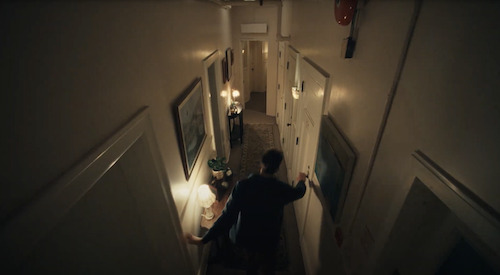
The Maze campaign began with several possible ways to represent a frustrating journey: an overgrown forest, dense fog, then the maze. The maze won because it could turn an abstract system into a physical experience. Hallways extended, rooms shifted, routes vanished. The final work made confusion visible before it offered an opening.
Chamberlin described the choice as the “bold honesty” the moment required. Earlier communication had leaned more heavily on statistics and general awareness. This one met an individual experience directly. It was unsettling by design, but the discomfort had a function. It recognized the audience’s experience, made the institutional problem tangible and gave support a specific role in changing the path.
The production added its own evidence. Chamberlin recalled how personal the project became to the people making it, including the director, sound designers and voice actors. Their connection to the work, she said, elevated the details. After launch, she noted particularly strong reactions from men in their fifties, a group the Foundation did not often reach with the same intensity. That surprise is worth keeping. Audience strategy begins with a hypothesis, but good operators leave room for the audience to teach them something.
“This campaign is one piece of a broader strategy.”Sarah Chamberlin on the ecosystem around The Maze
05 · The turnA voice of her own
For years, Chamberlin’s public voice was attached to CAMH Foundation. She wrote columns under its mandate, represented its partnerships and sat inside its executive leadership team. In May 2026, that public description changed. A podcast introduced her as a communications strategist, the founder of Pin Drop Communications and a former CAMH Foundation executive.
The conversation placed her new practice around reputation, leadership and trust in moments that matter. It also focused on the gap between intention and impact, and on clarity, accountability and courage as alternatives to over-polished messaging. Those themes are consistent with the record that came before. At CAMH, she had already been working where language meets consequence: a public claim had to survive internal scrutiny, respect an audience and eventually support an action.
Founding a consultancy changes the direction of accountability. An executive can borrow the institution’s platform even while shaping it. A founder puts her own name behind the method. Pin Drop is therefore more than a new title in a timeline. It is a bet that the operating lessons learned inside a complex foundation can travel to other organizations and other consequential moments.
06 · What travelsThe portable playbook
Begin with the reason
A supporter needs a personal point of entry before an institution can ask for action.
Give each channel one job
Use broad media for reach, intimate formats for trust and community programs for participation.
Make complexity visible
A concrete metaphor can carry an institutional problem farther than a stack of abstractions.
Listen after launch
Unexpected audience response is information. Let it revise the next brief.
Chamberlin’s career does not offer a magic sentence. It offers a sequence. Listen closely enough to understand the stakes. Find the human reason inside the institutional requirement. Choose a metaphor that respects the truth. Match the channel to the job. Give the audience a way to answer. Then pay attention to who responds.
There is also a small personal detail in her published work that fits the larger pattern. In a 2021 column, she wrote about fall bike rides while thinking through how environments affect people. The observation was ordinary, which is why it worked. A large argument arrived through a recognizable moment. Chamberlin has spent much of her public career making that move: bringing the scale of an institution down to the size of one person’s attention, without losing the size of the ambition.
Now the institution is her own. Pin Drop Communications begins with a name that suggests precision, quiet and the moment a room becomes attentive. What Chamberlin does with that attention will be the next chapter. The earlier chapters have already established the method: make the message useful enough to become part of the mission.