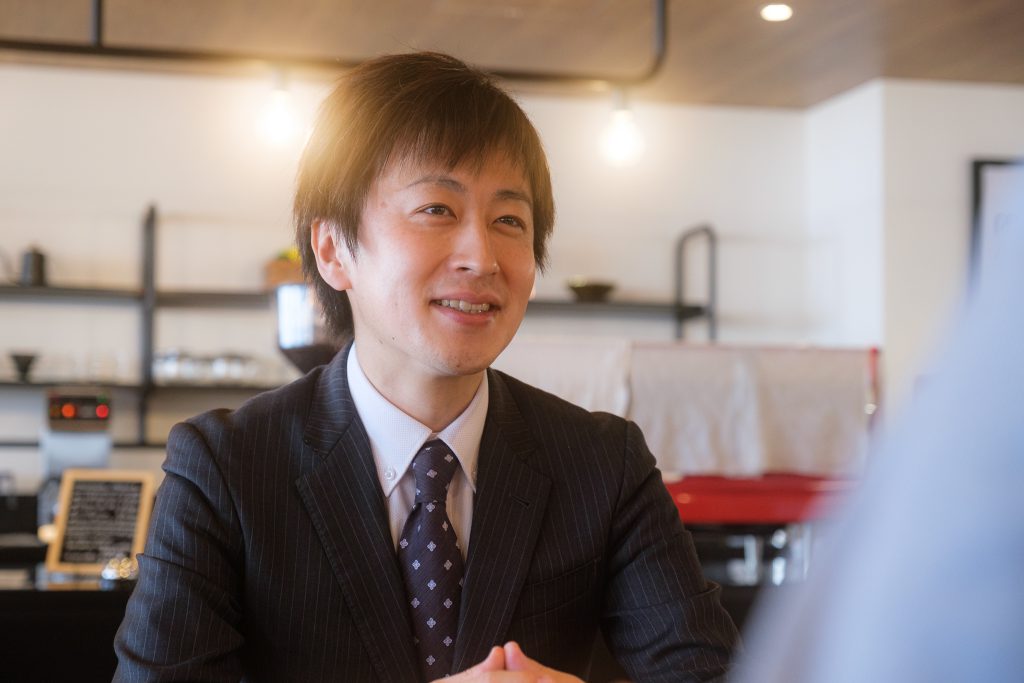
Kazuhiro Ikumi did not found MEDICOLAB because his laboratory work produced a miraculous result. He founded it because it did not. The neurologist spent two years studying amyotrophic lateral sclerosis, or ALS, and could not find an answer he trusted. The field was crowded with formidable researchers; the beginner from Nagoya felt outmatched. It was a bruising, unusually useful discovery. Ikumi concluded that his talent was less likely to be making the breakthrough than carrying somebody else's breakthrough out of the lab and into a clinic.
That admission explains the little medical AI company better than its list of accelerator badges does. MEDICOLAB, founded in 2018, now develops software intended to analyze ordinary brain MRI images and estimate information associated with nuclear-medicine testing. The objective is deliberately narrower than an artificial doctor. Its program is meant to help a physician decide whether a patient needs another test, a specialist referral, or a different diagnostic path for Parkinson's disease and related neurodegenerative disorders.
It also explains why the company has accumulated a curious mix of businesses: a medication-scanning app, digital biomarkers for drug companies, decentralized-trial ambitions, and Japanese regulatory support for medical-device makers. They all live in the awkward distance between a good medical idea and its routine use. MEDICOLAB has chosen that distance as its market.
01 / The first failureThe bench said no. The business began there.
Ikumi's route to that conclusion had been anything but leisurely. He grew up in Takasaki, a city known for its round, red daruma dolls, in a family of dentists. His father nudged him toward medicine and research, occasionally suggesting a Nobel Prize as though it were a sensible career target. After medical school at Nagoya University, Ikumi entered an acute hospital. In the emergency department, he has recalled, he sometimes managed five patients at once - writing charts, making calls, ordering tests and deciding who could go home.
The pressure did not extinguish his attraction to elegant research. ALS did something else: it showed him the height of the wall. One year passed, then two, without the convincing result he wanted. His mind changed when he separated the value of research from the identity of the researcher. Excellent scientists already existed. Perhaps his own speed, nerve and clinical experience were better deployed in commercialization.
“The dream can be enormous. The movement should be small, detailed and gritty. Then be bold when the moment comes.”Kazuhiro Ikumi, translated from Japanese
There is a copyable lesson here, and it is less romantic than “follow your passion.” Diagnose your comparative advantage with evidence. Ikumi did not abandon science; he changed his position in its supply chain. MEDICOLAB became a vehicle for clinical observation, product work, regulation and distribution - the parts of medicine where restless execution can matter as much as a pristine experiment.
02 / A cheap opening actBefore the brain scan, a paper notebook
The company's early commercial product was delightfully mundane. Japanese patients often carry medication notebooks. Clinicians must work out what each patient takes, what underlying illness the list implies, and which drugs complicate a procedure. MEDICOLAB interviewed about 100 doctors and staff and found an invisible tax: conscientious clinicians were spending attention on lookup work while already carrying the emotional and operational burden of care.
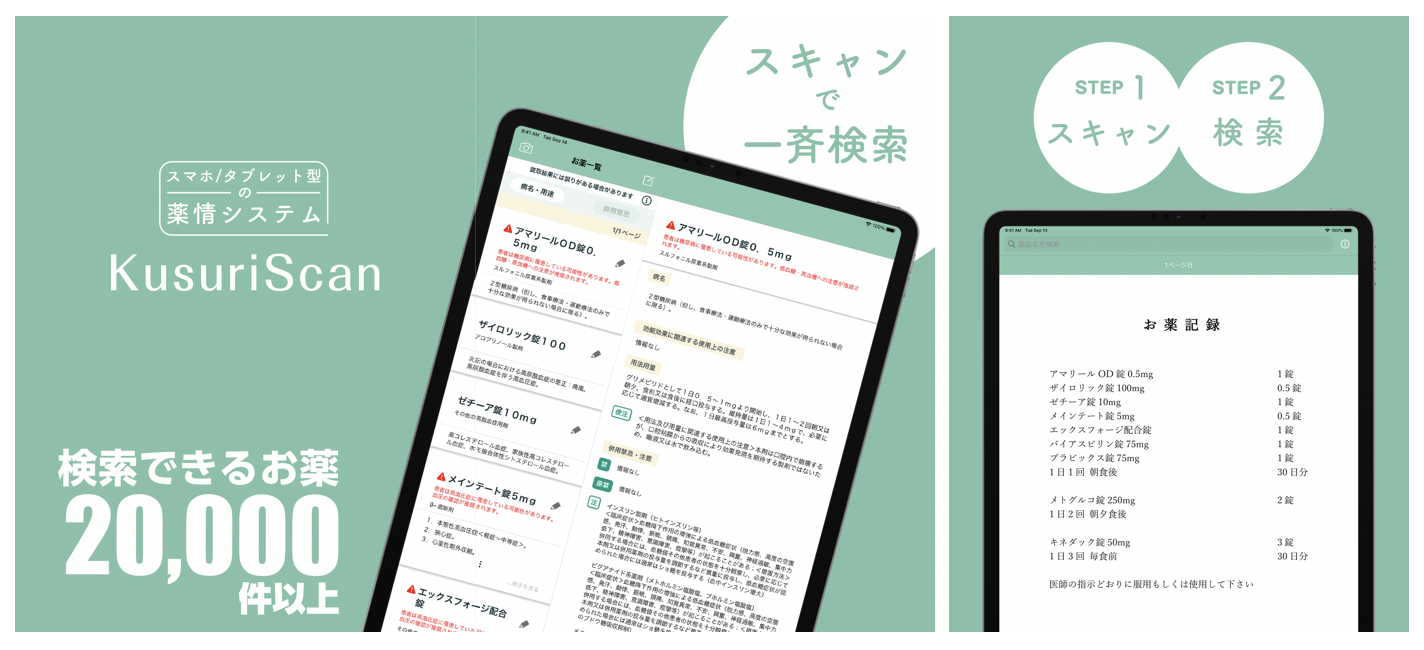
KusuriScan turned one iPhone or iPad into a reader. Photograph the notebook and the app searched a database of more than 20,000 drugs, surfacing medication information, cautions and possible interactions. In 2022, MEDICOLAB said the scan took roughly five to 10 seconds. The subscription was listed at ¥1,900 a month, with a 14-day trial. No hardware installation, no grand transformation program, just a camera pointed at a stubbornly analog object.
The app is instructive even if MEDICOLAB's present story has moved toward regulated imaging AI. It gave the company a compact recipe others can borrow: interview the people doing the work, find the recurring task they barely mention because it feels normal, and build around equipment already in the room. That recipe does not require a neural network. It requires respect for boredom.
03 / The bigger bottleneckAsking an ordinary MRI to do more
Parkinson's disease and dementia with Lewy bodies can be difficult to distinguish through symptoms and conventional MRI alone. Physicians may turn to specialized nuclear-medicine imaging. Those tests need dedicated facilities and skilled personnel, and they impose travel, waiting and operating burdens. MEDICOLAB's thesis is that the MRI already common in daily practice contains signals that can make the next decision better.
The announced targets include Parkinson's disease, dementia with Lewy bodies, progressive supranuclear palsy and multiple system atrophy. The software is not positioned as a complete replacement for nuclear imaging, and it is not supposed to issue a diagnosis on its own. An independent 2026 profile described a staged entry: assist with normal, borderline and abnormal stratification first, rather than promise immediate substitution.
That status defines the conditions under which the idea cannot yet work. A model trained on one institution may stumble on another scanner, protocol or patient population. A useful score can still fail if it does not fit the hospital's image system, if clinicians cannot understand its uncertainty, or if better triage does not change a constrained referral pathway. And until performance, cybersecurity, quality controls and regulatory compliance hold up together, the product remains research rather than routine care.

04 / What the money buys¥109 million for the unglamorous middle
In July 2026, Japan's Agency for Medical Research and Development selected MEDICOLAB as one of four projects from 21 applications in its Medical-Engineering Collaboration Global Expansion program. The subsidy ceiling is approximately ¥109 million. A ceiling is not the same thing as cash already spent or equity funding, and it should not be described as a valuation. It is a budget for the difficult middle.
MEDICOLAB says the program covers multi-site data, model refinement, generalizability testing, clinical performance evaluation, regulatory and quality systems, cybersecurity, connection to hospital image infrastructure, overseas data and preparation for markets including the United States. Those nouns are why medical AI costs more than a convincing demo. The first thing to fail is often not model accuracy but transfer: another site, another machine, another workflow.
KusuriScan was ¥1,900 monthly in 2022. The current MRI program has a public-subsidy ceiling near ¥109 million; the company's own spend is undisclosed.
Ikumi's ALS research did not produce a result he trusted after roughly two years. That failure changed his role, not his commitment to medicine.
Founder self-knowledge and clinician observation. Research frustration pushed him toward commercialization; 100 interviews pulled product work toward hidden workflow stress.
Use existing hardware, sell a narrow first utility, state the clinical boundary clearly, and budget for validation across institutions before promising scale.
05 / More than a modelA small company's three-sided market
Hospitals are only one customer group. MEDICOLAB offers Parkinson's and essential-tremor digital biomarkers to pharmaceutical and device companies for evidence generation, with an eye toward decentralized clinical trials in which participants can contribute data away from a hospital. In 2023 it joined the Japan CTX Research Group, convened to help move such trials forward.
It also provides Japanese marketing-authorization and regulatory support to medical-device companies, including overseas businesses entering Japan. MEDICOLAB obtained a Type I medical-device marketing authorization in 2024, allowing it to support products across Classes I to III. That service work can create commercial contact while the company's own SaMD follows a slower regulatory clock. It also forces the team to understand the rules it must eventually satisfy itself.
The competitive set therefore changes by room. In imaging AI, MEDICOLAB faces conventional specialist assessment and more established Japanese imaging-software vendors. In trials, global eCOA and DCT platforms such as Medidata, Veeva and Signant Health have far greater scale. In regulatory work, CROs and specialist consultancies sell local experience. MEDICOLAB's differentiator is not breadth. It is the short loop between a practicing neurologist, hospital workflow, biomarker work and marketing authorization inside a tiny organization.
Tiny can also mean fragile. Eleven people including contractors cannot be everywhere at once. A services business can fund knowledge but distract from a product. A neurology specialty can sharpen the model but narrow the market. Accelerator programs from Fujitsu, NVIDIA, AWS, Microsoft and Google lend tools and networks, not clinical proof. The company will be judged by whether its multi-site results travel and whether physicians use the output when the waiting room is full.
06 / The honest promiseGive the doctor a better next question
MEDICOLAB's mission is to deliver care to patients quickly. Its language sometimes reaches for a larger horizon - illuminating the future of neurodegenerative disease and extending healthy life - but its best products are grounded in the next five minutes. Which medication matters before this procedure? Does this MRI justify a more specialized test? Should this patient see a neurologist?
The company will not work where those decisions are not bottlenecks. It will not work without representative clinical data, careful integration, regulatory clearance and doctors willing to keep responsibility for the result. It may not work in health systems where nuclear imaging is easy to obtain or where MRI protocols vary beyond the model's tolerance. Those are not small caveats. They are the business.
Ikumi's useful instinct was to stop treating failure as a verdict and start treating it as a routing instruction. He moved from bench scientist to operator, from a medication notebook to a brain scan, and from quick subscription software into the deliberate machinery of a medical device. MEDICOLAB's wager is that ordinary images can carry more information. Its more interesting wager is that an unusually candid founder can carry a scientific idea through the parts that science alone does not solve.