On December 17, 2022, Matt Wolfe put a website online. The first six visitors, he later joked, were probably Matt Wolfe himself, checking it from different computers. The site had begun as a Google Sheet of AI products he wanted to remember. The list grew, the rows became hard to search, and a weekend spent learning Webflow turned his private index into Future Tools. It was an oddly modest beginning for a project built to track the future: a person trying to find something he had already bookmarked.
Five days in January, less than a month after the launch, the site averaged roughly 6,000 users a day, during that period. A tool directory had found an audience almost before its maker had decided what business it might become. He had shared it on Twitter, then Facebook, watched the response and begun adding the suggestions people sent back. He also noticed that the AI tool videos on his existing YouTube channel were outperforming his other subjects. In a December post, he wrote, “I feel like I found my niche.”
The phrase sounds tidy in retrospect. A few weeks earlier, nothing about his working life had felt tidy to him.
A public question before the answer
In November 2022, Wolfe published a post with the title I Still Don’t Know What I Want To Be When I Grow Up. He had spent years in online marketing, blogs and podcasts, then pushed into gaming and Web3 content through a project called Hard Fork Gaming. He loved the subject. The business side had become difficult as clients cut marketing budgets during a bear market. His longtime collaborator Joe Fier had stepped away from that venture to work with his wife. Wolfe wrote that he was still committed to Hard Fork but needed a steadier way to earn.
He made an inventory of skills: video and audio production, media buying, web development, automation, hardware, AI, community building. He described himself as a creator and analytical problem solver who struggled to sell those abilities as a service. What he enjoyed most was combining tools until a useful thing happened. That last detail matters. Future Tools did not arrive as a grand strategy to own AI discovery. It came from the same practical itch that had carried him through several corners of the internet: what can these pieces do together?
“What really lights me up is combining multiple tools to make cool things happen.”Matt Wolfe, November 2022
There is a long prehistory behind the quick launch. Wolfe says he began working in online marketing in 2005. In 2007, he started a blog and content marketing project with Fier; in 2009, he left his day job to work on online businesses full time. Together they built Evergreen Profits and co-hosted Hustle & Flowchart, a podcast about marketing systems and the people who use them. Wolfe has also written on WordPress, affiliate marketing and online education. The subject changed over the years, but the recurring action did not: find a method, test it, explain it so another person can try it.
Even the story of his personal domain has the tempo of a long internet career. Wolfe wanted mattwolfe.com for roughly 13 years. Another Matt Wolfe, a real estate agent, owned it. He set an annual calendar reminder to check its status. When the name finally expired, an auction pushed the bidding beyond his comfort level. A reseller won it; Wolfe returned later, negotiated, and paid about $2,200 for his own name. He then let the new site sit largely unused for months. The punch line is gentle: online experience does not make every online project urgent.
The list begins to move
By late 2022, the products in his AI spreadsheet were arriving faster than he could comfortably sort them. Webflow offered him a way to turn the rows into a searchable database, with sorting and a scraper he assembled using a little code and a great many YouTube tutorials. In his account of the launch, he called it a weekend project to learn a skill. The impulse was as much curiosity as commerce. He had not worked out the revenue model; only a small fraction of the first roughly 150 listings used affiliate links.
The site and the channel began to feed each other. Future Tools gave Wolfe an inexhaustible queue of products to try on video. His videos sent viewers back to a place where they could keep browsing after the episode ended. Rather than change his subject once more, he had made a home for his habit of investigating whatever was new. That was good editorial arithmetic in a period when the supply of AI tools seemed to have no top line.
Wolfe chose to narrate the business while he built it. His first “Build In Public” update in January 2023 described the traffic, the uncertain affiliate revenue, and his ideas for newsletters, better sorting and featured listings. He worried aloud about cluttering the site with ads. He preferred a cleaner experience and was interested in suggestions from the people already using it. A tool directory is often treated as a neutral shelf. This one had an owner visibly moving the shelves around.
That public record also makes the growth easier to understand. Wolfe had spent years learning to publish regularly and turn a technical discovery into a usable explanation. In a LinkedIn post about his production routine, he called himself “a systems guy.” He described batching short videos, adapting a daily post across platforms, and reserving a weekly AI news breakdown for YouTube. One short video drew two million views and 20,000 subscribers, he said, so short videos became a permanent part of the schedule. The apparent spontaneity of a creator reacting to the week’s surprises rests on a timetable.
A microphone, and more microphones
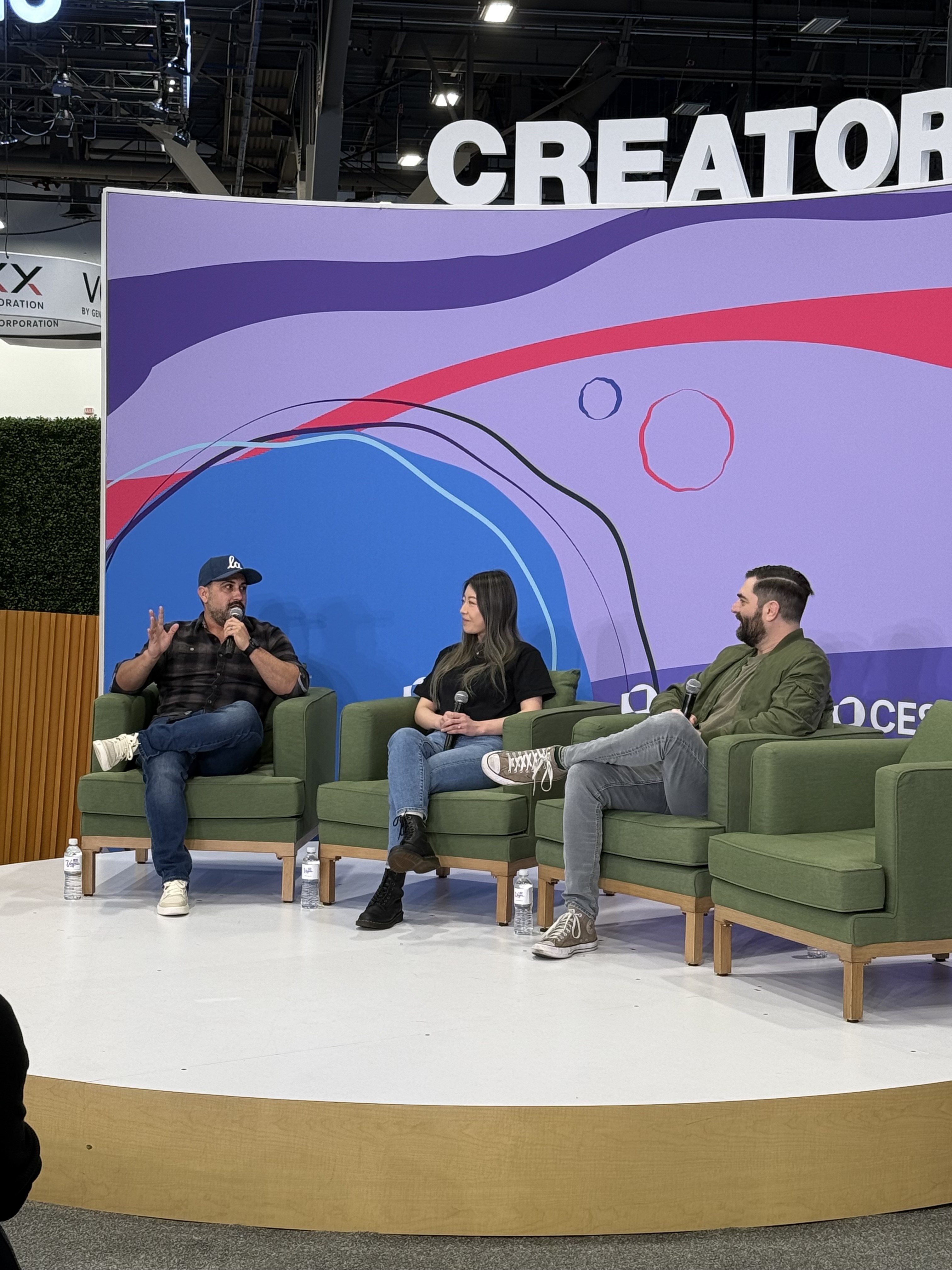
The camera opened other rooms. In April 2024, Wolfe and Nathan Lands launched The Next Wave with HubSpot, a podcast built around AI news and interviews with people working in the field. Wolfe has interviewed Qualcomm chief Cristiano Amon, Microsoft AI chief Mustafa Suleyman, DeepMind chief Demis Hassabis and Microsoft CTO Kevin Scott. The images are useful evidence of how the beat widened: from product demonstrations at a desk to conversations with the people making the products.
It is tempting to date this career from the first viral AI video. Wolfe’s older work complicates that neat story. A marketer who has made podcasts for years understands what a person needs when a tool’s feature list is longer than their afternoon. He can ask how a new product fits into a workflow because workflows were his subject before AI supplied the latest instruments. His audience grew quickly in 2023, but the skill on display had been practiced much longer.
His work also expanded into writing for HubSpot’s marketing blog. He has published books including Evergreen Wisdom and WordPress Revealed, and received a YouTube Creator Award at 100,000 subscribers and a TubeBuddy Emerging Creator Award. In 2025, Edelman included him in an AI creator list. These are milestones, though perhaps less revealing than the way he describes a working day: reading, trying, recording, sorting, then doing it again when the tools change.
When the directory met its subject
In 2026, Wolfe published a blunt update about Future Tools. At its peak, he said, the site had drawn around one million visitors a month. Traffic had fallen to roughly 180,000 a month, a decline of more than 80 percent. His explanation had a certain circular elegance. People who once browsed lists of AI tools could now ask ChatGPT, Claude, Gemini or another assistant for suggestions. They could also build small tools for themselves. The technology the directory catalogued was taking on part of the directory’s job.
He proposed a change: give AI news more prominence, keep the tool database but make it more selective, and recommend products that were genuinely distinctive or useful. A later announcement described Future Tools as moving from “here’s everything” toward “here’s what matters.” The editorial principle is plain: “Taste beats completeness.” The newsletter reaches more than 250,000 people twice a week, and people decide what goes into its news feed and picks.
“Taste beats completeness.”Future Tools’ stated editorial principle
This is an interesting reversal for a founder whose original problem was too many tabs. The 2022 answer was to put all the links in one searchable place. The 2026 answer is to spare the reader from searching a large place at all. Both are responses to abundance, but they require different kinds of work. A database rewards coverage; an editor must be willing to leave something out and accept that another person may disagree.
Wolfe has been unusually specific about what prompted the revision. He did not claim that the old site had stopped being useful; 180,000 monthly visitors is an audience most publications would gladly keep. He said the direction of travel was clear enough to act. His team now includes people working on newsletter writing, long-form production, social media and tool moderation. The site that began with one person’s spreadsheet has become a small editorial operation.
- Begins a blog and content marketing project with Joe Fier.
- Builds Future Tools from a personal spreadsheet.
- Launches The Next Wave with Nathan Lands and HubSpot.
- Shifts Future Tools toward selected news and recommendations.
The long channel and the short list
In 2026, Wolfe marked his YouTube channel’s seventeenth birthday while it was nearing one million subscribers. Soon afterward, he announced that it had crossed the mark. He used the milestone to make a point about uneven growth: seventeen years of posting can look, from a distance, like a sudden arrival. The channel has held marketing advice, experiments in gaming and technology, then a sustained run of AI news and tutorials. The old work did not disappear from the story because a new topic finally found a larger audience.
That history gives the latest Future Tools turn some weight. Wolfe has changed subjects before, and has written openly when a bet did not work. The difference now is that he is changing the shape of a project that has already succeeded. He can keep the directory while admitting that its original promise has weakened. He can let a team produce summaries while insisting that the choice of what matters belongs to a person. Neither decision makes the next result certain, and neither needs to.
The first six Future Tools visitors may indeed have been one man refreshing his own website. It is a good origin story because it is so ordinary. He had made something he wished existed and wanted to see if it worked. Years later, the question is more demanding. With a million subscribers on YouTube and a newsletter read by hundreds of thousands, Wolfe has more people watching the choices he makes. The spreadsheet solved a problem of remembering. The short list asks him to decide.