A Roman centurion walks through Manhattan carrying a plate of pinsa. This is not the opening of a Fellini film. It is a public-relations campaign. In May 2026, Marino sent the costumed soldiers into New York, built a tasting kiosk outside Eataly in Flatiron Plaza, recruited influencers and invented a National Pinsa Day for Di Marco, the Italian company that created the flatbread. The stunt was funny. The spreadsheet was funnier.
The campaign reported 130 million impressions, 1.09 million social views, more than 37,000 engagements and 29,000 clicks. Nearly 2,000 coupons went out; 53.7 percent came back redeemed. Marino was subsequently named a finalist in the 2026 PRNEWS Platinum Awards. The numbers explain what a modern communications agency is trying to become. It is no longer enough to put a client on television. The centurion must lead somewhere.
A firm built around the decision
Frank Marino founded The Marino Organization in 1993 after working in New York government, including public affairs, media relations and marketing for the city’s economic-development apparatus during the Koch administration. That origin matters. Government teaches a particular version of communications: a good story is useless if the wrong council member, community group, reporter or union hears it at the wrong time. The real unit of work is the coalition.
That logic still runs through the firm. Marino serves companies, developers, universities, nonprofits, trade associations and consumer brands. Its assignments have included the opening and expansion of JFK Terminal 4, Home Depot’s arrival in New York, communications around One World Trade Center, clean-energy businesses and difficult land-use approvals. In 2022, it led communications and stakeholder engagement for three housing proposals that together represented 45 percent of the 11,000 homes approved by the New York City Council that year.

The problem Marino solves, then, is larger than publicity. Clients often arrive with a decision trapped inside a thicket of audiences. A developer needs neighbors and officials to understand a project. A food company needs Americans to recognize an unfamiliar category. A chief executive needs a point of view that sounds like a person rather than a committee. Marino maps the people around the decision, builds a narrative they can repeat and chooses the channels that can move them.
“Success is no longer about who shouts the loudest; it’s about who listens the smartest.”John F. Marino, president
The second generation adds instruments
John F. Marino joined the family business in 2002 and became president in 2018. During that span, the menu widened. Social media became a formal capability in 2011. Creative, advertising, branding, web work, video and full-scale production followed. Public relations remained the front door, but fewer client problems stayed politely inside one department.
This is where Marino differs from a specialist publicity shop. Its public-affairs team can work a stakeholder map; its media team can earn attention; its creative studio can make the campaign; its digital staff can distribute and measure it. A client can buy one piece or ask the firm to conduct the whole orchestra. The business model is the familiar agency mixture of retained counsel and project work. Marino does not publish a price list or campaign budgets, which makes the honest answer to “what did it cost?” unsatisfying but important: outsiders cannot know. The useful metric is whether the brief ties spending to a behavior anyone can count.
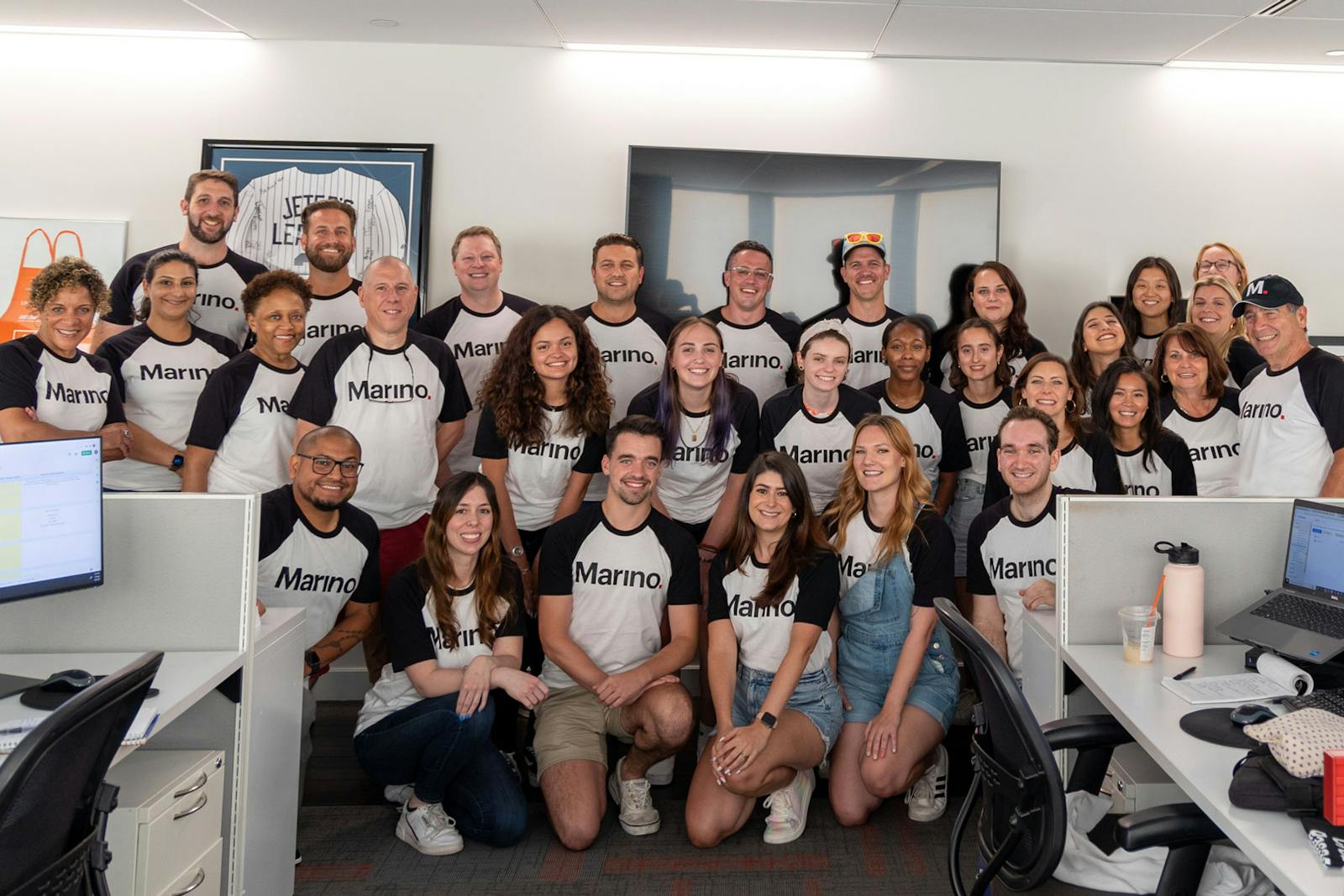
The firm says it has represented more than 400 clients and reports a 92 percent retention rate. Those are company figures, but they fit a culture built around continuity. Marino calls itself an ego-free, family environment and points to employees who have stayed five, ten and fifteen years. In an industry where accounts and staff can churn together, memory becomes a product. Someone remembers why an argument failed in 2017, which stakeholder hates surprises and which statistic the client’s chief executive will actually use.
The dashboard arrives
In September 2025, Marino launched Marino Intelligence. It is less a shrink-wrapped software product than a service layer: clean and enrich customer data, segment valuable audiences, audit the marketing stack, watch behavioral signals, prioritize leads and run targeted nurture campaigns. The firm also said it planned to integrate AI for intent prediction and personalization.
Attention is not the finish line
Pinsa campaign · reported resultsThe first thing to fail in many campaigns is not the creative. It is the handoff. A person sees the story, likes the post and then encounters no next step. Marino’s recent work suggests that this gap changed the agency’s mind about measurement. Earned attention still matters, but attention without a trail to action leaves the most useful question unanswered. The pinsa campaign connected spectacle to sampling and sampling to a coupon. Intelligence tries to make that chain routine.
Four things worth stealing
A company does not need Roman armor, a Midtown office or three decades of reporter contacts to borrow the useful parts. It needs a brief disciplined enough to prevent activity from masquerading as progress.
This approach is not universal. It struggles when the product disappoints, leaders will not make decisions, data is too thin to segment responsibly, or the public-interest claim cannot survive scrutiny. Integrated work also becomes expensive clutter when a simple announcement would do. Marino’s model makes the most sense for consequential, multi-audience problems - launches, approvals, reputational threats and categories that must be explained before they can be sold.
The agency’s evolution looks less like a pivot than an accumulation. Public affairs taught it to map power. Media relations taught it to frame a story. Creative work made the story portable. Data made the response visible. The tools changed because the distance between a message and a decision became easier to observe.
That leaves Marino with a delicate job. It must measure judgment without pretending judgment is only a metric. Relationships still matter precisely because people are not rows in a CRM. The useful machine does not replace the old instinct; it tells the instinct where to look. Then, perhaps, it sends in the centurions.