The AI news cycle has a discourteous habit: it continues while you sleep. A model arrives, a benchmark changes, a company announces a new tool, and by breakfast there are already several confident explanations of what it means. Wes Roth works in that interval between announcement and understanding. His YouTube channel follows the labs, products and claims that keep the field in motion. Then he built a news site that can keep looking when he steps away.
The site is called Natural 20. It describes a pipeline that gathers stories from news outlets, AI labs, research feeds and online communities, scores them for relevance and engagement, and updates at five-minute intervals. AI agents maintain the operation. Roth created it. There is a neat, almost comic symmetry in an AI commentator assigning AI the job of watching AI. The more interesting point is editorial: a feed can collect a great deal of material, while a person still has to decide which developments merit an explanation.
That distinction helps explain the shape of Roth’s public work. The videos have a voice and a point of view. The newsletter offers a daily written brief. AI Pod, which he co-hosts with Dylan Curious, makes room for guests and subjects that cannot be disposed of between two refreshes. Natural 20 keeps the tabs open. Together, the formats resemble a modest newsroom built around a single, relentlessly updating beat.
A beat that changed its own deadline
Roth began his YouTube channel in 2020, before the current rush of generative AI products became ordinary news. By March 2026, a published account of his work placed the channel above 300,000 subscribers and around 51 million views. Counts move, but the scale shows why a creator explaining model releases can become a daily fixture for an audience. The channel’s descriptions name OpenAI, Google, Anthropic, NVIDIA and open-source AI among its recurring subjects. Its titles often convey the tempo of the industry in capital letters.
A Roth video can take a launch, interview or research claim and turn it into a tour of the larger argument around it. His 2024 upload about a much-discussed Eric Schmidt interview is one example of the format: the public event is the starting point, and Roth’s commentary is the invitation to follow the implications. He also published a video on an OpenAI Playground assistant in 2023, an early reminder that his beat includes how a tool is used as well as what a company says about it.
The voice of the channel is expansive and openly interested in what may come next. The stated aim in its video descriptions is to help viewers understand large language models, generative AI and the prospect of AGI. That future-facing frame gives Roth a recurring question, though the answer changes with each new release. It also creates a demanding assignment: he has to explain a moving target to viewers who have come expecting another update.
“My goal is to teach you the latest AI tools to make you more productive and increase your profits.”Wes Roth, on his public Skool profile
His Skool introduction gets to the practical pitch with less ceremony. Roth says he wants to teach people the latest tools, and signs off by calling himself “AI Yoda” and a “JedAI.” It is a joke with a job to do: lower the temperature around an intimidating subject and tell a prospective learner what the lessons are for. The profile lists San Diego as his location. It also shows how the work reaches beyond a passive video audience into a community of people trying to use the tools themselves.
One subject, several clocks
A daily video and a daily newsletter may seem like neighboring desks in the same office. They work differently. A video can linger on the distinction between a demo and a product, or pause over what a result might mean for work and business. A newsletter can collect several developments into a readable sequence before the day ends. Roth’s Natural 20 author page shows that rhythm in dated posts on AI products, research and industry news. The writing runs under his name, with each issue serving as another snapshot of a field that rarely holds still for long.
The podcast changes the clock again. AI Pod’s listing names Roth and Dylan Curious as its hosts and describes interviews with researchers, builders and other people working around AI. Episodes run long enough for disagreement, detours and context. The pair have spoken with guests including AI creator Matt Wolfe, researcher David Shapiro and legal scholar Christa Laser. Those conversations range beyond product announcements into questions about ownership, work and the rules surrounding new systems. The roomier format matters because a claim that fits in a headline may take an hour to examine honestly.
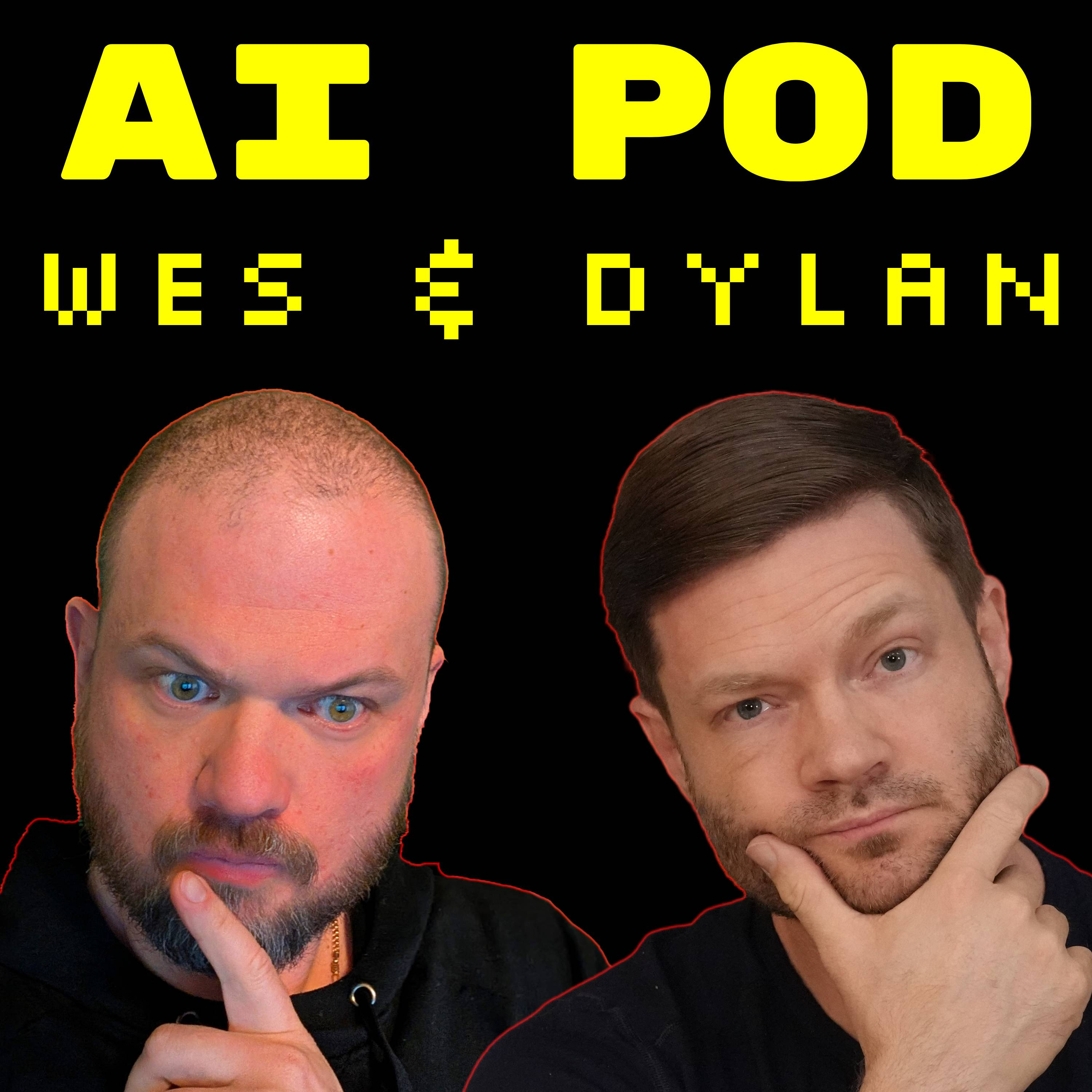
Roth and Curious are a visible connection in his career, and a useful contrast in format. On his own channel, Roth can move at the speed of a news item. In a shared interview, the next question can come from someone else. That simple change makes a difference when the topic is uncertain or contested. It also makes the enterprise less dependent on one presenter’s running monologue. Guests supply expertise, argument and, sometimes, a correction to the easy story.
The experiment inside the coverage
Natural 20 is where Roth’s subject becomes his method. Its about page describes a feed drawing from more than 15 sources. It names technology publications, AI lab blogs, Hacker News, Reddit, research papers and newsletters. The site adds trending detection, lab watch pages, model comparisons, search and an RSS feed. One small detail has the charm of a builder’s signature: keyboard shortcuts let a reader move through stories with “j” and “k.” News that once required a stack of open browser tabs is presented as something to navigate.
The more provocative line is the site’s account of its own production. It says AI agents run the pipeline from fetching feeds through scoring stories and deploying updates. That is a claim about the system, not a guarantee that each item has been checked by a human editor. In fact, the site plainly says there is no editorial team and no manual curation. Its frankness makes the project easier to understand. Natural 20 is a machine for noticing; Roth’s personal work remains the place where a human can add judgment, a story and a question worth carrying away.
He has taken a similar interest in personal knowledge work. In 2026, Natural 20 published his practical guide to building a “second brain” with Obsidian, Claude Code and plain-text Markdown files. The guide is less about a dazzling demo than about the unglamorous maintenance that makes saved information useful later. It lays out folders, rules and ways to trace a statement back to its origin. For a creator who reads a lot of AI news, the attraction is obvious: collecting information is easy; finding it again at the right moment is harder.
There is a pattern across these projects. The site watches. The knowledge base organizes. The video explains. None replaces the others. Their value lies in knowing which task each is good at. Roth’s public work does not settle the argument about where AI will go. It shows a working response to a nearer question: how does one person keep a coherent view of a field whose updates arrive faster than any one person can read them?
What an audience comes back for
The answer, for Roth, appears to be a mix of regularity and curiosity. His channel gives viewers a recognizable guide to the day’s announcements. His newsletter offers a written record that can be skimmed. The podcast permits a subject to resist the day’s deadline. His community pitch turns watching into learning by doing. Each route begins at a different level of attention, which is useful when the audience includes people who want a quick update and people trying to change how they work.
It would be easy to treat Natural 20 as the end of the story, the clever twist in which an AI news creator automates the news. The better ending is still unfolding. The site can refresh every five minutes, but the reasons a reader might care about a story do not run on a timer. A benchmark may deserve a closer look. A product launch may matter mostly to the people who use it. A guest may challenge the premise of a neat headline. Roth’s formats leave room for those different outcomes, even when the feed keeps moving.
There is no lucky roll for understanding a complicated industry. There is repetition, a system for finding material, the patience to ask another question, and the occasional good joke. Roth has made all four visible in his work. Tomorrow’s AI news will arrive whether the audience is ready or not. He has built several ways to meet it.