A gym owner has a peculiar problem with success: the better business gets, the more often he has to be there. Every appointment is a promise to occupy a particular patch of rubber flooring at a particular hour. Fill the calendar and you have done well. Fill it completely and you have acquired a rather elaborate way of being unavailable.
Ryan Matt Reynolds knew the arrangement from both sides of the bar. He had competed as a powerlifter and professional strongman. He had taught school. In 2008, he opened STRONG Gym in Springfield, Missouri, with William McNeely. By the end of 2015, he had sold his interest. In January 2016, he began coaching online. Years later, he would write a book about giving urgent demands less of your life. The calendar had been part of the story all along.
The teacher with a second classroom
Reynolds’s route into business ran through education. He trained to be a teacher and completed a master’s degree while considering a future as a high school principal. Meanwhile, his sporting life supplied a second curriculum. He has described earning his professional strongman card in 2006, after competing in powerlifting. The gym brought teaching, competition and customer service into the same room.
His ambition for STRONG was fairly specific: serious barbell training with the attentive service he admired in boutique gyms. The industrial aesthetic of strength sports had its charms, but a gloomy building was hardly a customer benefit. He wanted the equipment and the expertise without asking people to mistake neglect for authenticity. Chalk could remain. Indifference had to go.
For a while, the classroom and the gym competed for him. He left teaching in 2012 to run the business full time. That decision matters as much as opening the place. It was an early exercise in subtraction, a willingness to stop doing one worthwhile job so another could receive enough attention. His later writing would make that trade-off explicit. A life can contain several commitments; a working day remains stubbornly unexpanded.
A sale, then a different kind of appointment
The move online did not begin as a perfectly drawn strategy. Reynolds has spoken about partnership conflict preceding the gym sale and the uncertainty that followed it. That is a less tidy origin than the familiar founder tale in which someone sees the future and politely waits for everyone else to catch up. He had to work out what came next with the old arrangement already coming apart.
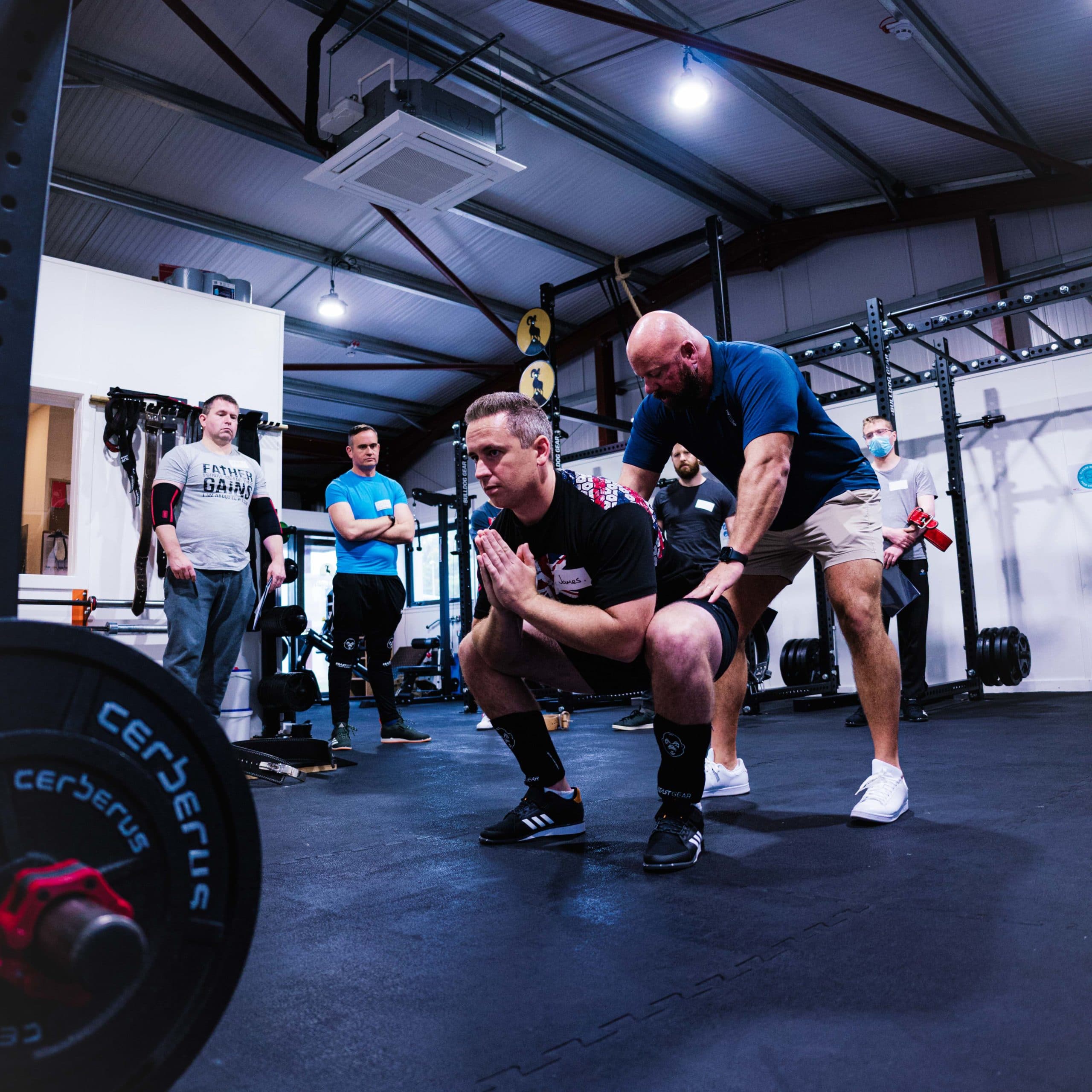
The answer preserved a teacher’s central task while changing the timetable. A client would film a lift. A coach would watch the recording, explain the adjustment and prepare the next work. They could be in different cities, operating on different schedules. The interaction no longer required both people to arrive at the same rack on the same Tuesday.
There is something pleasingly unglamorous about this invention. The barbell stays a barbell. The client still does the work. A phone supplies a record of what actually happened, including the part the lifter did not notice. Expertise can then travel without its owner buying a plane ticket. Reynolds had exchanged a room full of appointments for a continuing exchange of evidence and judgment.
By December 2020, he described a business serving roughly 1,000 clients with about 80 expert coaches. Those are historical figures, a snapshot of the operation at that point. They also explain why his attention had to move beyond his own ability to coach. An organization that size needs shared expectations. A founder cannot personally inspect every exchange forever, however enthusiastically he checks his phone.
The recording also changes what a client brings to the exchange. A remembered effort is slippery; a video can be replayed. The coach has something concrete to discuss, and the client can return to the explanation. There is a teaching idea underneath the business arrangement: make the work visible, look at it closely, then give the learner something specific to try. Reynolds’s old occupations had supplied rather good preparation for that sequence.
The business hidden inside the feedback
Reynolds’s insistence on professional service became an operating problem. How do you make a distributed coaching team dependable without reducing every coach to a script? In interviews, he returns to standards, apprenticeship and communication. Technical knowledge gets a coach into the conversation. The client also needs a reply, a clear explanation and some confidence that yesterday’s promise will survive until tomorrow.
His 2021 conversation with Brett Bartholomew explored premium pricing and the difference between possessing a credential and practicing a craft. These are revealing subjects for someone whose own sporting achievements could easily dominate his public identity. He spends considerable time on the less photogenic questions: how coaches learn, what customers should expect and how service keeps its quality as the roster grows.
Software became part of the answer. Available tools did not provide the combination of workflow and client experience Barbell Logic wanted. The company developed its own platform, TurnKey Coach, and subsequently offered it to other coaching businesses. Reynolds’s job had widened again. He was running an organization that coached people, educated coaches and supplied the machinery through which coaching could happen.
Initial Series A funding announced by Barbell Logic as it expanded into business and government markets.
That funding announcement described a company with 23 full-time staff and approximately 50 contracted coaches in its consumer business. Different roles, different counts, a later stage of development. The useful point is the changing shape of the enterprise. Reynolds had moved from selling his own time toward building systems other professionals could use. The original problem of being needed everywhere had acquired a software budget.

The strongman takes something off the list
Undoing Urgency: Reclaim Your Time for the Things That Matter Most arrived on December 10, 2024, published by Forbes Books. Its author had spent years in occupations that reward effort. His prescription included doing less. There is a small comic justice in a former professional strongman telling busy people to put something down.
The book asks readers to examine their values before organizing their tasks. Its GAME Plan stands for Goals, Actions, Metrics and Execution. The sequence has a coach’s practicality: choose a direction, identify the work, decide how to judge progress and carry it through. A handsome list is allowed no special privileges merely because somebody has enjoyed making it.
In a conversation with Brett McKay, Reynolds argued that people can effectively pursue only two or three major goals in a season of life. The appeal is also the difficulty. Ambition would prefer to keep every option open. Choosing means admitting that some attractive projects must wait. A calendar offers a more candid autobiography than a statement of values: it records what actually received the hours.
“I have to get up every day and think, okay, what are the important things I need to accomplish today?”Matt Reynolds, speaking with Will Spencer
He has been frank that the problem remains his own. In his conversation with Will Spencer, he described the daily competition between a short list of important things and a much longer list of pressing demands. Writing the book had not granted him immunity. That admission gives the advice a useful proportion. He is describing a practice he has to repeat, with opportunities to get distracted arriving on schedule.
His choice of subject makes more sense against the recurring expansions of his job. Opening a gym brings responsibilities beyond lifting. Leading coaches adds responsibilities beyond coaching. Selling software brings another collection of decisions. Each can look reasonable in isolation. Taken together, they ask a founder to decide how much attention any one role should receive. The book gives that ordinary, uncomfortable decision a vocabulary. It also makes room for the possibility that a worthwhile opportunity should belong to somebody else.
Springfield, with room for everybody
Reynolds remains based in Springfield, in the Ozarks. His wife, Rachel, was his high school sweetheart; they have two daughters, Cailin and Kinsley. The publisher’s biography also includes a dog named Milo and four cats. Anyone attempting to design a perfectly controlled household timetable may wish to consult the cats before proceeding.
His interests include coffee, food, travel and training. His faith also has a place in how he describes himself and his obligations. These details help explain the particular version of ambition he is selling. Business growth belongs beside other commitments. Time reclaimed from a task can become time with a spouse, time to read, or simply enough room to think before making another promise.
In his April 2025 conversation with Kevin Eikenberry, he discussed aligning the calendar with core values, delegating work and leaving something useful for future generations. He also spoke warmly about reading as access to another person’s lifetime of experience. The old teacher is still visible in that enthusiasm. Learning has remained part of the job even as the classroom has changed.
When a program becomes cheap
By August 2026, his Mondays with Matt material was addressing a fresh business question: what happens when AI can generate a workout program quickly? His argument was that coaches should examine which parts of their service had become easy to reproduce and develop the judgment, communication and accountability clients still value. The discussion follows a familiar concern in his career: what is the customer actually paying a person to do?
The question carries him back to that first crowded calendar. Reynolds built a gym, sold his interest, took coaching online and helped build software for other coaches. At each stage, the work asked for a different use of his attention. His book puts that question to the reader, too. There are only so many hours available. Before arranging them beautifully, it helps to decide who and what deserves to have them.
Keep the conversation going
Read, listen or watch Reynolds in his own words.
- Ryan Matt Reynolds’s website
- X
- Barbell Logic
- TurnKey Coach
- Undoing Urgency - book details
- Interview with Eric Bandholz (2020)
- Conversation with Brett Bartholomew (2021)
- Conversation with Brett McKay (2024)
- Conversation with Kevin Eikenberry (2025)
- Watch: From Garage Gym to Global Coaching
- Barbell Logic on YouTube
- AI and coaching - August 2026