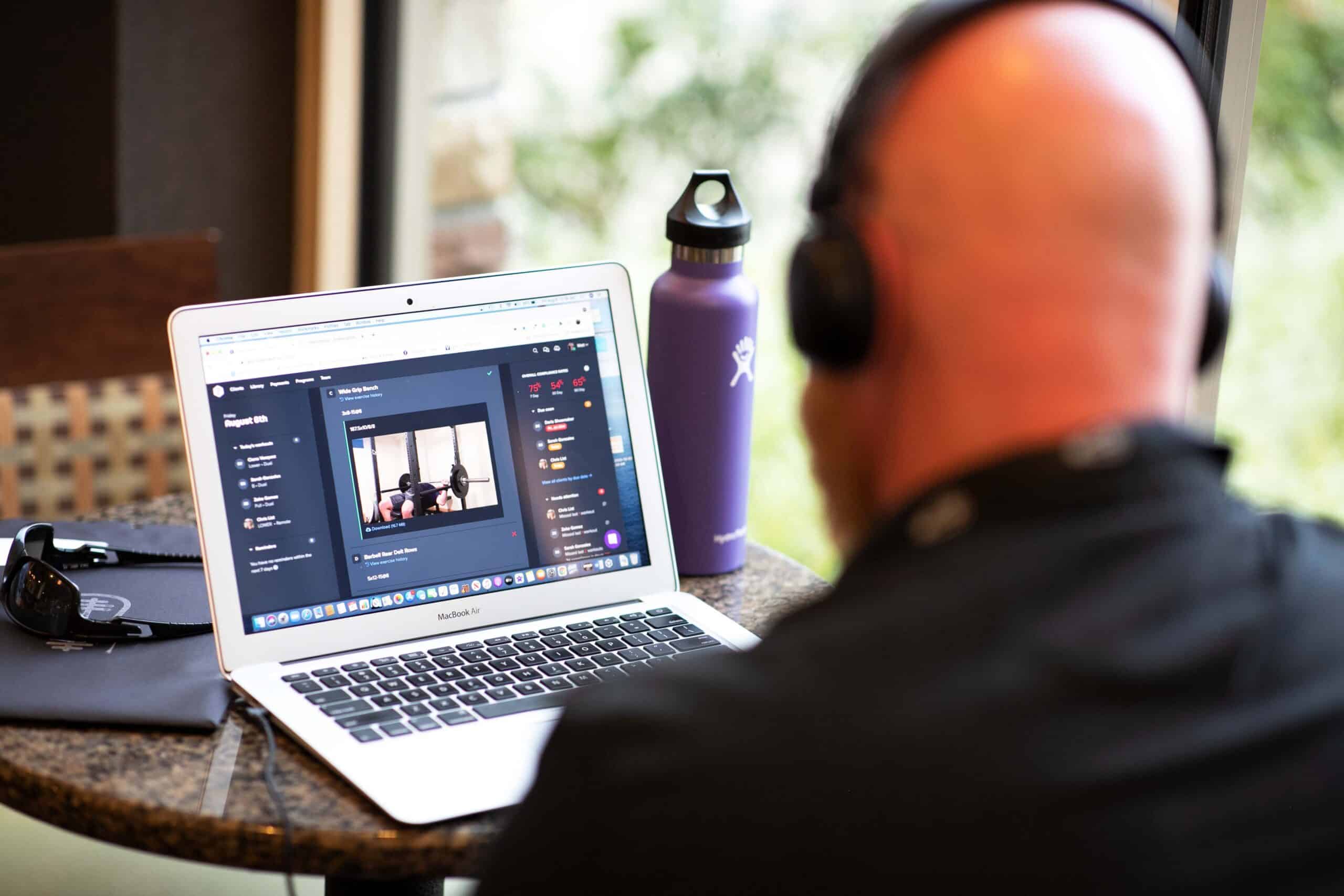
- Clients receive custom programming from a named coach, film their lifts, and get video feedback by the next business day.
- Current coaching costs $199 a month for two weekly check-ins or $319 for unlimited check-ins. Nutrition support is a $100 monthly add-on.
- The company also trains coaches through the Barbell Academy and sells its TurnKey Coach software to independent and enterprise operators.
- The model works best for people who will train independently but benefit from expert judgment and someone noticing whether they did the work.
The odd thing about watching yourself squat on video is how quickly your certainty disappears. The rep felt upright. The phone says otherwise. Your knees did something you do not remember authorizing. In an ordinary gym, a trainer shouts a correction before the next set. In Barbell Logic’s version, you upload the evidence and go about your day. Later, a coach who knows your history studies the clip, records a response, and adjusts what comes next.
That pause sounds like a defect. It became the product.
Barbell Logic is an online strength and nutrition coaching company founded in 2016 by Matt Reynolds, a former professional strongman, educator and gym owner. Its customers are not buying access to a library of animated lunges. They are paying for judgment: a program written around their equipment and schedule, a pair of eyes on the bar, and a person who expects another video to arrive.

The room disappears
Reynolds owned a physical gym from 2008 to 2015. After partnership conflict and the sale of the business, he started coaching online in January 2016. This was less a grand thesis about digital fitness than a practical answer to a suddenly missing room. Clients filmed their lifts. Coaches broke down the footage and replied through an app. By 2020, Reynolds said the company had roughly 1,000 clients and about 80 expert coaches.
The first thing to fail was not the barbell method. It was the surrounding machinery. Existing software scattered programming, video, messages and client records across too many places. A high-touch service becomes low-touch surprisingly fast when the coach spends the afternoon hunting for Tuesday’s deadlift. Barbell Logic built its own platform. That internal tool became TurnKey Coach, now a separate SaaS product used by solo coaches, gyms and larger teams.
The mechanics are deliberately plain. A free call establishes goals, history, schedule, equipment and anything that hurts. Barbell Logic matches the client to a Professional Barbell Coach rather than an anonymous queue. The program arrives in TurnKey Coach. The client trains, uploads clips and receives corrections by the next business day. When travel, pain, fatigue or a chaotic week intervenes, the coach changes the plan.
“I was worried about the delayed feedback, but it’s actually been very helpful to review video and see what my coach is seeing.”Michael H. - Barbell Logic client
The customer hidden in the average
Barbell Logic says its average client is 45.7 years old. That decimal is more revealing than a montage of personal records. The likely customer is old enough to have a job that interrupts Tuesday, perhaps a shoulder with opinions, and enough abandoned programs to know that information is not the missing ingredient. Many are beginners. Others know exactly how to train and keep restarting anyway.
This explains why the company talks less about transformation photos than continuity. A coach can swap a barbell movement for dumbbells, rewrite a hotel-gym week, or slow the load increase when form gets slippery. The point is not novelty. It is keeping the training relationship intact when ordinary life makes a rigid template absurd.
It also explains the price. Standard coaching is currently listed at $199 per month for two structured check-ins a week. Unlimited coaching is $319. Nutrition coaching adds $100 monthly. That is expensive beside a mass-market workout app and inexpensive beside three $75 personal-training sessions every week. Barbell Logic occupies the middle: less synchronized time, more persistent attention.
The trainer comparison uses Barbell Logic’s example of 12 monthly sessions at $75 each.
A company with three flywheels
Consumer coaching is only one part of the machine. The Barbell Academy teaches the company’s model, programming principles and coaching practice. It supplies a pool of trained professionals. TurnKey Coach gives those professionals a place to work and is sold to outside coaching businesses. The coaching service, in turn, produces the problems that improve the software and the experience that shapes the curriculum.
There is media wrapped around all three: hundreds of podcast episodes, YouTube instruction, articles, ebooks and newsletters. Reynolds described that material as a free value-add rather than a paywalled secret. It is also a remarkably patient sales funnel. Someone can learn to squat from a video, spend months listening to the podcast, and only later decide they want a person checking their work.
In late 2023, Barbell Logic announced an initial $2.3 million Series A at a reported $37.7 million post-money valuation. The round followed a strategic push into business and government markets. This is where the Academy and software stop looking like side projects. A large contract does not merely require more customers. It requires enough qualified coaches, a consistent service standard and software that will not buckle under the roster.
The expensive part is still human
Barbell Logic differs from app-led competitors because it refuses to pretend that the difficult part of coaching is generating a workout. Its own operating numbers point to the real work: more than 45 certified coaches and a promise of continued review. Reynolds has said the shared standards are simple - respond quickly, keep cues clear and avoid advice likely to get clients hurt - while leaving room for professional judgment.
That balance is the copyable idea. Take a service that normally requires two people to meet at one place and one time. Identify which parts truly need to be live. Make the rest asynchronous. Set a visible response standard. Preserve one accountable relationship. Build software only after the repeated workflow is obvious enough to annoy everyone.
The conditions matter. This model is a poor fit for someone who needs hands-on supervision, urgent rehabilitation, a medical professional, a spotter, or the social electricity of a class. It also asks the client to film sets, use the platform and train alone. No clever feedback loop can help much if the camera stays in the bag.
But for the traveler, the parent, the home-gym lifter and the person tired of beginning again, the delay has a peculiar dignity. The coach does not have to be standing nearby to be present. The client does not have to reorganize Wednesday around a 6 p.m. appointment. The gym has not vanished. It has become a relationship that fits around the week.