In 1994, Doug Lebda wanted to buy a $55,000 condominium in Pittsburgh. He was a young accountant, the sort of customer who could reasonably expect to understand a financial transaction. Yet shopping for a mortgage meant consulting newspaper rate tables, contacting banks and working through a process that seemed remarkably indifferent to the person paying for it. Buying the home had produced a second, rather less welcome undertaking: learning how to buy the money.
Five years later, he offered a comparison almost anyone could understand. A car buyer could arrange financing and leave the dealership that day. His mortgage had taken weeks of shopping and months to close. The discrepancy bothered him. Two purchases could involve comparable sums, yet one came with the efficiency of a checkout and the other with the atmosphere of a permission slip.
Lebda’s response was to build LendingTree. Founded in 1996 and launched nationally in 1998, it gave borrowers a way to submit a request and have multiple lenders compete for their business. The proposal contained a small reversal with considerable consequences. A customer who had been making the rounds could invite the banks to come calling.
The borrower gets a receiving line
The appeal of that reversal is easy to miss now that comparison websites are ordinary furniture on the internet. A mortgage is both an enormous household purchase and a product people buy infrequently. Familiarity favors the seller. Shopping requires time, and each additional conversation can bring another set of questions, conditions and paperwork. Lebda had encountered the inconvenience personally, even with an accountant’s training.
LendingTree’s early exchange connected consumers with participating banks, lenders and brokers. The borrower filled out an online qualification form; the platform sent requests into its network. In its early public filings, the company described a business built around attracting those consumers and connecting them with lenders. The mechanism mattered as much as the website. The internet supplied a common meeting place for parties who had previously been conducting separate conversations.
It was also a distribution business. In February 2003, Microsoft and LendingTree announced a multiyear marketing agreement worth more than $10 million. LendingTree would appear across the MSN network, including financial news destinations. The agreement described consumers receiving multiple responses to a single request within 24 hours. A comparison service still needed people to discover it. Even a receiving line requires invitations.
One online request
A simplified illustration of the marketplace idea. Participating lenders evaluate requests and set their own terms.
Before the banks, there were golf balls
Lebda grew up in Lewisburg, Pennsylvania, near Bucknell University. His early ventures included collecting golf balls and selling them back to golfers. There is a tidy economy in that arrangement: the customer loses the inventory, then supplies the demand. He also mowed lawns and helped generate leads for his father’s cookware business. Commerce arrived as work that could be done, with people close enough to approach.
He graduated from Bucknell in 1992 and worked as an auditor and consultant at Price Waterhouse in Pittsburgh. Later, at the University of Virginia’s Darden School of Business, he worked on the plan that became LendingTree. Jamey Bennett, another Bucknell alumnus, helped start the venture. The original name, Credit Source USA, had the reassuring sound of a company that would keep your forms in alphabetical order.
His first attempts to enlist banks failed. Spending $500 on Yahoo mortgage advertisements gave him something more useful than another assertion that the idea ought to work: evidence that consumers were interested. Banks in Pittsburgh and Cleveland eventually joined. He left school to pursue the company, then moved to Charlotte in 1997, drawn by a banking community where a young financial business could recruit.
A company with several second acts
The national launch preceded LendingTree’s 2000 initial public offering. Then came the collapse of the dot-com boom. The company survived, and in 2003 IAC acquired it. For a founder’s biography, that might normally provide a convenient stopping point. Lebda’s relationship with the business kept changing shape instead.
At IAC, the internet company led by Barry Diller, he became president and chief operating officer. It was a broader assignment than building a single lending marketplace. In 2008, IAC separated Tree.com, the parent of LendingTree, into a public company, and Lebda returned to lead it. The separation arrived during the financial crisis, a particularly awkward moment to be reacquainted with a business whose original product was mortgage shopping.
The corporate name became LendingTree again in 2015. Over time, the marketplace expanded into personal loans, credit cards, auto loans and small business financing, with insurance comparison becoming another part of the group. The early condo problem had opened onto a larger question: how often could a household benefit from seeing competing financial offers together?
- 1996Company founded
- 1998National launch
- 2000Initial public offering
- 2003Acquired by IAC
- 2008Independent again as Tree.com
- 2014Lebda completes his executive MBA
He returned to Darden and completed its executive MBA in 2014. By then, the student who had taken time away to start a business had lived through public markets, a sale, a corporate operating role and a return to independence. The classroom had rather a lot to catch up on. He continued coming back, this time to work with students and faculty.
The founder who stayed after class
Professor Saras Sarasvathy’s work on effectuation gave Lebda a vocabulary for entrepreneurial habits he already recognized. The approach starts with available means, willing collaborators and risks a person can afford. It leaves room for events to change the plan. For someone who had tried to recruit banks before he had a functioning network, that was familiar territory.
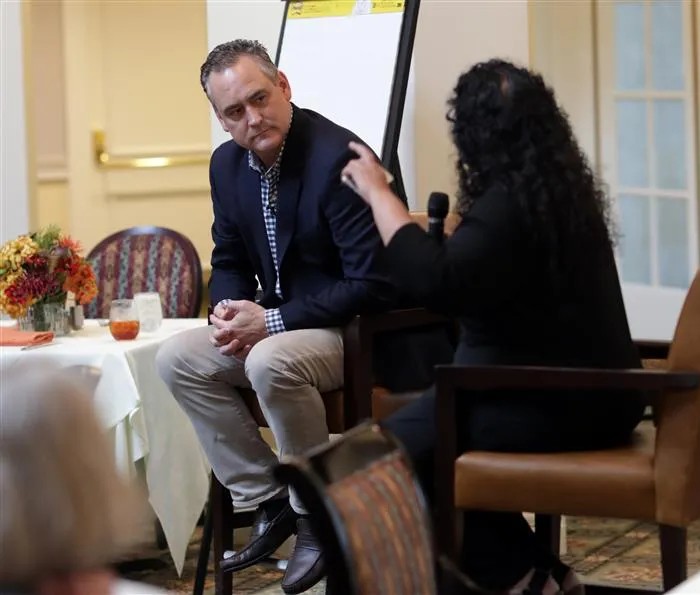
He wanted to carry that habit into an established company, where routines can become so comfortable that asking a fresh question feels impolite. His interest extended to the people using the products. Discussing product development in 2018, he put it plainly:
“One thing I love to do is design products around people.”
Doug Lebda · 2018
His educational interests also reached children. He co-founded Tykoon, a financial platform for families, with Mark Bruinooge. Later, he supported the launch of Mia & Tiago, Gosia Glinska’s picture books built around Sarasvathy’s research. The books introduced children to using what they already had, responding to surprises and making manageable bets. Entrepreneurship could be practiced well before anyone needed a pitch deck.
Tykoon gave families a way to organize real money around earning, saving, giving and spending. Parents could assign tasks, track progress and set goals; children could see the consequences of their choices. That was a different audience from a mortgage marketplace, yet the interest is recognizable. Money becomes easier to discuss when people can see what is happening to it. A household allowance offered a smaller setting in which to make the process visible. The scale had changed from financing a home to paying for a completed chore. The underlying curiosity about how people learn to handle money remained.
There was a human version of the same teaching method. Sarasvathy remembered Lebda giving students his time beyond the scheduled class, carrying conversations into dinner and discussing their ventures with the involvement of a prospective co-founder. Sometimes she had to intervene so that he would make his plane. A visiting executive can deliver a speech and depart. Lebda apparently required a little more extraction.
Nine holes, room to think
Golf remained part of his life. He liked evening rounds of nine holes, sometimes alone, using the quiet to think through problems. He also brought 15 college friends together for the Bison Cup, a competition named for Bucknell’s mascot and played in a Ryder Cup format. The childhood business of retrieving golf balls had acquired a social calendar.
For a 2017 round at Quail Hollow, he arrived with balls and gloves in a plastic bag but without his own clubs. A flat tire had left them in a car being towed from the airport. He played with a borrowed set and treated the inconvenience as a ready-made excuse for whatever followed. There is something reassuring about a chief executive arriving at an exacting game with his explanation already in order.
Outside the office, he developed interests in fishing, gardening and regenerative farming. His wife, Megan, and his three daughters were central to his life. His family’s account of him described a person drawn to helping others succeed, and to making things grow. The impulse had room for a company, a student’s project and a patch of ground.
A question handed on
Lebda died on October 12, 2025, aged 55. Scott Peyree became LendingTree’s president and CEO, and Steve Ozonian became chairman. The company he founded continued under new leadership. His own career had lasted long enough to turn a complaint about one mortgage into a business, and then into a set of lessons he wanted other people to try.
By October 2026, LendingTree had created a memorial garden at its Charlotte headquarters and was supporting Do Greater’s Lebda Entrepreneur Club. Young people would learn about effectuation through the Mia & Tiago books. Those projects carry forward two of his interests with unusual precision: growing things and helping people discover they could begin.
The $55,000 condo is an appealing origin because it keeps the story at human scale. Before public shares and corporate titles, there was a buyer trying to understand an expensive decision. Lebda kept returning to that buyer’s predicament. Somewhere in the paperwork was a question worth asking again: could this be easier for the person on the other side of the desk?
Keep following the question
- Watch: Bridge Builder Conversations with Doug Lebda
- Listen: The Deal Ranch, episode 51 · September 2025
- LendingTree · the marketplace
- Doug Lebda on LinkedIn
- Doug Lebda on X
- Writing by Doug Lebda on Medium
- Darden: the return to entrepreneurship education
- Mia & Tiago · the children’s book project
- LendingTree’s remembrance and current updates