In 2016, WeLab had a rather awkward problem for a company selling convenience: its customer call pickup rate was just 15%. Growing loan applications had overwhelmed support. Look closely at the questions, though, and a different problem appeared. More than 70% concerned application status or basic product information. Borrowers were calling because they could not see what was happening.
- Online lending grew into banks in Hong Kong and Indonesia.
- Local products solve different problems, from investment access to irregular income.
- Revenue is growing. Sustained profitability remains the test.
WeLab’s account of the fix is refreshingly mundane. It introduced a loan tracker, improved its question-and-answer material and refined a chatbot. In five months, it says, call pickup reached 98%, without increasing headcount. There is a useful business idea here: a queue can reveal something missing from the product.
A lender earns a banking licence
WeLab began operating in Hong Kong in 2013. Simon Loong, Kelly Wong and Frances Kang are listed as its co-founders in KPMG’s 2019 fintech survey. Loong had worked at Citi and Standard Chartered. He knew the machinery of retail banking from the inside. WeLend, the group’s online lending business, put a familiar transaction onto a different interface: apply for personal credit without organizing your day around a branch.
The company’s technical expertise sits behind that interface. Its risk systems use machine learning and data analysis; it also develops privacy computing technology and supplies financial technology to enterprise clients. WeLab consequently has two audiences: people who need financial services, and institutions that need the technology to deliver them. The group reported more than 70 million individual users and over 700 enterprise customers in January 2026. Those figures span businesses and markets, rather than counting active customers of one bank.
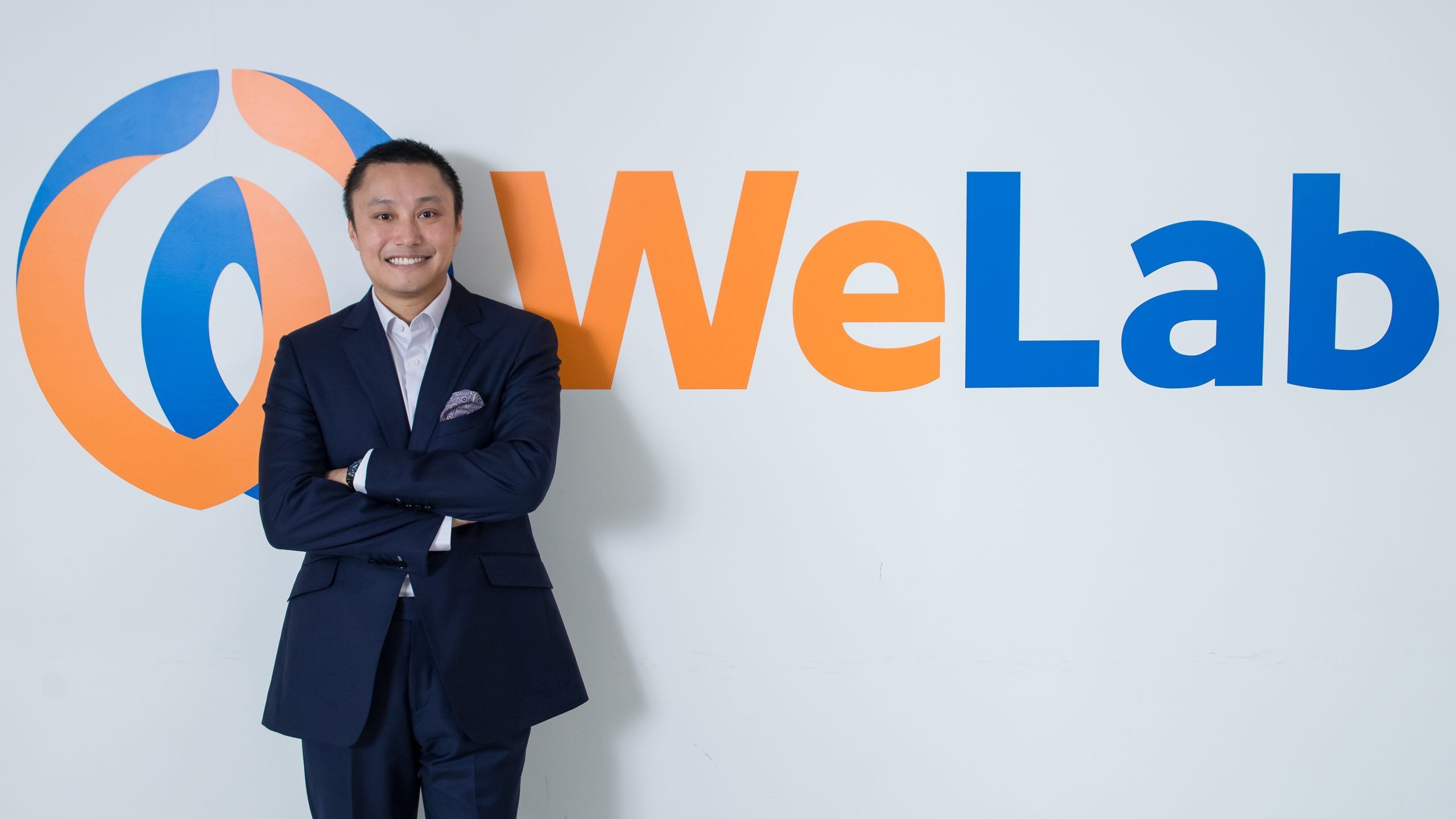
In April 2019, Hong Kong’s monetary authority granted WeLab’s subsidiary the city’s fourth virtual banking licence. WeLab Bank opened publicly in July 2020. A bank could hold deposits and develop a broader relationship with customers than a standalone loan application allowed. Today, its offerings include personal loans, time deposits, fund investing, foreign exchange and a multi-currency debit card.
Consider GoWealth, launched in July 2022 with Allianz Global Investors. Its organizing question is a goal: what are you saving for? The service combines planning, portfolio recommendations, fund transactions and progress tracking inside the app. Its advertised investment entry point is HK$100. That changes who can get through the door, although it does not make investment risk disappear. Funds can lose value; they are different from bank deposits.
Twenty pockets for a lumpy payday
Then there is Indonesia, where a different problem matters. A person running a small business may receive money in bursts, while bills arrive with tedious regularity. An account organized around a monthly salary can be a poor description of that person’s life.
WeLab and Astra acquired Bank Jasa Jakarta in 2022 and launched Bank Saqu’s digital proposition in November 2023. Astra brings an established local business presence. WeLab brings digital banking and technology experience. The resulting service explicitly targets solopreneurs and other productive customers.
The launch features included as many as 20 customizable savings pockets, automatic saving from rounded-up transactions, and Busposito, a community-based time deposit. These are mechanisms for separating money and building habits. A pocket can give tomorrow’s expense a visible home today. Astra reported nearly two million Bank Saqu customers by the end of 2024, with approximately 40% classified as solopreneurs.
This helps explain WeLab’s position in the market. It competes with conventional lenders and digital banking alternatives, including ZA Bank and Mox in Hong Kong. A mobile app alone offers little distinction when competitors also have one. The more interesting combination is lending expertise, licensed banking, enterprise technology and local partners who help turn those capabilities into useful products.
The expensive part of convenience
Some of that construction has required considerable capital. WeLab announced US$156 million in Series C financing in December 2019. Allianz X invested US$75 million in 2021. In January 2026, the group announced US$220 million in strategic financing, combining debt and equity. The whole amount should not be mistaken for an equity cheque.
At the Hong Kong bank, lending remains the economic foundation. It earns interest, pays for funding and absorbs credit losses; wealth services add fee income. Its 2025 revenue reached HK$942 million. For the first half of 2026, revenue rose 7.7% to HK$491.7 million, yet the bank reported an HK$11.8 million net loss. Its separately adjusted loss was HK$5.4 million. Growth spending and profitability can move in opposite directions.
The Google partnership announced in September 2025 adds another layer: AI agents for research, more personalized services and marketing tools. The bank later said an AI loan agent at WeLend had reduced approval time by approximately 20%. That is a useful operational claim to watch. The group’s ambition to reach 500 million users by 2032 remains a target.
Copy the diagnosis
For a borrower, WeLend offers an online application; approval and pricing depend on eligibility. For a saver or investor, WeLab Bank offers tools to manage money through an app. For an Indonesian entrepreneur, Bank Saqu offers ways to organize uneven receipts. Faster access helps only when repayment costs, investment risks and product terms fit the person using it.
“taking shortcuts doesn’t work anymore”
WeLab’s culture book, on operating at scale
The lesson for another business is smaller, and immediately usable. Sort the questions customers keep asking. Make the answer visible at the moment they need it. This approach helps when avoidable uncertainty drives demand; it cannot substitute for human judgment on a disputed decision or fix an unaffordable loan. WeLab’s early support problem offers an unusually concrete starting point: inspect the waiting before expanding the waiting room.