“Fixed speed limits are kind of dumb,” Noam Maital said in 2017. He was running Waycare, a startup trying to make traffic management more responsive to what was actually happening on the road. A number painted on a sign could tell a driver what was permitted. It could say rather less about the conditions ahead. For a founder working with live data, that gap was an invitation.
Years later, Maital is back in the business of helping governments decide when to let things move. His company, Darwin AI, works with state and local agencies trying to put artificial intelligence into everyday use. The setting has changed from the traffic control center to the employee’s screen. The awkward relationship between a useful tool and an institution’s rules remains.
There is a pleasing wrinkle here. A founder who once questioned fixed limits now sells agencies a way to enforce boundaries around new technology. His argument depends on how those boundaries work. Rules that respond to the job, the user and the circumstances can make an organization more willing to proceed. The appeal is permission with something practical behind it.
A glass room, a faded T-shirt
Before the government AI company, before the acquisition, there was a meeting room at Mindspace in Tel Aviv. In his account of pitching Waycare in late summer 2016, Maital remembered its glass walls and the faded black UpWest T-shirt worn by Gil Ben-Artzy, the fund’s co-founding partner. He also remembered a difference in the conversation: respect for the work of starting a company.
UpWest became Waycare’s first investor. By 2022, Maital would be joining the fund himself. One detail from his explanation of that decision carries more personality than the usual career announcement. An Israeli employee had once teased him about his fluency across cultures: “Noam, I may speak English well, but you speak AMERICAN!”
He used the joke to explain why he valued investors who understood both Israeli founders and the American market. Language was only part of the crossing. There were customers to understand, expectations to translate and a company to build on the other side of the Atlantic. His later move into venture capital kept him close to that work.
- 2016Co-founds Waycare
- 2021Rekor acquires Waycare
- 2022Joins UpWest as its first EIR
- 2024Co-founds Darwin AI
The road was already full of information
Waycare’s proposition involved bringing scattered signals together. Transportation agencies had infrastructure and data. Mobile apps, connected vehicles and weather systems offered additional information. The company’s software combined those inputs to help agencies identify incidents, detect congestion and anticipate trouble. A road could be crowded with information long before anyone had a useful view of it.
This was a coordination problem as well as a prediction problem. Waycare worked with traffic management centers, law enforcement and service patrols. The value of an insight depended on reaching people who could act on it. In that environment, a clever model had to find its place among organizations with existing equipment, responsibilities and ways of working.
Rekor announced its agreement to acquire Waycare in August 2021, with $61 million in consideration consisting of cash and stock. The acquisition was completed that year. Maital’s first company had found a larger home in roadway intelligence. The transaction also supplied him with experience that would be hard to acquire by studying an attractive chart of the government software market.
Announced acquisition consideration, in cash and stock.
His preparation had included a BSc from Babson College, where he graduated summa cum laude in economics and strategic management. Before Waycare, he worked on strategy projects involving technology implementation, process innovation and financial due diligence. His route into AI entrepreneurship came through business and institutions as well as technology.
By the time he appeared on a city-mobility podcast in early 2022, he was discussing digital infrastructure alongside physical roads. The conversation ranged across the volume of vehicle data and the security questions accompanying it. Even in the traffic chapter, the subject was bigger than a driver getting home sooner: new information created new obligations for whoever used it.
The investor returns to the workshop
UpWest announced Maital as its first entrepreneur in residence in October 2022. He would help founders with the early stages of company building and the difficulties of scaling in the United States. He had been the person pitching for money; now he could help someone else prepare for that conversation.
He continues to describe himself as an angel investor in the Israeli startup ecosystem. Yet the venture chapter also gave him a view of a new imbalance. Generative AI companies were arriving with plans for many industries. Government, particularly at the state and local level, seemed underrepresented to him. He recognized repetitive, language-heavy work that the technology might help with.
His previous experience made the attraction more specific. An agency could see a useful application and still need an answer about oversight. Staff enthusiasm, institutional responsibility and the availability of a tool were different things. Darwin emerged from his effort to bring them together, with Asaf Fadida as co-founder and chief technology officer.
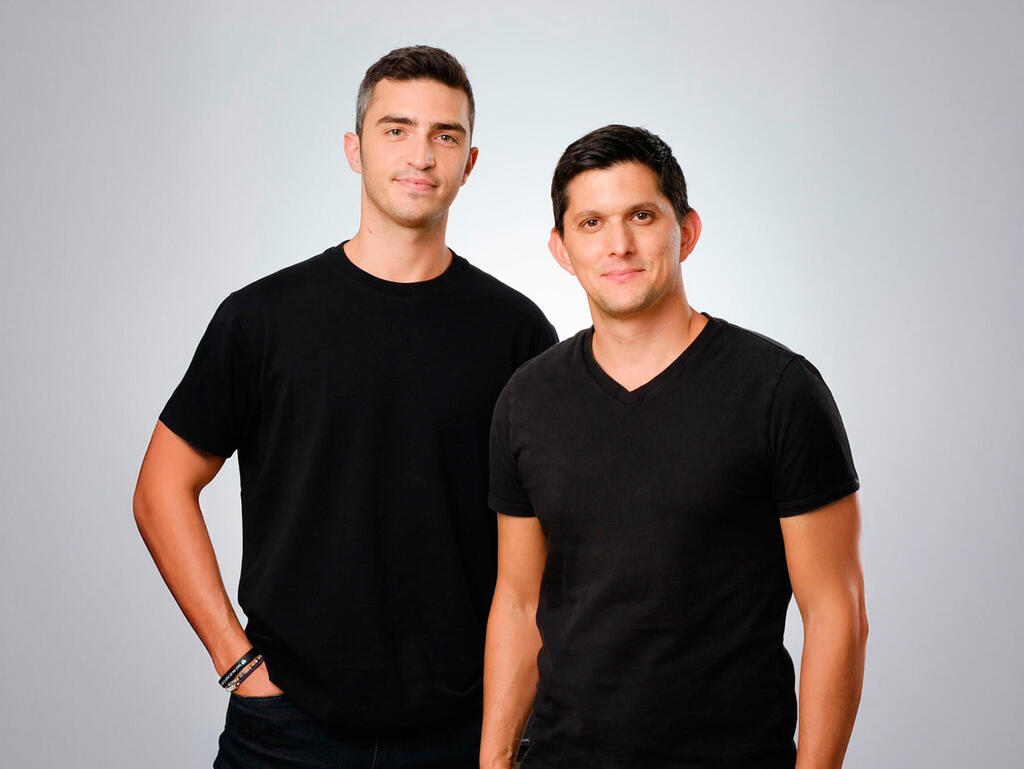
The policy has to leave the PDF
“A policy document doesn’t scale,” Maital said in a May 2025 interview. He described Darwin’s approach as a software layer that applies an agency’s AI rules at the endpoint, with centrally managed controls that can vary by department, role or user. Writing a policy is a beginning. Making it part of someone’s daily work is another task.
His explanation also included staff education: people need to know how to use the tools and how to question their output. The intended customer is an organization full of people making small decisions throughout a working day. Maital’s account of adoption gives those people a place alongside the technology and the people responsible for supervising it.
“A policy document doesn’t scale.”
Noam Maital · May 2025
By October 2025, Darwin had announced a $15 million Series A led by Insight Partners, with UpWest and Resolute Ventures participating. It brought the company’s announced funding to $20 million. The business reported 15 employees in Texas and Tel Aviv and agency use in states including California, Illinois, Ohio, Texas and Washington.
The round also brought Brenda Harvey, formerly general manager of IBM Public Sector, onto Darwin’s board. Dustin Haisler served as chief AI officer. Around Maital’s new company was a group with experience inside and around public institutions. The familiar UpWest relationship had also followed him into this second operating chapter.
The customer problem was already moving. Speaking about that funding round, Maital pointed to employees adopting AI without waiting for an official framework. Darwin’s offering included LaunchPad, a platform for agentic workflows in tasks such as procurement and permitting. Oversight was therefore connected to a further ambition: helping agencies put the technology to use in their actual processes.
Those examples give the venture a distinctly municipal texture. Procurement and permits carry less theatrical promise than a machine producing a dazzling answer on stage. They also involve work that institutions do repeatedly. Maital has chosen to build in that everyday setting, where a useful idea has to make it through an organization.
Conceptual illustration of the company’s approach, not a performance comparison.
Ego can wait outside
Asked in a March 2025 entrepreneurship interview about culture, Maital resisted defining it through a presentation. He described the founders setting an example, with “ego is left outside the door” as part of his account. Determination, honesty and humility were the values he named. He also argued that early companies should concentrate on execution and real customers before becoming preoccupied with competitors.
His description of internal communication was similarly concrete: investor newsletters each month and team meetings every three weeks that connected company activity with developments in the market. These are small operating habits. They offer a view of how he wanted a young team to understand the context for its work.
A later public note from Ben-Artzy offered a different view of the same company: desks spreading through an office shared with UpWest in Tel Aviv. The investor described seeing the team’s pace and small celebrations at close quarters. A funding announcement gives a business a number. An expanding collection of desks gives the number somewhere to sit.
Who gets to finish the sentence?
Maital’s interests also turn up in his writing. In December 2025, he published an essay about keyboards and AI, considering how tools that help people express themselves can also shape that expression. His concern was the gradual transfer of authorship as software supplies more of the words and ideas people accept.
He argued for control over the amount of assistance, transparency about suggestions and room for distinct voices. That concern belongs beside his government work. Both ask who has authority when a useful system becomes part of ordinary activity. The person using it needs a meaningful say; so does the institution responsible for its use.
There is an agreeable counterpoint in a post about a summer week hiking in Acadia National Park. Maital shared a photograph from Cadillac Mountain and reflected on time spent away from offices, screens and planes. A founder building AI for public agencies could still enjoy a place that required no AI to function. The mountain appeared to be managing.
In February 2026, Darwin announced its inclusion in the GovTech 100. Maital had returned to a familiar customer with a different product and a question that had followed him from the road: what would let people use new information with confidence? His working answer is to put the rules close enough to the activity that they become useful. For someone once impatient with a fixed speed limit, it is a consistent kind of ambition.
Follow the conversation
Continue with Darwin AI, Noam on LinkedIn and his writing at Tablet.