Matt Knox needed bricks. The co-founder of DiggersList, a marketplace for home-improvement materials, posted a request on his own site. One contractor offered 400 for free. Another offered 500 for $125. A business proposition had become something rather more persuasive: a way to improve the driveway.
His wife, Skaie, described the project on HomeJelly. There was a patch of dirt, an unhelpful dog, and a plan to plant bougainvillea. The episode makes a modest but revealing introduction to Knox. The product had crossed the distance between an idea worth explaining and a tool worth using. It could find its founder some bricks.
Today, Knox is co-founder and CEO of Wonderful, the El Segundo agency that builds ecommerce experiences and digital products. Its work includes jewelry storefronts and mobile shopping. His route there runs through contractors’ insurance, surplus construction supplies, a garage office, and an app for deciding what to watch. Across those settings, the interesting question is what people are trying to do before a screen gets involved.
A second life for the leftovers
Before DiggersList, Knox worked as an insurance broker serving contractors. That position put him near a recurring problem: finished jobs left behind usable materials. Some could be saved for another project. Some would sit around. Some would be thrown away. The difficult part was finding someone who wanted what remained.
He and his brother, Johnnie Munger, developed a classifieds business around that gap. DiggersList offered categories for the building trade, from tools and appliances to materials. Its 2009 rollout followed a Los Angeles beta and included other American markets. In 2011, the company announced nationwide availability, using visitors’ locations to surface nearby listings.
For the seller, the question begins with getting something out of the way. For the buyer, it begins with finding a useful thing at a sensible price. Those motives can meet without either person taking an interest in the business behind the website. That is part of the challenge for a founder: the service must justify itself in the exchange, even when its users have much more pressing concerns than admiring the service.
There is a particular discipline to this kind of marketplace. A piece of timber has dimensions. A buyer has a location. A bargain can lose its charm when collecting it becomes a small expedition. The product has to help two people discover whether their practical circumstances line up. Attractive design alone cannot move the pallet.
Habitat for Humanity ReStores helped bring inventory to the service. DiggersList also offered a widget that let sellers display their listings on their own websites. That detail matters: the marketplace could extend a seller’s existing presence, rather than asking every customer to start the entire search in one place.
The office was wherever the connection worked
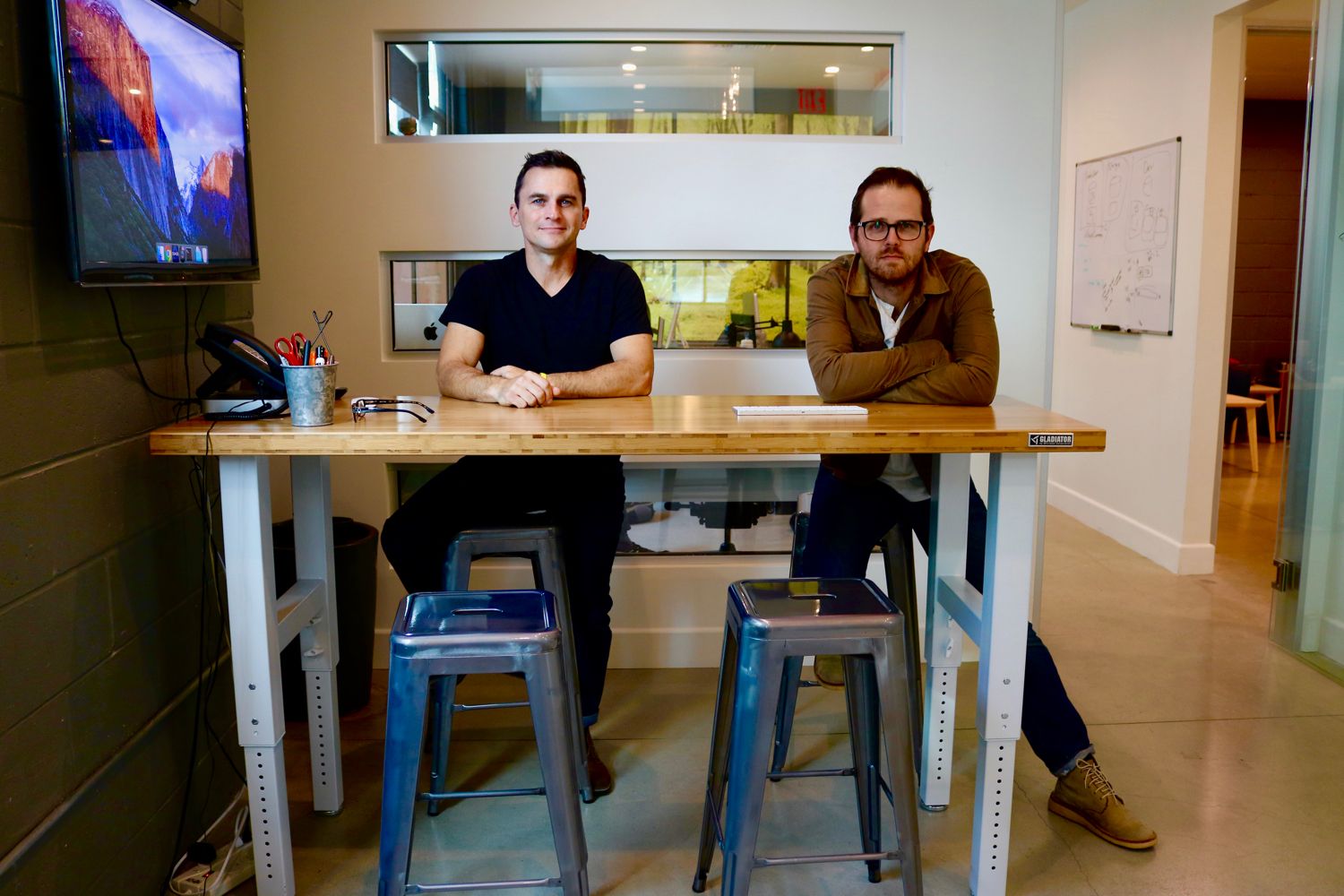
In the early DiggersList years, the brothers lived in different states. Knox worked from a garage cubicle; Munger used a spare bedroom. They shared documents online, used video calls for meetings, and shared screens to work through website changes. Their office was assembled from rooms they already had and services they could afford.
Knox had a clear exception to the economy drive: the internet connection. His advice was to protect the speed of the connection when choosing where to cut costs. For two people working at a distance, a slow upload was an obstruction sitting squarely between them.
“Don’t let it be your Internet speed.”Matt Knox, on where to save money
It is good advice because it names the purpose of the spending. An office can have inexpensive furniture and still function. A collaboration can have free software and still function. The saving becomes less attractive when it repeatedly stops the work. The garage makes a fine founding photograph; the connection makes it a workplace.
Knox’s writing about the original iPad offered another glimpse of that practical interest in technology. In a HomeJelly article, he considered what contractors might do with it: sketch plans, carry credentials, show prospective customers a portfolio, and consult digital blueprints. His list also made room for music on the job. A useful device could have a soundtrack.
A business to keep a business going
By September 2012, DiggersList needed money. Knox later recalled that rent was only two weeks away and that an investment offer would have required surrendering control and heavily diluting early investors. In his garage, he and Munger chose another route: build products for other entrepreneurs. Wonderful began as a way to earn the resources their own venture needed.
That decision gave the brothers two kinds of responsibility. A marketplace founder can decide what to build next. An agency must understand another person’s idea, agree on the work, and deliver it. The client’s ambition arrives with its own assumptions. Somewhere between the first conversation and the first release, those assumptions have to become decisions.
An editorial diagram of the agency’s founding logic, rather than a financial forecast.
The arrangement also complicates the usual story of a founder pursuing one idea in a straight line. Paying work can determine what a team learns, whom it hires, and which problems it encounters next. An activity begun for its income can become a business with reasons of its own to continue.
There is no romance in a rent deadline. There is, however, a useful question inside this episode: which part of what you already know can someone else use today? Wonderful gave the brothers a way to put their product experience to work while continuing to think like founders.
What shall we watch?
In August 2020, Knox was a co-founder of Bingie alongside Joey Lane. Wonderful helped develop the app. It addressed an everyday nuisance of streaming: recommendations lived in conversations, while shows and films lived across different services. Remembering a title could require finding an old message before finding something to watch.
The app let users recommend titles, find viewing information, keep a watchlist, and discuss what they had seen. The social relationship supplied context. A suggestion from someone who knows your taste arrives with information that a title and a thumbnail cannot quite contain. You can ask a friend why they liked the film. You can also hold them responsible for the dreadful second act.
Bingie’s team had tested the premise. A company survey of more than 500 people found that 64 percent preferred recommendations from friends and family to the alternatives described. That is a finding from the company’s own research, with its own sample. It helps explain the product decision without becoming a universal claim about how everyone watches television.
Reported by Bingie from its 2020 survey of 500+ people. A company survey, not a population estimate.
The idea has an interesting relationship to DiggersList. One product helped someone find a physical object nearby. The other helped someone find entertainment through people they knew. Both depended on useful context around a choice. The products belong to different markets, yet the choices in each become easier when the surrounding information is useful.
The customer still has to take the next step
Wonderful’s present portfolio puts those questions into commercial settings. For Irene Neuwirth, the agency worked with the jewelry brand’s design agency on a Shopify Plus website. The brief joined an expressive visual identity to the practical requirements of shopping. The customer needed to encounter the collection and understand how to move through it.
Fine jewelry makes the relationship between presentation and function particularly visible. A product can invite a long look. The website still has to organize choices, answer the next question, and behave reliably. If the machinery distracts from the object, the design has acquired an unwanted exhibit of its own.
Wonderful also planned, designed, and developed an iOS app for Athletic Brewing. That project combined content, community interaction, and shopping for the nonalcoholic beer company. Its purpose extended beyond the moment of a transaction: customers needed reasons to return and engage with the brand between orders.
These are team projects. Knox leads the business; Munger is CTO, and Wonderful’s leadership includes responsibilities for client success, project operations, and creative direction. The resulting product depends on those jobs meeting each other. A polished screen is one visible piece of an agreement among people who have to make the rest work.
Room for another idea
The agency’s public updates in 2026 placed Knox alongside Munger and creative director Joshua Benedikt in plans for Toronto’s DotDev gathering. The subjects were design systems, engineering, and commerce. The vocabulary has moved some distance from construction classifieds, but the conversation remains about making something people can use.
Knox’s career is interesting at that working scale. A buyer needs materials. Two brothers need to share a screen. A viewer needs to remember a recommendation. A customer needs to navigate a collection. Each problem contains a person whose next step can be made easier or more complicated.
The driveway provides a useful place to leave him. A marketplace founder asked for bricks, and people with bricks answered. The exchange made sense to both sides. Long before an agency portfolio or a conference itinerary, there was a small, testable result: something available had found someone who could put it to work.