A loyalty card is a modest piece of optimism. Buy something today, it says, and there may be a little reward for returning. The customer tucks it into a wallet already conducting a small archaeological experiment. The owner hopes the promise survives the laundry. For Matt Hyman, the space between those two people became a business worth building.
In August 2012, SpotOn introduced a digital loyalty network with tablets on merchant counters and check-ins through a smartphone or card. Its three founders, Matt, his identical twin brother Zach, and Doron Friedman, had supplied $5 million. More than 1,500 merchants had joined since the regional rollout that April. The proposition was comfortably human: help a local business remember its customers and give those customers a reason to return.
Hyman already knew the moment at which a customer paid. He had built payment businesses with Zach for years. Loyalty asked him to think about the quieter interval afterward. Where did the customer go? Would the business hear from them again? A card transaction could settle successfully while the relationship went nowhere. SpotOn began working on that second problem.
Two exits, with unfinished business
The brothers started CardPayment Solutions in 2000 and sold it to iPayment three years later. In 2005 they founded Central Payment. The repeated choice of industry matters. Hyman kept returning to the small business owner, a customer with ordinary transactions and a decidedly unordinary collection of demands on the working day.
Central Payment developed into a national merchant-services operation. By the time of its final TSYS transaction, it served nearly 80,000 businesses and processed more than $10 billion in annual credit-card sales. A network of more than 1,000 independent sales agents helped distribute the service. Hyman had experience building the machinery that gets a financial product from a company office to somebody’s counter.
The exit happened in stages. The brothers sold 60 percent to TSYS in 2012, then stayed involved for six years. Over that period, Central Payment’s valuation rose from $110 million to $840 million. In 2018 they sold their remaining stake. Those numbers describe the company’s valuation, rather than a personal payday of the same size. They also describe a long working relationship after a transaction that might otherwise sound like a clean ending.
While that sale was unfolding, the loyalty experiment had acquired a problem of its own. The distribution network that made payments work did not automatically make software work. Having a customer’s attention was one advantage. Knowing how to explain a different product was another.
Three businesses. The same small-business customer.
- 2000CardPayment Solutions begins
- 2005Central Payment is founded
- 2012Digital loyalty network launches
- 2017SpotOn Transact takes shape
- 2018Final Central Payment exit
The sales pitch that needed a new company
The initial idea was to sell loyalty through Central Payment’s existing channel. It looked sensible: payment revenue could support the expense of getting software into merchants’ hands. The founders already had a sales force and relationships with business owners. A new product would have a ready route to market. On paper, the arrows all pointed in the right direction.
The salespeople proved less accommodating than the arrows. Zach later described the difficulty of teaching payment sales professionals to sell software. Processing was familiar territory. A conversation about customer engagement asked for another kind of explanation. The founders could connect the economics of the products more easily than they could connect the selling habits around them.
SpotOn Transact took shape as a separate business in 2017. The distinction in dates is useful: the loyalty venture existed years before the integrated payments-and-software company. In April 2018, SpotOn announced a $20 million investment led by the Hyman brothers. Matt also said the company had hired more than 100 employees during the preceding year. They were supplying capital and building an organization around the changed proposition.
That is the revealing turn in Hyman’s career. An established payments operation had given him reach, but reach alone could not do the new job. The next company required people who could discuss what happened before and after the sale. The counter was becoming a place to understand the business, rather than simply collect its money.
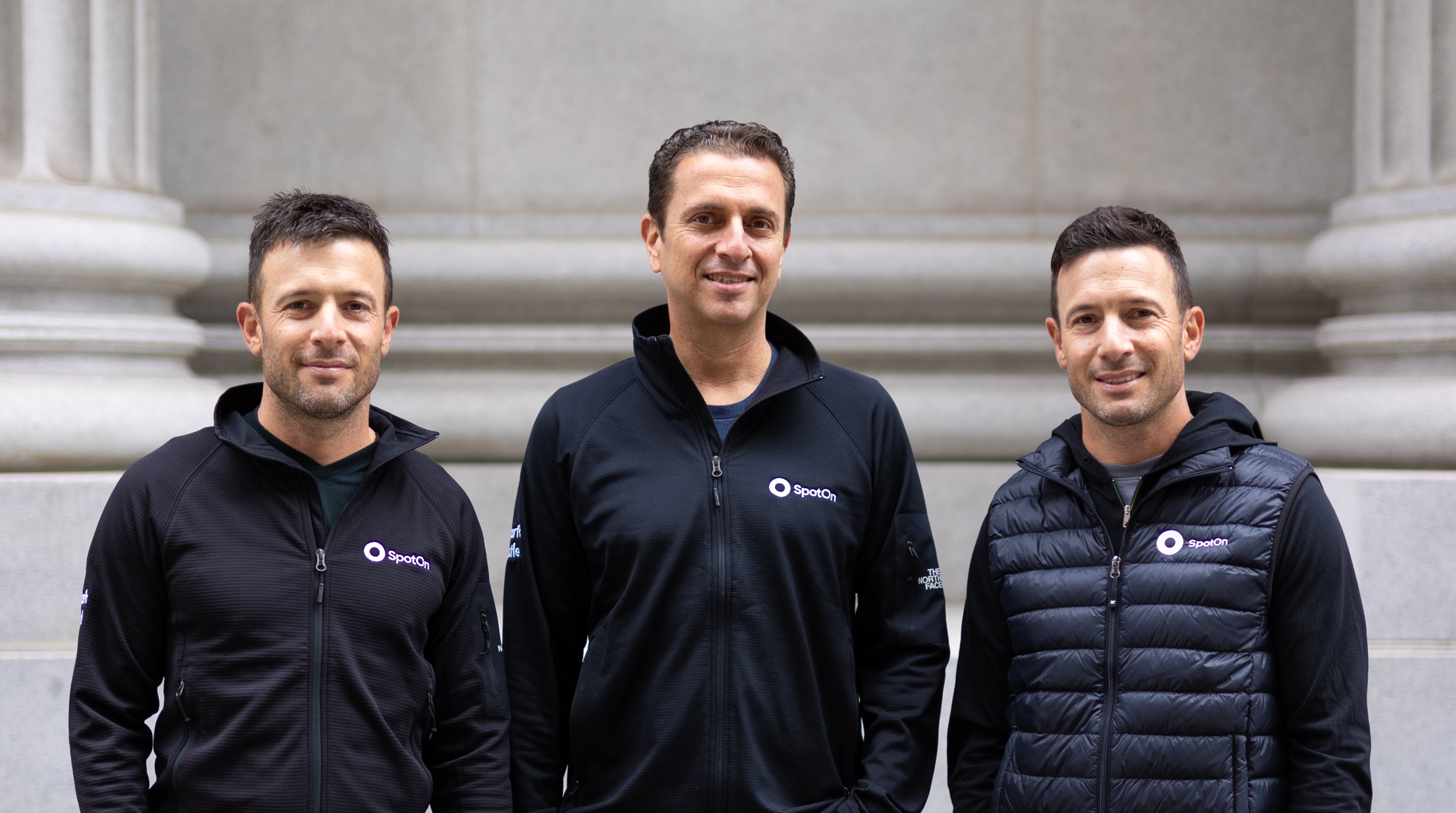
A restaurant has enough moving parts
By 2021, SpotOn’s offering included point-of-sale systems, online ordering, reservations, loyalty and reporting. It had roughly 30,000 customers, about 40 percent of them restaurants. Hyman described empathy as a working principle. “We really try to do business with empathy,” he said. The claim came with an operational question: who gets to influence what the software does?
One answer was a restaurant advisory council that included Michael Mina and Brent Bolthouse. Another was Friedman, the co-founder whose own restaurant experience included IV Bagel Cafe in Isla Vista, California. Restaurant people had a route into product discussions. A missed order or an awkward checkout could be considered by people who understood what those interruptions cost during service.
Hyman also described a market larger than a contest to win accounts from Toast or Square. Businesses still using legacy systems were potential customers for cloud software. SpotOn offered a selection of services rather than requiring every merchant to buy an identical bundle. The offer depended on persuading an operator that the overall value justified the bill, even when processing alone might be available for less elsewhere.
There is a useful restraint in that argument. A cheaper transaction can be attractive, but a restaurant also needs to schedule people, accept orders and understand its results. Hyman’s company was asking to be judged across that working day. It was a broader promise, with more places to disappoint someone if the pieces failed to cooperate.
An editorial map of the restaurant workflows described in SpotOn’s offering.
The distance between personal and nearby
Hyman’s thinking about service has room for revision. He has described how SpotOn initially associated personal service with being physically present. Customers wanted more choices. Sometimes they needed someone on site; sometimes they needed a quick answer through a call, message or email. Geography was a poor substitute for availability.
His example was an employee named Brad, who answered clients during nights and weekends, even when they were far away. The lesson Hyman drew was that a dependable person could matter more than a nearby office. It is a small story, with no launch stage or ceremonial cheque, and that makes it a useful description of the standard he wanted to set.
“Think Big, Act Small” is the company value he has singled out as a lasting reference point. In hiring conversations, he asks candidates which value they connect with and why. The question makes a culture claim discussable. Someone has to explain what it means to them before the phrase becomes background decoration beside the coffee machine.
“Think Big, Act Small”
A SpotOn value Matt Hyman returns to
Growth requires more than the founders
Outside investors eventually backed the model. Andreessen Horowitz led a $125 million round in May 2021. Investor David George described a combination of product development, distribution and customer service, and pointed to the founders’ willingness to finance the early business themselves. His assessment was an investor’s endorsement, with the corresponding interest in its success.
The organizational demands grew alongside the funding. By January 2022, SpotOn had more than 1,700 employees. Matt and Zach announced three senior appointments: Lisa Banks as chief financial officer, JiNa Han as chief people officer and Mark Brodahl as chief revenue officer. Their responsibilities put finance, hiring and sales under leaders with their own experience. A company cannot indefinitely operate as a larger version of its founders’ calendars.
In May 2022, a $300 million Series F led by Dragoneer valued SpotOn at $3.6 billion. The company said its restaurant segment had tripled over the preceding year. It was also integrating Dolce, the labor-management acquisition that added scheduling, payroll-related workflows and tip-pooling capabilities. The growing list of products reflected a widening assignment: help the operator manage what the transaction leaves behind.
April 2018
May 2022
The 2022 round valued SpotOn at $3.6 billion. These are company figures.
Another table, another set of numbers
There is a second kind of table in Hyman’s public life. In 2013 he reached the final table of the World Poker Tour World Championship at Bellagio. The San Francisco entrepreneur was building Central Payment and the early SpotOn venture with Zach at the time. His brother had already made a WPT final table. Identical twins are inconvenient enough before tournament statistics get involved.
Matt finished fourth and received $289,988. He has five WPT cashes totaling $437,370. These are tournament winnings; they do not establish profit after entry fees or provide a measure of his wealth. The distinction is especially welcome in a biography full of large company valuations.
Poker supplies a lively footnote, though it cannot explain his management decisions for him. The final-table result sits alongside the years spent building merchant services. Both belong in the account of his working life and interests. There is no need to give the cards an executive coaching practice to enjoy the sight of a payments founder collecting chips at Bellagio.
Still asking about the next shift
The latest chapter returns to the operator’s working day. In October 2026, SpotOn reported 25 percent year-over-year growth in signed hospitality locations during the third quarter. Signed locations measure new business commitments, rather than completed installations or revenue. The company’s update described changes to dashboards, labor reporting, integrations and employee tip access.
As SpotOn’s co-founder and co-CEO, Hyman connected the quarter’s products to questions about what independent operators needed. He has also publicly discussed DayCheck and the practical difficulty of paying tips while managing restaurant cash flow. The subjects are less glamorous than a funding announcement, and closer to what happens when the shift ends.
SpotOn’s ambitions now encompass much more than the early tablet and loyalty card. Yet the original question remains legible. Can a business use what it learns at the counter to make the next visit, the next shift or the next decision a little easier? Hyman has kept building around that question across several companies. The customer still has to decide to come back. No amount of software can make that courtesy automatic.