A room can change a career. Matt D'Avella's was an ordinary apartment, tidy enough to suit a minimalist and familiar enough to make viewers curious. In 2018, after roughly a year of trying to make a personal YouTube channel work, he filmed a tour of it. He wrote the piece, planned the shots, added jokes, and gave a modest subject the care he had learned on documentary sets. The video passed a million views. He says his channel gained 50,000 subscribers in two months. The subject was less stuff; the production had years of practice inside it.
There is a neatness to that origin story, but D'Avella's path to the apartment was not neat. He had been a freelance filmmaker, a director of branded projects, and a maker of feature documentaries. Some early YouTube uploads, he recalls, took 40 hours and barely cleared 100 views. The apartment was a breakthrough only because he kept filming long enough to find it. An algorithm saw a room. An audience saw a point of view.
The boy with the Handycam
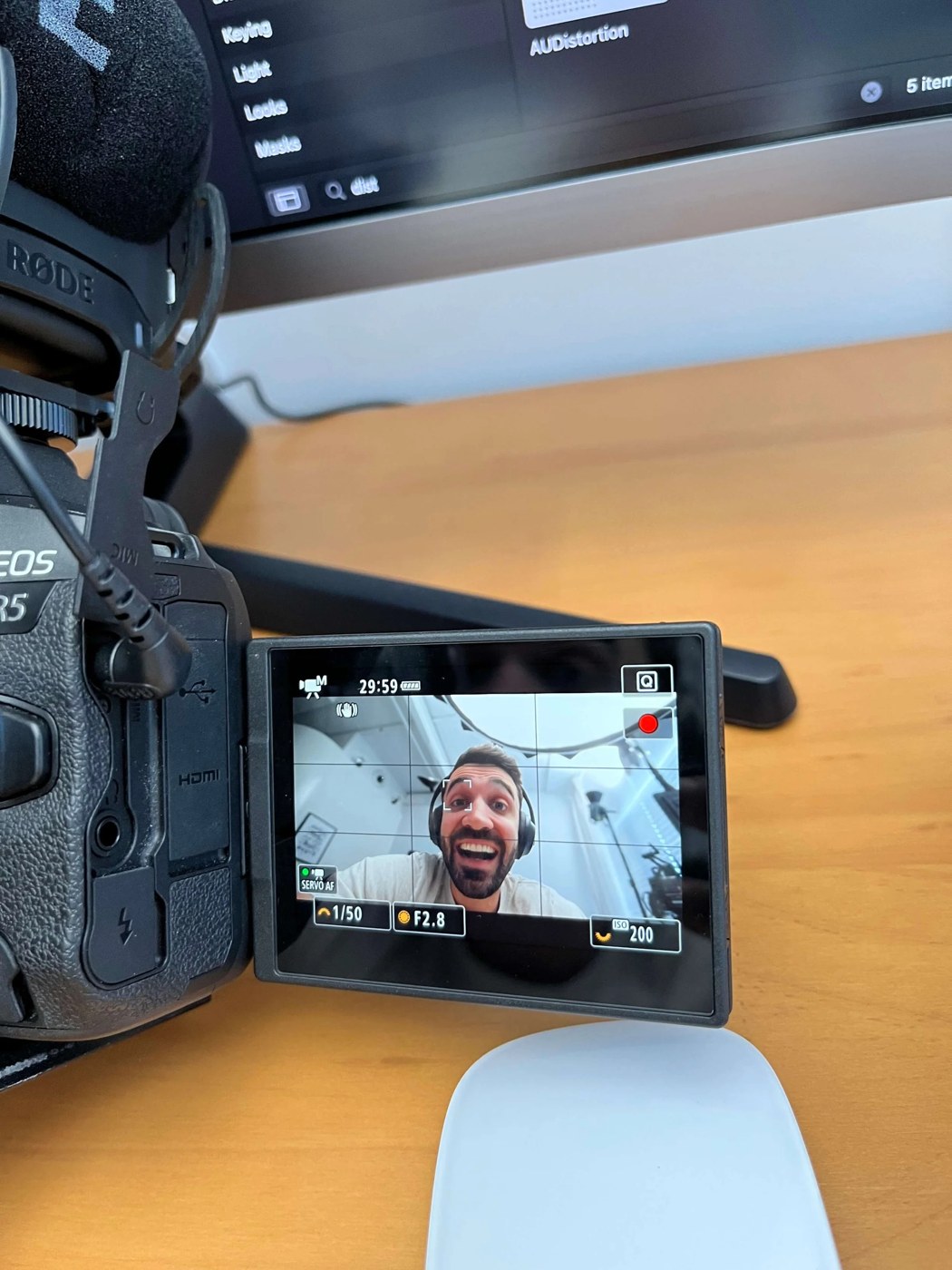
D'Avella traces his filmmaking habit to high school, when he picked up a Sony Handycam and began pointing it at whoever happened to be nearby. After college, the camera became a livelihood. He worked freelance, making videos for brands including Red Bull and Reebok. In an interview, he remembered taking small paid jobs early on, from weddings and local commercials to whatever else would let him practice and keep the business going. It was a practical education in how to make pictures and how to get the next job.
He also learned how to turn down a job. Graduating with substantial student debt, he moved back in with his parents and reduced his living costs. That gave him room to decline a week of work for a few hundred dollars and ask for the kind of budget a larger project required. He describes the decision without glamour: lower expenses bought him the ability to say no. The effect showed up in his films, where the interesting material usually depends on someone having enough time to look twice.
The client work led to Design Disruptors, a documentary produced by InVision and released in 2016. It gathered design leaders from companies including Airbnb, Netflix, Pinterest, and Spotify to talk about how products get made. For a filmmaker who later became associated with empty shelves and a familiar T-shirt, it is a useful early credit. His interest was already in choices: the decision to keep, cut, or arrange something until it works for a person on the other side of a screen.
A film about the things that remain
Another 2016 film gave his name a different audience. Minimalism: A Documentary About the Important Things, made with Joshua Fields Millburn and Ryan Nicodemus, asked what people could gain by questioning what they owned. D'Avella spent about two years filming and editing it, describing himself as a one-person band for much of the work. The film reached Netflix, where it found a broad audience, and is now available to watch on YouTube. He later directed a second film with the pair, The Minimalists: Less Is Now, released in 2021 and nominated for a Daytime Emmy.
The two men gave the films their central argument, but D'Avella had to make that argument visible. A person deciding to keep one object and let another go is not an action sequence. The camera had to stay close to people and the reasons behind their choices. That training mattered when he began filming his own life. It gave him a way to make an apartment, a cup of coffee, or a month-long experiment feel like a story instead of a list of tips.
“I decided on YouTube specifically that early on I wasn't going to be an expert. I was going to be an experimenter.”Matt D'Avella
That distinction rescued him from a narrow set of subjects. At first he thought he could speak about minimalism, filmmaking, and perhaps freelancing, the fields where he had a claim to expertise. Then he tried activities for 30 days and filmed what happened. Some worked. Some did not. The value of the format was that it gave the audience a witness, not an instruction manual. He could show the awkward parts, keep the jokes, and say when an idea looked better on a thumbnail than it felt in real life.
His videos became identifiable without much decoration. There was the carefully composed shot, the dry line, the pour-over coffee, the T-shirt that seemed to have a standing contract. He jokes about the shirt himself. It became a small visual promise: the person on camera would try to take an idea seriously while leaving room to laugh at how earnest the enterprise could look. The same impulse is there in the editing. He has spoken about throwing away material that does not work, however long it took to make.
What happens when simple gets big?
By 2019, the channel had reached a million subscribers. D'Avella's own website now puts it at roughly four million. The audience made a new kind of work possible, but it also made the schedule harder to ignore. He took YouTube full time in 2018 and began treating each upload like a business event. A video had to perform; another had to follow. For a while he answered the pressure in the familiar way: he built a team.
At one point, he says, 11 writers, editors, and managers worked in the business. The head count sounds like success in a profile, and it was certainly a serious operation. Yet his account of that period is more complicated. He found himself managing the production rather than making it. Eventually he let the employees go. It was a difficult decision with consequences for real people, and he has said that part still stings. It also gave him back the work he had wanted to do with the Handycam.
The arithmetic of a creator business is peculiarly intimate. Every new hire can free time and create responsibilities. Every new format can bring an audience and claim another afternoon. D'Avella had spent years filming people who chose deliberately what belonged in their homes. Now he had to decide what belonged in the company built around his own name. The answer, at least for this chapter, was a smaller operation and a slower calendar.
He says he reduced his pace to one video a month and saw engagement rise. The claim is interesting less as a universal prescription than as a correction to his own working habits. A documentary filmmaker does not need to treat each upload as disposable. He could give an idea time to become a film, even if the platform kept reminding him that another upload was due. His site now describes this as a slow creator approach, with an emphasis on making work he wants to keep making.
The next film is a business, too
Slower does not mean idle. D'Avella teaches other creators through Master YouTube, writes the Snail Mail newsletter, and hosts the Slow Creator Podcast. These are separate doors into the same question: how does a person make meaningful work over a long period without losing control of the day to the machinery around it? The course deals with the craft of a channel. The newsletter lets him speak in a shorter form. The podcast gives him a reason to listen to peers who have made their own choices about pace.
He is also still testing the theme that made his name familiar. In July 2026, he published a video asking where all the minimalists had gone. It is a fair question from the director of two films about the subject, and a revealing one. He has not abandoned the idea of living with less; he has taken it beyond the cupboard and into the calendar. The problem is no longer just what a person owns. It is what a creator agrees to produce, maintain, and carry forward.
His Sydney studio, shown in a 2025 video, makes the new arrangement visible. There is room for a filming table, cameras, guests, and coffee. There are also the ordinary compromises of a working space: a desk that needed a felt top, shelves still in progress, a sofa that can serve visiting family. D'Avella is amused by those details. They make the room feel lived in. Minimalism on camera has always risked looking like a property listing; his best work keeps a person in the frame.
The apartment tour was a story about making room. Years later, the story has moved from an apartment to an entire working life. D'Avella knows how to enlarge a project; the films, the channel, and the company prove it. His current experiment asks a less photogenic question: after you have built something large enough to succeed, what can you remove so you still want to make the next thing? It may be the most honest sequel a filmmaker of minimalism could make.