The sign was behind the bar at the Pembroke Tavern in East London. “Bitcoin accepted here,” it said. In 2013, Guy Turner was not looking for a media business, a camera, or an audience numbering in the millions. He noticed an unfamiliar form of money advertised in a perfectly familiar place: a pub. He went home and searched for it. A modest invitation to pay for a drink had supplied a considerably larger question.
Turner had studied English at university and spent several years teaching corporate writing. That sounds an unlikely route into cryptocurrency, until one remembers how much of crypto is language. Every new protocol arrives with a white paper. Every token has an explanation of what it does. Every market cycle invents fresh nouns and asks the rest of the world to learn them quickly. Turner was interested in the technology, but he also noticed the prose. There was plenty of information, he later said, and too little of it was well written.
His first fascination did not immediately make him a Bitcoin investor. In 2014, the collapse of Mt. Gox, then a major exchange, offered a brutal public test. Turner drew a distinction between the failure of a centralized business and the survival of the underlying Bitcoin network. He began buying Bitcoin that year. The reasoning mattered more to his later career than the purchase: he wanted to know which part of a complicated system had actually broken.
“They had a sign behind the bar saying ‘Bitcoin accepted here.’ That’s the moment it first sort of registered with me.”Guy Turner, recalling 2013
A teacher meets a badly written internet
As Turner kept reading, he found a problem familiar to anyone who has opened a financial prospectus or a technical manual. The facts might be there, but the doorway was hidden. People had questions about blockchains, exchanges and coins. The answers were often buried under jargon, marketing or both. Turner and Nic Puckrin, a former Goldman Sachs banker and fellow traveler down the crypto rabbit hole, saw space for a site that would explain the subject in ordinary language.
Coin Bureau began as a written project. Its authors reviewed exchanges, described protocols and tried to give newcomers enough context to make their own judgments. Turner became one of its founding members. The choice of a “bureau” was apt: it suggested a place where a visitor could ask what a strange term meant and leave with a usable answer. It also set a demanding standard. In crypto, clarity has to survive both fast moving markets and the writer’s own temptation to sound certain.
For a while, the blog found its audience through search. Then Google changed its algorithm. Turner has described the result with the plain horror of anyone whose work depends on a platform: the site slipped down the results and, in his telling, “basically ceased to exist.” The writing had not vanished. Its route to readers had. Turner proposed trying YouTube, where other crypto channels were already growing, and agreed to present the videos himself.
The living room studio
The first videos were filmed with an entry level camera in a friend’s living room. This was hardly the headquarters of a financial television network. It was a practical attempt to rescue a useful body of work by changing its form. Turner brought the teaching voice; the team brought research and production. The videos placed a face beside the explanations, and viewers could return each week for the next lesson.
The timing mattered. As the pandemic kept people at home, many finally had time to explore subjects they had filed away for later. Turner recalled the channel’s subscriber numbers passing 10,000, then 100,000, then a quarter of a million. By January 2024, Coin Bureau’s YouTube channel had 2.38 million subscribers. The numbers are striking, but the more revealing change was personal: Turner, who had started by questioning a pub sign, had become the sign people recognized.
At Bitcoin Miami in 2023, he and a colleague wondered whether anyone at the event would know who they were. Turner turned around and saw a man sitting nearby in a Coin Bureau T-shirt. The scene has the neat timing of a scripted joke, but its meaning is quieter. A person who has been speaking into a lens discovers that the audience has an independent life, complete with its own clothes.
There is a small comic reversal in that journey. The former writing teacher had become a recognizable figure partly because writing alone was no longer enough to reach readers. Yet the central skill had not changed. A useful Coin Bureau video still begins with editorial questions: What does this thing claim to do? What does the audience need to understand first? Which risk gets lost when the story is shortened to a headline?
From the screen to the room
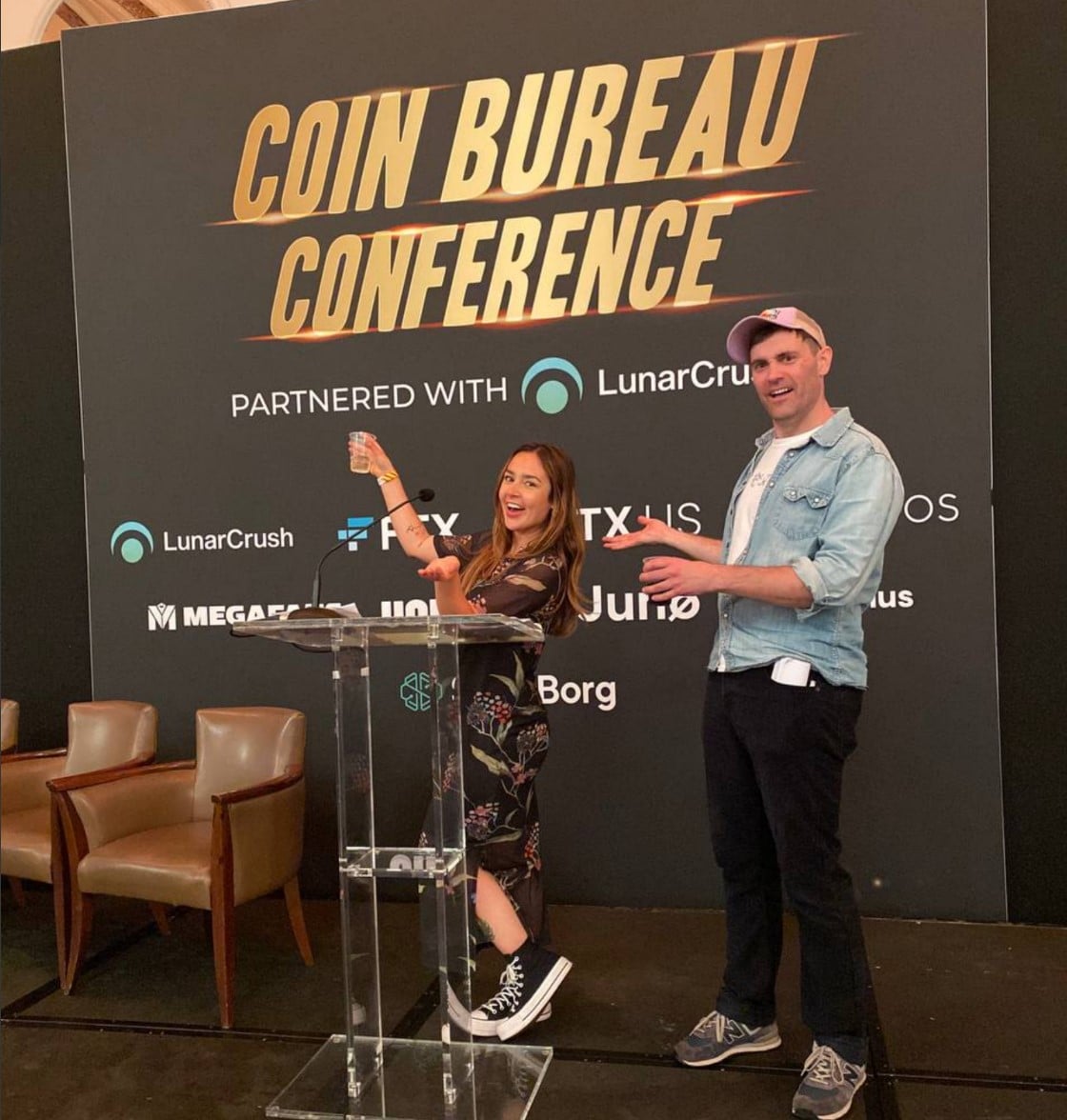
In 2022, Coin Bureau held a live conference. Turner and Macey opened the event, and the program brought creators and industry speakers together. The photograph of them onstage has none of the polished solemnity finance sometimes demands. There is a branded backdrop, a lectern, and two people plainly enjoying the oddity of an internet community assembling in a physical room. It marked a further turn in Turner's job: he was no longer simply presenting researched videos; he was hosting a gathering built around them.
The network around him grew as well. Puckrin remained central to the business and is now listed as its CEO. Coin Bureau’s current team page lists Turner as chief content officer, alongside presenters, analysts, writers and operations staff. The company says its blog, channel and insider community reach more than 3 million people a month. Those are company figures, and they describe a collective operation. The familiar face remains Guy’s, but a substantial amount of the work now happens off camera.
Turner’s own subjects widened. Early crypto education could concentrate on a single coin or exchange. As the market became more entangled with interest rates, institutions and regulation, his coverage moved toward macroeconomics and traditional finance. This changed the scale of the explanation. A project review might ask what a token does. A broader video must ask what conditions make people want to hold it, how policy affects the market and which claims survive a change in the economic weather.
“There was a lot of material out there, but not much of it was very well written.”Guy Turner on the early crypto information gap
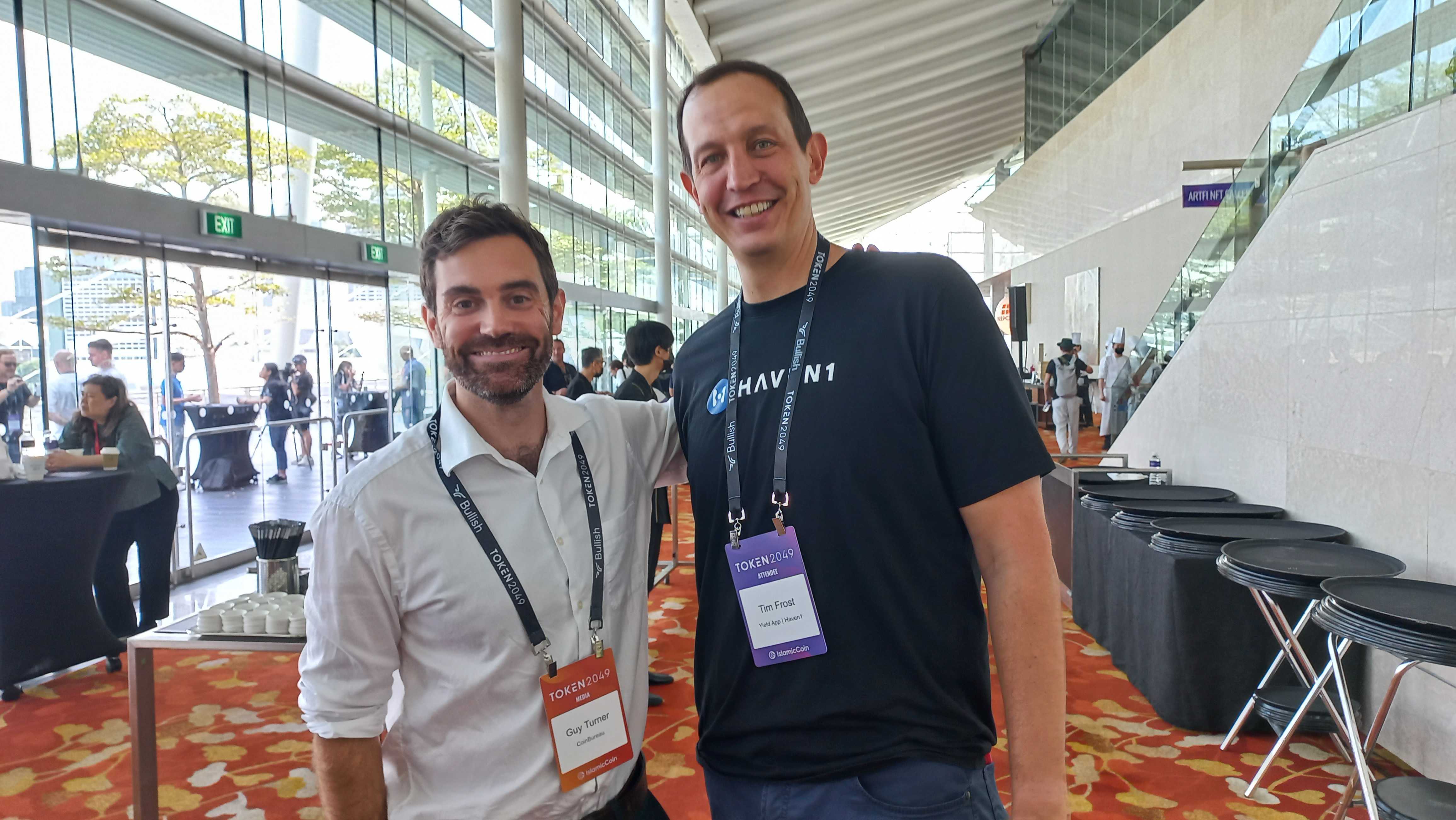
He has also sat across from other media makers. In a 2023 conversation with the Bankless hosts Ryan Sean Adams and David Hoffman, Turner observed that crypto podcast listeners and crypto YouTube viewers could seem like separate worlds. It was a presenter’s observation, attentive to where audiences spend their time and how their habits shape what they learn. A video channel can introduce an idea in twenty minutes. A podcast can let its edges show over an hour. Turner was curious about the distance between them.
The problem of explaining a moving target
Coin Bureau’s stated mission is to advance crypto adoption through education, one person at a time. That is an ambition, and it deserves to be read as one. A creator who talks about assets and markets does more than translate technical terms; he influences what people notice and what they may decide to buy. The work therefore carries a persistent tension. A good explainer must keep asking hard questions of a subject he plainly finds interesting. Turner’s distinction after Mt. Gox - separating a network from the institution built around it - remains a useful model for that scrutiny.
The medium adds another pressure. Video titles must earn a click; serious explanation often needs qualifications that make poor slogans. A presenter can become the shorthand for a team’s work, while the research, editing and production remain almost invisible. Coin Bureau’s growth has made those tensions larger, not smaller. It has also given Turner the chance to make a once obscure vocabulary familiar to people far beyond the original blog’s search traffic.
There is no need to turn the Pembroke Tavern sign into a prophecy. Turner noticed something odd, looked it up, kept asking questions, and found that the available answers could be better. Years later, when a search engine made his written answers hard to find, he changed the format. The route from bar to blog to living room camera to conference stage is unusual. The impulse behind it is commonplace and durable: when a subject becomes complicated, someone has to explain the terms before the argument can begin.