Matt Dalio used to take four- and five-hour walks across San Francisco, working out the details of a world that did not exist. Somewhere in those hills, between conversations on the phone and the view from Twin Peaks, he was imagining hidden doors, secret passages, and software that children could pull apart. The computer would become a place of discovery. Hacking would be a superpower. It was an appealing prospect, particularly if your experience of computers involved being told which buttons you must never touch.
The idea became The Endless Mission, an ambitious game built around the possibility of changing other games. Dalio remembers a vast terminal, rather like an airport, with gates opening onto different worlds. Players could explore the machinery behind the scenery. They might change the way something moved, then discover what that change made possible. The finished vision proved more expensive than the team could sustain. What survived was a question that would redirect his company: why do all the building yourself?
An eleven-year-old goes abroad
Long before the game, there was China. At eleven, Dalio lived with a Chinese family and attended a Chinese school. It was immersion with the usual escape hatches removed. The experience became a reference point for the life that followed, introducing him to a world well beyond the one he knew at home. At sixteen, a summer spent working in a Chinese orphanage led him to establish the China Care Foundation.
Founding an organization while still a teenager gave him an unusually early introduction to the distance between wanting something to happen and organizing it. The foundation supported orphaned children in China; it also gave its young founder a practical education in responsibility. He would later graduate from Harvard College in 2006 and Stanford Business School in 2012. By the time he finished business school, he had already begun the work that became Endless, founded in 2011.
His surname comes with its own introduction. His father, Ray Dalio, founded Bridgewater Associates. Matt has addressed that connection directly in his public writing. His own working preoccupations have taken him toward computers, education, and the question of who gets to participate in making technology. The family connection is a fact of the biography. A room full of children gathered around a computer explains rather more about the business.
The computer that could wait for the internet
At Stanford, the smartphone revolution was happening around him. A trip to India sharpened a concern: phones would spread, but the computers people used for study and work might travel much more slowly. It was easy to imagine a world full of screens that still left many people without the equipment to create a spreadsheet, write software, or prepare for a computer-based job. Being connected and being equipped were separate problems.
Endless began by trying to close that gap. Its early desktop was a small device that could connect to a television. In 2015, the machine was offered from $169, with a Linux-based operating system and applications that could work without a reliable connection. The team tested its approach with users in places including India, Guatemala, and Bangladesh. A computer intended for intermittent internet had to earn its keep while the connection was absent.
Preloaded material was central to the design. Educational resources and everyday applications were available on the device, rather than waiting behind a loading screen. There is a pleasingly unfashionable quality to the idea. While much of the industry was busy putting things in the cloud, Endless was asking what belonged on the hard drive. For a family with unreliable service, storage could be a useful form of independence.
“You can deliver most of the value of a computer without a data plan”
Matt Dalio, on offline access
Affordability also became a question of timing. Dalio describes pay-as-you-go financing as a way to make computers accessible to people who could not manage the upfront price or obtain conventional credit. The device can unlock when a payment is made and lock when one is missed. The model grew out of lessons from other industries, including solar. Getting the price down mattered; arranging how people could pay mattered too.
Twenty children and a multiplication game
Getting a computer into a classroom created another problem worth solving. What should happen next? Dalio recalls seeing children crowd around a Linux mathematics game, shouting numbers at one another. The software was hardly a rival to the commercial games industry. Its audience did not appear troubled by that distinction. A multiplication table had acquired suspense, spectators, and a reason to try again.
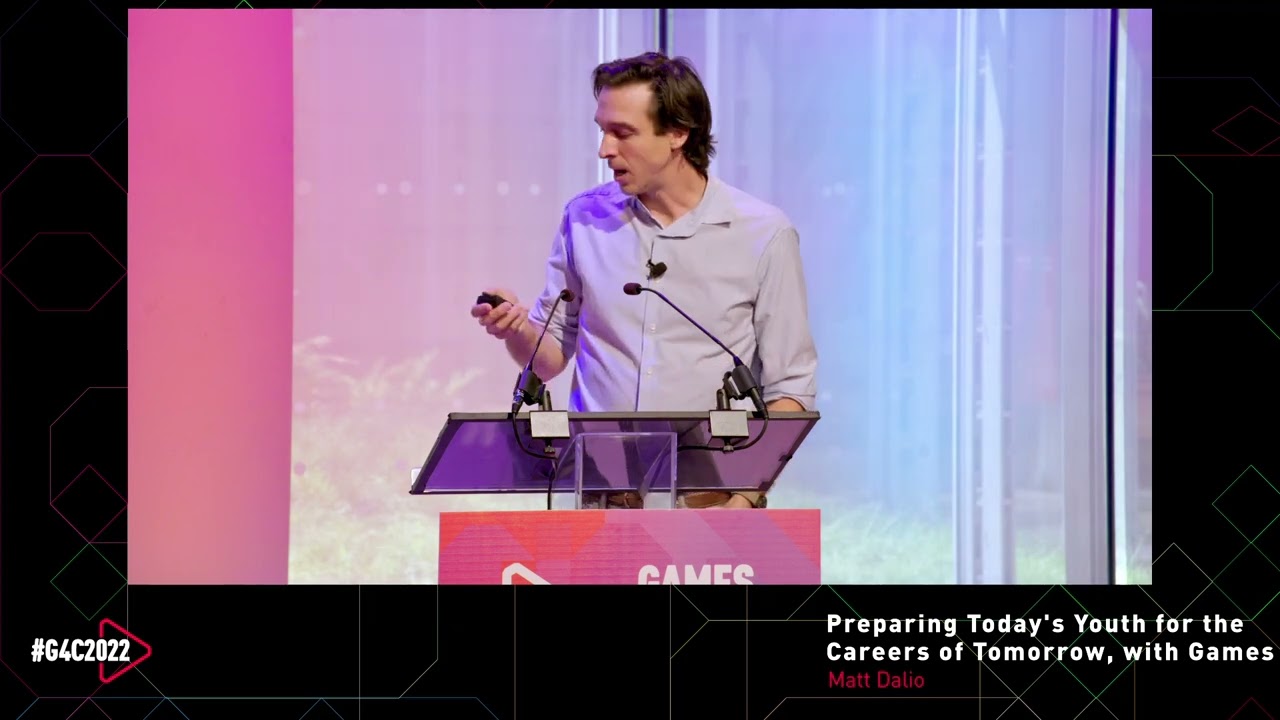
He was also asking Endless engineers how they had learned to code. Again and again, games appeared in the answer. They had played them, become curious, and started changing them. A pastime had supplied a motive for learning something difficult. By his 2022 Games for Change talk, Dalio was making the case for carrying that route into education: follow the desire to make something, then teach the skills needed to make it.
He describes learning music in similar terms. Someone loves music, picks up an instrument, learns the basics, and joins a band. The band supplies company and a reason to improve. Endless Studios applies that logic to digital work. A game gives a young designer, artist, programmer, or organizer something to make together. Collaboration becomes part of the task, rather than a word printed on the assignment sheet.
The project that changed the assignment
The Endless Mission was an attempt to give that curiosity a home. Its premise brought together play, code, and the freedom to alter a digital world. Development also exposed the difficulty of supplying enough content for an experience with such wide ambitions. Dalio has been candid about the result: the project consumed years and money, and the team could not build everything it had imagined within a workable budget.
The experience led him toward a different arrangement. Students could learn by making their own games, with tools and people to help them. Even that contained a trap. Put an inexperienced learner in front of a professional game engine and the first lesson might simply be how much they did not understand. Familiarity with Minecraft did not automatically confer familiarity with Unity. A door can technically be open and still be awfully hard to enter.
Endstar, the game-creation tool offered by Endless Studios, addresses that early stretch. It lets beginners build and collaborate, introducing more capability as they progress. Dalio's stated ambition extends beyond keeping people inside one product. He wants them to reach professional tools, whether Unity, Godot, Unreal, or another environment suited to their work. Success includes the moment a learner is ready to move on.
- PlayFind something worth changing.
- BuildMake a first working idea.
- CollaborateTest it with other people.
- ContributeTake work into real projects.
Five million dollars, and a place to test the idea
In April 2024, Dalio and Arizona State University president Michael Crow announced the Endless Games and Learning Lab. A $5 million gift from Endless Network made the initiative possible. The lab sits within ASU's Herberger Institute for Design and the Arts, with a physical home at the Media and Immersive eXperience Center in Mesa, Arizona. The partnership brings a university's research and teaching resources into the work of games and learning.
The educational premise reaches back to John Dewey: begin with the learner's experience. Games are already part of many young people's lives. Building around that interest gives the lab a place to start, and a set of practical questions about mentorship, assessment, and access. The gift establishes an institution for that work. It also marks a concrete point in a career that is often described through much larger ambitions.
Endless Network's founding gift for the ASU lab, announced April 2024.
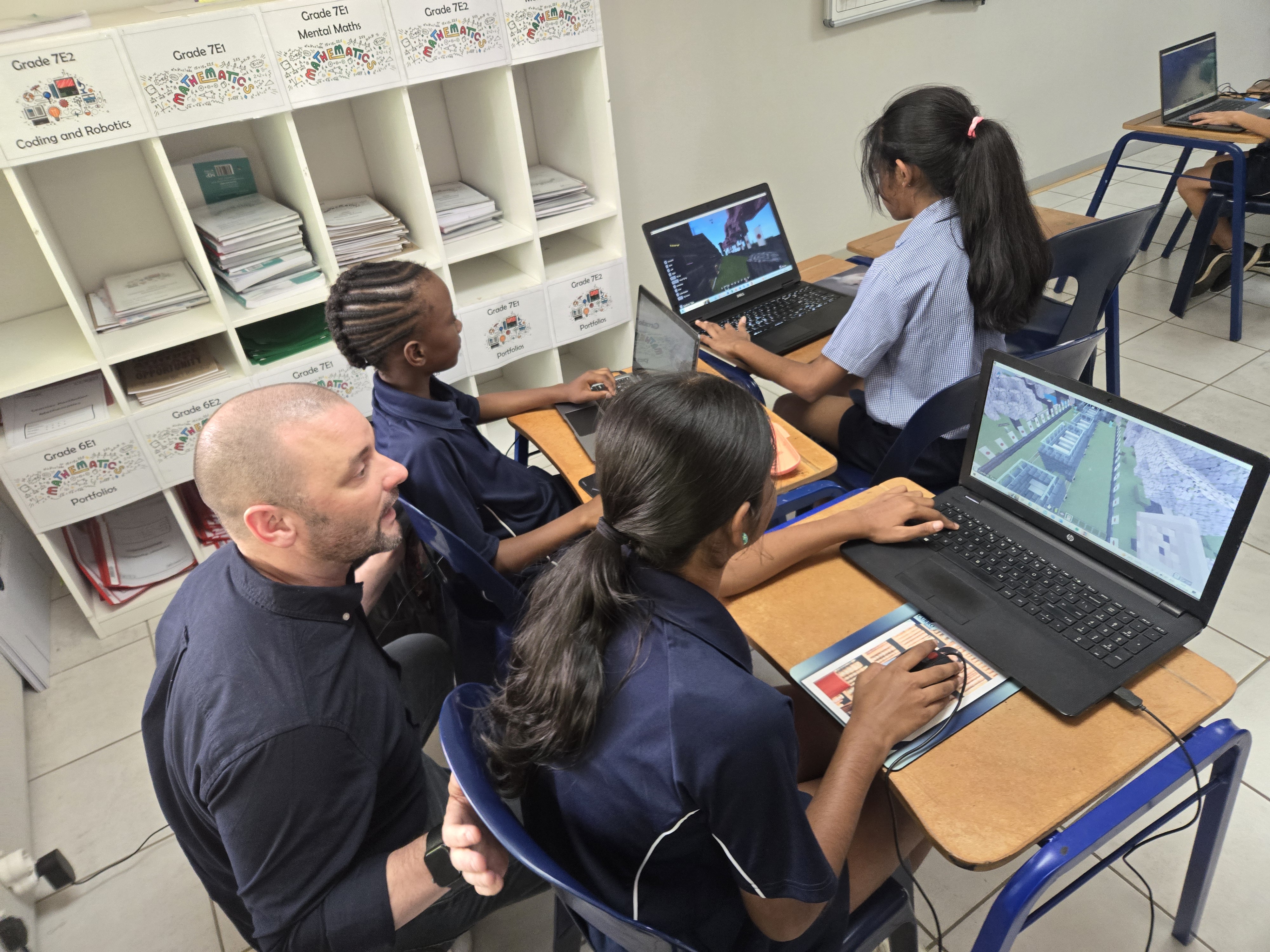
In his later writing, Dalio returns to a visit to a KIPP school in the Bronx. A teacher pointed out a student who struggled through the school day but had become absorbed in building a platform game. Dalio remembers the student explaining his creation at speed. The episode matters to him because it locates progress in a particular person, doing a particular thing. A working jump in a game is small enough to test and satisfying enough to keep.
He sketches the wider journey as a skill curve, from novice toward professional, with different kinds of help along the way. Interest brings someone in. Early teaching makes the tools approachable. Community gives them somewhere to practice. Leadership and apprenticeship follow. It is a more patient picture of education than a course promising to turn a beginner into an expert before the next billing cycle.
A book too long for a tweet
On July 4, 2026, Dalio announced An Endless Future, publishing the manuscript online and asking readers to help improve it. He had been working on the book and a prequel for around seven years, often during early-morning journaling. His explanation for choosing the format was disarmingly practical: “I find it hard to write tweets, so I wrote a book.” Some people handle a character limit by changing the unit of measurement.
The manuscript connects the work at Endless to questions about AI, technological literacy, and what young people will need to do with their lives. It remains a work in progress, offered for public feedback. That choice fits the approach he wants students to experience: put something into the world, let other people respond, and improve it. Publishing becomes another workshop.
One proposed route for spreading the work is a network of campus clubs. In the book, he describes students starting local groups, hosting game jams, mentoring younger learners, and contributing to projects. He links that ambition to the clubs that grew around China Care during his own youth. The recurring attraction is that a student can start something before an institution has finished discussing it.
Dalio's story keeps returning to that permission. The eleven-year-old enters an unfamiliar school. The teenager starts a foundation. The founder builds a game, discovers its limits, and changes the assignment. Now he wants more young people to have an experience of making that is concrete enough to believe in. A character jumps. A door opens. Someone who had only played the game begins deciding what happens next.
Follow the work
Ideas, projects, and conversations to keep open.
- An Endless Future Read the manuscript ↗
- Endless Studios Tools and game-making programs ↗
- Endless Device access and the wider mission ↗
- The Endless blog Projects and field notes ↗
- Watch Dalio at Games for Change YouTube / 2022 ↗
- Building Beats Playing Professor Game / 2025 ↗
- A conversation about raising builders The Necessary Entrepreneur / 2026 ↗
- The ASU partnership announcement April 2024 ↗