Michael Lombardo sometimes goes to school without announcing that he is the chief executive. He takes a support shift and gets on with it. On one occasion, working as an operations specialist, he helped with student transitions, the yard, and lunch. Only afterward did he reveal that he ran BrightBee. His colleagues appreciated the gesture. They had also noticed that the temporary worker seemed a little unsure of himself in the yard. A company title, evidently, is no substitute for knowing where everyone is supposed to stand.
The episode supplies a useful introduction to the founder of BookNook. Lombardo has spent years building organizations around the adults who help children learn. He has worked with volunteers, tutors, school leaders, and now support staff. That day put him at the receiving end of his own proposition: the work deserves attention, including the parts an executive can muddle through only with help.
His career can be read as a series of questions about the same school day. Who can help a child read? How can that help reach another classroom, another city, another state? And who makes sure the child actually gets to the lesson? Each question has led him to a different organization. The people remain central.
The newspaper before the reading table
Long before BookNook, there was a school newspaper. Lombardo joined partly because other students he thought were cool were involved. Mrs. Kurtz, its faculty adviser, helped him find a purpose in the work. Within two years he had moved from an incidental staff writer to editor of the news page. He has credited the experience with helping him discover his voice.
It is a pleasingly ordinary beginning for someone whose later work would involve national expansion and venture investors. A teenager follows the interesting crowd, then finds something worth doing. The adviser provides an opening; the student grows into it. His recollection gives an early, personal example of an adult making room for a young person to take responsibility.
Lombardo describes himself as a product of public education from kindergarten through college. His professional life also began in higher education, at the University of California, Berkeley. He later held senior administrative roles there. Universities have remained part of his working life, alongside the organizations he has built outside them.
A waiting list becomes a national job
In 2006, Lombardo joined Reading Partners. The organization was already in existence: its origins lay in a tutoring program begun in East Menlo Park in 1999. His assignment became expansion. By the time he left the chief executive role in June 2016, it had grown from serving a few hundred Silicon Valley students to more than 10,000 across ten states and the District of Columbia.
Those numbers describe children reached, but they also imply a considerable amount of coordination. A volunteer has to arrive, a child has to be available, and the lesson has to be useful. Multiply the arrangement by thousands and the calendar becomes an educational instrument. Someone has to keep it in tune.
In the 2011-12 school year, Reading Partners opened programs in New York City, Dallas, and Baltimore, while nearly doubling enrollment in its existing regions. Its waiting list included more than 150 schools. A dozen cities wanted the program. Demand was a compliment with an administrative bill attached: every new place needed the conditions that made the tutoring work.
The next annual report described tracking 5,373 students across 104 school-based reading centers in 2012-13. For a child who had fallen behind, progress alone was insufficient; catching up required learning faster. The individual tutoring arrangement allowed the organization to notice when a student struggled and change its approach. Expansion and close attention had to occupy the same room.
Reading Partners' practical approach involved turning an empty classroom into a reading center, with books, teaching materials, and a staff member managing the work. Volunteers received training and structured lessons. The community supplied time; the organization supplied a way to use it. A person willing to help could walk into a school with more than goodwill in hand.
The discipline behind the invitation
That model invited a question larger than any single organization: could community volunteers deliver measurable academic results? An evaluation released in 2015 found positive, statistically significant effects on three reading measures. For Lombardo, the result supported the idea that volunteers, given a structured curriculum and appropriate support, could change a child's educational trajectory.
The distinction matters in the story of his career. Recruiting adults is one undertaking. Arranging their work so that it helps students is another. The evidence gave the invitation a firmer footing. It also made the less photogenic tasks, from training to assessment, part of the educational achievement rather than mere overhead.
Stanford selected Lombardo for its Social Entrepreneurs in Residence program, announcing the fellowship in December 2013 for the following winter. At that point, the university described Reading Partners as reaching more than 40 school districts in eight states. The residency placed him alongside other practitioners working on public problems, bringing experience from the field into a university setting.
His later connections would include advising Oakland Mayor Libby Schaaf on the Oakland Promise initiative and serving as an entrepreneur in residence at UC Riverside. There is a recurring movement between institutions in this career: schools, universities, civic offices, nonprofit boards, and businesses. Each offers a different set of tools for a problem that travels across their boundaries.
BookNook starts with a lesson
Lombardo founded BookNook in 2016. Its first live tutoring session took place at Alvarado Elementary School in San Francisco Unified School District, led by Sara Shenkan-Rich. In a sixth-birthday reflection, he also remembered the company's second school, Riverside Elementary in West Contra Costa Unified, and Christine Gant Hatcher. He marked the anniversary through the schools and people who had made the beginning possible.
That is a useful scale at which to picture a startup's first day: a lesson, a school, an adult leading it. A founding year can make a company sound instantaneous. Naming the first two schools restores the work of trying something with actual students and earning the chance to return.
BookNook combined a synchronous teaching platform, curriculum, and tutoring services. Moving instruction onto a screen changed how students and tutors could meet. The service still depended on someone teaching someone else. Technology could organize and deliver the encounter; the encounter remained the point.
By 2022, Reach Capital's impact report recorded $38.2 million in total funding and described BookNook as free to students through their schools. Its early backing included investors focused on education and social impact. Lombardo had moved from leading a nonprofit to building a company, carrying a familiar concern about access into a different financial structure.
He discussed that choice publicly, including in the Mission Driven podcast. The conversation covered the advantages and disadvantages of nonprofit and for-profit organizations in education, along with the responsibilities of a mission-driven employer. It was a practical question for someone who had led both kinds: how do you finance change while keeping the reason for the work visible?
Access is a design decision
In March 2023, BookNook appointed Brad Baumgartner chief executive, and Lombardo moved to chairman of the board. The company then reported having served more than 500 school districts and nonprofit partners across 38 states. At the transition, Lombardo pointed to its equity-based pricing model as one way it had pursued his original ambition of equal opportunity in reading.
A leadership handover brings an unglamorous test of that ambition. The founder's daily involvement changes; the organization has to keep doing its work. Lombardo's public message endorsed the next leader and the team's ability to reach more students. The company had become something that could continue under another chief executive.
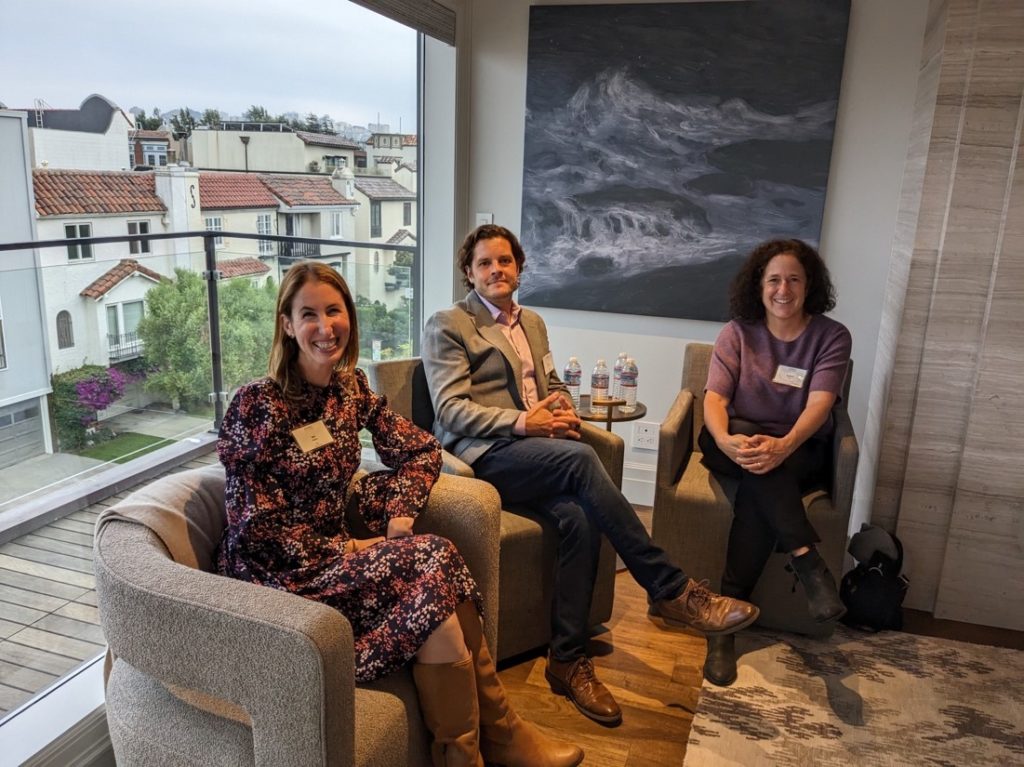
That September, he joined education researcher Susanna Loeb for a San Francisco discussion of tutoring. He argued that public and philanthropic funding had changed who could receive it: access could be organized around a student's need rather than a family's ability to pay. He also emphasized the structure required to deliver instruction reliably.
The discussion connects his nonprofit and company chapters. A tutor's skill matters, but access determines which child gets to benefit from it. Scheduling, materials, and local implementation shape whether a promising idea becomes a regular lesson. His work repeatedly returns to these arrangements, the places where an educational intention acquires a time and an address.
The next people on the roster
BrightBee, founded in 2023, widens that attention to school support staff. Its stated mission pairs local work opportunities with sustainable staffing for schools and childcare organizations. The roles include paraprofessionals and other classified positions. The company emphasizes flexibility, training, and connections between workers and the communities they serve.
One employee's account gives the model a human scale. Riley Mew first encountered BrightBee through Indeed and interviewed with Lombardo, who was still conducting some worker interviews. Riley went on to take different school assignments and eventually joined BrightBee full time. The company describes that progression through successive, cheerfully bee-themed stages.
The wordplay has reached the executive office: Lombardo's title on the team page is Founder and C “Bee” O. It is a small joke embedded in a serious staffing proposition. Education has enough acronyms to furnish a Scrabble tournament; there is room for one that sounds as though somebody enjoyed writing it.
“When I go sub, I don’t tell them who I am.”Michael Lombardo, 2025
In 2025, he also announced that he was joining ONE WORLD Investments as its first venture scout, focused on education technology. He expressed a wish to help founders building companies for social good. His relationship with investor Scott Saslow extended across BookNook and BrightBee, giving that next role a connection to his own experience seeking backing.
There is an ordinary life around the organizations, too. In August 2025, Lombardo announced his family's return to Los Angeles after two years in the Bay Area. The beach was difficult to give up, he wrote. The remaining family question was which child would become their obligatory Dodgers fan. Some assignments apparently require negotiation even in a founder's household.
His work now reaches from the reading lesson to the school roster. The anonymous shift makes that movement tangible. A chief executive can propose a staffing system, but spending the day inside it reveals the people, routines, and small uncertainties that the proposal must accommodate. Lombardo left that shift with their stories. They got a colleague who needed a little direction in the yard.