Open the drawer
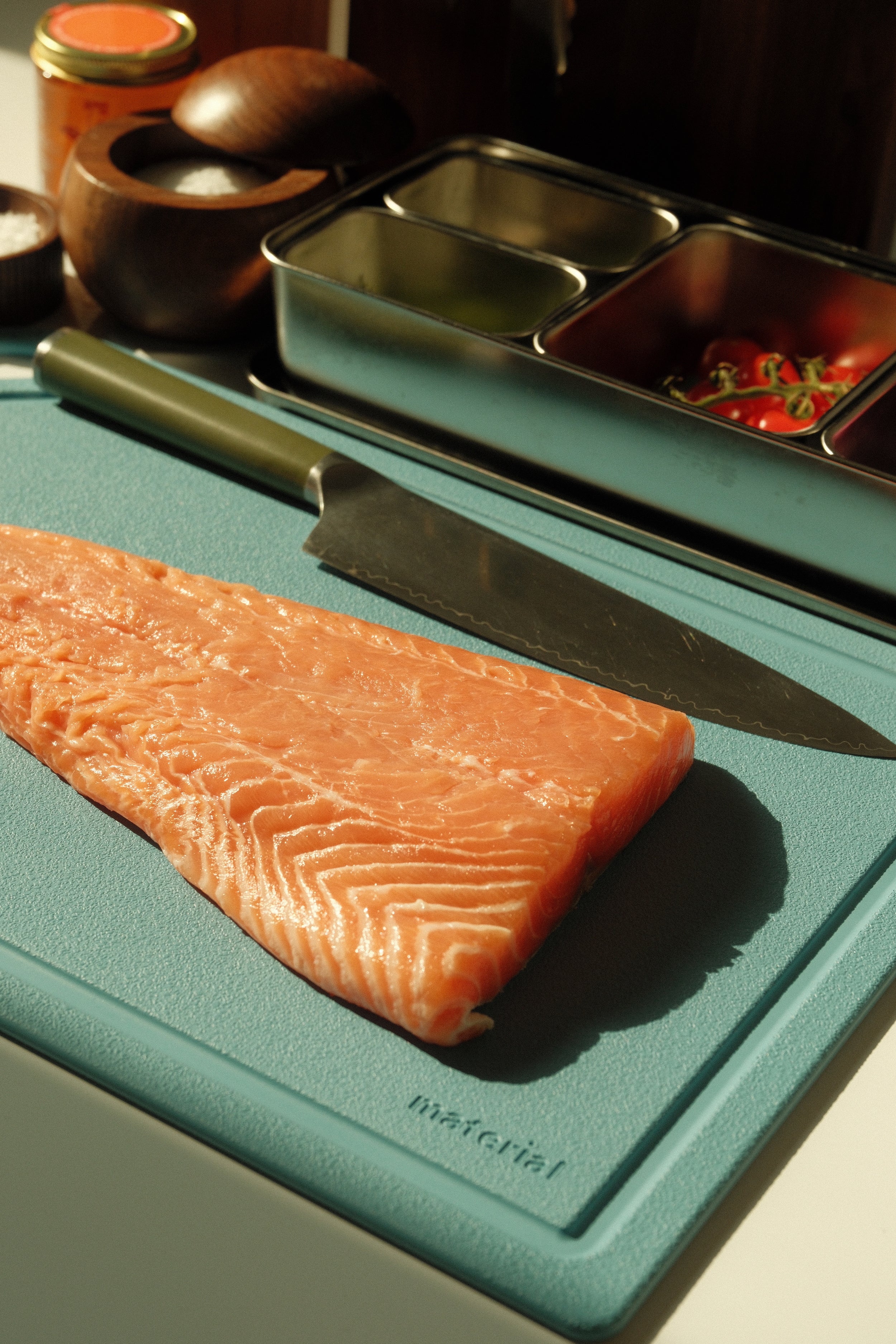
Somewhere in New York this morning, someone pulled a knife out of a drawer and didn't wince. The handle felt right. The blade was Japanese steel. The cutting board next to it was made from plastic scraps that, in another life, were headed for a landfill. None of it matched the chaotic gadget pile most kitchens accumulate. That, more or less, is the entire point of Material.
Material is a direct-to-consumer kitchenware company, founded in 2017 and run out of New York. It sells a tight edit of things you actually use - knives, pans, cutting boards, the occasional ceramic bowl - and it sells them with a lifetime guarantee, which is a bold thing to promise about objects most people replace every couple of years out of sheer boredom.
Why is good kitchenware so ugly?
The kitchen aisle has long offered a strange choice: tools that look good but fall apart, or tools that last but look like they were designed by an accountant. Cheap pans flake Teflon into your eggs. Cheap boards crack. Cheap knives go dull by Thanksgiving. The honest, durable stuff was usually expensive, intimidating, and sold in stores that smelled faintly of potpourri.
And then there was the quieter problem - the waste. Kitchens are quietly disposable places. A drawer of single-use gadgets, a board you toss when it warps, a pan you replace when it scratches. Material looked at all of it and asked the obvious question that somehow nobody had built a company around: what if you only had to buy it once?
There was a second, less polite problem hiding inside the first. A lot of cheap cookware is not just flimsy - it's faintly hazardous. Nonstick coatings shed compounds nobody wants in their dinner. Some imported wares carry trace lead or cadmium. The category had quietly trained people to accept that the affordable option might also be the slightly toxic one. Material refused that trade.
Two friends, two immigrant kitchens
Eunice Byun spent more than a decade in finance, marketing, and business development - most recently as a VP of global digital marketing at Revlon. In 2017, after having her first daughter, she walked away from the corporate ladder to start a kitchenware company with an old friend, Dave Nguyen. On paper, leaving beauty to sell cutting boards looks like a strange career move. In practice, it was the most personal one she could make.
Both founders grew up in immigrant families - Byun's Korean, Nguyen's Vietnamese - where cooking was, as they put it, the family love language. The bet was simple and a little contrarian: that home cooks would pay a fair price for well-designed tools if those tools were genuinely better, genuinely safer, and built to be handed down rather than thrown out.
Early on they found a believer in Daniel Gulati at Comcast Ventures, who backed the vision before there was much of a product to point at. New York Angels followed. The bet had its first chips on the table.
The short, well-seasoned history
A company built one tool at a time
Fewer things, made properly
Material's catalog is deliberately small. The thesis is editorial restraint: instead of fifty knives, a few good ones; instead of a wall of pans, the one you'll actually reach for. Everything is designed 100% in-house, which is rarer than it sounds in a category dominated by white-label factory goods slapped with a logo.
The restraint extends to how the brand sells. There's no endless drop calendar, no firehose of seasonal colors engineered to make last year's purchase feel stale. The reBoard is a small but telling example of the company's design instinct: take a waste stream nobody wants - recycled kitchen plastic, renewable sugarcane - and turn it into the object most likely to end up in someone's online unboxing. It's circular design that happens to photograph well, which is the only kind that actually sells.
The numbers, lightly toasted
A small team, a small catalog, and a surprisingly large footprint. Material became an Instagram-popular brand and a press regular - The Kitchn, Food Network, and Domino among them - on the strength of products that reviewers actually keep using after the unboxing video ends.
Funding, raised the slow way
Disclosed rounds, approximate values in USD millions // sources: Crunchbase, PitchBook, Tracxn
Total disclosed to date: roughly $6-7M. Modest for the category - which is rather the point.
Material also put its money where its mission is. Through its "Kinder Kitchens" campaign and a long-running partnership with Heart of Dinner, the company has donated over $184,000 to organizations working at the intersection of food and social equity. Cooking as a love language, scaled up.
What's notable is how little the company raised to get here. Roughly $6-7M in disclosed funding is a rounding error next to the war chests some DTC brands burn through chasing growth. Material grew at a more deliberate pace, which is either a constraint or a philosophy depending on who you ask. The founders seem to treat the small raise the way they treat the small catalog - as a feature, not a compromise.
Heirlooms, on purpose
The throwaway kitchen made a certain kind of sense in an era of cheap everything. Material is betting the next era values the opposite - tools you're proud to keep, materials that don't poison the food or the planet, and design that earns its place on the counter rather than hiding in a cabinet.
It's not a flashy mission. Nobody's promising to disrupt dinner. But there's something quietly radical about building a company on the premise that you should sell people fewer things and make those things last. The competition - Our Place, Caraway, Made In, and the old guard like All-Clad - is crowded. Material's edge is the unfashionable discipline of restraint.
That discipline shows up in the details a casual shopper might miss. The lifetime guarantee is not marketing garnish; it's a structural bet that the products are good enough to honor it. The in-house design means the company owns its mistakes and its improvements rather than reordering whatever the factory had on the shelf. And the cultural thread - food as the way two immigrant families said the things they couldn't always say out loud - keeps the brand from sliding into the cold minimalism that swallows so many design-forward startups.
Back to the drawer
Return to that New York kitchen and the drawer that opened without a wince. A decade ago, the well-made knife and the recycled board and the non-toxic pan didn't sit together in an ordinary home - they belonged to chefs, or to catalogs nobody read. Material's whole project has been to move that drawer from the exception to the default.
Whether it scales to a household name is still an open question. But the company has already shifted the terms of the argument: that sustainable can be beautiful, that safe can be high-performing, and that the thing you cook with every day is worth getting right. Open the drawer. Notice that you didn't wince. That's the work.