The company quietly running your kitchen and your living room
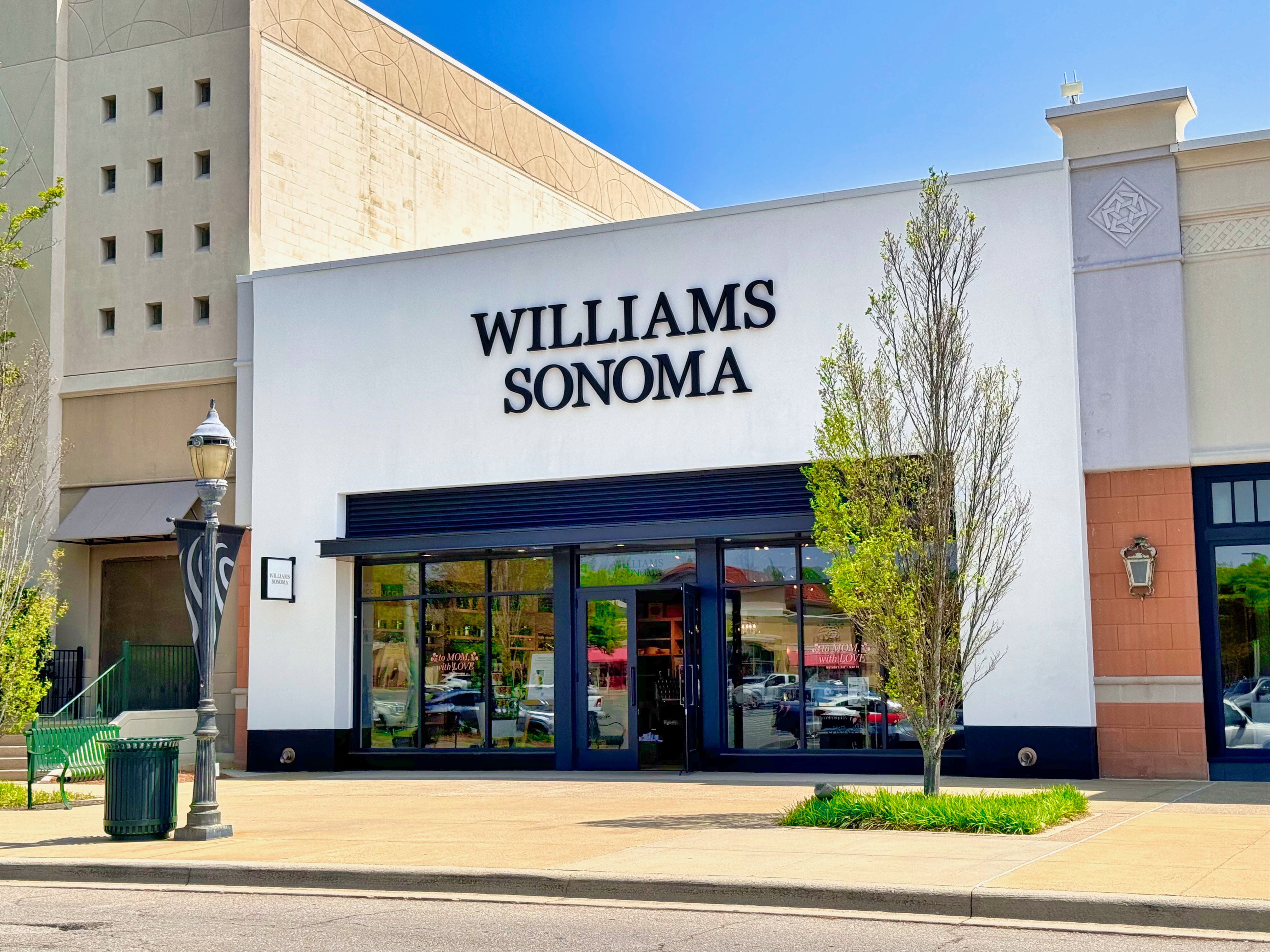
WWalk into a Williams Sonoma on a Saturday and you will find someone holding a copper saucepan the way other people hold a newborn. A few storefronts down, a couple argues happily about a West Elm sofa. Somewhere a parent is buying a Pottery Barn Kids bed that will outlast three phases of dinosaur obsession. These are not three different companies. They are one: Williams-Sonoma, Inc., headquartered in San Francisco, trading on the New York Stock Exchange as WSM, doing roughly $7.8 billion a year.
It is one of the largest digital-first sellers of things for the home in the United States. Nine brands. Around 20,000 employees. Hundreds of stores and a website operation that now drives most of the revenue. And yet most shoppers cannot name the parent that ties Pottery Barn to West Elm to Rejuvenation. That anonymity is not an accident - it is the strategy working exactly as intended.
The trick is that each brand gets to feel like its own world. Pottery Barn speaks to the family settling in for the long haul; West Elm to the renter who reads design blogs; Williams Sonoma to anyone who believes a meal is worth the right pan. A skeptic might call that fragmentation. The company calls it coverage - a different door for every kind of customer, all opening onto the same warehouse, the same designers, the same checkout. You can disagree with the math, but it has held up for nearly seventy years.
America could not buy a decent omelette pan
In the 1950s a man named Charles "Chuck" Williams went to France and fell for its cookware - heavy, exact, made for people who took dinner seriously. Then he came home to a country where you simply could not buy the stuff. The tools that made good cooking possible were trapped on the wrong continent. That was the gap. Not a market study, not a pitch deck - a genuinely annoying absence.
The deeper problem ran past pans. The home, the place where most people spend most of their lives, was underserved by retail that treated it as an afterthought - generic, mass, joyless. Cooking deserved better tools. Living deserved better things. Someone had to actually design them and put them within reach.
One shop in Sonoma, and a very patient idea
In 1956 Williams opened a hardware-store-turned-cookware-shop in the small town of Sonoma, California. Customers kept asking for more, so in 1958 he moved it to San Francisco. The bet was almost suspiciously simple: give serious cooks serious tools, explain them well, and trust that taste is contagious.
It spread further than a single shop could serve. In 1972, nudged by a regular customer, Williams launched a mail-order catalog - retail's original way of reaching the people who could not walk through the door. The same year, encouraged by an executive from Neiman Marcus (a competitor, which is the sort of irony the home-goods business specializes in), he incorporated as Williams-Sonoma, Inc. In 1978 he sold the company to Howard Lester, who took it public on the NYSE in 1983. Williams himself kept working into his nineties and lived to 100.
The fast facts
- Founded1956, Sonoma, California, by Charles "Chuck" Williams
- HQSan Francisco, California, United States
- CEOLaura Alber (joined 1995, CEO since 2010)
- TickerNYSE: WSM · public since 1983
- Revenue~$7.7-7.9B annual net revenue
- People~20,000 employees
- Brands9 distinct merchandise strategies
Not a store. A house, broken into nine brands.
The genius move was to stop being one shop and become a portfolio - each brand aimed at a different room, a different age, a different wallet, but all sharing the same machine underneath. Williams-Sonoma designs the majority of its products in-house, sources and ships them itself, and sells direct to you. No mystery middleman deciding what your kitchen gets to look like.
Williams Sonoma
The original: premium cookware, tools, gourmet food, and the art of entertaining.
Pottery Barn
Casual, comfortable furniture and decor for the whole home.
West Elm
Modern, design-forward furnishings for younger urban buyers.
Pottery Barn Kids & Teen
Furniture and bedding built to survive childhood and adolescence.
Rejuvenation
Classic American lighting and house parts with a heritage streak.
Mark and Graham
Personalized, monogrammed gifts and accessories.
Williams Sonoma Home
Upscale furnishings and interior design pieces.
GreenRow
A sustainability-first brand of responsibly made furnishings.
Seven decades, one address book
The numbers behind the catalog
Sentiment is lovely; revenue is the argument. In fiscal 2025 the two largest brands carried the company. Pottery Barn alone is a roughly $3 billion business inside the larger one, and West Elm has climbed past $1.8 billion. Here is how the headline brands stack up by full-year net revenue.
Net revenue by brand
Bars scaled for comparison; Pottery Barn and Total share the full-width baseline. Figures rounded.
The other proof point is structural. Williams-Sonoma went digital-first years before it was fashionable, and e-commerce now drives the majority of sales. That shift turned a catalog company into a data company that happens to sell sofas - it knows what you bought, what you returned, and what you are about to need. Pair that with a growing business-to-business arm furnishing hotels and offices, and the home retailer is quietly also a logistics and design operation.
"Own the home"
CEO Laura Alber names three differentiators she returns to: in-house design, a digital-first channel strategy, and a values-based culture - all in service of a stated vision to "own the home." It is an ambitious phrase for a company that started by selling omelette pans, but it is consistent with the original gap. If the home was underserved, the fix is to take responsibility for all of it.
Values do real work here. Sustainability and equity are framed as part of the operating model rather than a glossy appendix, from how products are sourced to the dedicated GreenRow brand. Alber, who climbed from inside the company over fifteen years before getting the top job, tends to treat culture as a competitive asset, not a poster in the break room.
The last frontier of retail is where you live
The home is the hardest thing to sell online and the most rewarding. It is heavy, personal, and slow to decide on - which is exactly why a company that has spent seven decades earning trust in this category has an edge that a faster rival cannot simply buy. Tariffs, supply shocks, and shaky consumer confidence all hit the furniture business hard, and Williams-Sonoma kept beating expectations through fiscal 2025 anyway.
What comes next is the same bet, scaled: more in-house design, more personalization powered by all that e-commerce data, more B2B, and a sustainability story that customers increasingly demand rather than merely admire. The competitors - RH, Crate & Barrel, Wayfair, IKEA - each own a slice. Williams-Sonoma wants the whole house.
The risk, of course, is the obvious one for any company this old: that taste moves on and a portfolio built for one generation feels dated to the next. The counter-argument is the data. A company that already knows what its customers buy, return, and search for is better positioned to follow them into the next style cycle than a newcomer guessing from scratch. Designing in-house means WSI can change its mind quickly and cheaply, without waiting on a supplier to agree. That is the quiet advantage hiding behind the catalog photography.
So picture that Saturday store again. The copper pan, the sofa argument, the kid's bed. None of it feels like a $7.8 billion machine, and that is the point. The omelette pan Chuck Williams could not buy in 1956 is now three aisles deep, designed in-house, and one tap away on a phone. The gap he found closed a long time ago. What replaced it is a company betting that the place you live is worth getting exactly right - and quietly furnishing most of it while you decide.