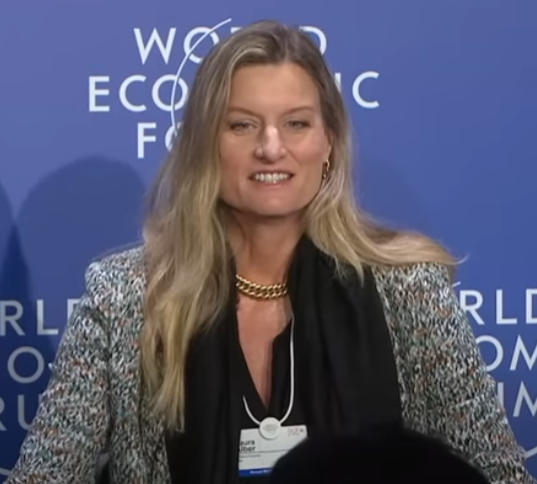
She sells you the bowl your salad came in, the bed your kid sleeps on, and the lamp by the door. Then she sells it again, online, before the catalog hits the recycling.
Walk into a Pottery Barn on a Saturday and you can feel the hand of someone who knows the difference between a couch and a couch with a memory. Laura Alber writes the memory. She has been at Williams-Sonoma since 1995, when her title was senior buyer and the internet was a rumour. Thirty-one years later she runs the place, has doubled its revenue, and still walks the stores asking strangers what they think of the cushions.
Most CEOs arrive parachuted in. Alber walked in the front door, made a small thing bigger, made a bigger thing work, and stayed. She has never interviewed for another job. Recruiters call. She lets them call. There is a kind of confidence in that, and also a kind of stubbornness, and the two have largely been indistinguishable in her career.
She wrote the Pottery Barn Kids business plan while pregnant with her first daughter in 1998. She handed it around, recruited other expectant mothers from the parent company to staff it, and watched it become the most successful launch in company history. There is a small lesson there about how new businesses get built. It is not glamorous. It is a woman with a binder, asking five other women in a conference room if they would help her, and them saying yes.
The retail apocalypse came and went without taking Williams-Sonoma with it. Big-box neighbours collapsed. Mall anchors filed for bankruptcy. Alber kept opening stores, kept pushing online, and kept saying the same line in interviews: digital first, but not digital only. It is a sentence that sounds tame until you remember that for most of the last decade, conventional wisdom was that physical retail was finished. She wagered that conventional wisdom was wrong, and ran the company accordingly.
About half of the company's sales now come from e-commerce, which is a quietly extraordinary number for a brand that started as a single cookware shop in Sonoma, California in 1956. Williams-Sonoma is one of the largest U.S. e-tailers, full stop. It is also, under Alber, one of the more disciplined operators in retail - a company that did not chase the discount cycle to the bottom, did not flood Instagram with promo codes, and did not pivot wildly when its category cooled.
In 2023, when housing slowed and high-end customers tightened their belts, she talked about it openly with Fortune. In 2025, when tariffs hit, she went on CNBC to explain how the company had been preparing for years. She does not panic on camera. It is one of the more underrated executive skills.
She is also building a B2B business that quietly sells Pottery Barn and West Elm to hotels, offices, and developers. That part of the company gets less press than the kitchen aisle. It is also growing fast.
Public Williams-Sonoma topline, approximated for shape rather than precision. The arc tells a story the press release prose tends to bury.
You can't wait for a macro trend to improve your business. You have to make it happen and look for other opportunities to grow.
We are digital first - but not digital only.
You have to hire entrepreneurial people.
I think there's not enough role models of women, different types of women, in senior jobs. That's what we really need to change, and something that drives me every day.
If it's not completely obvious to me, I seek a lot of viewpoints.
I think going to a store is the experience. The smell, the people, the help, some trusted expert who can help you decorate your home.
Thirty-one years at one company, in an era when the average executive tenure is measured in seasons. She knows the building. She knows the vendors. She knows which buyer hates plaid.
Her self-described management style is to ask everyone, all the time. Senior buyers. Store associates. Her own children. A leadership style closer to anthropology than command.
Built a billion-dollar brand from a personal observation - that being pregnant changed what she wanted to buy. Then she staffed the launch team with other pregnant women. Few business plans have ever been more lived.
While peers closed stores to chase Wall Street's e-commerce fever, she kept opening them - and grew the digital half anyway. Both engines, running at once.
More than half of Williams-Sonoma's VP-and-above roles are held by women. Not a quota. A pattern she has built one promotion at a time.
Tariffs, housing, recessions. She does not raise her voice. She explains what they have been doing about it. The market tends to listen.
Most retail stories in the last fifteen years have followed the same plot. A category leader gets disrupted. A founder gets pushed out. A turnaround CEO arrives, closes stores, cuts staff, and writes a memoir about courage. None of that happened at Williams-Sonoma. The category leader remained the category leader. The CEO who came up through the buying organization kept running the buying organization, just bigger. The stores kept opening. The website kept growing. The dividends kept getting raised.
There is a tendency to attribute this stability to luck or to category - home furnishings, the argument goes, holds up better than fast fashion. The argument does not survive a closer look. Pier 1 went bankrupt. Bed Bath & Beyond went bankrupt. Crate & Barrel changed hands. Restoration Hardware reinvented itself twice. Williams-Sonoma, under Alber, just kept compounding. There is a leadership story in there, even if Alber would be the last person to tell it.
What she does tell, in interview after interview, is a story about asking questions, about hiring entrepreneurs, about staying. She uses the word stay a lot. She means it about employees. She means it about herself. In an industry that runs on novelty, she has built a career on continuity.
The Pottery Barn Kids origin story is the one that travels best, because it has the texture of a real thing: a woman, pregnant, frustrated by the available products, drafting a plan in her own home. But the more revealing detail might be the velvet floppy hats. At eighteen years old, she was already running a small product line. She has been doing this her whole life. She just happens to do it now at a scale measured in billions.
If you are looking for a lesson, here is one. There is no shortcut. There is no parachute. There is the binder, the buyer's job, the boss who notices, the next promotion, the question you ask the store manager about the cushions. Three decades of that is what built this. Alber would probably nod at the description, ask a follow-up question, and then go check on a sample.