The useful part of a swim meet happens in seconds. A child climbs onto a block, the horn sounds, water rises, and a family leans toward the lane as if attention itself might shave a tenth from the clock. The administrative part can consume a week. Someone must learn who is attending, place hundreds of swimmers into events, build relays, schedule volunteers, collect fees, update parents and pray that the computer holding the whole arrangement remains cooperative.
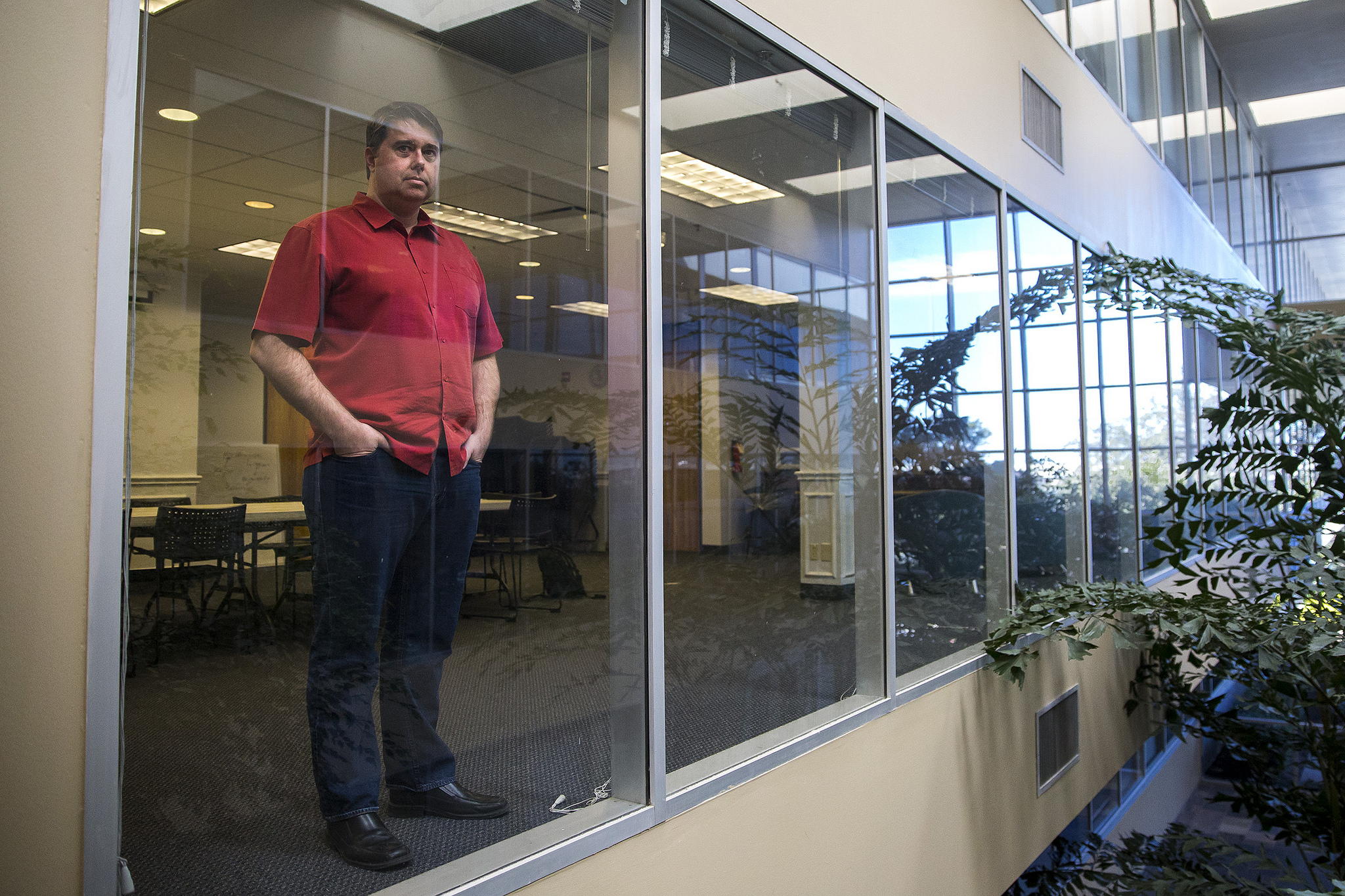
In 2010, that someone was Mason Hale. His children's neighborhood team in Austin had recruited him as its computer volunteer. Hale came qualified in the dangerous way that gets a person volunteered forever: he knew technology. The roster held roughly 250 young swimmers. The prevailing software ran on a single laptop, and the work of assigning events and calculating relay combinations was brittle enough that a small error could reach the pool deck as a disappointed child or an irritated parent.
Hale had spent years near the front edge of commercial technology. At frog design, he led digital work across nine studios and helped make web, desktop, mobile and embedded products for clients including Microsoft, Dell, Disney, SAP and T-Mobile. He had presented at Microsoft's MIX06 conference. He had studied how open-source communities collaborate. None of this glamour improved an evening spent tracking down parents or driving to the coach's house to settle relays.
So he made a system. Parents could choose their children's events online. The coach could generate fast relay combinations. Hale recovered time. His team noticed. Then other teams noticed, and began asking whether they could pay to use it.
“I jumped out of the proverbial airplane and started Team Topia.”Mason Hale, on recognizing the wider market
At first he rebuffed those requests. The little system was an answer to his own aggravation, not yet a company in search of a slide deck. Market research changed his mind. The largest sports attracted general-purpose platforms, while many timed and judged sports carried equally fussy workflows without equally attentive software. Hale saw a long tail of neglected detail. In 2011, SwimTopia officially launched, and a volunteer became his own first customer.
A niche with complicated bones
Swimming was more than a convenient first market. It was a severe product test. A team needs registration, payments, websites, volunteer coordination and messages. A meet adds entries, heats, times, disqualifications, scores and results. Swimming and diving bring together timed, judged and team-scored competition, giving Hale a compact laboratory for the machinery that other sports also need.
The product expanded along that grain. Team websites arrived in 2012. Team stores followed in 2015. Record books came in 2017. Meet Maestro, launched in 2018, handled the actual operation of meets and connected with timing systems. A mobile app put calendars, commitments, heat information and results into parents' hands. The sequence reads less like an empire being declared and more like a list of chores being crossed out.
This is the first stealable idea in Hale's story: pick a starting customer whose complexity forces useful architecture. A shallow problem can produce a shallow tool. Swimming demanded that Team Topia understand several kinds of competition at once, while the daily presence of coaches and parent volunteers kept the interface honest. The niche was narrow enough to know and difficult enough to teach.
Years measured in seasons, not launch days
Hale's route to Team Topia was already pleasantly crooked. He left frog design in 2006 to help start LargeSmall Systems with his friend Matt Cohen. He later served as CTO of OneSpot. His name appeared on a patent involving a graphical interface for wireless devices. He called himself a hands-on CTO, designer and builder of things. By the time SwimTopia appeared, he had enough experience to know that software businesses rarely respect their clean diagrams.
A seasonal market makes the mess visible. Summer swim teams prepare, compete and rest in cycles that product managers cannot hurry. Miss the buying window and the calendar hands you a long lesson in patience. Hale has spoken about the long SaaS ramp and, in a 2026 conversation, about stretching what seemed like three months of runway into six years. Team Topia charged customers early, narrowed its audience and treated each season as another chance to earn its next one.
The company remained small by ordinary software standards. That constraint shaped technical choices. Managed infrastructure meant fewer midnight pages and less time hiring specialists simply to keep servers alive. “One of the appeals of Heroku is not having to worry about the infrastructure details,” Hale said. For a compact team, an avoided distraction is nearly as useful as a shipped feature.
Leaves frog design after eight years and helps start LargeSmall Systems.
Builds for his neighborhood swim team, then officially launches SwimTopia.
Meet Maestro moves the company deeper into pool-deck operations.
A community round raises $687,323 from 260 investors.
Campminder acquires Team Topia; Hale remains CEO.
Hale marks fifteen years of going all in on the company.
The patient approach produced an unusual kind of momentum. By 2021, the company reported more than 1,800 customers and over $1 million in annual revenue run rate. It had launched three products with $630,000 in prior funding and had acquired a competitor. In early 2022, 260 investors contributed $687,323 through a Wefunder round. The figures belong to a moment in the company's history, but the operating idea travels well: conserve attention, charge for real value, and let the calendar compound what spectacle cannot.
The customer was standing beside him
Hale did not merely observe community sports. He stayed in them. He volunteered for his neighborhood summer league swim team for 15 years, coached his children's basketball and soccer teams, and supported a family calendar that also included baseball, volleyball, kickball and dance. The product's user was often the person in the next folding chair.
That closeness influenced hiring. Elli Overton, an Australian Olympian and former Austin swim coach, joined early and helped grow the customer base. Tracy Nelson arrived after looking for a platform for her own triathlon training business, then led customer success. Chris Bonser, a former Division I swimmer as well as an engineer, helped build Meet Maestro. Much of the customer support team came from current or former customers. Domain knowledge was not a decorative line in a biography; it sat inside the operating system of the company.
Hale's own old blog offers another angle on the operator. Its subtitle promised “sporadic, infrequent musings,” a bit of accurate advertising in an industry not famous for it. He wrote about open networks, typography, software design and the pleasure of abandoning a planned blog weekend to float the Blanco River with family and friends. The posts reveal a technologist interested in how communities work and a father unimpressed by productivity for its own sake.
“I'm most proud of the company and culture we've created together.”Mason Hale, fifteen years after going all in
In that anniversary reflection, Hale credited two forces for keeping him through the hard years: purpose in supporting volunteers and the steady backing of his wife, Colleen. He wrote that the company had faced existential threats, and that much of what he learned arrived the hard way. Pride landed not on a valuation but on a team whose members cared about customers and one another.
The acquisition kept the founder in the lane
In February 2025, Campminder acquired Team Topia. The pairing had a practical symmetry. Campminder builds management software for youth camps, another world where seasons matter and administrative work can crowd out the shared experience it is supposed to support. Team Topia remained an independently operated subsidiary, and Hale stayed as CEO.
For Hale, the stated attraction was support rather than disappearance. Campminder's resources could help the company grow while its team continued improving products and serving customers. The deal also completed a quieter transformation. A tool once built to escape errands between parents and a coach had become part of a larger company built around similar communities.
The work continues close to the water. In 2026, Hale spent two months on an East Coast road trip visiting swim teams and leagues. The same year, he sought a UI/UX designer who cared about swimming and could improve SwimTopia's experience. Fifteen years after the first release, the founder was still meeting customers and worrying over the interface.
Five notes from the pool deck
Become the inconveniently informed user.
Hale knew where the workflow hurt because he was doing it after work, with real families waiting.
Let complexity choose the wedge.
Swimming forced the product to understand teams, timing, judging, scoring and volunteer labor in one market.
Ask for money before applause.
Other teams offered to pay. Revenue clarified demand more sharply than broad interest would have.
Design around the calendar you have.
Team Topia learned to build through seasons instead of pretending a seasonal market behaved like a daily one.
Protect the reason for the software.
The useful outcome was always time returned to volunteers, coaches and families. Features served that bargain.
There is an appealing modesty to the first promise of SwimTopia: less time wrestling administration, more time watching the meet. The business became larger, the product became deeper, investors arrived, and an acquirer eventually did too. Yet the original unit of value stayed human-sized. Somewhere beside a pool, a volunteer closes a laptop before the next race begins.