The troublesome number in team apparel is one. One child joins late. One jersey disappears. One parent misses the deadline. A purchase that seems trivial becomes a fresh round of messages, approvals and apologies. The team has already ordered, but the team is never quite finished ordering. Someone must reconcile those two facts. Usually, that someone has volunteered.
- Free team stores stay open year-round; families buy individually.
- SquadLocker handles customization and fulfillment, including direct shipping.
- SquadGEAR uniforms and SquadStudio connect on-demand production with digital design.
- Fundraising adds a markup; free setup does not mean free clothing.
SquadLocker’s proposition begins with this unglamorous predicament. It gives teams, schools and businesses online stores containing approved apparel. Buyers choose their own sizes and pay online. The company decorates the goods and handles fulfillment. The organizer can stop being the cashier, purchasing department and temporary warehouse. A hoodie acquires a logo; a coach recovers some time.
A textile man walks onto a sports field
Gary Goldberg traces the idea to a tournament at Harvard’s athletic fields. Watching his son play, he noticed the crowds of parents and volunteers, then the enormous variety of names, numbers, colors and sizes. A third-generation textile manufacturer saw a production problem hiding inside a family outing. Every child belonged to a team; every garment required particulars.
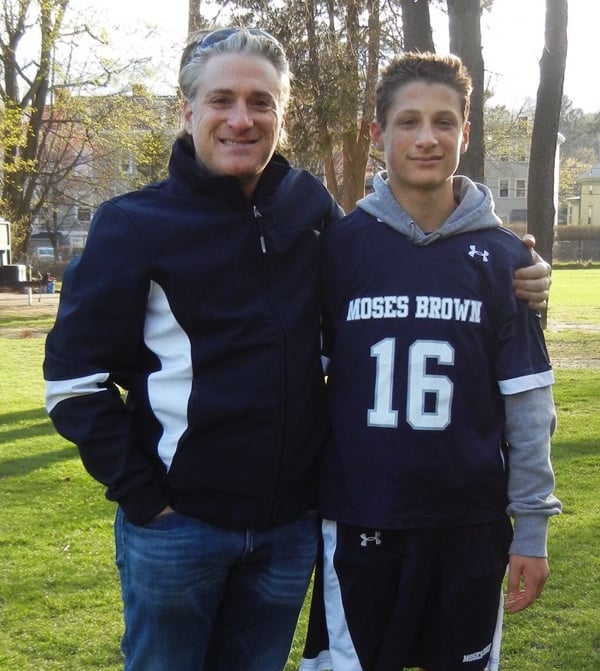
The incorporated company dates to 2015, with Goldberg, Todd Grant and CFO Frank Tillinghast identified in company-hosted reporting as its founding team. There was apparel experience before that: a 2016 company blog described the predecessor, Turfer Athletic. SquadLocker’s history is less a sudden invention of clothing than an attempt to reorganize the work surrounding it.
Goldberg’s early difficulty was translating textile expertise into a software operation. In an Ecommerce Age interview, he identified building the technology backbone and recruiting a technology team as first-year hurdles. Knowing how to decorate a garment did not automatically produce a system that could coordinate thousands of different requests. A factory and a website had to learn the same language.
“I think my biggest mistake was that I didn’t go further faster.”
Gary Goldberg, reflecting in Ecommerce Age
The store stays open. The boxes go elsewhere.
The important design choice is continuous ordering. A traditional group purchase collects everyone’s requirements before production begins. SquadLocker promotes stores that never close and orders without minimums. That accommodates the family buying a replacement, the grandparent wanting a sweatshirt and the player arriving halfway through the season. Their schedules need not become everyone else’s problem.
- 01Approve the gear
- 02Let buyers order
- 03Customize each item
- 04Ship to the buyer
For an organizer, the practical sequence is straightforward: select suitable products, upload a logo or request artwork help, establish the store and share its link. Schools can maintain approved branding; clubs can offer uniforms alongside fan clothing. Businesses can use the same machinery for branded merchandise. The common customer need is avoiding a cupboard full of guessed sizes.
The alternatives include local decorators, custom apparel providers such as Custom Ink and sports suppliers such as BSN SPORTS, which also offers online shops. SquadLocker’s case rests on the combination of single-unit ordering, customization and fulfillment. An online checkout alone is a modest achievement. Making the scattered orders manageable is where the operational argument lives.
Five days is a production promise
In February 2023, SquadLocker introduced SquadGEAR, its own sublimated uniform line. The advertised shipment window was three to five days, supported by on-demand production and U.S. manufacturing. Sublimation provides a route to incorporating colors, numbers and designs into custom uniforms. The company’s pitch put a particular emphasis on serving individual orders throughout the season.
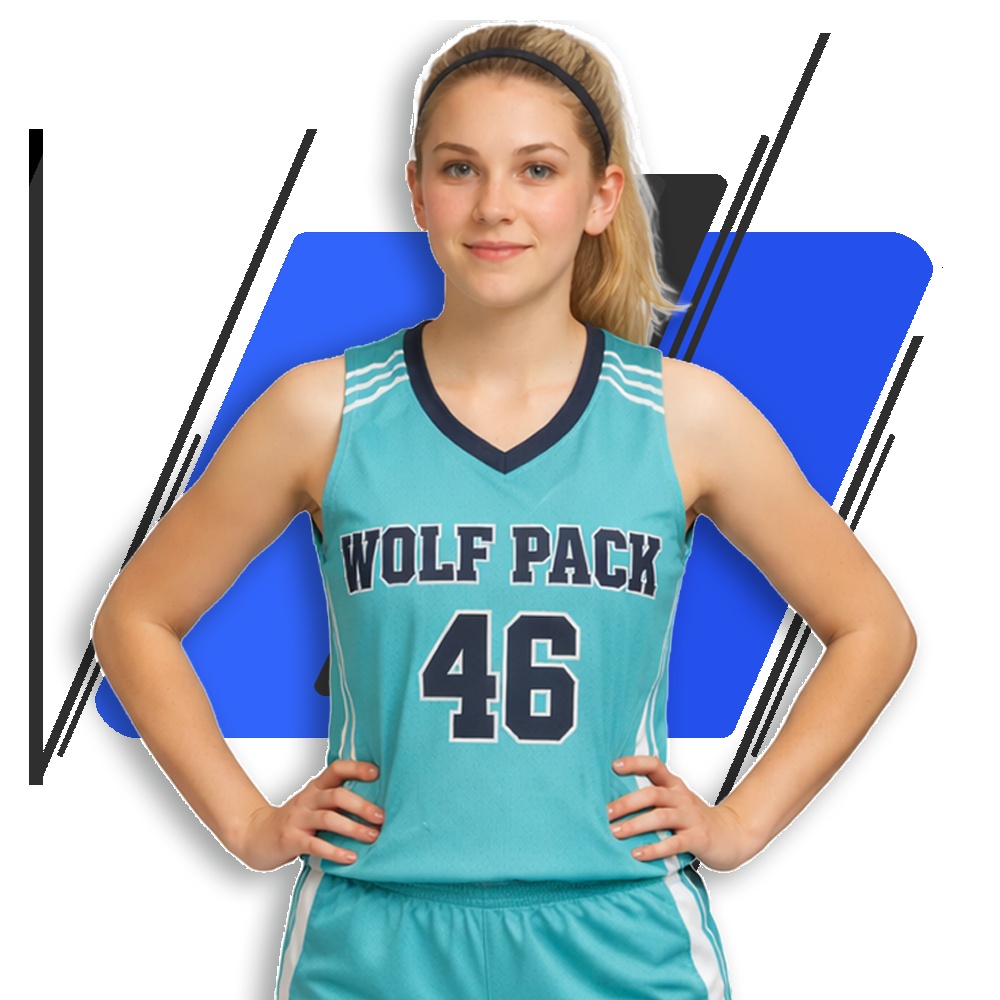
SquadStudio followed in February 2024. The digital tool lets users choose a sport and design, customize the uniform and request a quote. Its value is the connection between the design decision and the production process. A coach can experiment without becoming an illustrator, then move an approved design toward actual garments.
Timing requires care. SquadStudio says its shipping clock starts after artwork approval or setup is complete. Shipment also precedes delivery. SquadLocker’s current uniform catalog lists different production ranges for different brands, so the SquadGEAR claim should not be pasted across every product. For a tournament next Saturday, product choice and transit matter more than an attractive headline.
Free software, paid shirts
The storefront is free to establish; the garments are sold. SquadLocker therefore sits between ecommerce software and apparel manufacturing rather than operating simply as a subscription software vendor. Buyers pay for decorated products and applicable shipping. The company carries the work of customization and fulfillment. Its undisclosed unit economics determine how comfortably that arrangement supports orders of one.
Fundraising introduces another decision. An organization can add a markup to eligible items and receive the resulting funds under the program’s rules. The buyer is financing that contribution through the purchase price. Administrators should check eligibility and payout details, particularly for custom products, discounts and shipping. A fundraising feature can simplify collection while still requiring someone to explain the bill.
Led by ABS Capital Partners
Building the operation took outside capital. A $7 million Series B in 2017 supported plans for manufacturing equipment, training and growth. The $20 million Series C in 2020 included expansion of channel relationships. Investors were funding a business whose software promises had physical consequences: garments, decoration capacity and parcels moving out the door.
Meet the customer inside another app
Those channels became tangible. The 2024 TeamSnap partnership creates a ready-to-shop store when a new team is created in its app. FACTS announced a school apparel partnership in 2025. In April 2026, SPiN named SquadLocker a preferred apparel solution. Each puts purchasing closer to the place where organizations already conduct their business.
SquadClub adds qualification-dependent discounts, merchandise credit and price locks of up to three years. In February 2025, the company reported more than 274 participating organizations and 94,671 players. Those are program figures, rather than a count of every SquadLocker customer. They suggest how the company is extending a single purchase into an ongoing organization relationship.
The useful lesson for other businesses is specific: find the routine task assigned to your customer’s least available person, then redesign the handoffs. For teams, this works best when approved products, artwork and individual checkout fit the buying process. When exact delivery dates or a different procurement arrangement are essential, assess those requirements first. The order of one deserves its own plan.