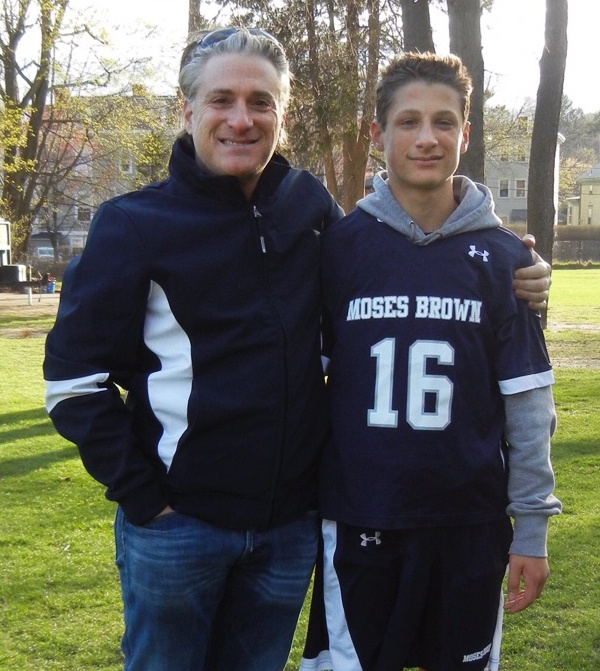
On a spring day at Harvard’s athletic fields, Gary Goldberg walked back to his car through the familiar carnival of youth sports: flags, tailgates, bags, uniforms, children moving in packs and adults attempting to keep the whole republic on schedule. His son had one of roughly 15 tournament games that weekend. Most parents would have seen a long day. Goldberg saw a supply chain wearing shin guards.
The scene contained a small infinity of names, numbers, sizes, colors and logos. Every variation had to become a physical garment, arrive before game day and somehow pass through the hands of coaches and parent volunteers who had not volunteered to run a warehouse. Goldberg went home with what he later called a “nagging sense of opportunity.” How, he wondered, was all this still being done? And why could technology not make it easier?
There are founders who wander into an industry as outsiders and discover that everyone has been doing it wrong. Goldberg had the opposite qualification. Textiles were the family weather. His grandfather left New York City after the Great Depression and started in the business in Fall River, Massachusetts, in 1948. Goldberg grew up around his father’s factory, worked there after college and became the third generation to learn what fabric will do, what machines can persuade it to do, and what customers assume should be effortless.
The originThe factory was inherited. The question was new.
Goldberg’s route to SquadLocker was not direct. At Brandeis University, where he earned an economics degree, he played guitar in a performing band. In the early 1990s he founded Case the Music, making cases for guitars and other instruments. Later came CleanBrands, which developed protective encasements for mattresses and pillows. His patents include an insulating sheer fabric and a barrier designed to block particles or organisms from passing through a zipper assembly. The résumé looks varied until one notices the recurring material: fabric pressed into the service of an awkward practical problem.
Team apparel supplied the most elaborate problem yet. The old ritual favored batches. A coach collected sizes and money, chased late forms, placed one large order, received one large shipment and became a distribution center with a whistle. The system worked, in the sense that carrying groceries in your arms works when a bag is plainly available.
“We want to fill those stores, their time stores. We want to fill them up so they have more time with their kids.”Gary Goldberg, speaking about coaches and mentors
The company that became SquadLocker turned the batch inside out. An organization opens an online store. Families order separately. Apparel is decorated as needed and sent directly to the buyer. The store remains open instead of forcing everyone through a narrow order window. There is no minimum. The cleverness is not merely the web page, which is the attractive part everyone can see. It is making the factory behind the page behave with the flexibility customers have learned to expect from software.
How the clipboard disappears
The hard partMass customization, minus the mass
Goldberg’s favorite unit may be the single garment. A traditional factory adores sameness: a long run, one setup, predictable handling. A youth team produces the opposite. One child needs a medium jersey with 14 on the back; another needs an extra-small with 8; a parent buys an embroidered jacket; somebody else arrives in October after the main season has begun. Printing, embroidery and sublimation obey different physical rules. The software must know which artwork belongs on which surface by which method, then keep the promised colors and identity intact.
“When we are asked to make thousands of individual custom garments a day, with no two looking the same, the task would be impossible without technology,” Goldberg has said. This is the marriage at the center of SquadLocker: software acuity on one side, textile judgment on the other. Plenty of commerce companies can put choices on a screen. Plenty of decorators can run a press. The operating puzzle is persuading those worlds to share one nervous system.
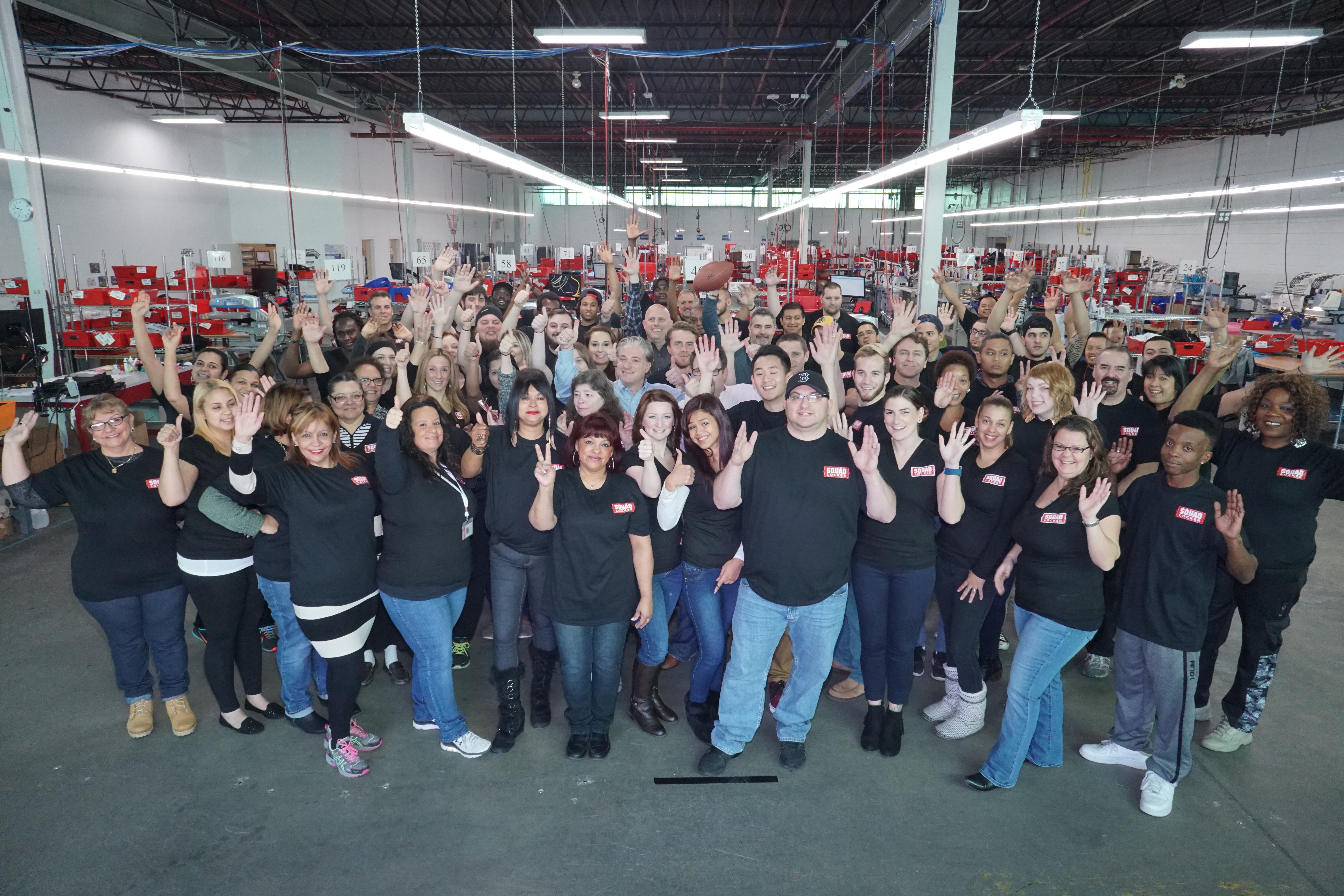
Investors eventually attached a larger number to the proposition. In February 2020, SquadLocker announced a $20 million Series C led by ABS Capital Partners, with Causeway Media Partners and Jim Lombardi also participating. The company described itself as an online platform tightly integrated with its own manufacturing facility. That sentence is businesslike to the point of shyness. It means the promise at checkout and the fluorescent-lit work of keeping it are part of the same machine.
The inner athleteLessons from finishing last
For someone who built around sports, Goldberg is disarmingly unsentimental about his own athletic gifts. He has called himself a late bloomer, uncoordinated and “the Charlie Brown of youth sports.” He remembers being last in the race and wanting his performance to catch up with his expectations. The distance between those two things became useful. Coaches taught him discipline, excellence through repetition and the difficult courtesy of hearing that you are not yet good enough.
One high-school baseball coach, Donovan, combined ground-ball drills with vocabulary. He would strike the ball and call out a word. “Goldberg, second base, unctuous.” The young player had to define it while making the play. The method was eccentric; the message was severe and generous. There was a right way to do the work, and the coach was prepared to walk the path again with anyone willing to stay on it.
After college, a safety and human-resources leader in his father’s factory taught Goldberg another technique: active listening, undertaken to absorb rather than to prepare a reply. The lessons accumulated into a view of teams that prizes criticism, collaboration, vulnerability and enough humility to make all three possible. He later hosted On the Whistle, a podcast devoted to the coaches and mentors who shape youth sports.
His most telling sports story concerns his oldest son, who took a game-day operations job at Fenway Park before finishing high school. After a doubleheader stretched through a cold, wet night, the son arrived home in Providence on the last train at about one in the morning. Goldberg, worried, gave him permission to quit. His son was baffled. Football practice had already taught him that discomfort did not cancel a responsibility. “Yeah, that’s my job,” he said. Goldberg realized that football had paid a dividend no box score would record.
The handoffLeaving the corner office, keeping the stubborn problem
In February 2023, Goldberg moved from chief executive to president and founder. The succession had been contemplated for more than a year. What he said he wanted to keep was revealing: textile processing, the boundaries of single-unit manufacturing and industry relationships. Later that year, the company launched SquadGEAR, a line of sublimated uniforms offered without minimums and with stated fulfillment in three to five days.
A founder’s promotion is usually narrated as a climb away from detail. Goldberg’s move ran in the other direction, back toward the seam where digital intention becomes a physical object. There is always another difficult combination: speed without careless design, individual choice without diluted identity, an always-open store without a garage full of inventory. He has said his largest early mistake was not going further faster. It sounds less like regret than a standing instruction.
He is particularly interested in preserving a team’s collective look while leaving room for individual choice. His prescription begins with a coordinated family of logos and a deliberately narrow merchandise collection, then allows the uniform itself a little edge. That sounds like design advice, but it is also operations advice. Limit the chaos where consistency matters; invite variety where it creates attachment. A school gets control of its mark. A player gets something that feels chosen rather than issued.
The same balance shapes his stated ambition for the company. Goldberg has talked about expanding the portfolio of products and services and becoming more deeply involved in the communities SquadLocker serves, from youth sports and schools to companies. The phrase he returns to is problem-solving. He is not coy about commerce, but he locates its purpose in the nuisance removed: the payment no longer chased, the size sheet no longer lost, the Saturday morning not surrendered to sorting garments across a dining-room table.
The emotional meaning of a uniform is visible. Children pull it over their heads and become, at least for an afternoon, a plural noun. The machinery that gets it there is hidden, as good machinery should be. Goldberg has spent his career in that hidden country. His ambition is practical and faintly mischievous: make the most complicated garment feel like the easiest purchase, then return the saved hours to the people on the field.