When the dot-com boom collapsed, Martina Cheung had a problem more immediate than a disappointing career forecast. She was an Irish strategy consultant in the United States, working for Accenture. Assignments were drying up. People were losing their jobs. Losing hers would also mean losing her visa. She wanted to stay.
Her response was to study. Technology strategy, architecture, process redesign: she taught herself enough to qualify for more kinds of assignments, working late and starting early. In consulting, being on the bench means being between projects. Cheung made herself harder to leave there. The grand career plan, at this stage, was to have work on Monday.
Years later, she would be running a business whose customers pay to understand uncertainty. That early predicament offers a useful way into her career: when circumstances narrowed, she widened the range of things she could do. It is a more interesting beginning than the usual photograph of a new chief executive beside a congratulatory announcement.
The client at the end of the list
Cheung came to the United States in 2000 for a consulting engagement. Two successful projects helped persuade her to transfer. Over 12 years in consulting, she worked with 35 clients across different industries. The final name on that list was S&P Global. In 2010, the client became her employer.
She had worked in Accenture’s financial services strategy practice and become a partner at Mitchell Madison Consulting. Before that came a bachelor’s degree in commerce and a master’s in business studies at the National University of Ireland, Galway, now the University of Galway. Her professional education continued well beyond the university.
Consulting supplied repeated introductions to unfamiliar businesses. Joining one company supplied the chance to live with the consequences of decisions. Her first S&P role was vice president of operations in Ratings. She subsequently became chief strategy officer, then led Risk Services within Market Intelligence. The changes took her across the company’s machinery, from how work gets done to which opportunities deserve investment.
The Risk Services assignment had a particularly practical brief: turn the company’s research, models, content and analytics into services customers could use to manage complicated risks. A good model still needs a customer with a reason to use it. The role brought those two sides of the business into the same conversation.
- 2010Ratings operations
- 2014Chief strategy officer
- 2019Market Intelligence president
- 2022Ratings president
- 2024S&P Global CEO
A promotion can travel sideways
In January 2019, she became president of S&P Global Market Intelligence. In 2022, she moved to the presidency of Ratings, also serving as executive lead of Sustainable1. On November 1, 2024, she succeeded Doug Peterson as president and CEO of the whole company. She also joined its board.
An executive biography tends to arrange this sort of journey into a tidy staircase. Cheung has offered a less tidy and more useful account. Speaking to George Mason University’s graduating class in May 2025, she urged students to consider opportunities beside them. Interesting work could justify a lateral move. Collecting experience had helped her handle later responsibilities.
“Sometimes it’s the lateral move.”
Martina Cheung · George Mason commencement, 2025
That advice makes particular sense in a company with several ways of looking at the same economic world. A ratings business assesses creditworthiness. A market intelligence business equips people to investigate companies and markets. Their customers’ questions overlap, but their products and responsibilities differ. Running both gives a future CEO more than a longer list of former titles.
The succession process put that breadth to a formal test. The board considered internal and external candidates, used an independent search firm and required finalists to present strategic plans. Its selection was unanimous. Among the reasons it identified were her operating record and contributions to the SNL Financial acquisition and the IHS Markit merger. The appointment followed a sustained examination of her work.
Learning to buy, learning to let go
Cheung’s career includes the less photogenic side of corporate transformation: due diligence. She helped examine major transactions before their public promises became operating commitments. The IHS Markit deal, announced in 2020 and completed in 2022, was one such assignment. The SNL Financial acquisition in 2015 was another.
Due diligence is an awkward companion to excitement. It asks what the attractive presentation has left out, what the numbers depend on and whether the businesses will fit together. For someone who had moved between operations and strategy, it was a place where both forms of experience mattered. The fine print had a future workforce attached to it.
As CEO, Cheung has also overseen a separation. S&P Global completed the spin-off of its Mobility division on July 1, 2026, creating the independent public company Mobility Global. Shareholders received one Mobility Global share for each S&P Global share held on the record date. The transaction changed the boundaries of the company she leads.
It is an instructive pairing: a career associated with bringing businesses together, followed by responsibility for sending one out on its own. Size alone cannot settle an ownership decision. The announced rationale for the separation included simpler operations and a sharper focus for S&P Global. Whether buying or dividing, the decision has to make sense beyond announcement day.
The people who get invited into the room
Cheung’s account of learning begins before consulting. Her parents ran a small business, and their children worked in it. She has traced her emphasis on service and quality to that experience. A customer’s judgment arrives rather sooner in a family business than it does in an annual strategy review.
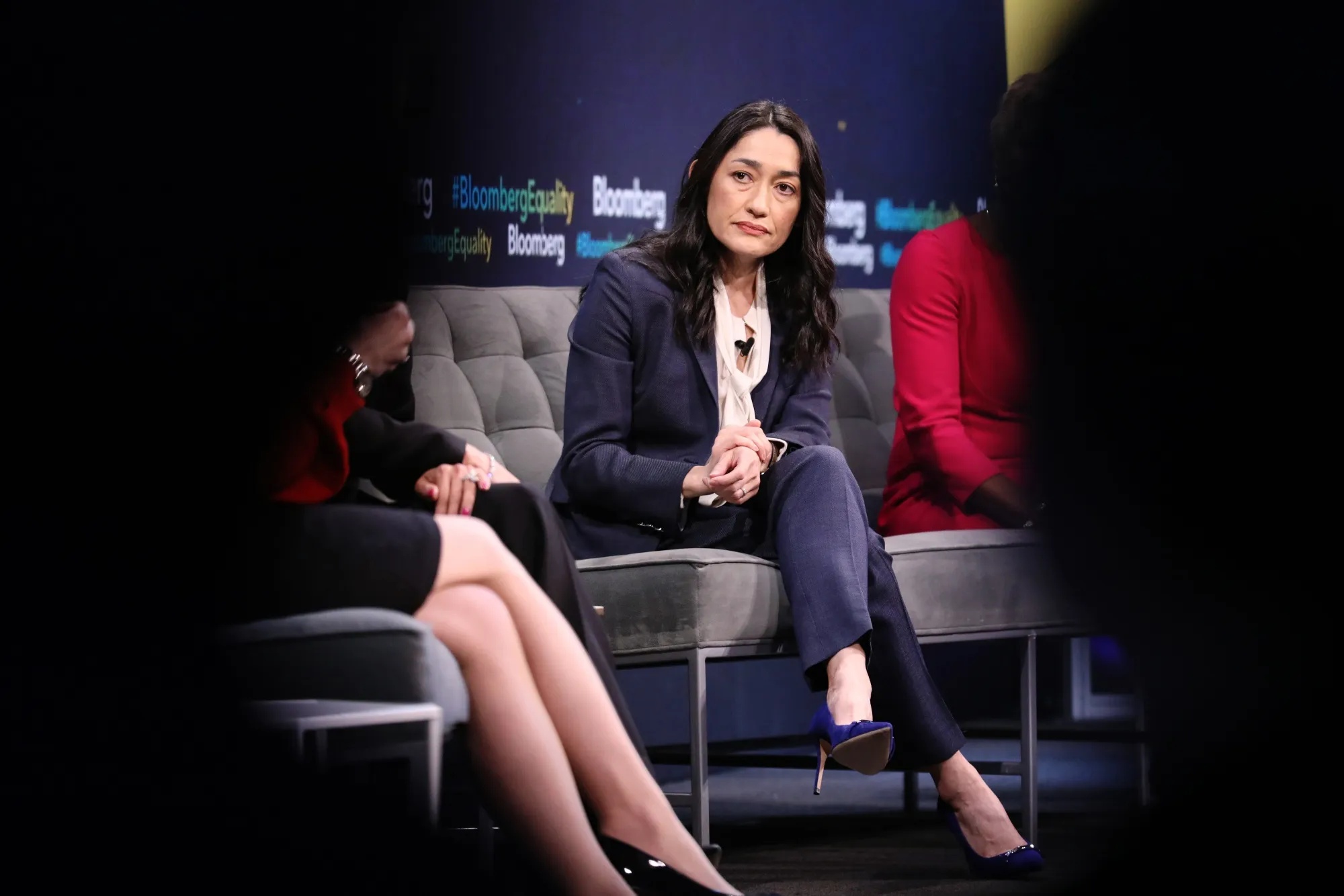
Inside S&P Global, she has tried to give other employees access to the kind of conversations that can clarify a career. As executive sponsor of the Women’s Initiative for Networking and Success, she created and hosted its Trailblazer fireside chats. Guests included Accenture CEO Julie Sweet, NYSE Group President Lynn Martin and former Desjardins chief Monique Leroux.
The point was candid advice from women doing the jobs that employees might one day want. In 2024, the resource group had 7,000 members. Cheung described the series as something she would have wanted earlier in her own working life. The invitation mattered: employees could hear the thinking behind a career, rather than simply admire its final job title.
Her recognition has included the Women’s Bond Club’s 2022 Merit Award and a place among Barron’s 100 Most Influential Women in U.S. Finance in 2025. She is also a member of the Council on Foreign Relations and the Economic Club of New York. These affiliations place her in conversations that extend beyond any one financial product.
The next unfamiliar assignment is AI
Her interest in technology carries a concern with how institutions use it. In 2019, she co-authored a World Economic Forum article with Algirde Pipikaite arguing that investors should examine cybersecurity during due diligence and keep paying attention after investing. The argument placed responsibility for security inside governance and investment decisions, alongside the technical work.
That earlier argument is relevant to the AI questions now arriving at her desk. A business built around financial information has to decide how new tools will handle its material, how customers will receive it and what makes the output dependable. A faster answer is only useful when someone can put it to work with confidence.
In her letter accompanying S&P Global’s 2025 annual report, Cheung emphasized the value of proprietary benchmarks, data and tools. She reported that they represented more than 95 percent of revenue. The company’s position is that AI makes these assets more useful to customers. That is a strategic proposition with consequences for products, distribution and training.
In March 2026, S&P Global announced a new chief technology and transformation officer role, appointing Firdaus Bhathena effective April 27. Reporting to Cheung, he was charged with leading a unified enterprise technology organization and accelerating AI capabilities and transformation. Her interest in the technology was acquiring an organizational shape.
A July announcement reorganized Market Intelligence around Kensho, Platforms and Enterprise Solutions. Cheung linked the changes to how customers consume and act on information as AI develops. The task is operational as well as technical: connect capabilities so that customers can use them in the places where they already work.
of revenue came from proprietary benchmarks, data and tools, Cheung reported in the 2025 CEO letter.
Still taking the long view
Public and private markets are another recurring subject. In a Mercer conversation released in January 2026, Cheung and Mick Dempsey discussed economic complexity, transparency and the role of data as those markets converge. The subject fits her experience across credit analysis and information services: customers need to understand the connections between exposures that may sit in different parts of a portfolio.
The current job also comes with the ordinary, consequential business of assembling a team. In October 2026, S&P Global announced Thomas Kim as chief legal officer, effective October 19, reporting to Cheung. The company scheduled its third-quarter earnings call for October 27. A chief executive’s future arrives through appointments and calendar entries as well as speeches.
Cheung’s advice to graduates has been to judge decisions over a longer horizon, seek honest feedback and keep acquiring skills. There is a recognizable continuity between that outlook and her early consulting years. The immediate need to stay useful became a career that crossed functions, divisions and eventually the whole company.
There is room in that story for ambition without pretending every turn was planned. Her route included a visa, a dwindling supply of projects, a final consulting client and a succession of unfamiliar assignments. The next opportunity was sometimes beside her. She took it seriously enough to learn the work.