An office is a surprisingly persuasive career adviser. It has a door. It may come with a team. Giving it up can look, to anyone passing in the corridor, like an unfortunate turn of events. Early in her career at Genworth, Jamala Arland faced precisely that prospect: a broader assignment, accompanied by a return to a cubicle.
The financial crisis of 2008 had unsettled the prospects of the variable annuity business where she had been advancing. She could hold on to the visible signs of progress or acquire experience elsewhere. A mentor sketched a matrix of products and actuarial functions, making the gaps in her experience visible. Arland chose the wider education.
There is something pleasingly awkward about this episode in the life of a future chief executive. The career move worth remembering involved less furniture. It also supplies a useful question for anyone reading a corporate biography: how much of a person’s progress happens before the impressive titles arrive?
Arland is now President and CEO of Genworth Insurance (Closed Block), a title she has held since May 2026. Before that came two years leading U.S. Life Insurance. Her route to those roles runs through Barbados, a mathematics degree in Canada, New York actuarial work and more than two decades at Genworth.
A profession becomes imaginable
In Barbados, a young person with a talent for mathematics might recognize the familiar destinations of teaching or engineering. Arland learned about another possibility through an encounter with an actuary. The profession offered a place to apply mathematical judgment to business decisions. A conversation gave an abstract aptitude somewhere to go.
That is an easily overlooked part of a career’s beginning. Before there can be an exam plan or an application, someone has to know a profession exists. Talent cannot investigate a doorway it has never seen. Later, Arland would spend years helping professional organizations examine who gets to see those doorways in the first place.
She graduated from the University of Waterloo in 2003 with a Bachelor of Mathematics in Actuarial Science and Statistics. Her first full-time actuarial employer was Ernst & Young in New York. In May 2005 she joined Genworth, where annuity product development and life valuation became part of her working education.
By the time the executive appointments arrived, her working vocabulary included the people who price products, the people who report their value and the people who oversee their obligations. That gives the career its continuity. Its chapters concern different functions, but the recurring problem is how to make a decision that remains intelligible from the other side of the business.
The sequence matters because it is broader than a single specialty. Pricing asks what a product should cost. Valuation asks how to account for obligations already undertaken. A business leader eventually has to understand how decisions in one area travel into another. Her early assignments gave her more than one place from which to watch.
- BarbadosGrowing up
- WaterlooMathematics · 2003
- New YorkErnst & Young
- RichmondGenworth · 2005 onward
The work behind the promise
Insurance has an unusual relationship with time. A customer can make a decision in one year and rely on it much later. The people running the company may change in between. A promise has to survive all those handovers, acquiring none of the convenient forgetfulness that sometimes accompanies a change of management.
Arland’s leadership responsibilities grew around business already on the books. From January 2019 to May 2022, she was a vice president leading execution of a multiyear rate action plan. A senior vice president role followed. These were assignments involving existing obligations, financial assumptions and the practical consequences of keeping an insurance portfolio sustainable.
The phrase “closed block” sounds like a filing instruction. It describes business closed to new sales, whose existing commitments still require management. The absence of a new sale does not remove the work. For an executive, attention shifts toward the performance of promises already made and the resources needed to support them.
This is a demanding setting for judgment because several audiences have legitimate interests. Customers care about the value and affordability of coverage. Regulators examine obligations and conduct. Investors want to understand financial exposure. The explanation offered to one audience must remain consistent with the explanation offered to the others. A spreadsheet can reconcile figures; people still have to reconcile expectations.
Arland’s experience includes life insurance, annuities, financial reporting and risk management. Read together, those disciplines suggest why breadth would matter in her present job. A leader responsible for an established portfolio needs to understand the connections among product design, assumptions, capital and customer communication. The interesting work often sits between the organizational boxes.
What has the company promised?
What resources support that promise?
How is the decision explained?
A comic strip enters the actuarial conversation
One of Arland’s more distinctive professional projects used a medium unlikely to appear in an actuarial syllabus: a comic strip. Working with the International Association of Black Actuaries and illustrator Jason Deeble, she helped create A Tale of Two Actuaries. The project translated research about barriers to entering the profession into a story.
The starting material was a study commissioned by four actuarial organizations. Its findings became characters and career paths that readers could follow. The choice of form was practical. A report can describe unequal opportunity in aggregate; a sequence of scenes can ask a reader to recognize an everyday decision about another person.
In her account of the project, Arland connected systemic inequities with workplace bias. Hiring, development and management were part of the concern. She asked readers to examine their own power to change those patterns. The invitation went beyond agreeing with a principle. It brought the issue back to decisions made inside ordinary working days.
The comic is an instructive companion to her financial work. Both require moving between an underlying analysis and an explanation someone else can use. The audience here happened to be her own profession. Actuaries, like everyone else, occasionally benefit from seeing a problem without first being handed a table of contents.
A report became a comic strip. The question became personal: who gets the opportunity to advance?
On Arland’s work with IABA and illustrator Jason Deeble
The committee work counts, too
Arland’s involvement in the International Association of Black Actuaries reaches back to the early 2000s. Over time she served in roles including treasurer, secretary, mentoring chair and vice president. Those jobs form a less glamorous vocabulary than chief executive, although anyone who has volunteered knows how quickly a modest title can acquire a formidable to-do list.
The Society of Actuaries recognized her with a 2021 Outstanding Volunteer Award. Its account of her work singled out her leadership of the Diversity, Equity and Inclusion Committee and her contribution to a strategic roadmap. Earlier, she had served on and chaired the organization’s Long Term Care Section Council.
A roadmap is easy to dismiss as committee paperwork. Yet institutions need decisions about priorities, responsibilities and follow-through. The award recognized work in that machinery. It is a useful reminder that a professional community develops through people who accept the meetings and revisions as well as the occasions that come with a stage.
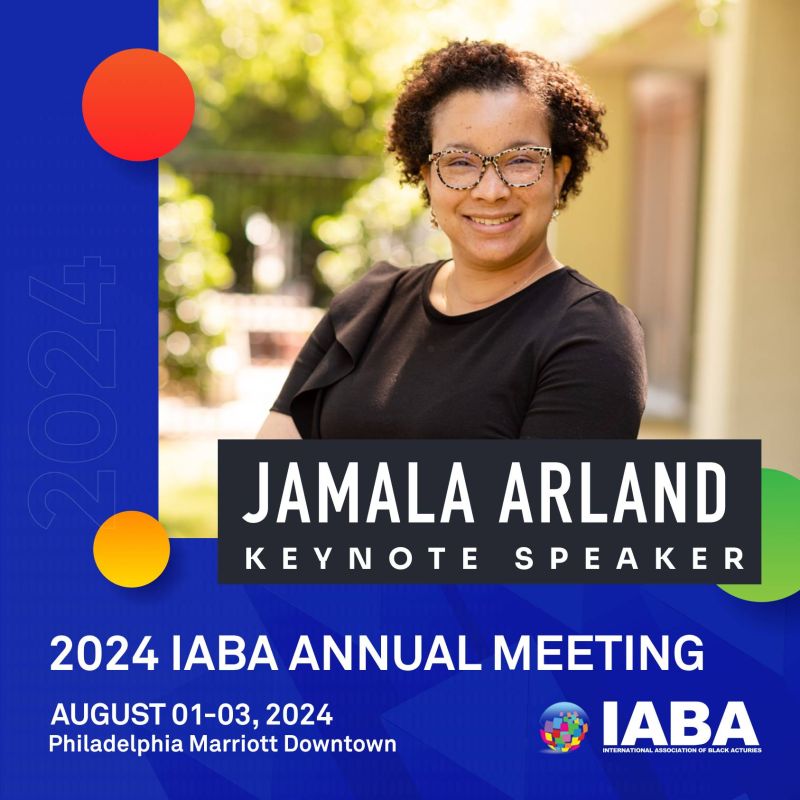
In 2024 Arland was announced as a keynote speaker for the IABA annual meeting in Philadelphia. She welcomed the opportunity to address an organization that had contributed to her own development. The invitation placed a long relationship in public view: a member who had done the administrative work was now being asked to tell her story.
Her later professional service also includes the American Council of Life Insurers’ CEO Steering Committee on Consumer Issues and the Society of Actuaries’ North American Employers Council. These roles connect the company executive with conversations about customers and the people entering or working in the profession.
A longer horizon than the next promotion
January 2024 brought her appointment as executive vice president of U.S. Life Insurance. In May she became that business’s president and CEO. The current Genworth Insurance title followed in May 2026. The dates show the formal progression; the preceding years explain the experience available when those appointments arrived.
Her credentials span three professional communities: Fellow of the Society of Actuaries, Member of the American Academy of Actuaries and CFA charterholder. The fellowship dates to 2008. The CFA designation came in 2018. Together, they sit alongside a career that has moved between insurance calculations, business decisions and investment-related knowledge.
There is a civic dimension as well. Arland has served on the Science Museum of Virginia’s foundation board and serves as a trustee of FRIENDS Association for Children. Richmond is both her professional base and a place where she has taken on responsibilities outside her employer. The connection is concrete: board service, with its accompanying duties.
In September 2026, the American Academy of Actuaries announced her selection as a member-selected director for a three-year term. It adds another institution to a record already shaped by professional service. For someone whose early career depended on discovering what an actuary could do, participation in the profession’s governance makes a fitting development.
Arland’s advice about difficult assignments is compact: “Go to where the fires are and figure things out.” It is possible to hear the practical actuarial habit inside that sentence. Identify the problem. Learn enough to understand it. Accept that the useful assignment may arrive without the reassuring appearance of a promotion.
The cubicle episode remains worth keeping in view because the choice was made before the outcome was known. Later titles can make an earlier risk appear inevitable. At the time, the exchange was more immediate: some status surrendered, some experience gained. Arland’s career gives that transaction a human scale. Sometimes the next useful thing is across the corridor.