A food executive can learn a great deal from a room full of chips. At the 2022 Summer Fancy Food Show in New York, Mark Cotter surveyed the parade of snack inventions and reached a wonderfully inconvenient conclusion: “There is not another chip form that can be invented at this point in time.”
It was a joke with a business question tucked inside it. The Food Group’s CEO had seen familiar brands trying new flavors and formats, and an abundance of new sauces and spices. There was plenty to admire. Whether every product would find a place in the market was another matter.
Cotter’s observation is a useful entrance into his career. Food marketing rewards appetite, but it also requires discrimination. Someone has to enjoy the tasting and then consider the purchase. A trade-show sample is free. A lasting place in someone’s kitchen must be earned.
That distance, between an appealing possibility and a repeated decision, has occupied much of Cotter’s working life.
A culinary education, then a different kind of service
Cotter attended the Culinary Institute of America in 1983 and 1984. The school’s December 2024 Society of Fellows roster lists him as a member of the class of 1984 and as The Food Group’s CEO in New York. The culinary connection predates the executive title by decades.
His published career record places him at Compass Group as a regional director from 1987 to 1997. He joined The Food Group in 1997 as an account director, became managing director in 2000 and moved into the CEO position in 2007.
The sequence takes him through operations, client responsibility and agency leadership. It gives the story a more practical shape than a sudden leap into the corner office. Ten years in one organization, followed by successive responsibilities in another, is a career built through sustained work.
By the time he became CEO, food was already a subject he had approached through education and business. The advertising title came with a considerable amount of industry experience behind it.
The orange juice leaves the glass
In January 2013, a cooking event at The Kitchen NYC placed Cotter on a panel alongside television chef Claire Robinson and Heidi Skolnik. Called Just Add OJ, the gathering invited media and bloggers to consider orange juice as an ingredient, then put the idea to work in a cooking competition.
Cotter discussed changes in cooking and preparation across cultural boundaries. The account of the event described interest in preserving, foraging, whole-animal cooking, unfamiliar grains and making staples at home.
Then came the mystery bags. Participants had to create a dish and a beverage with orange juice, drawing on ingredients that included kale, oats, quinoa, chicken and bitters. One winning drink combined the juice with Sriracha, mint, basil and ginger ale. Breakfast had acquired quite a social life.
The event offers a small, concrete picture of Cotter’s professional setting: people talking about food, making something with it and testing the possibilities for themselves. An ingredient’s versatility became easier to grasp once somebody had actually cooked.
Trust has to be built together
The Florida Department of Citrus provides another glimpse of his approach. The Food Group created the video that launched its “There’s Amazing Inside” campaign, which debuted at a Florida Citrus Commission meeting in 2014. The work received an Award of Excellence in the branded-content category at the 21st Annual Communicator Awards.
When Cotter discussed the relationship, he emphasized “partnership, collaboration and trust.” The words describe how the work got made as much as what it achieved. He connected the award to a longstanding client relationship and to the effort to present the department’s brand in a new way.
There is a quieter story inside that public celebration. An agency and a client have to agree on what they are trying to communicate before a finished film can carry the message. The trophy records one result. Cotter’s comment directs attention to the relationship that preceded it.
“partnership, collaboration and trust”
Mark Cotter, on the Florida Department of Citrus relationship
The buyer starts asking questions
By 2017, Cotter was talking about a food audience with far more information at its disposal. People could investigate sourcing, ingredients and the businesses behind a purchase. His concise description was that “They are their own researchers.”
The observation changes the balance of a marketing conversation. An advertisement can prompt interest, but the interested person can keep looking. A brand’s claim may become the beginning of an inquiry. The story has to hold together after the first encounter.
That November, Cotter took a related discussion to producers and processors in St. Louis. His keynote at the Organic & Non-GMO Forum examined changes in purchasing habits and opportunities around transparency, quality and sustainability in agriculture.
Two years later, The Food Group’s operator research found that more than half of respondents said their Gen Y and Gen Z customers wanted information about the food they ordered. The report also found that 73 percent of operators made online purchases at least weekly. Customers and business buyers alike were bringing new habits to the transaction.
of operators in The Food Group’s report made online purchases at least once a week.
Historical survey finding, not a current market estimate.Sometimes the name on the menu is a place
Cotter’s work also reaches beyond packaged products. His public biography credits him with helping market Norwegian salmon and Oreo as a branded ingredient. It also includes a creator and content-expert role on the History Channel series America Eats. Geography, familiar brands and the stories people attach to meals all appear in that record.
In May 2019, he was among the experts listed for a Délice Network gathering in Tucson about iconic foods and destination marketing. The meeting considered how a recognizable dish could help promote a place while preserving authenticity and quality.
A city’s famous food is a delicate kind of calling card. Visitors arrive with expectations; local cooks have traditions and livelihoods to consider. Promotion can bring those interests together, but the dish still has to mean something when it reaches the table.
For Cotter, the appearance fits a career repeatedly concerned with what surrounds a food product. A name may identify an ingredient, a business or a destination. Each gives the buyer a different reason to pay attention.
The agency behind the voice
Leading a food agency means bringing together people whose expertise takes different forms. The Food Group describes a team of chefs, writers, designers, photographers and marketers. Its work includes recipe and menu concepts alongside campaigns, events and sales support.
Cotter’s public testimonial about recruiting with Frank Marino & Associates is correspondingly practical. He describes hiring marketing professionals through a process that involved understanding needs, identifying candidates, managing interviews and working with the agency’s leaders.
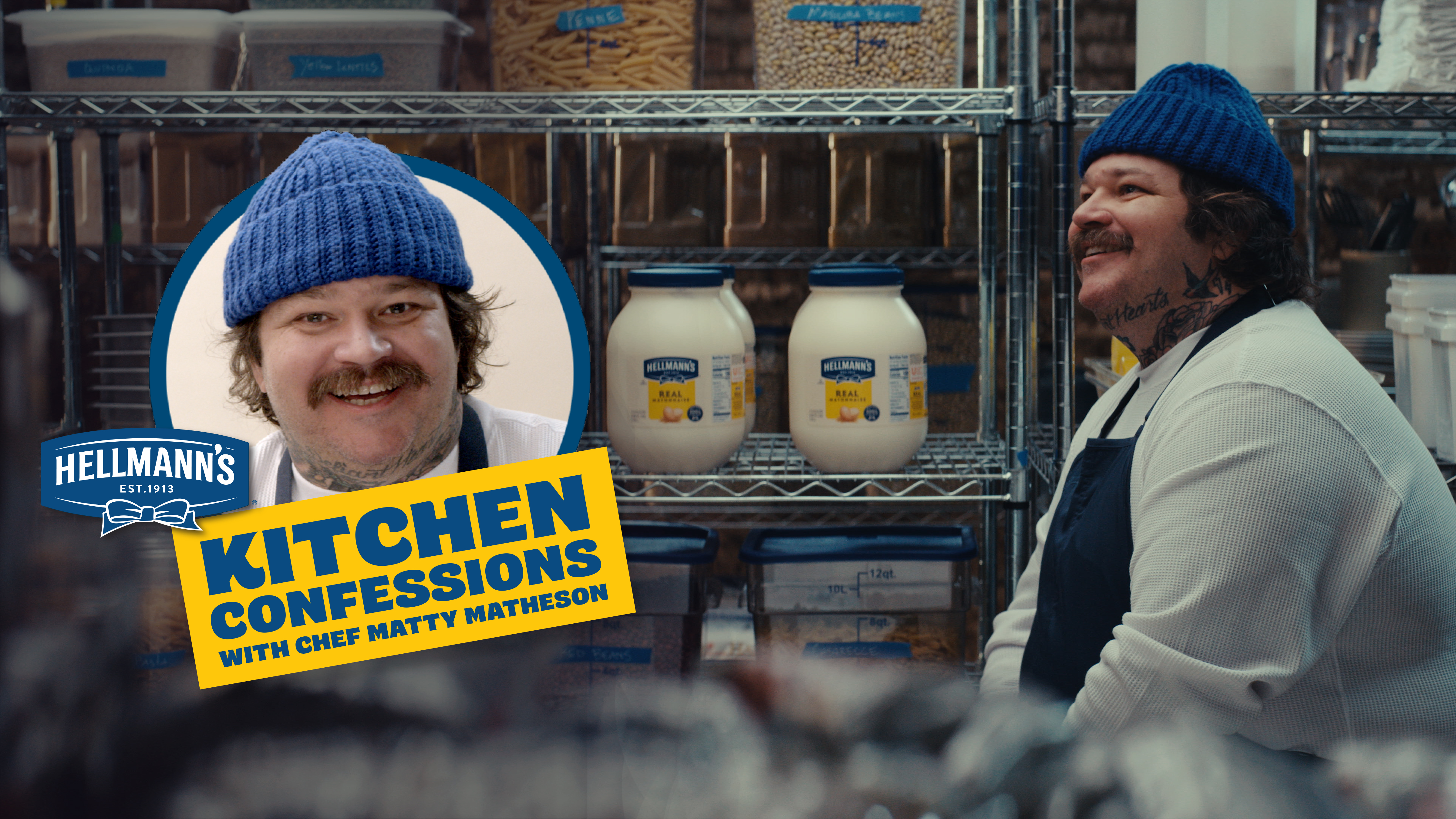
A recent work sample shows the team’s output: “Kitchen Confessions,” a Hellmann’s and Best Foods campaign with chef Matty Matheson. It won the Multi-Platform Partnership category at the 18th Annual Shorty Awards. The entry credits agency contributors including Pam Bevilacque, Don Dunbar, Katelyn Hayes and Carly Neville.
The campaign’s humor brought a familiar ingredient into conversations among chefs. For a profile of the CEO, the relevant distinction is authorship: this was credited team work. Cotter leads the organization in which specialists make it happen.
Another use for a food network
Cotter also serves on the board of the Napa Seafood Foundation. In March 2022, he discussed its Seafood for Heroes effort to support people in Ukraine through World Central Kitchen. Seafood companies contributed donations; the program connected industry resources with the provision of meals.
That is a different destination for a network usually associated with products and purchasing. Suppliers, funding and people able to prepare food can be brought together for relief as well as for commerce. Cotter’s board role places him inside that effort.
He remained involved in the industry’s wider conversations. The June 2022 Napa Seafood Summit program listed him as a speaker on how recent global events had influenced marketers’ playbooks.
His professional calendar, viewed through those appearances, spans both the way food is sold and the way an industry responds when circumstances change. The same sector that debates consumption and promotion can organize around the immediate task of feeding people.
Pixels, plates and the next question
The Food Group later found a playful way to support Feeding America: an AI-powered generator for food-themed holiday sweaters. Each submitted design triggered a donation equivalent to ten meals. The agency reported nearly 20,000 meals from the effort. The knitwear existed on a screen; the contribution had a purpose beyond it.
In December 2025, its personalized holiday-card generator offered another version of the idea. Users could choose an occasion, describe a recipient and select a scene, art style and voice. A donation accompanied each created card. Cotter described it as “turning pixels into plates for Feeding America.”
The projects belong to a later chapter of the career that began with culinary education and foodservice operations. The tools have changed. Now a food agency can invite someone to make a card as well as help a manufacturer explain an ingredient.
There is still a question at the end of the invitation: what will someone do with it? Cotter’s room full of chips supplied an amusing reminder. People can enjoy an idea, admire the ingenuity and keep walking. Getting them to stop is only the first course.