A basement is an economical place to begin a software company. It is also an excellent place to underestimate how long the work will take. In 1991, Mark Byers and his brothers Ron and Joe started Document Storage Systems in Colorado. Thirty-five years later, Mark is still president and CEO of the business they built, and the paperwork they set out to replace has given way to a much larger assignment: keeping complicated organizations working.
The abbreviated name, DSS, has the practical sound of something filed in the correct drawer. There is a certain suitability to that. Byers has spent his professional life in data processing and electronic document management, fields in which usefulness tends to outlast a fashionable name. His career in software development already spanned almost 45 years when he was recognized with a 2022 industry Hall of Fame induction.
That long view gives his story its shape. There are brothers, an early federal customer, employees who grow into executives, and a founder who turns up for a veterans’ trip as a volunteer guardian. The company becomes larger. The relationships keep appearing.
Three brothers, then a federal customer
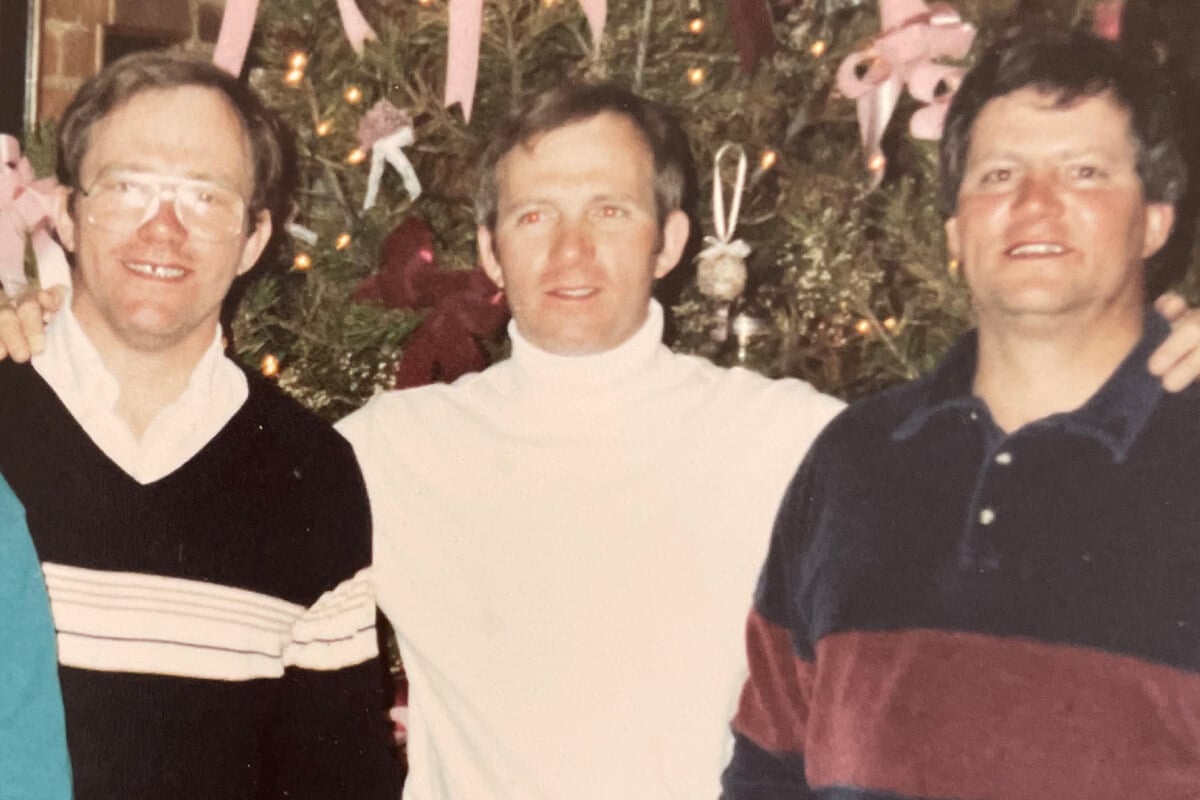
The beginning was a family undertaking in the most literal sense. Mark, Ron and Joe shared the conviction that records could move off paper and onto computers. The enterprise they founded in 1991 acquired an early institutional foothold in 1994, when the West Palm Beach division of the Department of Veterans Affairs contracted with DSS.
Three years separated the basement from that agreement. Put the two dates beside each other and the origin story becomes less like an overnight discovery and more like the beginning of a working relationship. The Florida customer would become central to the company’s identity. Byers’s own background adds another connection: he is a United States Air Force veteran.
For a founder, an early customer can supply something more durable than a first sale. It supplies problems that recur, requirements that change and people who expect the next version to work. DSS’s later history is full of the consequences of that first sustained relationship: integration work, maintenance assignments and services that extend well beyond the original document problem.
There is little glamour in the word “maintenance.” A system that stays available rarely receives a standing ovation. Yet maintenance appears repeatedly in the business Byers has built. His working world makes room for the less theatrical forms of progress: an interface kept usable, a process supported, an existing investment made to last.
A family business grows more chairs
By 1998, DSS had six employees. In June 2020, it described a workforce of more than 600 across offices around the country. Those two snapshots tell a substantial growth story without requiring a heroic origin myth. A six-person business can operate through a handful of conversations. A company with hundreds of employees has to make room for people the founders did not personally recruit at the beginning.
In 2020, Byers promoted Rodney Neal to vice president of sales and marketing and Kelly Kavooras to chief marketing officer. Both had already spent years inside DSS. Kavooras moved up from marketing director; Neal brought an established record of revenue work at the company. The appointments expanded the executive team through people who knew the organization.
Byers gave much of the credit for the company’s growth to its culture and to executives such as these. That is a specific way of describing a founder’s achievement. It allows the people around him to occupy the sentence. The family name explains how DSS began; it cannot, by itself, explain how hundreds of people keep it running.
Meggie Soliman offered another view from inside the business in 2020. She described leadership as open to providing room for innovation and spoke about hiring people who could collaborate, think creatively and remain open-minded. At the time, DSS employed 304 people in Palm Beach County out of a nationwide workforce of 600. The company had become both a national employer and a substantial local workplace.
That local presence gives the growth figures another dimension. Hundreds of jobs in one county mean the company’s decisions travel beyond its own meetings. A promotion changes a team; an expanding team changes a workplace. Byers’s story can be read at that scale, through the accumulated responsibilities of an employer whose beginnings were three members of the same family.
Six years later, on October 13, 2026, Soliman was promoted to vice president of federal product operations. Her assignment brought product teams, business objectives, operating processes and program management into closer alignment. She had joined DSS more than a decade earlier. Once again, someone with a long history inside the company was being asked to take on a broader job.
The acquisition with a practical purpose
Growth also arrived from outside. On September 8, 2021, DSS closed its acquisition of SBG Technology Solutions, an Alexandria, Virginia company founded in 2004. SBG became a wholly owned subsidiary. The price was not disclosed.
The logic of the purchase was concrete. SBG brought engineering, enterprise modernization, IT governance, cybersecurity and artificial intelligence capabilities. Its customers included federal agencies beyond DSS’s established VA relationship, among them defense and nuclear oversight organizations. Byers described the transaction as a way to widen the company’s services footprint across government.
SBG also offered an AI learning platform with customized training. That detail is useful because it makes the acquisition legible beyond the ceremonial handshake. DSS was adding capabilities and a team with experience delivering them. Byers’s ambitions were expanding into adjacent work that government customers already needed to buy.
In December 2023, DSS appointed Robert L. Gordon III senior strategic leader for AI and digital innovation. Gordon had been SBG’s chief growth officer. His background included service as a deputy under secretary at the Department of Defense, an Army career ending at colonel, and teaching at West Point. The appointment carried experience from the subsidiary into the parent company’s work.
These are the kinds of connections that give Byers’s career its texture. The brothers remain part of the beginning. Long-serving colleagues become executives. An acquired company contributes another leader. The organization changes through people with histories of their own.
A seat on the flight
One episode takes Byers away from the executive office. He served as a guardian on an Honor Flight trip that brought 27 World War II veterans to Washington, D.C. DSS helped coordinate the visit with Southeast Florida Honor Flight, the West Palm Beach VA and the local community.
More than 50 DSS employees worked a fundraising poker night at Duffy’s Sports Grill. It raised more than $3,000. Four employees served as guardians on the trip. The visitors went to the World War II Memorial and the Tomb of the Unknown Soldier before returning home.
Byers wanted the involvement to continue. He connected the company’s growth to its ability to contribute money and volunteer time. The aspiration was straightforward: make Honor Flight an ongoing undertaking within DSS. A larger business had provided more room to participate.
The company’s present community commitments range from veterans’ organizations to Habitat for Humanity, the Palm Beach County Food Bank and environmental projects. They include support for the Tequesta Chili Cookoff, an event whose ingredients extend to live music and military flyovers. Corporate citizenship occasionally comes with a spoon.
The building changes. The work continues.
By late 2025, another chapter was closing. DSS sold its Juno Beach office that November and moved its headquarters to North Palm Beach. It had purchased the Juno Beach property in 2003 and the North Palm Beach office in 2012. The new headquarters was therefore already part of the company’s working geography.
“We have many great memories from our time in Juno Beach.”
Mark Byers, December 2025
There is affection in that short sentence. Byers spoke about the work done in the old building and its place in shaping the business. The move consolidated corporate functions at the North Palm Beach location. After more than two decades in one headquarters, the next step involved making better use of a place DSS already owned.
In June 2026, DSS announced a $30 million VA contract for maintenance and support of a supply chain graphical user interface overlay. The assignment is an apt example of the business’s continuing attention to operational continuity. Behind the acronym is a familiar obligation: keep a system working for the people who depend on it.
At the company’s thirty-fifth anniversary, Byers discussed further work in cloud infrastructure, security and AI readiness. He also returned to the employees and to the veterans the company serves. The future, in his telling, remained connected to those existing responsibilities.
The basement has long since been outgrown. So has the six-person office. What makes Mark Byers’s story interesting is how many of its later chapters still involve staying: with a customer, with colleagues, with a community, with work that requires another year of attention. Thirty-five years leaves plenty of room for change. It also gives a founder time to discover which commitments he intends to keep.