Some businesses begin with a patent. Others begin with the discovery that the existing options are irritatingly inadequate. DME Express belongs to the latter and more durable species. Its raw materials are warehouse shelves, delivery routes, late-night phone calls and the stubborn conviction that an urgent request deserves a useful answer. Mark Borneleit, its co-founder and chief executive, arrived at this work by way of finance. He had spent years looking at companies through the orderly grammar of capital. Then he helped build one whose daily life is governed by geography, inventory and clocks.
The company serves hospice organizations with durable medical equipment, a category that includes beds, mobility products, respiratory equipment and other assistive devices. Its contracts commonly run on a recurring per-patient-day basis. Yet the item is only half the sale. The customer is also buying availability: the expectation that the right equipment will be stocked, routed and delivered when needed, including nights and weekends. This is less retail than choreography. Nobody applauds the warehouse when everything goes well. Everybody notices when it does not.
The banker crosses the loading dock
Borneleit's early career supplied the clean lines. After graduating summa cum laude from UCLA with a bachelor's degree covering economics, finance and accounting, he joined Prudential Capital Group as a financial analyst. He later spent a decade at Growth Capital Partners, rising to senior vice president. The work involved the central verbs of middle-market finance: raise, fund, acquire, advise.
His own professional summary adds a useful detail. Before DME Express, he held executive responsibilities in finance and business development for a multi-state hospice provider with more than $100 million in revenue. Other profiles describe a chief financial officer and corporate-development role at a smaller stage of that company's growth. The figures vary with the period being described, but the direction is plain. Borneleit moved closer to the operating facts of a specialized healthcare service, then eventually into the chief executive's chair at a supplier built around those facts.
That progression matters because finance and logistics share a concern that polite conversation rarely celebrates: allocation. A banker decides where capital should go. A logistics operator decides where equipment, people and capacity should sit before demand becomes visible. Both disciplines punish wishful thinking. Only one of them may require a truck to leave a warehouse after dinner.
“Customer service” sounds soft until it requires hard assets in the right place before the request arrives.The operating idea inside DME Express
Narrow first, then wide
DME Express says it was founded in 2006. Public career records place Borneleit's formal co-founder and CEO tenure from January 2012. There is no contradiction worth dramatizing: companies often have an operating life before a later leadership structure becomes the version recorded across databases. What matters is what the founders chose to build. The company focused on hospice and nursing-facility customers rather than trying to be every sort of equipment provider to everyone.
A narrow market gave the business permission to be unusually specific. DME Express could stock for the demand patterns of one customer group, arrange warehouses around its service areas, and design availability around requests that do not respect office hours. The result is a model in which surplus inventory is not merely idle capital. It is a cushion against uncertainty. A nearby bed on a shelf can be more valuable than a theoretically cheaper bed several hundred miles away.
The reliability loop
This is specialization as a system, not a slogan. The company says its management team brings long experience in hospice and nursing-facility operations. Co-founder and president Curtis Spencer contributed sales, marketing and operating experience in those sectors. Borneleit brought finance, capital formation and acquisitions. The pair's backgrounds are complementary in an almost suspiciously tidy way: one deeply familiar with the customer and the other trained to finance and structure growth.
The footprint becomes the moat
By 2026, the company operated more than 70 warehouse locations across nine states. Its own website has described a footprint of hundreds of delivery technicians and extensive warehouse space, though those counts evolve as the network changes. The stable fact is the architecture: many local nodes, considerable inventory and a central organization coordinating them. It is a decidedly physical answer to a customer-service question.
There is software in the machinery too. DME Express promotes proprietary technology and has announced an integration with the Homecare Homebase platform designed to reduce manual data entry and centralize information. But the company does not pretend that a dashboard can carry a bed upstairs. Technology makes the handoffs cleaner. Warehouses and technicians complete the sentence.
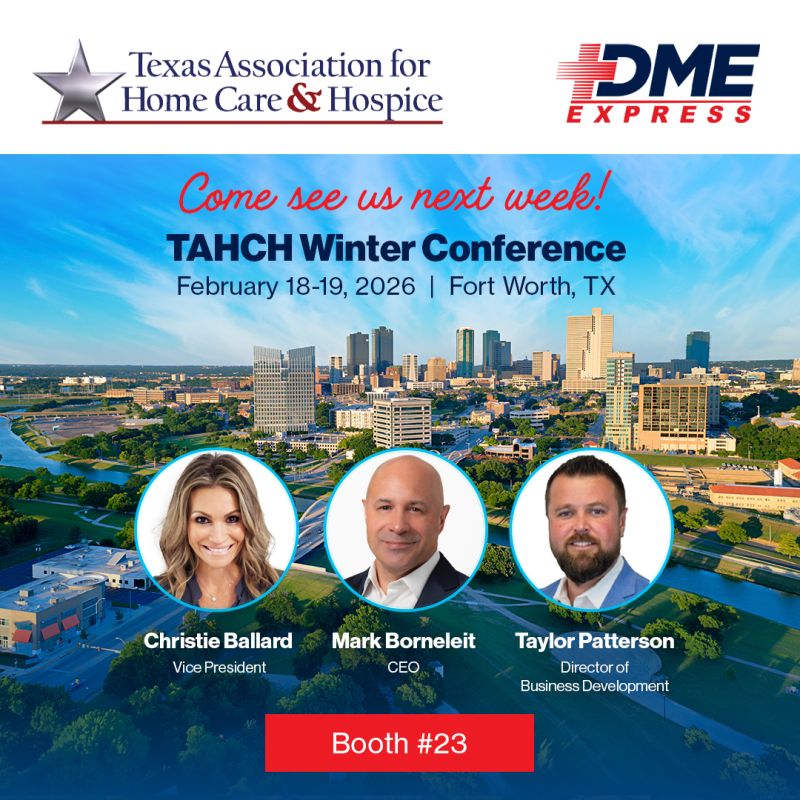
Borneleit's board work also kept him near healthcare technology and operations. He served on the boards of Medvantx from 2017 to 2020 and Connectiv from 2015 to 2018. Meanwhile, his managing-director tenure at Accord Capital ran through 2022. This was not a simple conversion from banker into person who never again opened a deal book. It was an overlap of investing, governance and company building.
The deal, and the day after
In March 2026, Palladium Equity Partners agreed to acquire a majority interest in DME Express. The transaction closed on March 25 and was publicly confirmed as complete in May. Accord Asset Partners divested its full equity interest, while Borneleit and his team remained in charge. Financial terms were not disclosed, which is corporate language for “you may admire the machine, but the price tag stays in the drawer.”
The continuity was central to the announcement. Palladium described a partnership with an experienced founder-led team. Kevin Webb, Accord's founding partner and a DME Express co-founder, emphasized more than 12 years of building alongside Borneleit. Palladium brought prior experience in hospice services and a stated willingness to support expansion. The new agenda was clear: enter more geographies, improve service capabilities and pursue strategic acquisitions.
“We look forward to collaborating together after the closing to expand our geographic footprint [and] enhance our service capabilities.”Mark Borneleit on the Palladium partnership
That statement is revealing because it points past the ceremony. Borneleit framed the deal around the work that follows it. More territory means more warehouses, more routing decisions, more inventory positions and more chances for a local promise to be weakened by distant ambition. Acquisitions can add density quickly, but acquired systems bring their own habits. The financier in Borneleit can appreciate the leverage. The operator must police the seams.
What can be stolen
The DME Express playbook does not require a fleet of trucks to be useful. Its first lesson is to look for the service hidden inside the product. Customers may appear to buy equipment, but they remember whether it arrived. A restaurant sells dinner and timing. A payroll company sells calculations and the absence of Friday panic. DME Express sells equipment and the confidence that somebody has planned for an inconvenient hour.
The second lesson is that focus can precede scale without limiting it. Specializing in a customer group gave the company a reason to make choices that a generalist might find excessive: hold extra stock, place warehouses closer to demand, staff for nights and weekends. What looks inefficient in a generic spreadsheet can become the whole advantage when the customer's definition of quality includes speed and certainty.
The final lesson is personal. Borneleit did not abandon his finance career so much as make it tangible. Capital allocation became inventory allocation. Merger advice became acquisition strategy. Board work became the daily duty of building an organization whose reputation rides in delivery vehicles. The career is coherent once viewed from the warehouse floor.
Now comes the more interesting phase. Palladium has bought the right to help the network grow, while Borneleit retains the responsibility of making sure growth behaves. At 70-plus locations, DME Express is already well beyond a founder's improvisation. Yet its promise remains oddly intimate: when a provider calls, somebody should know what is available, where it is, and how quickly it can move. Great strategy is occasionally no more glamorous than being ready.