Marco Veremis has a complaint about LinkedIn. Too many people dispensing instructions on how to build a company have never built one. His patience with the procession of mentors, coaches and self-appointed sages appears limited. “Give our feeds a break guys,” he wrote. It is an appealingly awkward position for a venture capitalist: a member of a profession that rarely suffers from a shortage of advice, asking everyone to ease off.
The complaint becomes more interesting when placed beside his working life. Veremis helped create Upstream, backed companies started by people around him, and became a founding partner at Big Pi Ventures. He also hosts conversations with entrepreneurs. He has plenty of opportunities to deliver a sermon. His objection is to borrowed authority: experience repackaged as universal instructions, with the difficult parts conveniently removed.
Follow his career and those difficult parts return. There are changing business models, employees leaving to build their own companies, and an uncomfortable question about when a founder should sell. The story stretches from advertising agencies in London to mobile operators in emerging markets, then back to the financing of Greek technology. It concerns what happens after a company works.
A politics student learns to sell
Born in Athens in 1973, Veremis studied politics and international studies at Warwick, followed by an MPhil in European studies at Oxford. His academic route was through institutions and political ideas. The professional route began in 1996, in marketing strategy, working within the Omnicom, WPP and IPG groups. He developed communications strategies for international brands including Nestlé and Sony.
Advertising supplied a practical education in attention. A business can possess a product, a budget and an audience, yet still fail to make itself understood. Veremis’s later comments keep returning to the person receiving the message. What do they want? When will they listen? How frequently will they tolerate an interruption? These are rather less glamorous questions than announcing a technological revolution. They are also harder to dodge when someone expects a sale.
By November 2011, addressing a mobile-marketing awards audience in London, he was arguing that digital advertising’s growing volume could undermine its effectiveness. He wanted more care devoted to understanding consumers. His prescription had the agreeable brevity of a good advertising line: “Speak less, but more convincingly.” An entire conference industry could probably fit inside the savings.
“Speak less, but more convincingly.”
Marco Veremis · mobile-marketing address, 2011
Athens was the starting point
Upstream began with Veremis and Alex Vratskides and a small team in downtown Athens. Its early business was a media-serving platform. The company’s subsequent history records a move into work with European mobile operators in 2006, followed by an office in Rio and operations in Africa in 2008. Its customers and opportunities took it far beyond its starting address.
The sequence matters because it resists the tidy retrospective in which a founder knows the destination from the first afternoon. Upstream changed. Geography changed. The services changed. A small Athens operation developed relationships with telecommunications companies in markets where the habits of consumers could differ sharply from those familiar to a London advertising strategist.
In April 2014, Actis announced its investment. Upstream was working across 40 markets, and its operator relationships gave it marketing and billing access to more than a billion consumers. Those were potential customers accessible through partners, rather than a billion people personally signed up to an Upstream app. The distinction is substantial. So was the commercial infrastructure behind it.
At an Athens startup gathering in 2016, Veremis used payments to explain why local knowledge mattered. People could want digital services while lacking the cards needed to buy them. Charging through a mobile operator offered another route. Prices also had to make sense against local incomes. A familiar product and a familiar dollar price could produce very unfamiliar results once they crossed a border.
The colleagues who became founders
One of Upstream’s consequential products was another company. Persado developed from an internal research effort exploring how language affected responses to marketing. It became a separate business in 2012, with Bain Capital Ventures as a lead investor. Vratskides went on to lead it. Veremis is a co-founder and shareholder. The partnership had acquired a second chapter.
Workable followed a different route. People inside Upstream were dissatisfied with the recruitment software available to them and decided to build something better. Veremis supported their first steps. It is a particularly useful origin story because the problem was close enough to be irritating. An operational annoyance became the beginning of a separate business.
That distinction gives his investment career some texture. He had seen both an internal experiment and a frustration encountered at work produce companies of their own. Supporting founders could mean allowing ambition to travel outside the original organization. The people leaving were also people whose abilities he had already had the opportunity to observe.
A trophy is a poor stopping point
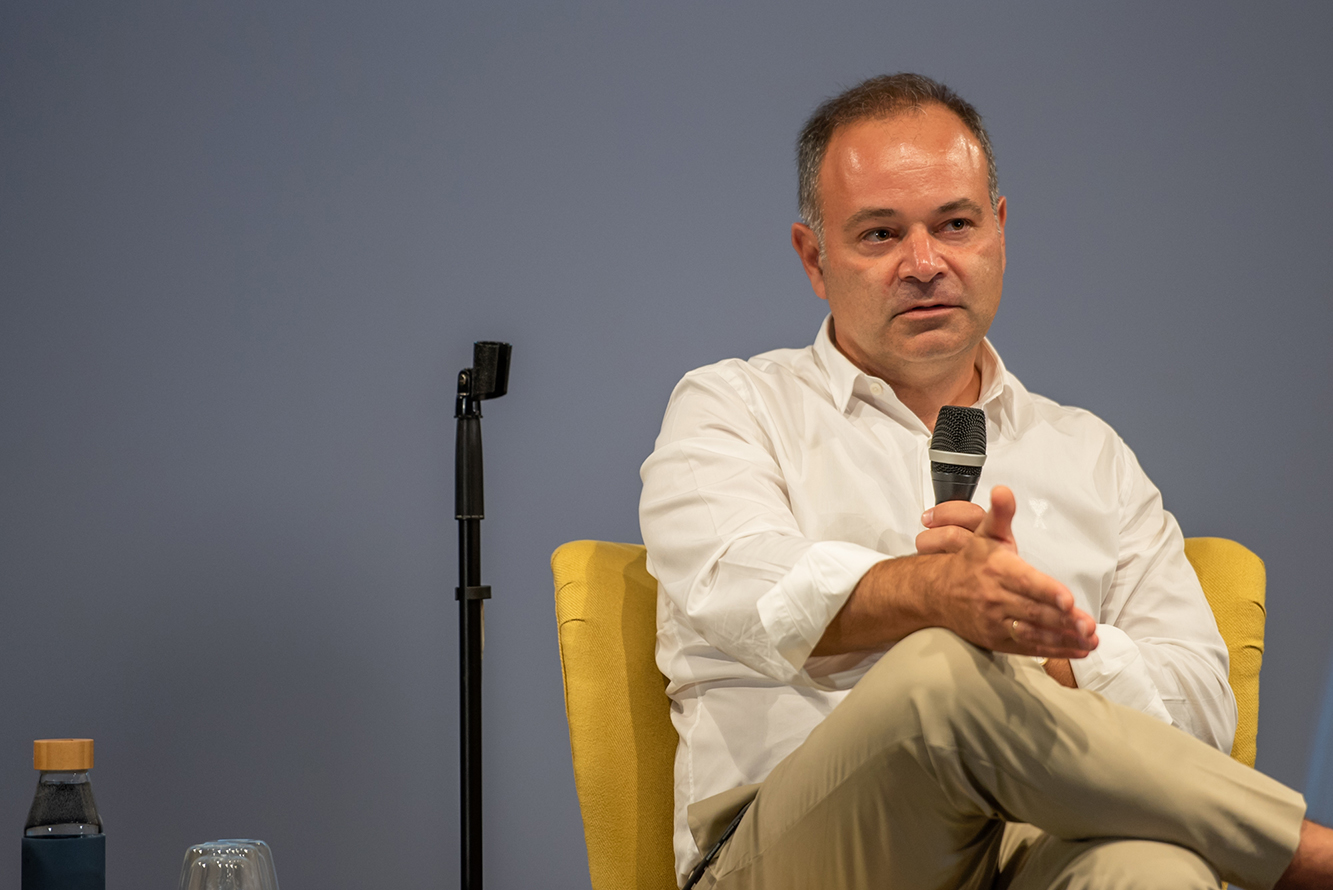
In 2013, Veremis received Greece’s EY Entrepreneur of the Year award. He went on to represent the country at the world competition in Monte Carlo in June 2014. The recognition arrived while Greece was still trying to make a persuasive case for its economic future. A technology company selling abroad provided a concrete example to discuss.
He served as Upstream’s chief executive until June 2017 and subsequently as chairman. Big Pi Ventures, founded in 2018, gave his work a different center of gravity. His investment record includes Workable, Hellas Direct, SoftOne, Softomotive and Accusonus. The last two were acquired by Microsoft and Meta respectively. His network also extends into Endeavor, Junior Achievement, SEV, IOBE and diaNEOsis.
In September 2022, speaking at a business gathering in Athens, he paired optimism about Greece’s technology prospects with a complaint about underinvestment. He also pointed to employee retention as an advantage for companies building teams there. His argument concerned the conditions under which businesses could operate and grow. A pleasing national success story still needed financing and people willing to stay.
Character gets a vote
Veremis’s public writing can be caustic, but it also reveals the standards behind the irritation. In a post about power and success, he invoked Aristotle and the practices of empathy, moderation, justice and courage. The destination interested him less than the character developed on the way there. Financial achievement, in his account, does not settle the question of whether someone deserves admiration.
Then he reached for a less classical comparison: “you can be Skywalker or you can be Vader”. Oxford, apparently, leaves room for a lightsaber. The joke serves a serious purpose. Agency remains with the person who acquires influence. Status is no excuse for abandoning judgment.
His vocabulary for partnership is similarly personal. In welcoming investment banker Panos Metsis into Big Pi’s growth-fund story, he used “Compadre.” He described Vratskides as the corresponding person in Upstream’s beginnings and acknowledged Metsis’s role in its transaction history. It is a language of trust and complementary abilities, with room for friendship inside the financial machinery.
The advertiser helps inspect the advertising
There is another turn in the career that a conventional investor biography might miss. Veremis and Vratskides are credited as executive producers of Unclickable, the 2024 documentary directed by Babis Makridis and written by Guy Krief. It examines digital advertising fraud through an operation constructed to expose the system’s vulnerabilities.
The connection is unusually apt. A career spent understanding digital marketing also offers reasons to scrutinize its claims. Advertising promises measurable attention, and the film investigates what happens when the machinery can manufacture evidence of it. An executive-producer credit establishes his involvement; the questions raised belong to the documentary. Still, it is a revealing addition to the familiar list of companies and board seats.
Buying founders more time
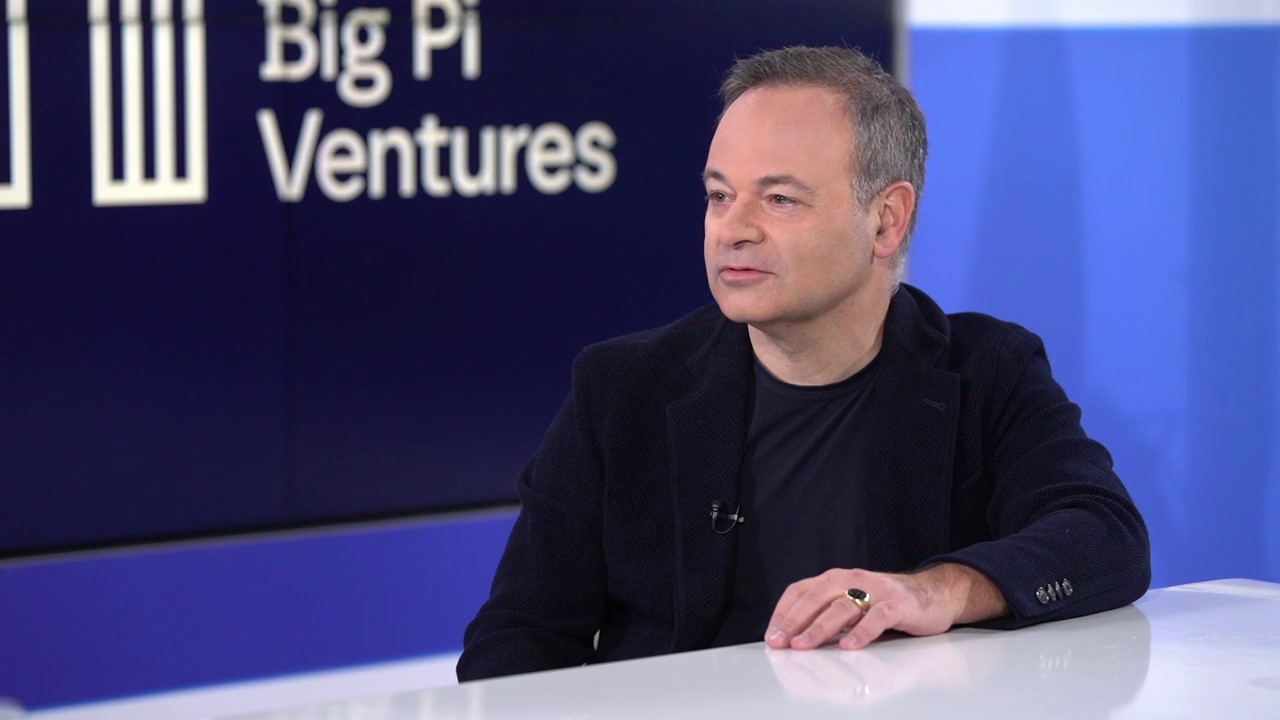
Big Pi’s September 2025 announcement of its growth fund gave the next phase a financial shape. The fund had reached a €130 million first close in June and was targeting €200 million. Planned investments of €7 million to more than €20 million per company would support expansion and acquisitions. These are dated fund figures and targets, rather than a running total of money already deployed.
First close in June 2025
The purpose was to address the financing gap between a startup’s early rounds and the later transactions that can support a larger enterprise. For Veremis, whose career already includes a founder’s sale and several investments, this puts resources behind the ambition to keep companies growing. A founder’s confidence has practical requirements. Further expansion costs money.
He continues to spend time on the other side of the microphone, too. In March 2025, he discussed co-founders and relationships with Dialectica’s George Tsarouchas. That December, his conversation with Mistral AI’s Arthur Mensch turned to European AI, open models and the work required to make technology useful. Both subjects return him to familiar ground: people making decisions together, then finding customers for what they build.
The question running through his career has grown larger. First came persuading a customer. Then came building a company capable of finding customers across borders. Now it includes whether Greek founders can assemble the people, capital and conviction to carry on. Veremis has already collected the award and occupied the chief executive’s chair. He is still interested in what happens after the first satisfactory ending.