Before a startup can change anything, somebody has to notice it. That sounds like a marketing problem. For TechCrunch, it became an editorial proposition: treat the young company, still awkward and largely unknown, as something worth reporting on before its success makes the assignment obvious.
Michael Arrington and Keith Teare founded TechCrunch in 2005. The publication grew from a personal blog into a business that reports on companies, gathers their founders and sells access to the resulting audience. Its distinctive asset is the distance between an unfamiliar name and a name that everyone in the room suddenly recognizes.
- Read it for startup reporting, funding news and the business behind technology.
- Use its events to meet founders and investors with a reason to talk.
- Watch the demos to see how a complicated product survives a simple question.
- Keep your judgment: attention and commercial success are different outcomes.
The company before the company
Arrington’s first post concerned Technorati, the blog search service. Think about that starting point. He was using a blog to investigate the machinery of other blogs. The subject was small enough to look provincial and large enough to contain a changing industry. A publication could grow by taking that world seriously.
By the end of 2007, Columbia Journalism Review later reported, TechCrunch was drawing millions of monthly page views. Arrington had trained as a lawyer rather than a journalist. The early appeal was proximity: an observer with experience in startups writing for people who were themselves trying to understand what other startups were doing.
That gave the reporting a useful organizing principle. Follow the company before it becomes an institution. Ask who built the product, why anyone needs it and who supplied the money. For a founder surveying competitors or an investor scouting unfamiliar territory, those questions turn scattered announcements into something closer to a working map.
A newsroom with a stage attached
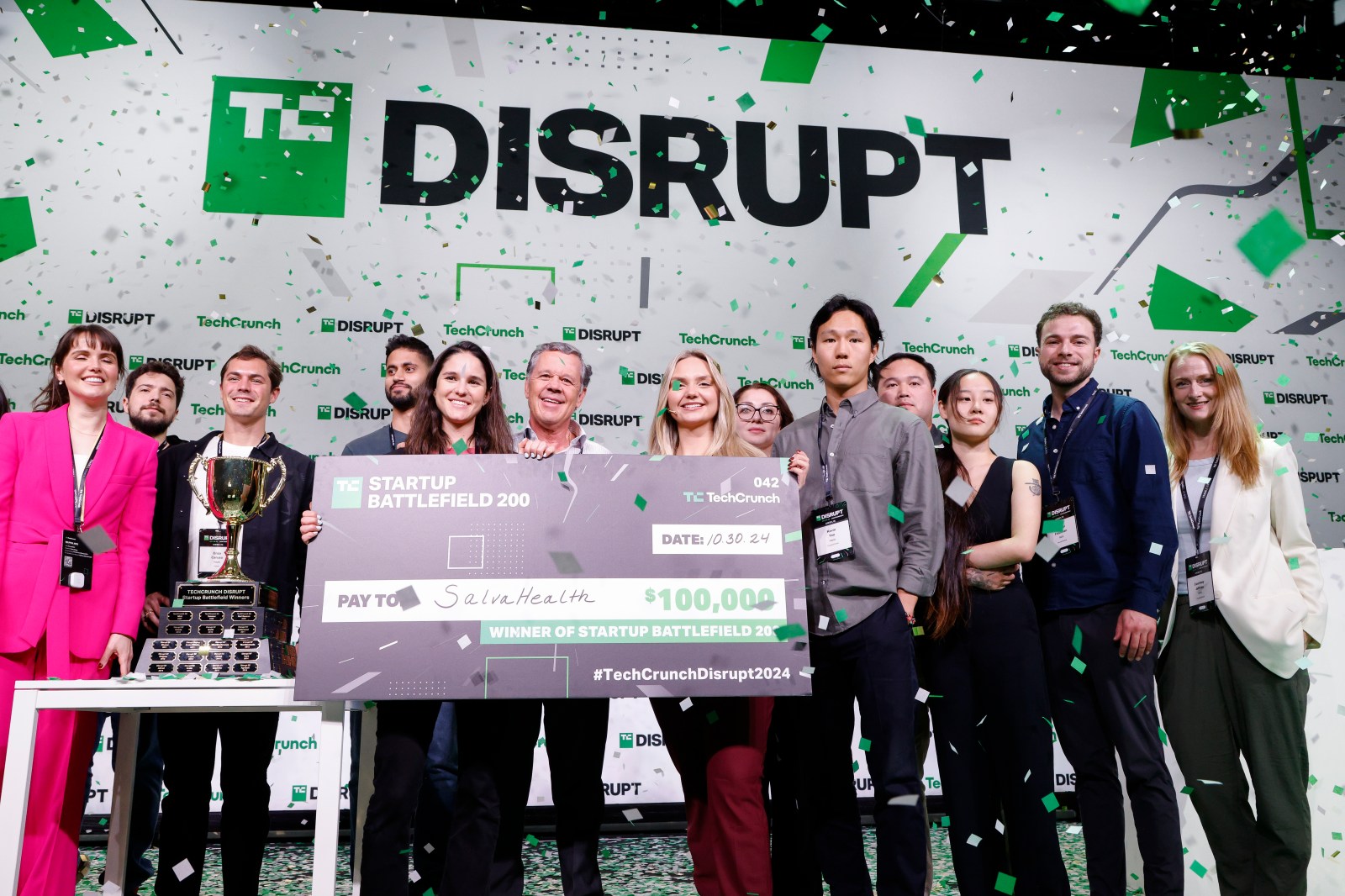
Most news articles end with the reader moving on. TechCrunch built another destination: the conference. Disrupt turns an audience that usually meets through headlines into people standing near the same demonstration. Startup Battlefield makes that arrangement especially legible. A founder must explain the product while investors and editors are paying attention.
The selection process gives the encounter a shape. A cohort of 200 companies exhibits; 20 reach the main competition; five reach the final round. The winner receives $100,000 without surrendering equity. Those numbers describe a filter, not a forecast. The company that wins a presentation still has to win customers.
There is practical help around the spectacle. Selected Battlefield companies receive exhibition space, and preparation includes coaching. Applicants need a working minimum viable product. This is a demanding bargain for a very early team: the financial barrier is reduced, but preparation, travel and time away from building still consume resources.
Glīd won the 2025 competition with a freight logistics business. That detail matters. A startup publication’s stage can accommodate a company concerned with moving shipping containers, alongside the software businesses readers might expect. The editorial frame is entrepreneurship, which leaves room for several kinds of technology and several kinds of customer.
The reader and the buyer
TechCrunch serves overlapping groups with different jobs to do. Founders want context and visibility. Investors want discovery. Operators want to understand competitors, platforms and changing markets. Technology enthusiasts want an explanation of what is happening. Advertisers and sponsors want to reach these people while their attention is on the industry.
The commercial offering follows that audience: digital advertising, event sponsorships, tickets and branded content. TechCrunch Brand Studio produces campaigns for partners. Google Cloud sponsored the 2025 Battlefield cohort. The commercial value comes from gathering a particular professional community, rather than requiring every person who reads a funding story to buy a subscription.
The reporting extends across artificial intelligence, venture capital, security, transportation and consumer technology. Newsletters and podcasts give readers other ways in. The sensible use is selective: follow a beat relevant to your work, then read beyond the announcement. A funding round is a useful lead for research; it is not proof that the product works.
Readers choosing among technology titles can use the job at hand as a guide. The Information emphasizes subscription business reporting; The Verge ranges across technology and culture; VentureBeat focuses on enterprise technology. TechCrunch’s appeal is the combination of startup discovery, financing coverage and events where those stories acquire a physical address.
The $89 experiment that ended
TechCrunch did try charging for a deeper layer of coverage. Its subscription product began as Extra Crunch in 2019 and later became TechCrunch+. Reported pricing was $15 a month or $89 a year. In early 2024, the publication announced its closure amid roughly eight layoffs, affecting editorial and business roles.
The paywall came down on February 29, 2024. The company framed the decision as a return to its core reporting and broader access. That is the documented change of direction. It illustrates a recurring publisher’s calculation: a subscription can earn money from committed readers while restricting the audience available to other parts of the business.
“Our readers want to know why, not just what.”
Connie Loizos, on taking charge in 2023

Ownership changes. The audience remains the question.
AOL bought TechCrunch in 2010. Regent announced its acquisition from Yahoo in March 2025, without disclosing terms. The deal followed Regent’s purchase of Foundry, home to publications including PCWorld and Macworld. TechCrunch entered a portfolio with other technology titles, each addressing a different slice of the market.
Connie Loizos became editor in chief and general manager in 2023, when Yahoo also acquired her StrictlyVC newsletter and events business. Crunchbase took a different path, spinning out in 2015. Treating that database as a current TechCrunch product confuses a shared origin with the businesses readers can actually use today.
Borrow the method. Bring a working product.
The lesson for a small publisher or community builder is surprisingly concrete. Choose a group whose members need to discover one another. Cover its work consistently. Give people a reason to gather. Keep testing which activities deserve their time. TechCrunch’s combination works because the reporting and the meetings concern the same professional world.
For founders, the conditions matter. A polished pitch cannot substitute for demand, and conference attendance makes sense only when the relevant customers, partners or investors are there. TechCrunch’s next scheduled Founder Summit, in Boston on November 4, 2026, continues the gathering model. The useful question before buying a ticket is wonderfully ordinary: who do you need to meet, and what will you show them?