Shaquille O’Neal needed very little time to announce the end of a nineteen-year basketball career. For Michael Downing, the entrepreneur behind the service carrying that announcement, the interesting part was what followed. In June 2011, O’Neal used Tout to tell fans he was retiring. A young video company suddenly had a rather large introduction.
Tout was about six weeks into its public life. The format was brief, personal and easy to pass along. A celebrity could speak into a phone, send the result through existing social networks and let the audience answer in the same medium. Downing saw the beginnings of a mobile broadcasting business. O’Neal supplied a demonstration that required considerably less explaining than a pitch deck.
“I will tell you what I’ve learned from this experience: Shaq knows social,” Downing said. There was some professional modesty in the observation. There was also a useful admission: the person using the product could understand its possibilities as clearly as the person selling it.
Eleven seconds, then fifteen
The first version was even shorter. In April 2011, Tout limited clips to eleven seconds. Users could add descriptions and hashtags, follow other people and share what was happening around them. Downing disliked the convenient label “Twitter for video.” It had already been applied to too many companies. Unfortunately for anyone trying to describe a new product, convenient labels have excellent survival instincts.
His idea was a visual conversation. The camera would carry some of the information that text left out: the setting, the voice, the expression. The product needed to make recording and uploading quick enough for that exchange to feel ordinary. A grand production would defeat the purpose.
There were commercial plans from the beginning. Customization and corporate accounts appeared among the proposed premium services. Even while Tout was finding its first users, Downing was considering who might pay for something more. The fifteen-second format became its familiar calling card, but brevity alone would never settle the business question.
“Our objective is to take the listening experience off the computer as fast as possible.”
Michael Downing, speaking about Musicbank in 2001
The music arrived before the business did
Downing had been working on that kind of question long before a phone became a reasonable place to watch a retirement announcement. At Sonique, where he served as chief operating officer, the medium was music. The software let people play MP3 files on their computers. Lycos acquired the company in 1999.
Musicbank, which he co-founded and led, approached another part of the problem: giving people licensed access to music online. The ambition extended beyond the desktop. In 2001, he talked about moving listening away from the computer and toward the places where people actually wanted their music. A computer could deliver a song without being a particularly pleasant place to enjoy it.
The proposed service connected physical ownership with digital access. Purchases through partner retailers could make albums available online; existing CDs could be verified through a computer’s drive. A listener’s collection would become available for streaming and organization into playlists. The record shelf was acquiring a remote control.
Permissions proved more complicated than the product description. Musicbank had agreements with the major labels, yet uncertainty about the rights and the material it could actually deliver remained a problem. Signing an agreement did not make the entire delivery chain function. The distinction was expensive.
In April 2001, Musicbank ceased operations and laid off forty employees. It had been testing its service without reaching a public launch. The company ran out of money and could not secure more financing. That ending belongs beside the acquisitions in Downing’s career. It shows how an idea can encounter an obstacle course of institutions, contracts and cash before a customer ever gets to press play.
A newsroom fits in a pocket
Video became the next substantial chapter. Downing co-founded GoFish Technologies in 2003, according to its contemporary corporate biography. In 2006, he became president and chief executive of the public company through the transaction recorded in its securities filing. The earlier music work had put him inside the changing relationship between content, software and audiences. Video gave those questions another medium.
Tout emerged from work associated with SRI International and became a separate company in 2010. Its consumer product arrived as smartphones made quick recording more practical. The celebrity attention was useful, but other customers saw a different job for the same technology.
WWE announced a partnership in July 2012. Fans could record short responses for use across programming, online channels and arena displays. The planned introduction coincided with the thousandth episode of Monday Night Raw. The audience could become part of the show, with the phone serving as a very small audition room.
The Wall Street Journal saw a reporting tool. Its WorldStream project used Tout to collect brief video dispatches from staff carrying mobile devices. By March 2013, the project had accumulated 2,815 videos over 229 days. Reporters could send something from the scene without preparing an elaborate standalone production.
“They just jumped right in and started using it,” Downing said. For an enterprise product, that is an attractive sentence. It describes adoption without making the training department the main character. The workflow met people close to work they were already doing.
- 2011Speak to fansShort personal video updates
- 2013Report from the sceneWorldStream and publisher tools
- 2016Reach readers elsewhereVideo across publisher websites
The product adapted. The Journal’s version allowed forty-five-second clips, creating room for a short interview or a report from a developing story. A constraint that suited a social update could be loosened when the customer needed something else. Downing described a premium service shaped around the publisher’s requests.
By 2013, publisher agreements had become Tout’s primary business. A product introduced through a famous person’s personal announcement was becoming part of the machinery behind other people’s reporting. That change made the company less easy to explain in a single phrase, and more useful to a different set of customers.
The audience moved off the app
In October 2016, Tout announced a $26 million Series C financing led by the Melohn Group. The company reported more than 57 million monthly unique video viewers and more than 350 million monthly video views across a network of over 2,800 websites. Those figures described a distributed publishing business at that moment in its history.
Company-reported network figures, October 2016. Audience figures describe Tout’s historical network.
The distinction matters. An audience could encounter a Tout-delivered video on a publisher’s page without thinking of itself as an audience for Tout. The company supplied programming and technology behind the experience. Media organizations including CNN, CBS, Fox Sports and Bloomberg maintained content channels on the network.
Matching video to the surrounding article became part of the proposition. A publisher with readers could add relevant programming; a content producer could reach people beyond its own property. Downing was working on the space between making something and getting it in front of an audience.
That space had occupied him in music, too. A player, a license, a distribution agreement and a customer relationship each solved a different part of the same practical problem. The experience makes his career more interesting than a procession of fashionable formats. He repeatedly worked on the arrangements that allowed a new format to become a business.
A second cheque for the first believers
Downing’s current work moves the access question into capital. His public professional profile lists his Tout CEO years as 2010 through 2019. He now serves as managing partner at MDSV Capital, which he founded in 2021. The firm backs emerging venture managers and invests directly in growing companies from their portfolios.
The operating career still supplies some revealing personal details. He grew up in Texas, spending more time on horseback than at a computer. In college, he worked with friends whose programming skills exceeded his own, building software to help graduating students find jobs. His first motive was practical: paying bills. The experiment helped pay his way.
His public biographies also find room for four rock bands. That is a welcome interruption in a list otherwise crowded with company names. Six technology companies and several bands make a busy résumé; the bands at least suggest that every meeting did not require a financial model.
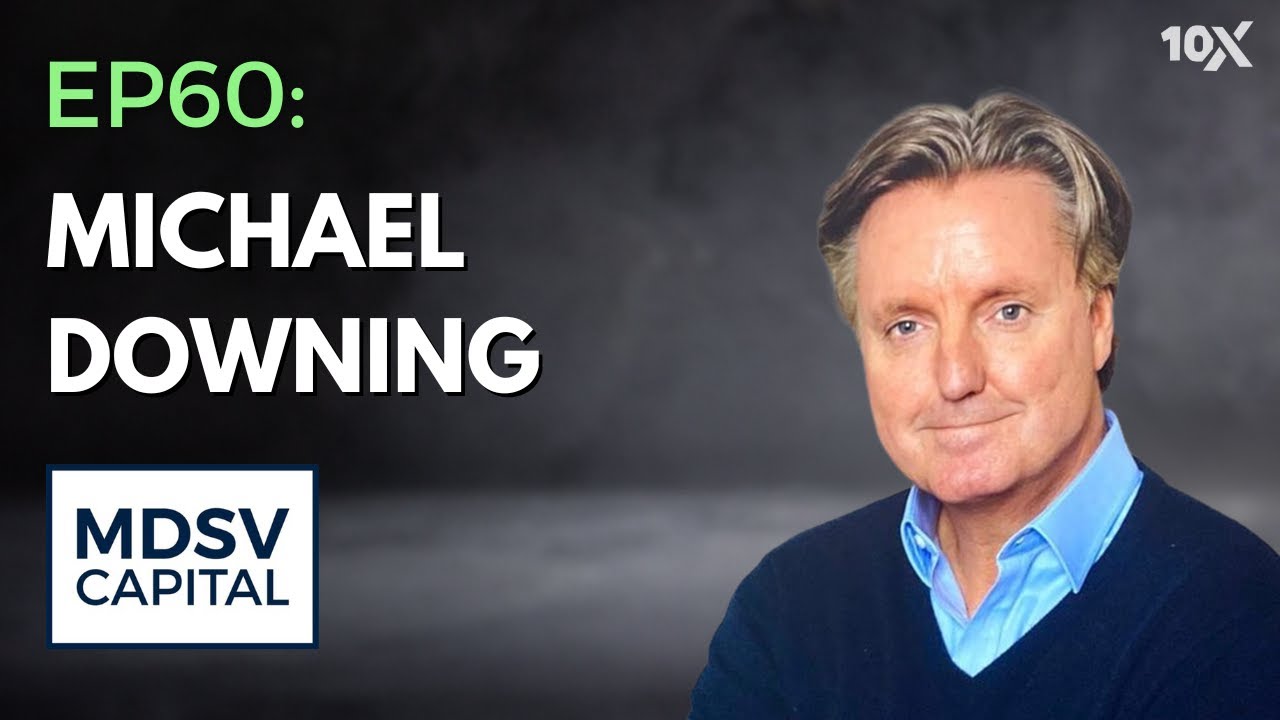
MDSV’s Capital Extension Program addresses a specific frustration. A small manager can identify a company early and still lack the money to join its later financing rounds. Having made the original decision does not automatically provide the resources to keep participating.
The program considers follow-on investments in growing technology companies, generally from Series A through Series D. It lists a minimum of $10 million in annual revenue and investment opportunities ranging from $200,000 to $5 million. Applicants need a confirmed allocation. These are concrete requirements for an existing business with measurable activity.
If approved, the investment is structured through a special-purpose vehicle with the originating manager as a co-manager. MDSV and that manager share carried interest. The arrangement gives the early investor a way to remain involved when the company’s financing needs have grown beyond a small fund’s capacity.
Downing discussed the program with David Weisburd in April 2024, then returned to the emerging-manager subject on Swimming with Allocators in October 2025. The details now concern fund structures and follow-on rounds rather than upload buttons. The underlying interest remains recognizable: someone has found an opportunity, and the next task is building a workable way to reach it.
A short video once helped Downing’s company reach an audience. His current business helps early investors reach the next round. Between those two moments sits a career spent dealing with everything that has to happen after a promising idea attracts attention.