On June 1, 2011, Shaquille O’Neal gave a start-up the kind of advertisement money struggles to buy. He announced his retirement in a 15-second video on Tout, then sent his millions of Twitter followers to watch it. The company, barely familiar outside its circle, suddenly had a famous customer performing its entire product pitch: point the phone, say the thing, share it now. One account put the clip at roughly half a million views in three hours.
Celebrity heat is useful, but it cools quickly. Tout’s more durable discovery happened when someone with a deadline picked up the same phone. A reporter at a fashion show, or at a flood, could capture a brief scene and publish it while the story was still moving. That was a recurring job, with an editor, an audience and eventually an advertiser attached.
The short version
- Tout launched as a free app for video updates of 15 seconds or less.
- Publishers used the same speed to turn reporters into mobile video contributors.
- Its later exchange matched relevant clips to written articles and shared video ad revenue.
- The original service is now inactive; its most useful lesson is how quickly a customer can change the product.
Fifteen seconds, one enormous entrance
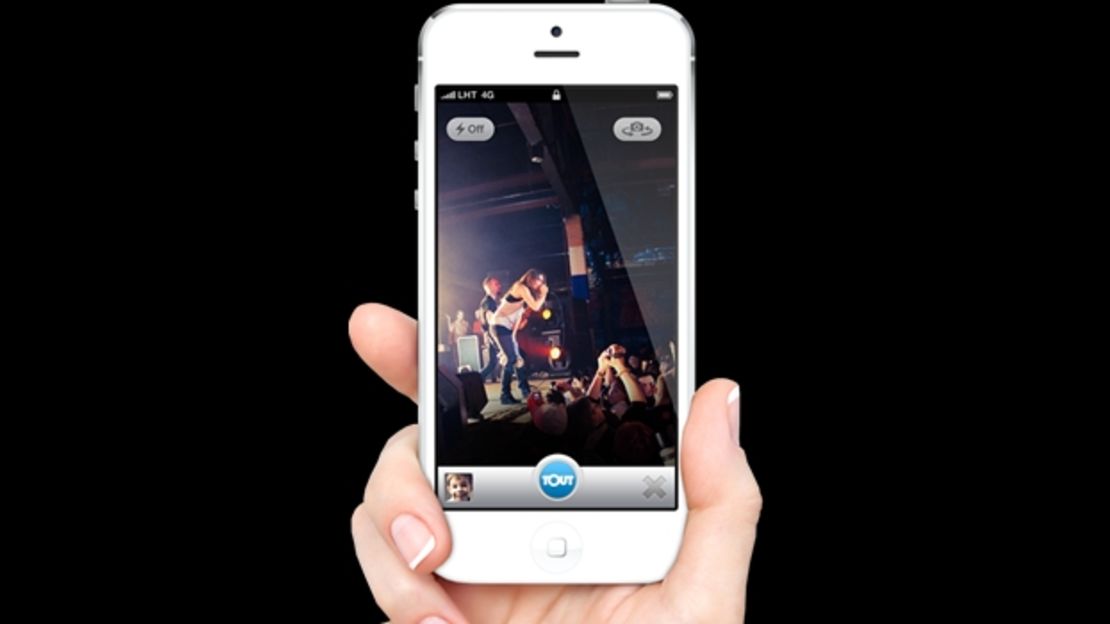
Founder Michael Downing built Tout from technology developed at SRI International. The early pitch was gloriously uncomplicated. Text could report that a moment happened; a short clip could show the moment. Users recorded from a phone or webcam, then distributed the result through Tout, social networks, email or an embedded player. The iPhone app was free. A later version reached Android, and the company offered a widget and API for publishing elsewhere.
In 2011 this looked like a bid to become the social network for moving pictures. Tout was easy to understand because its limit did the explaining. Fifteen seconds are enough to greet a friend, show a crowd, or resign from professional basketball. They are also too short to ask viewers for much patience. That discipline would prove more valuable to a newsroom than to a celebrity trying to build another social following.
The company did acquire a particularly loud partner. WWE invested $5 million as part of Tout’s $13.4 million Series B in 2012 and agreed to bring fan videos into its television shows, website and live events. A fan could send a clip and, in theory, appear beside the spectacle they were watching. WWE had more than 100 million social followers to invite. Tout got proof that short video might serve an existing media audience without first building a whole new one.
The customer with 2,000 reporters
The Wall Street Journal approached Tout about a proprietary tool for its reporters. The result, WorldStream, kept the app’s quick capture but added the things a newsroom needed: a central place for editors to review clips and analytics to see what happened after publication. In its first 229 days, hundreds of Journal staff filed 2,815 videos. Some entered a dedicated stream; others found their way into articles, blogs and broadcast appearances.
This is the point at which the word “social” starts to hide the interesting work. The Journal had an enormous reporting staff, many already carrying smartphones. Tout made those phones a lightweight video network. A clip did not need a camera crew, a lighting kit or a long edit. It did need enough editorial control to be trusted on a newspaper’s site. The company’s founder said by March 2013 that publisher agreements, rather than the consumer app, had become Tout’s primary business.
“What our customers want is more video and they want to access it on mobile, in real-time.”John Paton, Digital First Media, 2013
Digital First Media took the idea to 75 newsrooms. It handed smartphones to 1,800 journalists and trained them to file on the move. Two months into the rollout, the group said it was producing between 5,000 and 7,000 short videos a week, with most clips going live in about 30 seconds. A video of Colorado flooding reportedly reached more than 800,000 views in its first 72 hours. Those figures describe one publisher’s experience, not a guaranteed return for every newsroom. They do show that the simple workflow survived contact with ordinary reporting.
The 2016 website count was reported by Tout.
Then the article became the channel
The newsroom tool solved the supply problem: how to get clips made. Tout’s next product attacked distribution. In 2014 it launched a programmatic video content exchange. Its Annotator technology looked at the subject of a written article and paired it with a relevant video from the publisher or a participating media brand. The player could appear inside the article; advertisements around the video produced a revenue share for the publisher.
The distinction mattered. YouTube offered an ocean of video and an audience, but a newspaper still had to make, find and place clips where readers would encounter them on its own pages. Tout offered a supply chain for publishers whose articles outnumbered their videos. Content producers supplied footage. Publishers supplied pages and readers. Advertisers paid for video inventory. Tout connected the three, using contextual matching as the hinge.
The Local Media Consortium, representing outlets across the United States, signed on that September. Its member publishers gained access to the exchange. Tout said more than 500 media brands were participating at the time, including The Wall Street Journal, People, Fox Sports and Sports Illustrated. The potential was especially clear for a local article that deserved moving pictures but had no local crew available to shoot them.
Tout published no standard price for publishers. Its disclosed exchange model let them earn a share of ads shown with embedded video; the 2011 consumer app was a free download. The expensive part of the bet was capital: a $13.4 million Series B followed by a $26 million Series C.
How large did the idea get?
In October 2016, Tout announced its $26 million Series C and said its network carried more than 350 million videos a month to over 57 million unique viewers across more than 2,800 websites. Those are company-reported operating figures. They describe a different creature from the little app Shaq held in 2011. Tout was selling access to a distributed audience and the machinery that made video relevant on someone else’s page.
The company’s public profile later described more than 300 content producers and 3,500 publishers, with clients including CNN, Fox Sports and Time Inc. It also described its targeting as “Personalized TV Technology,” using patented AI from its SRI roots. That language sounds grand. The practical action was smaller and easier to test: take a page with an existing reader, insert a clip that truly fits the story, then see whether people watch and advertisers pay. A poor match would make the article worse, however clever the algorithm.
The original Tout service is reported inactive, with dissolution dated to 2019 in company records. Public reporting does not pin its end to one clean cause. It is fairer to say that the consumer app did not become a lasting standalone social destination, while the publisher business found a much larger reported audience. Rivals in consumer video, publisher tools and advertising all had their own advantages, and scale in video does not by itself reveal durable profit.
The useful trick was changing the question
A founder could copy Tout’s 15-second limit tomorrow. The more interesting thing to copy is its sequence of observations. WWE showed that established audiences wanted to participate. The Journal showed that working reporters would use a fast camera if editors could manage the result. Digital First Media showed the habit could spread across many newsrooms. The exchange showed that the page where a reader already stood might be a better destination for video than a new app to visit.
That approach depends on a real editorial fit. It works when the video adds evidence, place or personality to the text, when rights are clear, and when a publisher can control the placement. It grows harder when the clip merely repeats the headline, when the reader did not ask for playback, or when a site has too little traffic for advertising revenue to matter. Tout’s history is amusing because it begins with a giant man and a tiny video. It is useful because it ends with the less glamorous question every media company must answer: who needs this, again tomorrow?