The little wall in the Hoyos house was never meant to be a media property. Jenny knocked part of it down anyway, turned the space behind it into a secret room without spending money, and gave viewers a problem they could understand at once: could she pull this off for free? The result had passed 168 million views by late 2024. Somewhere in that improbable room is the neatest explanation of her work. A physical constraint becomes a plot. An ordinary house becomes a set. The payoff is visible before the minute is up.
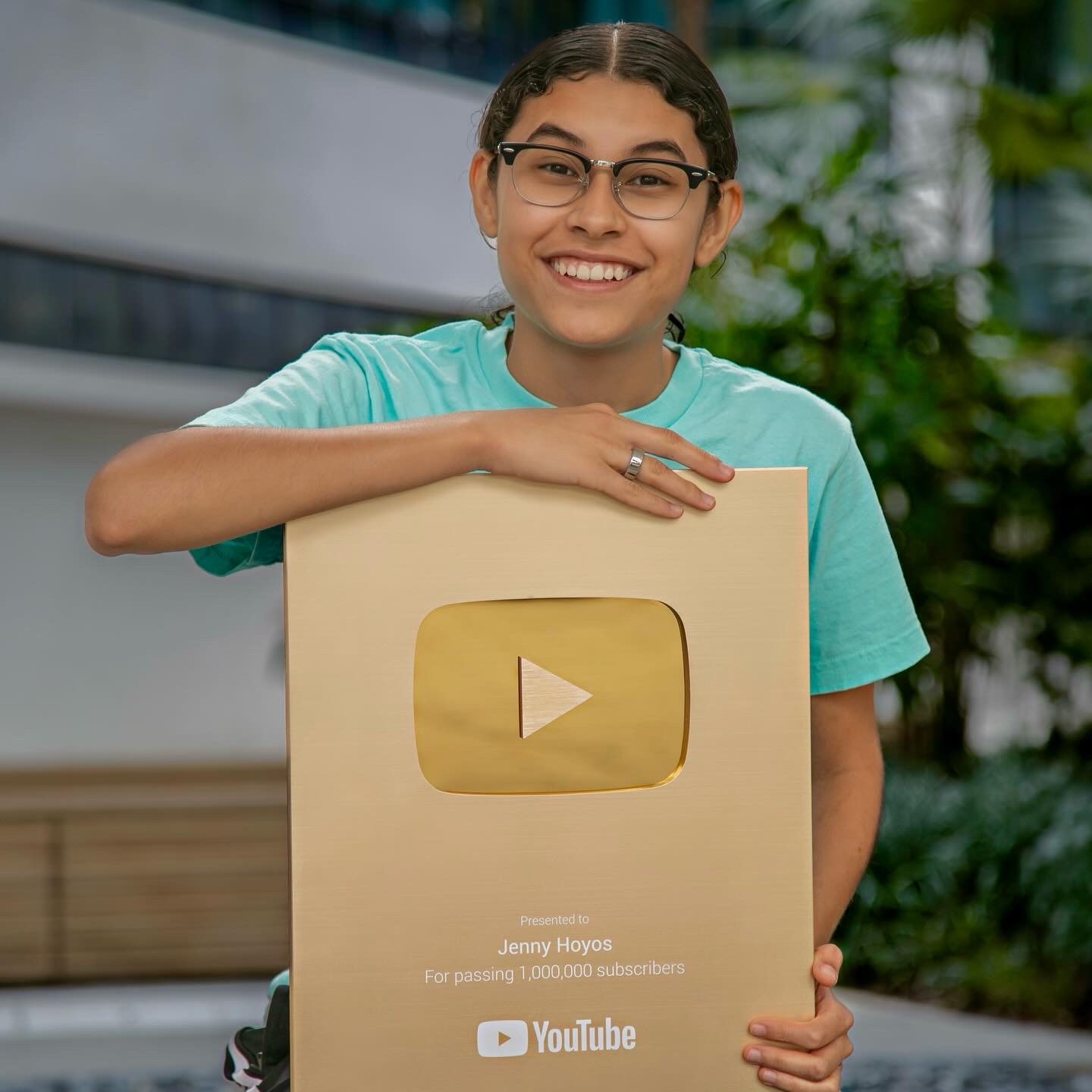
Hoyos has since built a channel followed by more than 12 million people. Her clips run on dares, bargains, household experiments and comic deadlines. She presents an idea quickly, makes the stakes plain, and allows the audience to see whether her plan survives contact with her mother, a drive-through line or a stubborn wall. The videos may be small, but they are rarely shapeless.
The scale can make the beginning easy to miss. She was eight when she first decided YouTube might be her stage. She had performed in a production of Willy Wonka and discovered that she liked being watched. Hollywood seemed far away. A channel was close enough to start that day.
A childhood measured in uploads
She grew up in South Florida with entrepreneurial parents. Business was familiar territory, and so was the idea of trying something before she knew exactly how it would turn out. Her early videos were daily vlogs, made under the spell of the creators she followed as a child. She posted into the peculiar silence that meets most young creators: a great deal of effort, an audience too small to fill a classroom, and very little evidence that the next upload would change things.
Another childhood pursuit taught her to enjoy a puzzle. Hoyos began playing chess at seven and, by nine, had ranked first among girls in her age group and been invited to represent the United States. She has described chess as training in thinking ahead. On a board, every move alters the possible endings. On a phone screen, every cut asks whether the viewer will stay for the next one. The comparison is hers, and it is hard to miss once you have watched a few of her Shorts.
Her impatience with ordinary pacing extended to school. She completed eighth grade online while attending seventh grade in person, then entered high school early and took college classes alongside it. When classmates mocked her videos, she kept making them. She paused at points, changed what she filmed, and eventually began a new channel devoted to finance in 2021. The childhood ambition had acquired a subject.
She could talk about money because it interested her. She could also see the teen working an after-school shift and wondering how far a paycheck might stretch. Early videos offered budgeting tips and documented her attempts to make money. Viewers recognized the problem. Some even recognized her at their jobs. The practical advice worked, but Hoyos saw a way to give it a wider audience: make frugality a character trait rather than a lesson plan.
Enter the cheapskate
The character was a version of herself, an inventive cheapskate who wants the experience without the usual bill. The premise is simple enough to travel across age groups. It turns a price into a dramatic obstacle. A secret room must cost nothing. A Christmas gift must fit a tiny budget. A cheap burrito becomes a mission, and a scoop of dirt might or might not contain gold. Viewers do not need a spreadsheet to understand the suspense.
Hoyos's favorite video from that period is an especially tidy example. While her mother drove through a McDonald's line, Jenny tried to cook a burger in the back seat before they reached the collection window. The other kitchen had a considerable head start. The car provided a clock, her mother provided an audience within the scene, and the result could be judged with a glance. The clip had more than 48 million views by late 2024.
The recurring partnership with her mother adds something a clever premise cannot manufacture by itself. Her mother plays along with the mayhem and sometimes pretends to be cross. After one video left a hole in a wall, they hid it with a picture frame. The household has its own comic rules; viewers learn them over time. Hoyos later helped her mother grow a channel past one million subscribers, making the family collaboration a small production company of its own.
“I decided to make general entertainment content where the main character is a cheapskate.”Jenny Hoyos
For a while, the channel's growth followed the odd mathematics of the internet. She has described taking a year to reach her first thousand subscribers, then adding tens and hundreds of thousands in successive months. In 2024, while videos were regularly drawing millions of views, she finished a bachelor's degree in business administration at Florida International University. She was 19, a fully online student, and concentrated in finance. The degree took two years. The work outside class was already a company.
The business behind the minute
A successful Short lasts less than a minute; the operations around it last all week. By 18, Hoyos had hired people and was learning to lead them. Sponsorships brought another education. When brands first approached her, she admitted she did not know what to charge or how to read the contracts. She compared offers with other creators, asked for advice and learned that having an audience does not automatically teach you to negotiate for it.
She began offering that hard-earned knowledge to other creators, through consulting and coaching, while continuing to make videos for her own channel. Her official site now presents the two parts of the work side by side: stories for viewers, strategy for brands and creators. The overlap is natural. The methods she teaches are methods she has tested in front of millions of impatient thumbs.
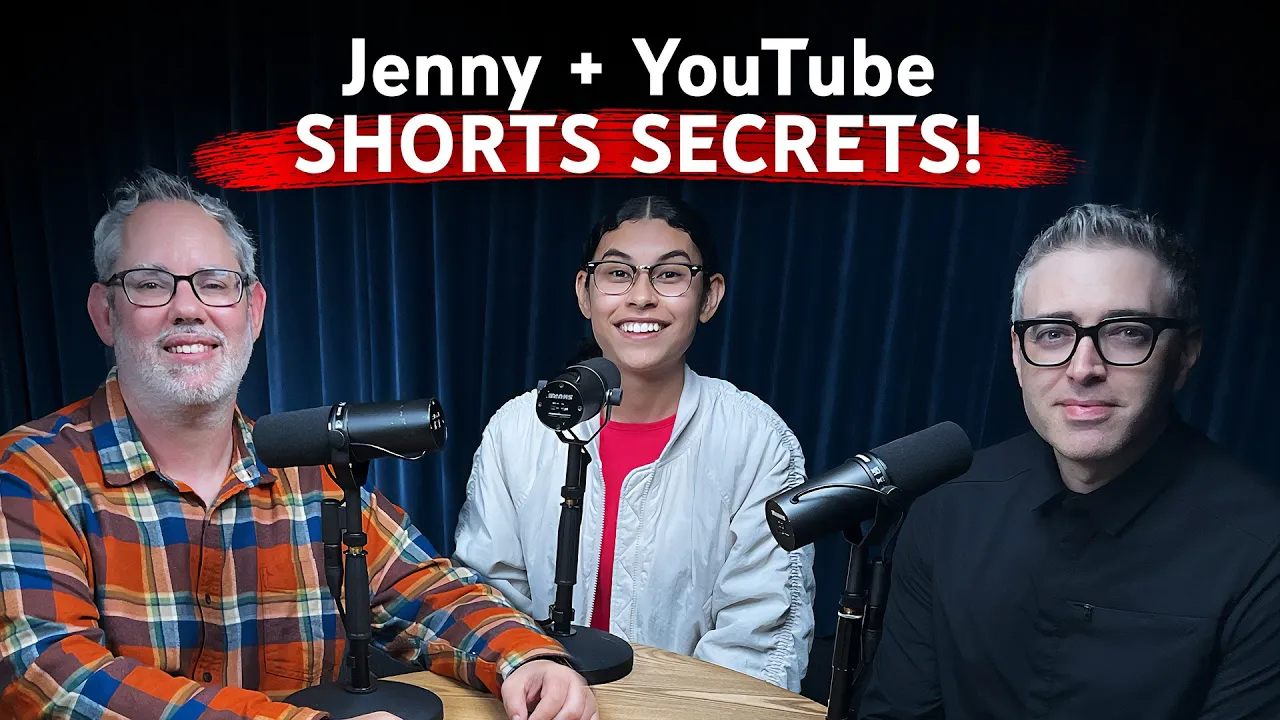
At TEDNext in 2024, she explained how to tell a compelling story in under 60 seconds. In a later conversation with YouTube Shorts product lead Todd Sherman, she argued that a creator may have about one second to earn attention. Her shorthand for the opening is shock, intrigue, satisfy. The words sound mechanical until you look at her simplest clips. A strange proposal opens a question; a sequence of attempts holds it open; an ending closes it. Even a joke deserves a structure.
She also distinguishes between the needs of a scrolling viewer and the needs of a channel. A thumbnail may do little to win discovery inside the Shorts feed, where people encounter the video directly. It can still help a channel look coherent to a person deciding whether to stay, or a brand deciding whether to work with its maker. There is a small business principle tucked inside that observation: an instant can win attention; a recognizable body of work earns trust.
When the numbers stopped telling the whole story
In 2026, Hoyos described a spell that complicated her own success story. She had been publishing roughly once a week and averaging around ten million views per video. Then she increased the volume, and individual clips fell as low as ten thousand views. The decline was unpleasant precisely because the earlier numbers had looked so reassuring. She concluded that many people had watched a video without forming much attachment to the person who made it.
She spent two months reshaping the operation. Monthly views dropped from around 100 million to 50 million, then surged. She reported a month of about a billion views across platforms, with roughly 900 million on YouTube. Figures at that scale are almost comic in print. Her more useful discovery was quieter: a visitor who happens to see a clip and a viewer who seeks out the next one are different people, even if both register as one view.
The audience reset
Approximate monthly cross-platform views, as described by Hoyos in 2026. Bars show relative scale.
That shift helps explain her current interest in longer videos and a closer relationship with her audience. She has spoken of wanting viewers to find her present and accessible between the big clips, replying and posting often enough to become a familiar part of their day. It is a demanding ambition for someone whose working unit has been the minute. It asks her to make room for more than a punch line and a payoff.
Creator gatherings have served a similar purpose for her. She once wanted to go to VidCon to meet the people she watched. She later returned as a featured creator, speaking about the decisions and failures behind the videos. She has recalled an in-person event where meeting other creators gave her a reason to continue when posting alone had become dispiriting. The lesson did not come from an analytics dashboard. It came from finding people who knew what the work felt like.
After the reveal
There is a certain comic elegance to the arc. A child who imagined YouTube as her own stage now teaches the platform's product people about the first second of a video. A student who made clips about saving money has learned to negotiate the value of her own work. A girl who played chess before she had a channel still seems interested in the move after the obvious one.
The secret room remains a useful image, even after its view count fades into a larger pile of numbers. It began with a wall that could be changed and a budget that could not. Hoyos made a story by letting the audience see the constraint, the experiment and the result. Her next project is less easily filmed: discovering what makes people return when the reveal is over. The answer may take more than a minute.