The advice was unusual for a newly launched podcast: turn the volume down. On 20 July 2015, Tech.eu introduced its first recording with an admission that the audio needed work. Neil Murray and Roxanne Varza had plenty to discuss. Unfortunately, the interference also wanted a speaking part.
- European technology, heard through founders, investors and reporters.
- Launched in 2015 inside the Tech.eu newsroom.
- Free listening; part of a publisher with commercial partnerships, research and events.
“The sound quality isn't the greatest, and the jingle is questionable,” the launch post conceded. That is a refreshingly specific product review to write about yourself. The team promised improvements and asked for feedback. Before the show could develop its voice, listeners needed to hear it properly.
Yet the agenda was already coherent: the financial crisis and Greek startups, Uber’s troubles in France, Airbnb’s legal position in Spain. Three countries, three different problems. The connective tissue was a technology industry whose fortunes depended on the place where it operated.
01 / A beat worth keeping
Tech.eu had opened in November 2013, almost two years before the podcast. The publication’s founding group included Robin Wauters, Roxanne Varza, Alex Barrera, Jon Bradford, Adrian McShane and Ivo Spigel. Its proposition was English-language coverage of European technology for readers across borders.
The origin helps explain the choice. Wauters had worked at TechCrunch and The Next Web. In his account of Tech.eu’s acquisition, he described wanting to concentrate on Europe when that focus was considered too narrow for a growing international publication. A supposed limitation became the new company’s organising principle.
For a listener, that focus has practical consequences. European expansion means dealing with multiple markets, rules and local habits. A story about a startup’s financing becomes more useful when someone also asks where it can sell, how it operates and what might obstruct its plans. The podcast gives those questions room.
“The sound quality isn't the greatest, and the jingle is questionable.”The podcast’s own launch verdict, July 2015
The distinction from broader technology shows is largely one of selection. Tech.eu keeps returning to Europe. Compared with venture-centred audio, its newsroom brief also makes space for products, regulation and the businesses using technology. Its value rests on sustained attention to that territory.
02 / The newsroom behind the microphone
By January 2019, the show had reached its hundredth episode. Hosts Natalie Novick and Andrii Degeler used the occasion to bring back four members of the publication’s founding team: Barrera, Bradford, Wauters and Varza, whose interview was recorded separately. The subject was the publication itself and the scene it covered.
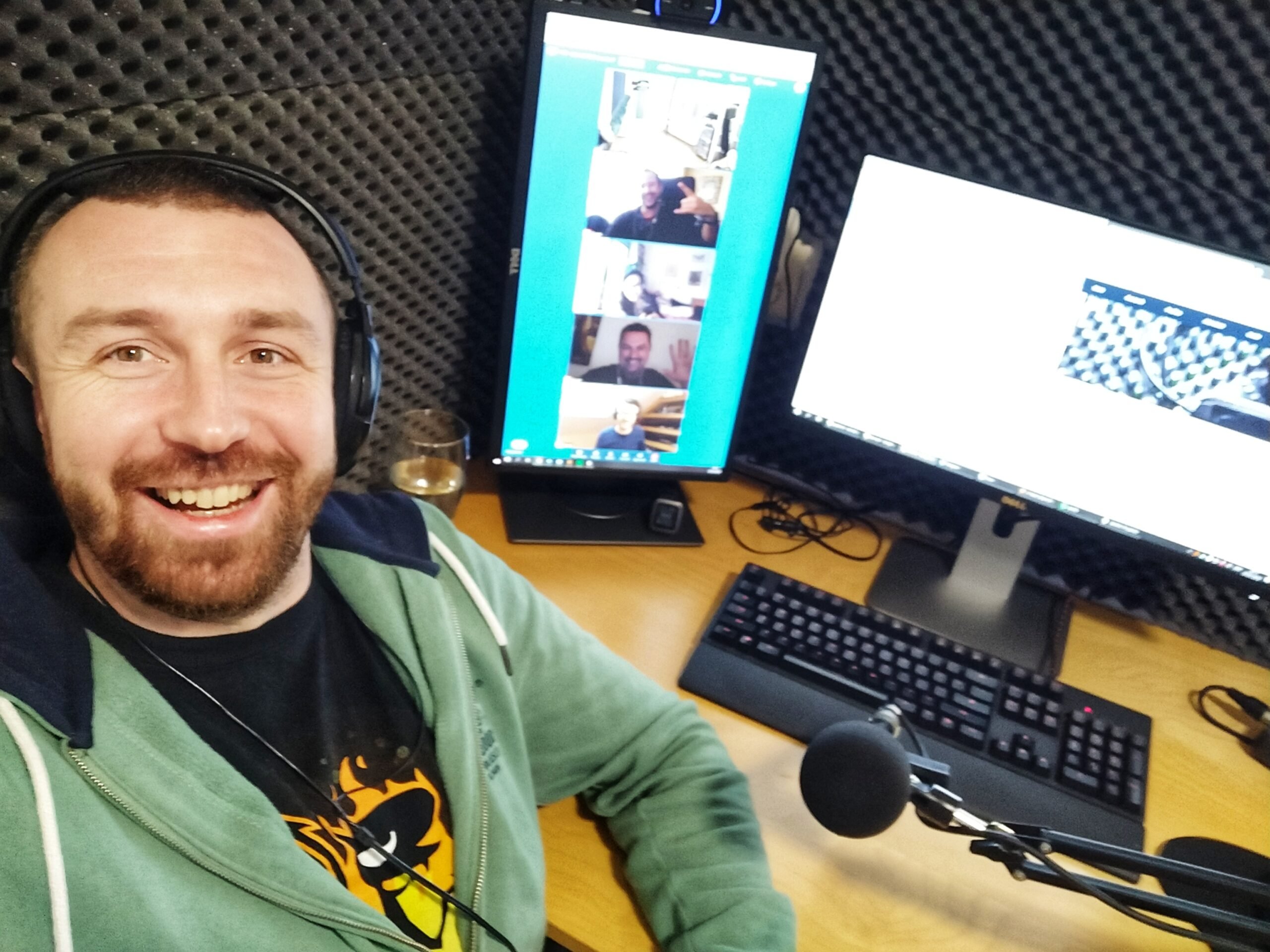
The picture accompanying that episode shows a microphone, headphones and remote participants on a monitor. It suits a publication built by people across Europe. Geography was both the subject and a working condition. Getting everyone into the same conversation did not require everyone to occupy the same room.
The archive subsequently carried several formats, including the “Drive at Five” newsroom recap and individual executive interviews. Its people directory lists journalists including Cate Lawrence, Dan Taylor, Fiona Alston and John Reynolds. The expertise comes from reporting on the sector; the microphone adds another way to examine it.
- 2013Publication
- 2015First recording
- 2019Episode 100
- 2021Webrazzi deal
- 2026Episode 401
Recent subjects show the range. Three AI roll-up founders discussed their approach in October 2025. CoreWeave’s Ben Richardson discussed UK and European strategy in May 2026. August’s episode 401 featured women innovators from Oxford Heartbeat, ATMOS Space Cargo and Minespider, with Lawrence hosting.
These are different businesses with different constraints. Hearing them alongside one another can help a founder or investor distinguish a sector-wide concern from a company’s particular argument. That comparison is a useful reason to keep an archive, even when yesterday’s announcement has stopped being news.
03 / Free to hear. A business to run.
The podcast is an editorial product within Tech.eu. Around it sits a publisher offering news, newsletters, premium material, market intelligence and conferences. Listeners can use the website, Apple Podcasts or Spotify. Commercial customers buy access to audiences and services through the broader business.
Sponsorship belongs in that picture. An August 2021 podcast featuring UiPath’s Vargha Moayed and Seedcamp’s Reshma Sohoni was marked as sponsored by UiPath. The publisher’s sponsored-content policy says financially supported articles should be clearly identified. A listener can value an interview while still checking its commercial context.
Capital arrived before the microphone. In his 2023 retrospective, Wauters put Tech.eu’s seed round at €150,000 and described it as the only investment the company had taken. That figure belongs to the publisher’s early financing, rather than a budget for making the podcast.
In October 2021, Webrazzi acquired Tech.eu. Wauters described the publisher as having built a sustainable, profitable business with limited resources. Joining a larger organisation offered a chance to expand its ambitions. The change in ownership was a decision about the resources behind the journalism as much as the journalism itself.
There is a useful business lesson here, though it should not be mistaken for a universal recipe. The audio product grew inside a publication with an existing subject, reporting relationships and other offerings. Someone copying the format needs to account for that foundation. A microphone alone does not reproduce a newsroom.
04 / Bring a question, not a shopping list
The most productive way into this show is to start with something you need to understand. Open banking? Listen to the Volt conversation, then the later TrueLayer interview. AI infrastructure? Start with an operator discussing European expansion. Before a meeting, use an interview to learn how its guest frames a problem.
Then write down the claims worth checking. What constraint does the executive emphasise? What evidence would support the proposed solution? What question remains unanswered? An interview reveals someone’s reasoning and priorities. It still needs to be read alongside reporting, financial information and the experience of customers.
That also sets the limits of the product. It is less useful when you need an exhaustive dataset, an implementation manual or independent confirmation of every forecast. But for hearing how European technology people explain their choices, Tech.eu offers a straightforward starting point. The early jingle could wait. The conversation had somewhere to go.