Marco Monroy went looking for an autograph. In November 2003, the Colombian lawyer and climate entrepreneur was in Beijing with his Argentine wife, attending a climate-change event. Diego Maradona was staying in their hotel. After an unsuccessful wait in the lobby, the couple tried the corridors. Music by the Argentine band La Mosca offered a promising clue. They knocked.
The encounter became an invitation, then an unexpected assignment. Maradona was unhappy with the terms of his commercial commitments in China. Monroy offered his professional help. Over three nights, the fan helped the footballer renegotiate, without charging him. A souvenir hunt had acquired a legal department.
There is a photograph of the two together: Maradona on the left, Monroy smiling beside him. It belongs to a different register from the usual executive portrait. No conference backdrop, no solemn handshake. Here was someone whose business involved atmospheric accounting, caught in a very earthly moment of delight.
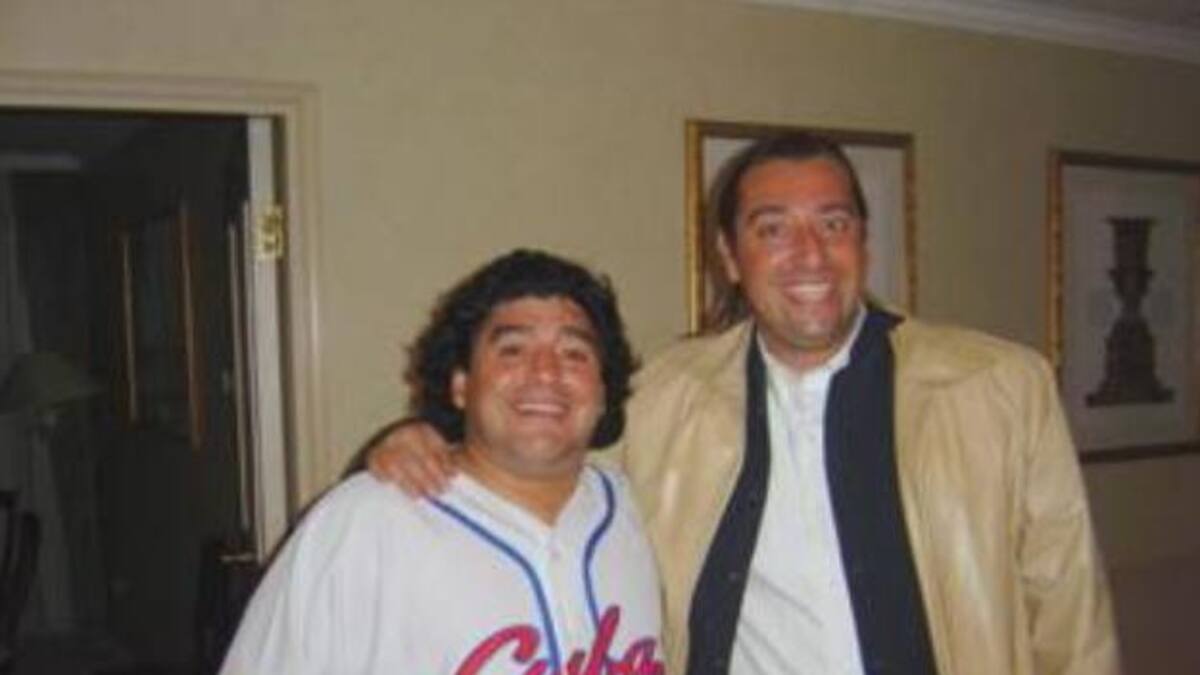
The episode makes a useful entrance to Monroy's working life. He could bring a lawyer's skills to an unfamiliar situation. He had also travelled to China for a business that required unfamiliar situations to become workable agreements. The hotel story has the better celebrity. The climate story has occupied much more of his career.
Before the commodity had customers
Monroy trained in law at Universidad del Rosario and pursued graduate legal studies at American University Washington College of Law. His professional biography includes authorization to practise in Colombia and New York. Before establishing MGM International, he advised the Japanese government on climate-change market mechanisms. The route into climate finance began with rules and agreements rather than the invention of a turbine.
He founded MGM International in 2000 and led it through 2010. The timing matters. A carbon project needed more than a physical reduction in emissions. It needed a way to account for that reduction and a market in which the resulting credits could have value. The enterprise sat between an environmental outcome and the commercial arrangements that made someone willing to pay for it.
During the early years, uncertainty over the Kyoto Protocol complicated that proposition. Between 2001 and 2005, persuading companies to participate could mean persuading them to enter a market whose future was still contested. Monroy's business offered its services and related costs in return for a percentage of credits eventually issued and sold. Its compensation depended on the opportunity becoming real.
“Convincing companies there was a business opportunity was not easy.” The sentence is Monroy's, and its lack of theatricality is part of its charm. A promising idea can be presented in a handsome slide deck. Getting a prospective client to accept the risk is a less photogenic occupation.
The reward depended on the credits becoming real.An early business model, in one sentence
The model put risk into the transaction itself. Clients could proceed without paying all the development costs at the outset; the developer would share in the eventual credits. It was a concrete answer to a commercial obstacle, with the rewards tied to a result. Reading his career through that arrangement gives the later investment funds a recognizable ancestry.
A map measured in projects
MGM International developed a portfolio of more than 400 projects across 35 countries, operating through 12 offices. Those figures describe the earlier company and its portfolio, rather than the present size of MGM Innova Group. They also describe a business that had to work across borders. An emissions-reduction project might be local, while its financing, buyers and regulatory framework reached much farther.
In 2002, the World Economic Forum named Monroy among its 100 Global Leaders of Tomorrow. A 2008 congress biography also records MGM International's 2005 recognition as best CDM/JI project developer. The initials belonged to the Kyoto-era mechanisms for developing and trading emissions reductions. This was professional recognition in a market still establishing its habits.
By 2009, his explanation of carbon management emphasized the combination of financial, regulatory and engineering services. MGM Innova formed an alliance with engineering and environmental firm MACTEC. Carbon expertise met capabilities in permitting, construction and operations. The arrangement acknowledged something that can disappear in discussions of markets: somebody still has to design the project, obtain permission and keep the equipment working.
The lawyer's territory had expanded. A transaction could involve the rules governing a credit, the technical basis for an emissions reduction, and the finances of a business undertaking it. None of those could safely be treated as a decorative attachment. Monroy's career became a succession of organizations built around their intersection.
The next wager: the electricity bill
In August 2010, Monroy and Maria Pia Iannariello established the MGM Innova Capital group. Their stated purpose combined financial, social and environmental results with technology transfer and climate mitigation and adaptation. Iannariello remains identified as founder and chief operating officer; Monroy as founder and chief executive. The partnership matters to the story because the investment operation was established by both of them.
MGM Innova Capital manages the MGM Sustainable Energy Fund and its successor, MSEF II. These funds provide equity and mezzanine financing for energy efficiency and renewable-energy projects. In ordinary language, they supply capital through ownership investments and financing that sits between conventional debt and equity. The ambition is to earn financial returns while improving how energy and resources are used.
Energy efficiency gives this story a rather unglamorous main character: the bill. Using less electricity for a useful service can lower a customer's expenditure. A financing arrangement must then connect the expenditure on better equipment with the savings it can produce. The arithmetic is appealing. The work lies in making the equipment, contract and payment schedule agree.
Monroy appeared alongside MGM Innova's Édgar Botero at a Mexican energy-efficiency seminar in March 2015. Their presentation concerned financing efficiency, cogeneration and renewable-energy projects to reduce operating and maintenance costs and improve service. It was a practical description of the business, with the customer's operations occupying the foreground.
The first fund's portfolio spans commercial and industrial energy efficiency, street lighting, solar generation, biogas and hydroelectric generation. Its listed markets include Mexico, Colombia, Costa Rica, Panama, Brazil and El Salvador. This range puts the word “energy” back into separate places and activities. A street lamp and an industrial installation share a financing question, even when their engineering differs.
Who takes the first risk?
Monroy and Iannariello were also involved in the Energy Efficiency Enabling Initiative presented through the Global Innovation Lab for Climate Finance. The proposal tackled barriers to private investment with a combination of public finance, risk protection and technical assistance. It approached efficiency as a financing problem as well as an engineering opportunity.
The design contemplated donor equity that would absorb early losses while private investors received a preferred return. It also proposed a facility to cover certain additional losses and assistance for energy-service providers and prospective customers. These were design elements of an initiative, rather than a list of results already achieved.
For a reader outside finance, the central question is simple: who agrees to lose money first if things go badly? The answer can change who is willing to invest. A guarantee, an insurance product or a different position in the capital structure can alter that answer. Monroy's early carbon-credit arrangements had already dealt directly with where risk would sit.
- Public capitalAbsorbs initial losses
- Risk protectionCovers specified risks
- Technical assistanceSupports providers and customers
The European Investment Bank committed $25 million to MSEF II. Its fund profile describes a $125 million green-infrastructure vehicle focused on energy efficiency and renewable-energy opportunities in Latin America and the Caribbean. It identifies commercial, municipal, industrial and residential applications, along with smaller renewable-energy investments at early stages of development.
Institutional backing comes with institutional obligations. The fund's environmental, social and governance requirements accompany its financial objectives. Its investment rationale includes energy and water consumption, emissions, energy security and opportunities for smaller enterprises. For Monroy, the work has moved from establishing carbon projects to managing capital whose purposes must be expressed in several kinds of outcome.
The figures need their footnotes
The current MSEF portfolio page lists 28 investments and roughly $170 million in capital leveraged. It gives an estimated 300 jobs created and approximately 1.8 million tonnes of avoided greenhouse-gas emissions over the investment lifetime. The lifetime qualification is essential. These figures are estimates spanning investments' lives, rather than a claim about a single completed year.
MSEF II's current page lists 16 investments, approximately $104 million of invested equity and a fund size near $125 million. It estimates around 600,000 megawatt-hours of electricity saved and 3.1 million tonnes of avoided greenhouse-gas emissions over investment lifetimes. Both fund pages now describe their funds as being in monitoring and divestment.
That stage shifts attention toward existing investments and exits. The initial decision to finance a project is only one portion of an investment's life. Monitoring keeps the financial and environmental promises in view after the announcement has passed. Selling an investment introduces another test: how the capital is returned and how the underlying business continues.
Monroy's public conversations reach beyond those fund pages. In a March 2021 podcast with Bilal Hafeez, the subjects included carbon taxes, cap and trade, efficiency incentives, climate finance and investor flows into ESG and green bonds. The episode's title also included Maradona. Apparently a portfolio can accommodate both energy policy and the memory of a footballing encounter.
The reading list attached to that conversation included Paulo Coelho's The Alchemist, Malcolm Gladwell's Outliers and Daniel Goleman's Emotional Intelligence. It is a small personal detail beside the institutional numbers. It leaves room for a person interested in stories, achievement and human behavior, without requiring a theory about what he is like in private.
The autograph anecdote is easy to remember. The less visible career is held together by clients, colleagues, projects and investment agreements. Monroy's work asks a recurring question: how does an environmental improvement become something another person can finance? His answers have changed from credits to funds, with energy savings increasingly taking their place in the calculation. A smaller bill can be a substantial ambition.