A power plant can be ready on paper and stranded in practice. Its developer has found the site, chosen the equipment, and identified a customer. A bank may be prepared to lend. Yet the project still needs a kind of capital that the developer cannot supply and the bank will not provide. Fernando Alvarado has made a career in that awkward space, where renewable energy meets the unfinished business of getting a deal to close.
Based in San José, the Costa Rican investment banker leads Deetken Impact Sustainable Energy, or DISE. He founded the Honduras Renewable Energy Financing Facility and Caribbean Basin Sustainable Energy Fund, usually shortened to H-REFF and CABEF. The initials are a mouthful. The problem they address is easier to say: smaller energy businesses need financing that fits the work they are trying to do.
A family connection to the current
Alvarado’s grandfather was a civil engineer involved in building early hydroelectric plants for ICE, Costa Rica’s state-owned electricity utility. Alvarado took a financial route into the same broad field. He earned an MBA in Banking and Finance, cum laude, at Universidad de Costa Rica. After nine years in banking, he moved into international investment in renewable energy and energy efficiency.
His later consulting work included the World Bank, IDB Lab, and Triodos Facet. The work addressed a stubborn financing gap. A useful energy project could need both risk capital and help developing the business around it. That combination became central to the funds he created. The family connection gives his career a pleasing continuity: one generation worked on the physical infrastructure; another works on the agreements that let infrastructure get built.
Two funds find a wider circle
In May 2019, Sustainable Energy Central America, the investment management company Alvarado led, entered a partnership with Deetken Impact. SECA would take the name Deetken Impact Sustainable Energy. Deetken invested in the advisor and the funds’ general partners, while a fund it managed also became an investor in H-REFF and CABEF.
The arrangement connected a Costa Rican operation with a Canadian investment manager. At the announcement, the two energy funds had $63 million in commitments and a $100 million target. Those were figures for that moment, with commitments and ambitions serving different purposes. Their mandate covered grid-connected and off-grid renewable energy, alongside energy efficiency, across Central America and the Caribbean.
The partnership put money into the management business as well as the investment vehicles. That distinction helps explain Alvarado’s job. A fund needs people who can assess a developer, negotiate terms, oversee an asset, and speak to its investors. Strengthening that organization can matter as much as adding another prospective deal. Renewable energy may begin with a natural resource; investment management begins with a team.
and initial capital
financing
within the deal
In Panama, a plant earns its next signature
A transaction in Panama supplies a concrete example. Solar Development Panama, co-owned by DISE and ReFeel Panama, built a 5.85 MW solar plant in Pesé, in Herrera Province. The plant began supplying electricity under a long-term private power purchase agreement in March 2021. In July, Banistmo provided a $4 million senior loan.
Alvarado described the loan as completing the financing structure the team had envisaged when the project began. The order is revealing: construction, electricity sales, and then the local bank loan. The venture had reached a point where another financing partner could participate. An investment in a developer had become an operating asset with an electricity buyer.
It is an unglamorous sequence to put beside a photograph of solar panels, but it explains what the panels depend on. A power purchase agreement connects generation to revenue. A financing structure assigns responsibilities around that revenue. The project needs both to hold together. Alvarado’s contribution sits in those relationships, where a business plan must become specific enough for other people to commit their money.
In Jamaica, the customer raises chickens
Two months later, DISE announced its first solar investment in Jamaica, with Soléco Energy, the business led by Jamaican developer Angella Rainford. H-REFF and CABEF invested equity through a project company to finance solar systems for commercial and industrial customers using long-term leases. The first agreement was a ten-year solar lease with a vertically integrated poultry business.
The customer is a useful corrective to the abstract language of an energy transition. Businesses need electricity to carry out ordinary work. A solar lease makes that need part of an investment proposition. The arrangement ties the financing to a customer relationship over years, with the developer responsible for bringing the project into being.
Alvarado argued that local developers would have a substantial part in advancing resilient Caribbean energy infrastructure, and that women should be among them. Rainford already had experience developing Jamaica’s Paradise Park solar project. Their partnership joined local project knowledge with investment capital. It also made the gender dimension tangible: a woman-led business was developing the infrastructure, rather than appearing only among a project’s intended beneficiaries.
“There is a lot of catching up to do.”
Fernando Alvarado, on diversifying electricity generation
The financing problem comes home
In September 2022, the work reached another Costa Rican setting. DISE announced an investment in greenenergy’s financing operation to expand access to solar systems, batteries, and microgrids for commercial and industrial businesses. The proposed structures included leases requiring no upfront investment, energy as a service, and microgrids as a service.
Alvarado linked the opportunity to changes in Costa Rica’s framework for distributed generation. He emphasized tailored systems, electricity costs, and resilience. The business already had a development pipeline; DISE’s capital was intended to work alongside senior debt to finance it. The aim was to make equipment accessible through terms a business could use.
There is a recurring question across these transactions: how will the customer obtain the system, and how will the company providing it be paid? In Panama, the answer involved a power purchase agreement. In Jamaica, it involved a solar lease. In Costa Rica, several service and leasing structures were available. Alvarado’s portfolio gives that question a geography, but its importance is quite ordinary. Customers have businesses to run while the energy system changes around them.
Before a project can ask for capital
A promising proposal may need more work before an investor can assess it. In January 2024, Deetken Impact announced a $600,000 grant through USAID’s Caribbean Climate Investment Program for the Caribbean Inclusive Climate Finance Initiative. The plan called for tailored acceleration services for 15 projects, with five receiving more intensive support to mobilize capital.
The assistance could include studies, permitting, transaction advice, and environmental and social management systems. Gender considerations ran through project selection, acceleration, and investment readiness. Alvarado presented the effort as a way to advance sustainable energy while helping enterprises become more investable.
Permits and management systems seldom get the scenic treatment afforded a solar farm. They belong to the less visible part of development: making responsibilities clear, checking that a proposal is ready, and giving a business the tools to answer an investor’s questions. For a fund manager, that work can widen the pool of projects able to proceed. The initiative made enterprise support an explicit part of the financing effort, with tasks that could be named and delivered.
A stage crowded with partners
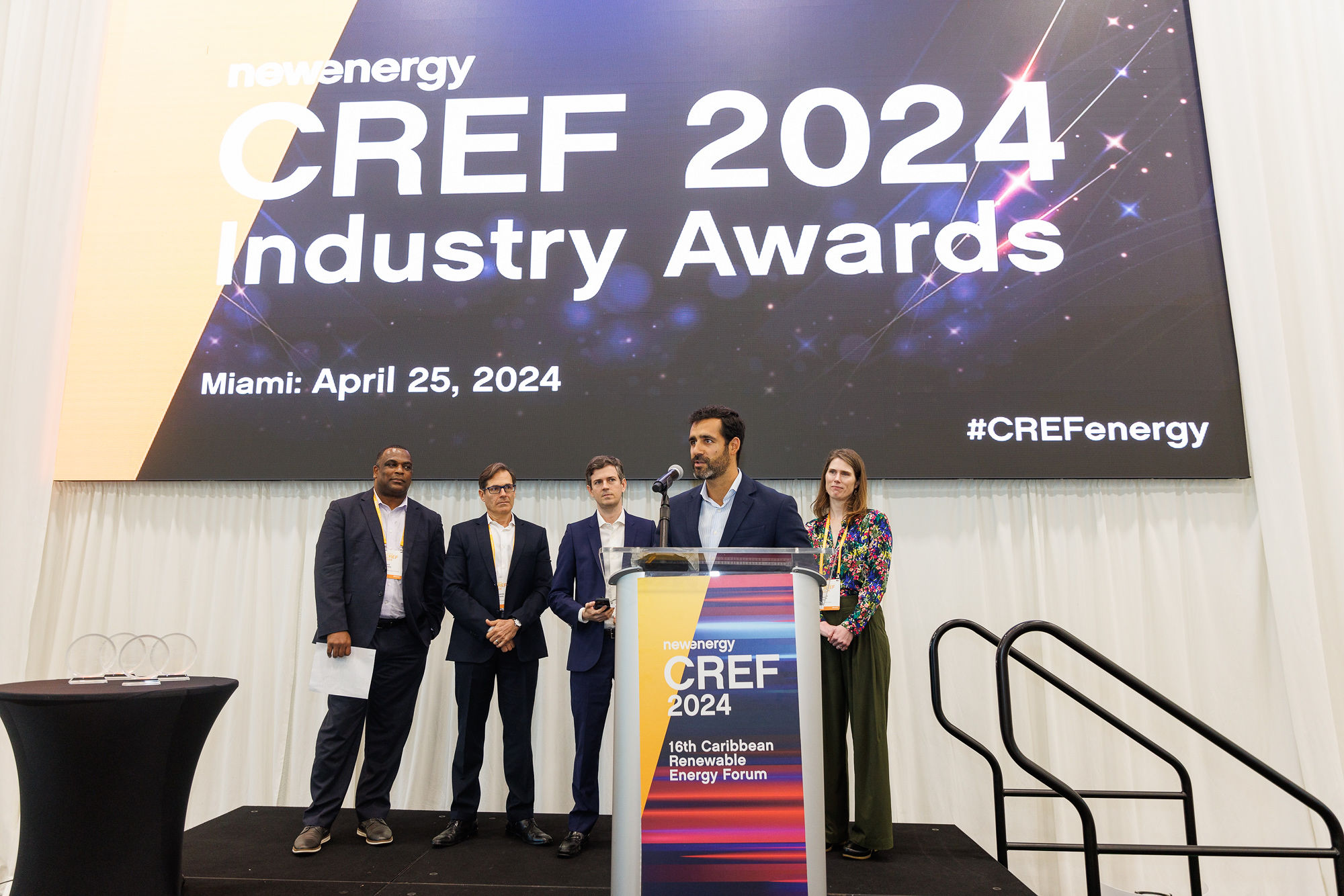
At the 2023 Caribbean Renewable Energy Forum awards, CABEF received Best Climate Finance Program. The CB Group project in Jamaica, developed with Soléco Energy, received Best Commercial & Industrial Project. Alvarado accepted the recognition with DISE colleague Carl Black, Deetken Impact’s Alexa Blain, and Soléco’s Rainford for the relevant awards.
He thanked the organizations that had supported the fund’s development, the investors providing its capital, and the clients bringing the funds into their projects. Then he said, “We are determined to persist in accelerating the renewable energy transition.” It is a sentence about continuing work, with a verb that suits a business dependent on many parties reaching agreement.
The following year, Cotoperi Solar in the Dominican Republic received CREF’s Best Utility Scale Project award. DISE was a co-investor alongside Acciona Energía and Dominican partners. The 2024 announcement described a 162.6 MWp project under construction with long-term contracts for all its expected electricity output. That was a development-stage description. The contracts mattered because a large generating asset also needed a defined route to selling its power.
After the investment period, the work changes
By June 2025, Alvarado was describing a different stage for H-REFF and CABEF. Their investment period had finished, with 16 investments in seven countries, comprising 25 renewable generation projects and an aggregate 310 MW of capacity. The next focus was managing assets and divesting the portfolio.
These counts describe different things. An investment can include more than one generation project; capacity describes what those projects can generate at a given moment, rather than their yearly electricity output. Keeping the units straight is part of understanding the business. So is distinguishing capital committed to a fund from the scale of the assets it helps finance.
Alvarado had already spoken publicly about the procedures for measuring investment effects. In a conversation with Alexa Blain, he described tools organized around Sustainable Development Goals and a webinar for project sponsors on monitoring and reporting. Clean electricity was one concern; he also discussed imported fuel, rural energy access, and resilience in Caribbean countries exposed to natural disasters.
In 2025, he became co-chair of the Latin America and Caribbean Regional Committee of the Operating Principles for Impact Management. The role brings his regional experience into a forum for other investors. It extends the same practical concern beyond his own portfolio: how to make an intended effect part of investment decisions and subsequent management.
A workshop beyond the spreadsheet
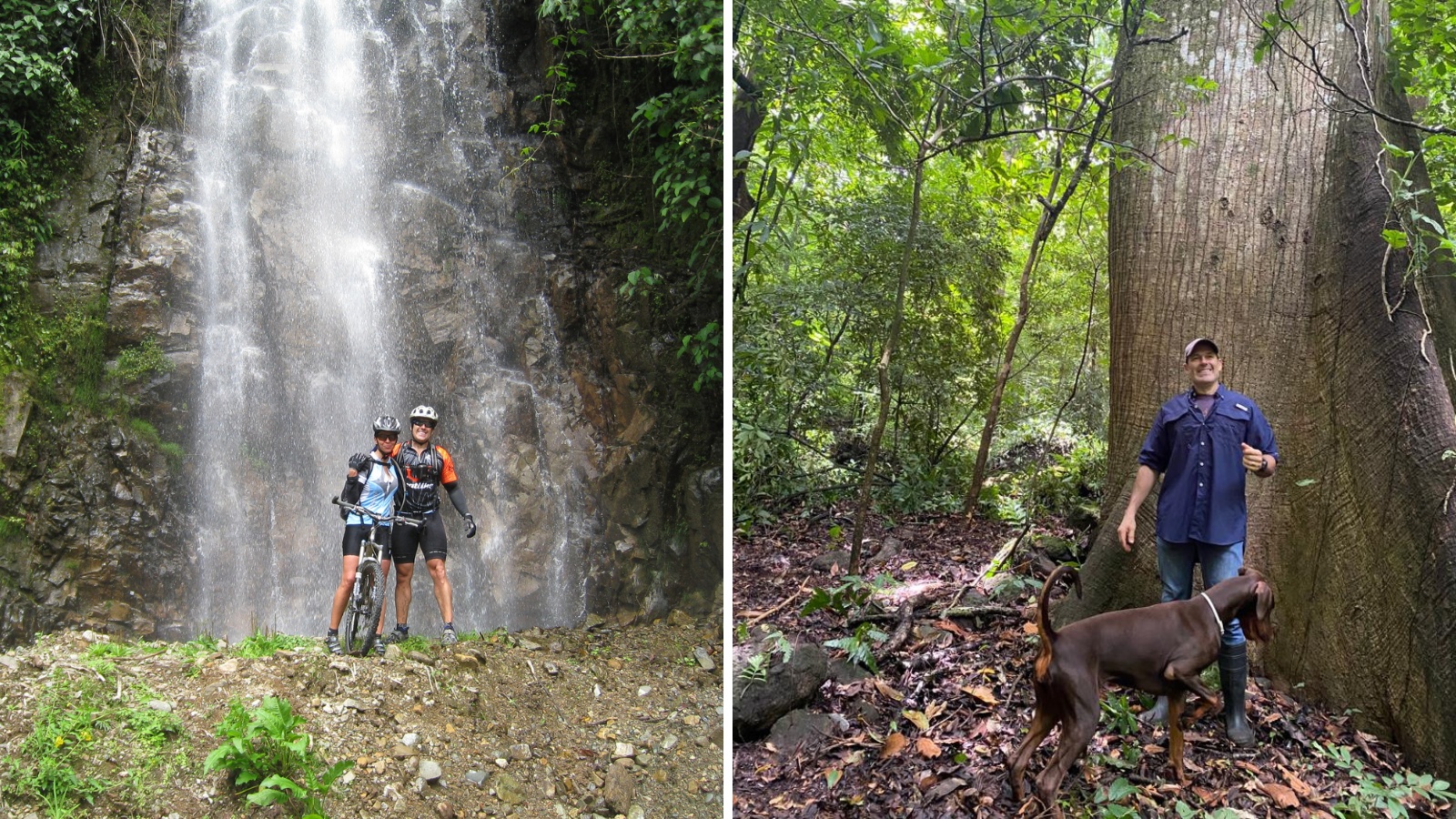
Away from work, Alvarado has described a garage workshop, mountain biking, cooking, and playing drums and trumpet. His 1988 Mazda RX7 Turbo II began as an early banking commute and became a car whose rotary engines he installed himself twice. He and his wife Carolina explore Costa Rica outdoors; their 2023 interview also included six large dogs. An investor’s calendar has room for smaller engines.
The next institutional chapter is larger. In November 2025, Deetken Impact announced Canada’s CAD$106 million commitment to the Inclusive Climate Action Fund, a vehicle targeting USD$300 million. Its scope includes clean energy, sustainable agriculture and agroforestry, and green finance, with technical assistance alongside investment. Those are the firm’s announced plans and commitments, rather than a claim about Alvarado’s personal results.
The continuity with his work is clear enough: projects need capital that suits their circumstances, and organizations need support to use it. His career makes the transition to renewable energy legible through individual arrangements: a Panamanian electricity contract, a Jamaican lease, a Costa Rican financing operation. Each puts a particular business closer to a working system. The sunshine is already there. The remaining work has people’s names on it.
Follow the projects and the conversations
- Deetken Impact
- Fernando on LinkedIn
- Fernando on X
- The personal interview
- Panama’s solar financing
- Soléco in Jamaica
- The 2019 partnership
- CREF awards, 2023
- Cotoperi Solar, 2024
- Investment readiness program
- The 2025 portfolio update
- Impact Principles committee
- Conversation with Alexa Blain
- The next climate fund
- Watch: regional renewable-finance discussion (Spanish)
- Deetken Impact on YouTube