Marc Williams once swore he would never join the family business. This is an inconvenient opening for the chief executive of a company carrying his surname. It does, however, improve the story. A career that follows a declared intention can be described in a sentence. A career that changes its mind gives us something to look at.
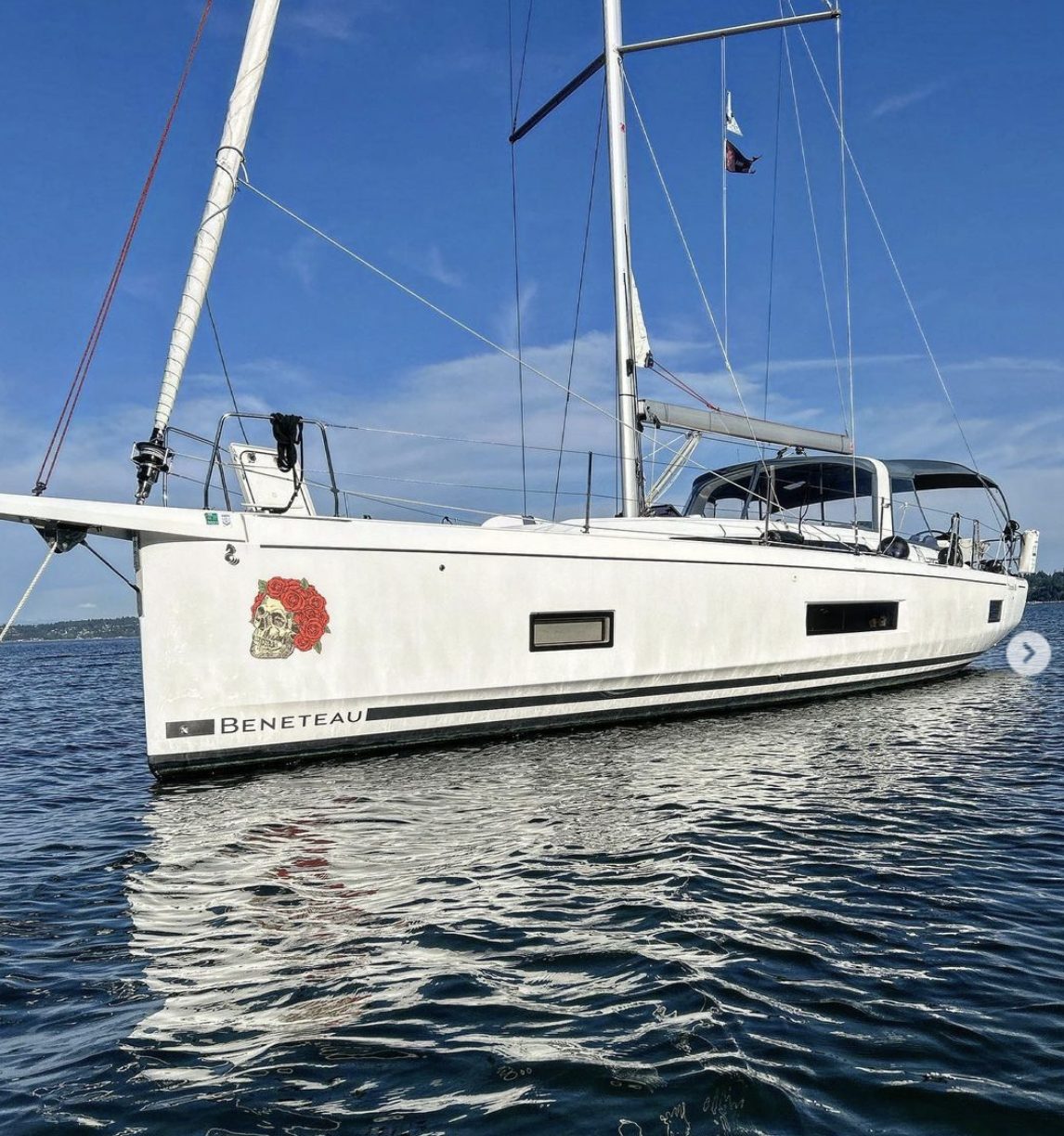
Williams now owns and runs WH inc., the Seattle marketing agency his father helped establish in 1969. He studied design and illustration at Western Washington University, became a creative leader, and took responsibility for an independent business whose history began before the consumer journey had acquired quite so many screens. He also skis, sails and has a family boat called Run for the Roses. A useful name for someone whose professional route declined to proceed in a straight line.
The job he was going to avoid
The agency’s beginning was practical. Jim Williams and Ed Helde could not find the work they wanted, so they created their own jobs. Their son’s eventual route into leadership involved Bayliner Boats, roughly 100 days a year on photo shoots, and Jim’s move to Mexico. Those are the ingredients of the reversal Williams discussed in an Indie Agency News conversation. Even the abbreviated version contains more motion than a succession chart.
There is a particular tension in joining a business with a family name. The name supplies continuity before the new owner has made a decision. It can also obscure the decisions he does make. In Williams’s case, the subsequent record gives the succession its substance: new ways of organizing creative work, a consumer journey model, a division for startups and an acquisition in public relations.
The inherited business became a place to develop a point of view. The question running through that work is how a brand becomes worth choosing. It is a quieter question than how to get noticed, and considerably harder to answer with a single advertisement.
A box of markers, a room of paintings
In January 2019, Williams marked the agency’s fiftieth anniversary with an account of its beginnings. He remembered magic markers, horse-racing bets and the founders’ entrepreneurial appetite. His own early memories of the work included a stat camera and the materials of pre-digital production. The family history comes with things you can hold.
That gives his design education a context. Before a brand became something to manage across platforms, somebody still had to make an image, arrange a page and decide what deserved attention. Williams’s retrospective follows changes in technology and taste while returning to the people involved: clients prepared to take a chance and colleagues trusted to do the work.
There is a lovely physical counterpart to that history. When the agency moved into its Belltown space in 2014, about thirty original oil paintings by Jim Williams came out of storage. An office full of current projects acquired some older pictures. The paintings suggest a family connection you could walk past on the way to a meeting, rather than one requiring a ceremonial plaque.
Williams’s year-end tally for the agency, alongside a move to Belltown and the launch of its Mobius model.
Williams described the new open layout as a way to bring creative, technology and account teams together. The process had a name, Flight. That year’s work included a Harry’s Fresh Foods rebrand and Alaska Airlines programs. The mix is revealing: systems for collaboration inside the office, useful communication outside it, and a founder’s paintings making the place feel less interchangeable.
Making room for the decision
The consumer does not know that a marketing team has drawn a funnel. She can hear about a product, forget it, ask a friend, compare it with another, and return later. Any account of that behavior has to leave room for the detour.
WH’s Mobius model, launched in 2014, addresses that untidiness. It treats the customer journey as non-sequential. The buying decision belongs to a continuing set of encounters, rather than a staircase everyone climbs at the same speed. Williams listed the model among the agency’s consequential work that year. His interest was in understanding how and why people decide.
In 2015, the agency hired Phil Chin as Marketing and Partnerships Director. Part of Chin’s remit was to develop partnerships that would help the model gain adoption. Williams, then identified as President and Executive Creative Director, connected the hire to experiences that resonated with audiences and produced measurable business results.
That pairing matters. A theory about customers has to survive contact with the practical business of serving clients. Partnerships, operations and experienced colleagues are part of how an idea gets used. The model’s shape may be a loop; the work of building an agency around it still involves fairly ordinary appointments to the calendar.
A simplified reading of WH’s non-linear model. People can revisit decisions and influence the next buyer.
Help sized to the company
In May 2016, Williams introduced Active Labs. The division offered a consulting and creative combination for startups with a market-ready product and early fundraising behind them. Its work included brand development, distribution strategy, design and public relations. The premise was refreshingly specific: companies at that stage needed a clear message and a plan for getting into the market.
Williams also recognized that they might want to retain control of their marketing. A young business could need experienced help without being ready to hand over the whole operation. The launch accompanied a partnership with Keiretsu Forum Northwest, an angel investment network. Williams had previously chaired the Northwest Entrepreneur Network and was then serving on Seattle University’s Innovation & Entrepreneurship Advisory Board.
This chapter puts the family-agency story in a different light. He was running a business with decades behind it while considering what companies with little history needed next. The useful distinction was the company’s stage. Buying the wrong amount of help can be an expensive way of discovering what you actually needed.
Taking the work outside
The following year brought another decision. In May 2017, Williams-Helde acquired Hayter Communications, the public relations agency founded by Ryan Hayter in 2001. Hayter’s work covered outdoor recreation, winter sports, travel and related categories. The announcement set out a reciprocal arrangement: Williams-Helde clients would gain earned-media and event expertise, while Hayter’s clients would gain access to broader creative and digital services.
Ryan Hayter would continue to run the public relations division. Preserving that role gave the transaction a human center. Expertise comes attached to relationships, habits and people who understand the particular audience. Outdoor public relations includes arranging experiences in which a product has to do something beyond looking agreeable in a photograph.
The overlap with Williams’s own interests is clear. His biography identifies him as a former ski racer and an avid skier and sailor. The work and the weekends share some terrain. That does not make every outing a strategy session. It does give an agency owner a personal relationship with the activities his clients support.
A later example was Peace Vans, which appointed WH its public relations agency of record in 2022. The Seattle camper-van business joined a roster that included Dometic, iKamper, Step 22 Gear and HitchFire. Williams spoke about working with brands sharing a taste for adventure and common values. The agency was also producing an overland edition of its LUMINATE media gear guide.
These are products whose appeal is tied to a use: leaving town, carrying equipment, making a trip possible. Marketing them invites a fairly direct test. Does the promised experience resemble the experience someone actually has? A beautiful campaign can attract attention. The next weekend supplies its own review.
The freezer test
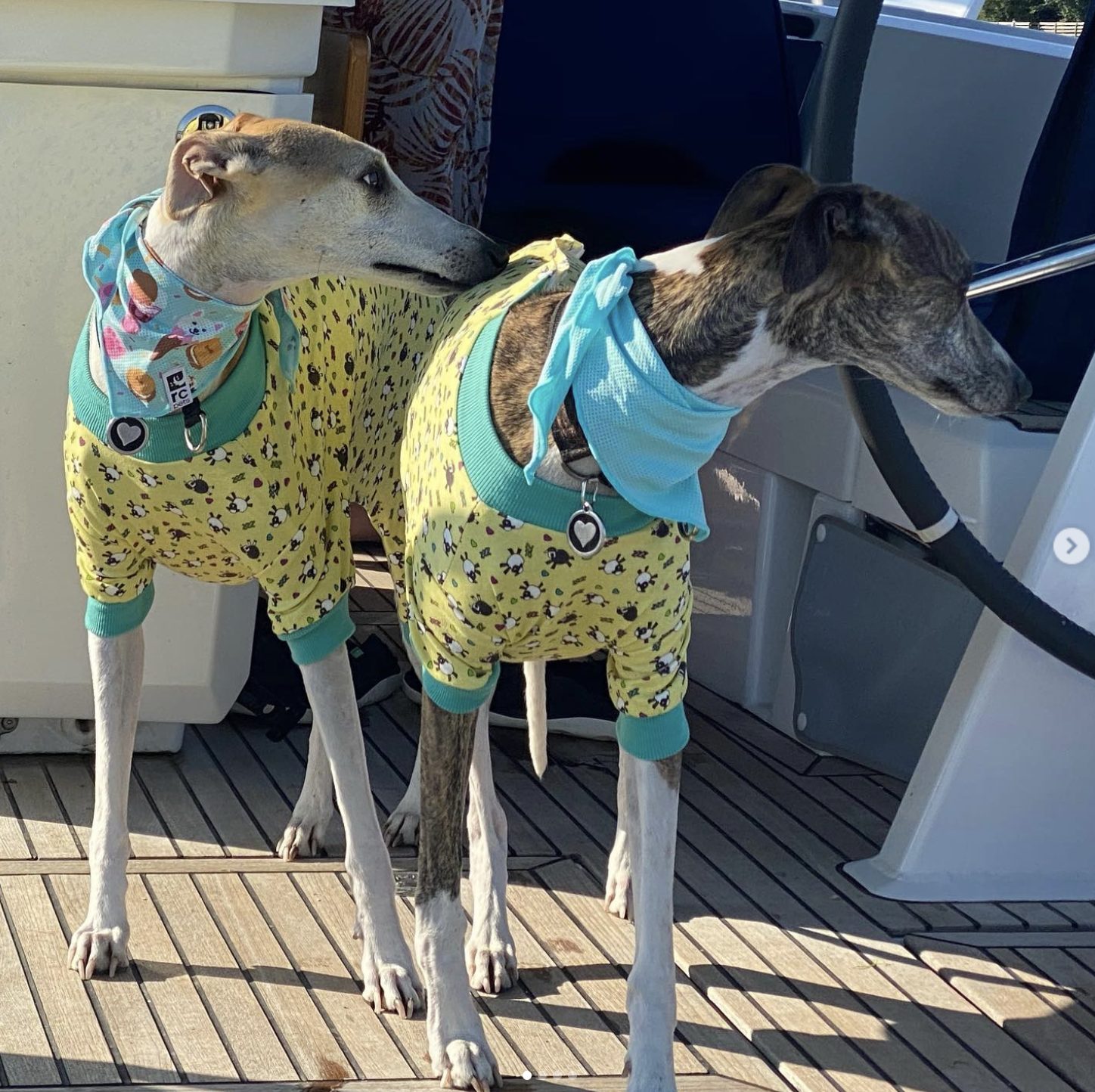
Williams supplied just such a review in January 2024, writing about the family’s Beneteau Oceanis 46.1 after three years. He considered the sailing equipment, cabin layout and storage. He also considered two growing children and three dogs. The freezer held mini corn dogs; an air fryer earned a place aboard. A boat, like a household, is eventually judged by the arrangements that let everyone eat.
His summers included multi-week trips into the San Juan Islands and Canada. The review made room for a boat that could withstand use, rather than one maintained for admiration. He was willing to recommend it after living with it. Read beside his professional work, the essay becomes a small, concrete example of preference formed through experience. That connection is an editorial reading, but the corn dogs are his.
A choice that keeps being made
There is a civic chapter, too. In 2017, Williams Helde shared a silver Community Impact Awards recognition with Samaritan, an app supporting people experiencing homelessness. The agency had volunteered with programs for three months and contributed more than $20,000 in creative work to help prepare the app. For this project, communication was meant to make another person’s situation more understandable and a response easier to take.
More recently, WH’s work has extended into heritage beverage brands. In July 2024, it added Redhook and Widmer Brothers to a public relations portfolio already including 10 Barrel Brewing, becoming Tilray Craft Beer’s agency of record for the Pacific Northwest. Those brands brought existing histories and communities. The assignment involved regional awareness, their legacies and their continuing development.
September 2026 brought a new executive and a new publication. Adrienne Lopez joined as Executive Vice President on September 1, with Williams emphasizing the need to connect strategy, communications, experience and execution. Eight days later, WH announced Stop Interrupting. Start Belonging., a book presenting its Performance Lifestyle Consumer mindset and Mobius framework.
“We believe most brands are still optimizing for awareness when they should be optimizing for preference.”
Marc Williams, September 2026
The book argues that research, recommendations and evidence increasingly shape choices across categories. Williams’s ambition is to help brands earn confidence and a place in people’s lives. It is a fitting present tense for this particular career: a designer running an inherited agency, continuing to examine why a customer comes back.
The family name supplied a beginning. It did not settle the direction. Williams has spent the intervening years making decisions about collaborators, clients, methods and the work a company should undertake. He also keeps heading for the water. Somewhere between the office paintings and the boat’s freezer sits a fairly recognizable life, which is where any argument about belonging ought to have to prove itself.
Follow the next turn
More from Williams and the work around him.
- Marc Williams on LinkedIn
- Run for the Roses on Instagram
- WH inc. · Agency Instagram
- The Oceanis 46.1 sailing essay
- Williams’s fiftieth-anniversary essay
- Stop Interrupting Me on Substack
- Watch: Meet an Indie Agency with Marc Williams
- Watch: Alaska Airlines self-tag work featured in Williams’s 2014 retrospective
- The 2026 book announcement · Adrienne Lopez joins WH