Marc Rowan owns a lobster business and does not eat lobster. In a conversation recorded in 2024, he described three Long Island restaurants: two Duryea’s locations, in Montauk and Orient Point, and Lulu in Sag Harbor. He called himself the “accidental restaurateur.” It is a useful introduction to an investor who can find a business interesting without requiring it to resemble his own tastes.
His explanation was practical. Restaurants often begin with too little money and owners who know more about food than finance. He preferred to bring capital and business judgment, then work with people who understood the kitchen. Even the wine list contained a decision about reputation: at Montauk, he said, wine and beer were enough. Selling spirits might earn more, but he liked the experience as it was.
There is something pleasantly unromantic about this. A billionaire acquires seaside restaurants; the conversation turns to capitalization. Yet the same questions run through Rowan’s much larger undertaking at Apollo: who supplies the money, how long can it stay, and who actually knows how to do the work?
The career that began with a change of course
Rowan did not grow up planning to run an investment firm. His childhood took him between New York and Hollywood, Florida. With public interest lawyers throughout his family, he expected to become one too. He was accepted at Cornell’s School of Industrial and Labor Relations. Then the coursework arrived, and his enthusiasm for the legal profession departed.
He called Penn and went to Wharton without having visited. His recollection of arriving with shoulder-length hair is a welcome interruption to the usual business-school origin story. He was choosing a subject that made sense to him before he had a particularly tidy explanation of where it might lead.
He earned his bachelor’s degree in 1984 and MBA in finance in 1985, graduating summa cum laude. His early working life took him to Drexel Burnham Lambert, where the attraction was businesses undergoing change. The firm offered plenty of instruction in that subject, including a final lesson its employees would have preferred to receive less personally: it collapsed in 1990.
Looking back, Rowan treated that failure as a release from a career he might otherwise have continued. Alongside former Drexel colleagues, including Leon Black and Josh Harris, he helped establish Apollo that spring. Leaving a familiar institution was involuntary. Deciding what to build afterward was theirs.
Drexel collapses. Apollo is founded. The disruption becomes a starting point.
A buyer’s eye for other people’s problems
Apollo’s early history makes the later company easier to understand. In 1991 it acquired Executive Life’s bond portfolio. An insurer’s troubled assets became part of the foundation of a credit business. The attraction lay in examining what was actually there, rather than accepting the reputation attached to it.
The firm subsequently spread across businesses and borders. A first real estate opportunity fund closed in 1993. Singapore and London offices opened in 2006. Athene began in 2009. Apollo went public in 2011, and its 2013 acquisition of MidCap Financial added a platform for originating investments. These were different ways of finding assets and organizing money around them.
That word, origination, does considerable work in Rowan’s world. It means creating or arranging a financing opportunity, rather than simply choosing among securities already on a shelf. It changes the investor’s daily assignment. Someone must understand the borrower, assemble the terms, price the risk and decide which pool of capital can hold it.
The distinction also helps explain why calling Apollo a private equity firm leaves so much out. Buyouts remain part of the business. But Rowan’s public conversations increasingly concern credit, financing and retirement. The familiar label is a small sign over a building that has acquired several additional floors.
Why the calendar belongs on the balance sheet
Retirement services gave this approach another dimension. Athene’s business centers on retirement savings products. Those commitments stretch into the future, giving investment managers a different timetable from money that customers can demand back immediately. The calendar becomes part of the business model.
Apollo and Athene completed their merger in January 2022. The transaction brought asset management and retirement services under one publicly traded parent. It also established a single class of voting shares, each with one vote. For Rowan, who had become Apollo’s CEO in March 2021, the combination made alignment an operating proposition as well as a shareholder matter.
The idea is straightforward enough to explain over dinner. A promise to pay someone years from now can be supported by assets designed to produce cash over those years. The hard part is selecting the assets, getting the timing right and leaving room for circumstances to disappoint. Patient funding does not make a bad loan good.
Simplified relationship. Investment selection, liquidity and matching remain essential.
Rowan also argues that private credit is too often discussed as though it consists entirely of risky corporate lending. His broader definition includes investment-grade financing. This is an argument about categories with real commercial stakes: a narrow description can obscure the range of assets Apollo wants institutions and individual investors to consider.
The numbers show how far the business has traveled. Apollo reported $1.047 trillion under management at June 30, 2026, with $60 billion of inflows during the quarter. Those are assets managed across the firm, rather than Rowan’s personal fortune. Scale supplies opportunities; it also increases the amount of judgment the organization must reproduce.
June 30, 2026
2026
An invitation to argue with the boss
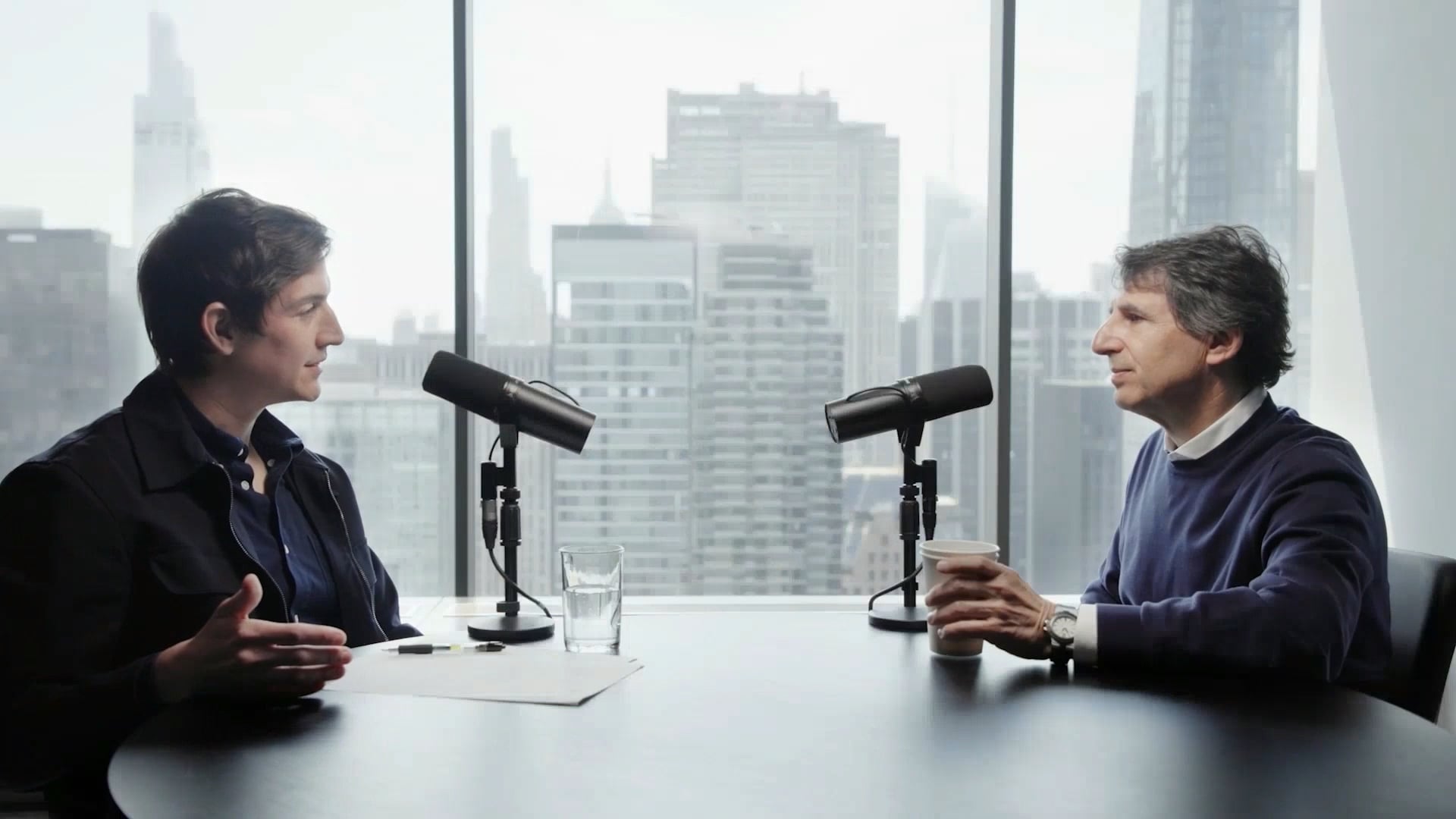
That problem of reproducing judgment leads Rowan back to culture. In his 2026 discussion with David Haber, he described an organization that should question inherited arrangements and tolerate challenges to authority. His phrase “intellectual insubordination” gives the ambition a suitably mischievous edge.
“Let’s ask the question what the right answer is,” he said. It is an appealing instruction, though making it work at a large financial institution requires more than permission to disagree. Employees must believe that an unwelcome answer can survive its encounter with someone more senior.
“Let’s deal with people as people.”
Marc Rowan, on the culture he wants Apollo to preserve
He paired that argumentative culture with attention to colleagues’ lives outside the office. People have happy events and difficult ones. A firm that expects partners to stay for a career must respond to both. The practical connection is experience: an investment business loses something valuable when people who have learned together stop wanting to work together.
In another leadership conversation, with iCapital’s Lawrence Calcano, Rowan examined the danger of successful organizations becoming preoccupied with avoiding mistakes. He argued for beginning innovation before necessity arrives. Having built something substantial, a founder faces a peculiar temptation: preserving its current form can start to feel like protecting the achievement itself.
The alumnus who opened his checkbook, then challenged the institution
Education has remained one of Rowan’s public commitments. In 2018 he and Carolyn Rowan gave Wharton $50 million to support faculty and the Penn Wharton Budget Model. The gift funded an effort to bring academic expertise into questions of business and public policy, including recruiting distinguished professors and supporting research.
His education work also extends beyond Penn. He was a founding member and chair of Youth Renewal Fund and served as vice chair of Darca, a school network serving diverse and underserved communities in Israel. These commitments place schools alongside markets in his public life, with considerably different measures of success.
At Penn, generosity did not produce a quiet relationship. In 2023 Rowan urged donors to withhold contributions and called for President Liz Magill and board chair Scott Bok to resign over what he regarded as failures to address antisemitism. Both resigned in December after a wider crisis that included congressional testimony. His campaign helped make donor power a central question in the university’s governance debate.
The relationship continued to evolve. His nine-year tenure chairing Wharton’s Board of Advisors ended in June 2026, with Jamie Dinan succeeding him in July. Meanwhile, his public responsibilities widened: in January 2026 the White House named him to the founding Executive Board of the Board of Peace and to a separate Gaza Executive Board supporting the reconstruction framework.
Visibility has brought scrutiny too. In February 2026, two teachers’ unions asked the SEC to investigate Apollo’s disclosures concerning Jeffrey Epstein. Apollo denied that Rowan had a business or personal relationship with Epstein and said he had supplied information in connection with Epstein’s tax work for Black. The request was an allegation requiring examination, rather than a regulatory finding.
The next problem is finding enough good problems
Rowan became Apollo’s board chair in April 2025, adding the position to his CEO role. The business he leads has set a goal of $1.5 trillion under management by 2029. Its challenge increasingly concerns finding enough suitable investments for the capital available. Raising money and putting it to work well are separate accomplishments, even when a presentation places them on neighboring slides.
His conversations about technology point toward another change in the assignment. With Haber, he discussed AI, data centers and the financing needs of a more capital-intensive technology economy. Software can reach customers without owning much physical infrastructure. Computing at enormous scale introduces a rather more substantial shopping list.
Across these pursuits, Rowan’s recurring interest is the construction of a business: its funding, its incentives, its people and its capacity to change. The accidental restaurateur offers a compact version of that interest. He can leave the cooking to someone who knows the kitchen. His attention stays on whether the enterprise has what it needs to keep serving dinner.
Continue the conversation
Interviews, official records and further reading.
- Apollo biography
- The Athene combination
- Wharton’s $50 million gift announcement
- Wharton leadership today
- Apollo’s June 2026 results
- Rowan’s public disclosures controversy
- 2024 conversation with Tyler Cowen
- 2026 conversation with David Haber
- Leadership with Lawrence Calcano
- Wikipedia biography
- Apollo on LinkedIn
- Apollo on YouTube