In October 2025, Flexpoint Ford announced a change at the top. Don Edwards, its founder, would become executive chairman. Chris Ackerman would take over as chief executive. Edwards would stay full-time, with responsibility for strategy, portfolio composition and investment decisions. After twenty years running the firm, he was handing over the keys while keeping a seat at the table.
The interesting part was how long the handover had been in preparation. Ackerman had joined in 2005, the year Flexpoint was founded. He became managing partner in 2021. For the next four years, the two worked deliberately toward the transition. A succession announcement can make a career look like a relay race: one photograph, one exchange, everyone smiling. This one had required rather more practice than the photograph would suggest.
Edwards had recently completed another long spell in the chair, leading the University of Illinois Board of Trustees from 2019 to 2024. The two institutions occupy very different worlds. One makes private investments; the other educates students. Yet both raise a question that becomes more pressing as a founder or leader stays longer: how do you help something carry on without requiring yourself to be at the center of it?
A team before a firm
Go back to Illinois in the 1980s, and Edwards is a finance student with another commitment on his calendar: the university’s golf team. He earned four varsity letters. His teammates included Steve Stricker and Mike Small. In 1988, the Illini won the Big Ten championship under coach Ed Beard. That same year, Edwards graduated with highest honors.
College sports tend to offer a tidy version of time. There is a season, a result, a graduating class. The relationships can be considerably less tidy, stretching into decades and acquiring new purposes. Small became Illinois’s head golf coach. Stricker built his professional golf career. Edwards took a route through banking and investing. They had shared a team before their later titles made them recognizable in separate fields.
It would be easy to turn that history into a business parable in which every putt predicts an acquisition. The more useful detail is the enduring connection. When Edwards and his wife, Anne, announced a major university gift in 2020, Small spoke about a friendship that had lasted since their playing days. The institution receiving the money was also the place where those friendships had begun.
Edwards’s academic record belongs alongside the sporting one. Finance was his subject at Illinois, and his undergraduate honors included recognition on the Bronze Tablet. He later attended Harvard Business School, completing his MBA in 1994 as a Baker Scholar. The resulting résumé has two kinds of scorekeeping on it. A transcript rewards individual performance. A team championship gives the result a plural pronoun.
and Big Ten golf title
founded
announced
The apprenticeship in decisions
His first professional chapter was investment banking at Lazard, where he worked on mergers and acquisitions. A later corporate filing places that period between 1988 and 1992. The work included financial institutions: businesses whose products, balance sheets and obligations require a different kind of reading from a shop window or a factory floor.
Harvard followed, then GTCR in 1994. Edwards became a principal and, for part of his tenure, chaired its investment committee. The progression matters because these jobs sit at different distances from a decision. An adviser works on a transaction. An investor commits capital. An investment committee considers which commitments belong together and which should never make it out of the meeting.
There was also an operating chapter. From 2002 to 2004, Edwards served as president and CEO of Liberté Investors, subsequently known as First Acceptance Corporation. He guided it through the acquisition of a provider of nonstandard consumer automobile insurance. Before establishing his own investment firm, he had occupied the executive’s side of the table as well as the banker’s and investor’s.
Those are useful distinctions in a career that might otherwise disappear beneath the phrase “worked in finance.” Advising a purchase, approving an investment and running a company all involve judgment, but the consequences arrive through different doors. Edwards’s route put him in each position. Flexpoint Ford, founded in 2005, became the institution in which he could bring those experiences together.
Choosing a particular corner of finance
Flexpoint’s current approach concentrates on financial services and combines two strategies: private equity and asset opportunity. The first centers on investments in businesses. The second can involve financial assets, including loans, leases and books of insurance. The distinction gives the firm more than one way to participate in an opportunity.
For a reader outside private markets, the practical difference is straightforward. Buying an interest in a company means joining its fortunes as a business. Investing in a portfolio of financial assets means examining the assets and the payments attached to them. Both require industry knowledge, but they ask different questions of the investor. The firm organizes its two strategies as a single team.
That arrangement helps explain the work Edwards retains as executive chairman. Portfolio composition is about the collection, rather than only its individual pieces. Investment decision making concerns which opportunities deserve capital. Firm and fund strategy sets the terms on which those decisions can be made. His new responsibilities keep him close to the substance of investing.
The scale belongs to the firm, rather than to a personal fortune. Flexpoint’s current account of its experience cites more than 100 transactions and $9 billion invested. Those figures describe activity across its history. They are useful markers of what the organization has undertaken, though they do not tell the reader how a particular investment performed.
Interests in businesses
Financial assets
The gift with four destinations
In February 2020, Don and Anne Edwards pledged $10 million to the University of Illinois. Both had graduated from its business school in 1988: he in finance, she in accounting. Anne subsequently earned her CPA and served as controller of the Lyric Opera of Chicago before retiring. The gift had two alumni behind it, and their names belong together.
Its allocation gives the pledge texture. Five million dollars went toward the Discovery Partners Institute, a research and education initiative. Two million supported business-school scholarships. Another $2 million was directed toward the renovation and expansion of the Ubben Basketball Complex. One million supported the university’s golf programs.
The familiar part is the return to golf, an institution within the institution where Edwards had spent his undergraduate years. The less predictable part is how much of the pledge went elsewhere. The largest allocation supported a venture looking ahead to research, education and economic development. Scholarships addressed access for students. Basketball facilities and golf received the balance.
$10 million, four destinations
Allocations announced in February 2020. Bar lengths share the same scale.
A philanthropic gift can be read as a small map of its donors’ attachments. Here the map crosses a classroom, a research initiative, a basketball practice facility and a golf program. There is affection for what the couple experienced themselves, alongside support for people and projects that would follow them. The university described the pledge, at the time, as the largest gift made by one of its trustees.
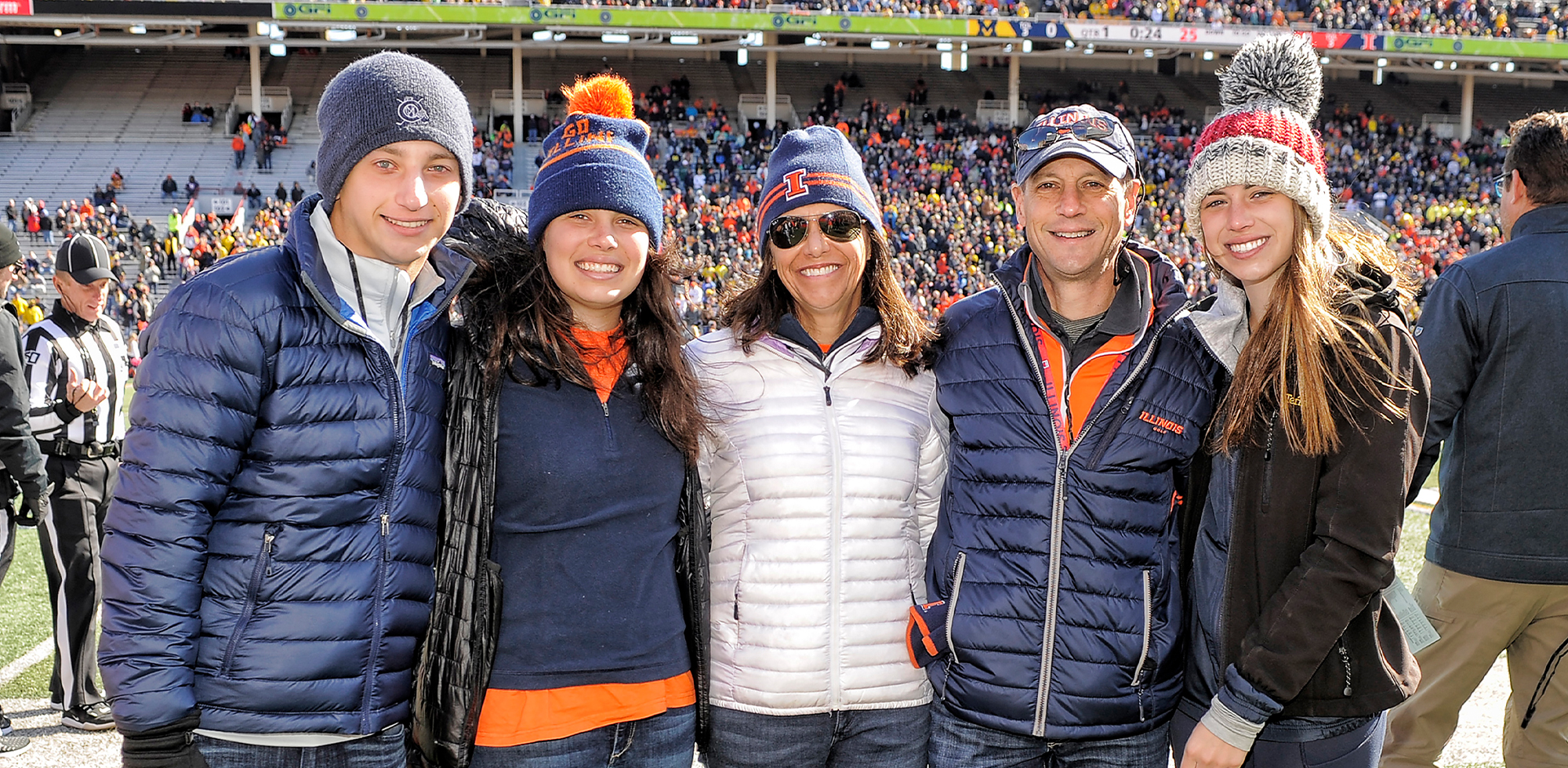
A chair with a public audience
Edwards joined the university’s board in 2017 and became chairman in 2019. He was unanimously reelected in January 2020, then again in January 2021. Board work has a calendar of its own: organizational meetings, committee responsibilities, agendas and votes. It is a quieter form of institutional life than a championship, but the decisions travel well beyond the room.
His university work also placed him in a role unusual for a former student-athlete. He had once represented Illinois on a golf course; now he chaired the trustees responsible for its system. A campus is an especially demanding object of loyalty because it keeps changing. The students who follow an alumnus have their own ambitions, and a university must make room for them.
In his greeting to the graduating class of 2024, Edwards remembered the mixture of excitement and anxiety he had felt at his own graduation. It is a modest recollection, and a recognizable one. A successful career can make its starting point seem inevitable when viewed backward. The graduate in the seat does not enjoy that luxury.
“Follow your passions, find your path, but never stop learning.”Don Edwards, to the Illinois Class of 2024
That advice allows uncertainty into the picture. A finance degree did not specify every subsequent job, committee or institutional commitment. Nor did a place on the golf team prescribe what he would eventually contribute to it. The connection endured while its practical expression changed, from competing to funding to helping govern.
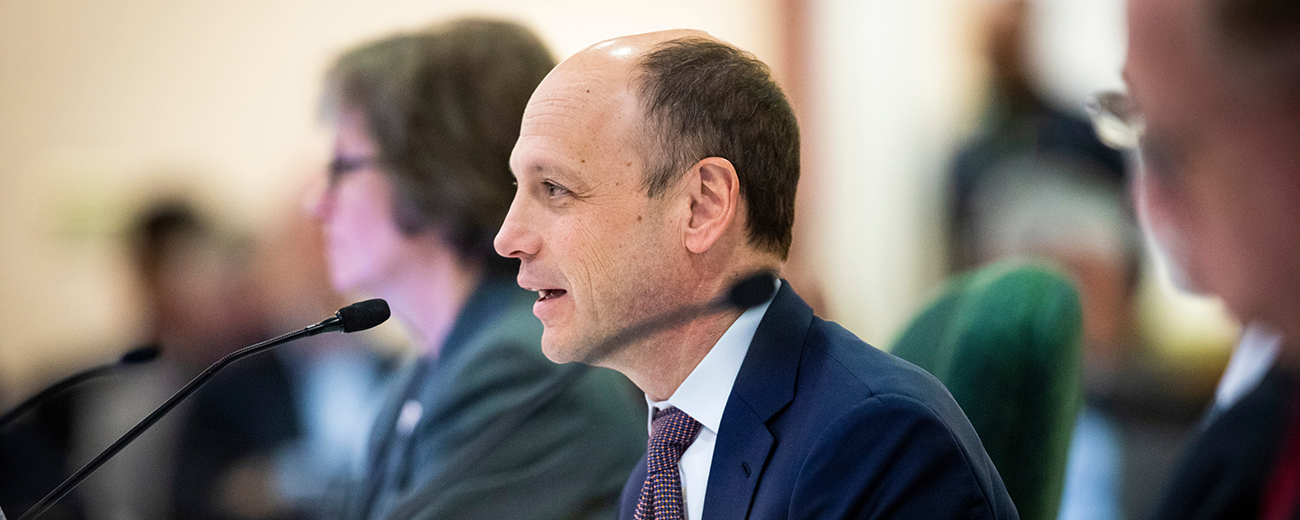
Leaving room for the next decision
By the time Flexpoint announced its succession in 2025, Ackerman had spent roughly two decades at the firm. During his four years as managing partner, he had helped expand leadership and infrastructure in accounting, compliance and investor relations. Preparing the next CEO involved the organization around him as well as the individual.
The announcement also described integrating the private equity and asset opportunity operations. Succession was arriving alongside a clearer account of how the firm wanted to work. For employees and investors, continuity has concrete requirements: responsibilities must be assigned, decisions must still get made, and the person becoming chief executive needs an institution ready for that authority.
Edwards’s current biography lists Miami as his office location. His Illinois connections remain a substantial part of the story, even as his professional role changes. In February 2026, he appeared on the Forged in America podcast to discuss his journey from college athlete to private equity founder, along with networking, mentorship and higher education.
The next chapter has a job description, rather than a farewell speech. Ackerman runs the firm as CEO. Edwards remains full-time as executive chairman and senior member of its investment committee. The founder continues to contribute while another person takes responsibility for leading. After years spent deciding where capital should go, there is a further decision to live with: how much room to give the next person holding the keys.