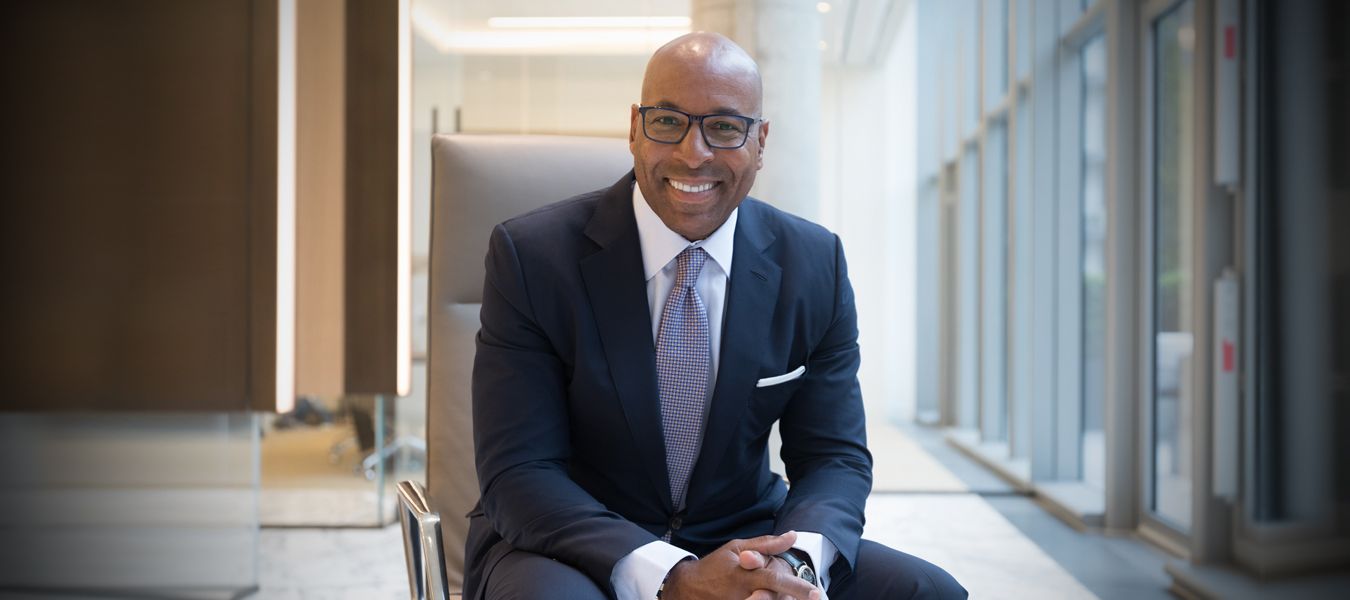
David Grain has built a career around things most people would rather leave someone else to explain. Cell towers. Fiber networks. Wireless spectrum. The last of these cannot even be photographed. Yet on October 8, 2026, his investment firm announced an agreement to sell its nationwide 800 MHz spectrum portfolio to SpaceX. The proposed buyer makes rockets; the proposed purchase concerns the invisible frequencies over which communications travel. It is an appropriately unusual meeting place for an investor whose working life has passed through Wall Street, cable operations and a bankrupt tower company.
The agreement gives the story a fresh destination, but its more interesting passage is the long apprenticeship beforehand. Grain founded Grain Management in 2007. By the time he put his name on the door, he had already worked in finance, managed a region of AT&T Broadband and helped lead Pinnacle Towers through a turnaround and public offering. His founder story contains an unfashionable amount of preparation. There is something rather pleasing about a business biography in which knowing how the business works gets a substantial speaking part.
A business education before business school
Born in Brooklyn in 1962, Grain grew up with an example of entrepreneurship close at hand. His father, Walter, worked for the postal service and built a trucking business in his off hours. David was the youngest of seven children. Watching the venture develop gave him an early interest in ownership, well before private equity became his profession. His parents eventually retired to Martha’s Vineyard, where he attended high school.
He graduated from the College of the Holy Cross in 1984 with a degree in English and earned his MBA at Dartmouth’s Tuck School in 1989. Between the two lies a useful distinction: learning to interpret a sentence and learning to interpret a balance sheet are different jobs, though both reward close reading. His later specialty would require patience with contracts, financing and the physical networks behind a service customers expect to work immediately.
The Vineyard connection survived the move into business. Sarasota became his base, but the island remained part of his family’s life. That geography matters to the profile: Grain’s career belongs to national finance and international infrastructure, while his educational and cultural commitments often return to particular places.
The towers needed an operator
Grain’s financial career included Drexel Burnham Lambert and Morgan Stanley. At Morgan Stanley, his work encompassed telecommunications, media and technology, and he became an executive director in high-yield finance. These were businesses where capital requirements could be substantial and where a financing decision had consequences far beyond the trading desk.
In 2000, he joined AT&T Broadband as senior vice president for New England. The move placed him inside the operating side of an industry he had worked with in finance. Regional management and investment banking ask different questions of the same enterprise. One concerns how to fund it; the other concerns what happens once the money has arrived and customers are waiting.
In 2002, he took the presidency of Pinnacle, the troubled tower business later renamed Global Signal. He helped bring it out of bankruptcy and through an IPO. During his presidency, its communications-site portfolio expanded from approximately 2,000 to more than 11,000. A tower may look like a piece of steel against the sky, but managing thousands of sites is an organizational task as well as a financing exercise.
Portfolio size during Grain’s presidency at Pinnacle / Global Signal. Rounded figures; bars show relative scale.
Crown Castle’s acquisition of Global Signal was valued at $5.7 billion. That figure describes the corporate transaction, rather than a personal payday. The distinction is worth preserving because large deals have a habit of swallowing the people involved in them. For Grain, the important career consequence was that the turnaround preceded the launch of his own investment platform.
A firm built around the connection
Grain Management began in 2007 and focused on communications. It has continued to specialize in digital infrastructure, including towers, fiber and spectrum, rather than setting itself up as a buyer of any business that happens to be available. A narrow remit can still contain a wide range of practical problems. Buying a network, expanding it and arranging its financing each require a different kind of attention.
In April 2026, the firm’s release of its 2025 annual report highlighted $12 billion in assets under management. That is money managed by the firm, and should be read as a measure of the platform’s scale. The report described an approach combining underwriting, operational engagement and portfolio construction. Its subjects included spectrum, structured capital, artificial intelligence and governance. The operating experience in Grain’s earlier career has an obvious place in that mix.
The firm’s international scope also complicates the image of a Sarasota-based founder. In a July 2025 interview, its portfolio was described as spanning 26 countries. His home city and his investment reach occupy different scales. The same person can have a local educational commitment and spend his working day considering networks far beyond Florida.
The asset you cannot put in a warehouse
To follow Grain’s work, it helps to separate three objects that a mobile phone makes appear almost magically continuous. Towers provide places for wireless equipment. Fiber carries data through physical cable. Spectrum licenses concern access to radio frequencies. They participate in the same communications economy, but they are bought, valued and operated differently.
Towers
Physical sites for wireless equipment.
Fiber
Cable networks that carry data.
Spectrum
Licensed access to radio frequencies.
In his FEG Insight Bridge conversation with Greg Dowling, Grain discussed the evolution from tower opportunities into spectrum, as well as fiber networks and data centers in regional markets. The conversation spent time on determining value and the costs of holding spectrum. These are useful questions precisely because the asset is so easy to describe vaguely. An invisible resource still needs a price, a purpose and someone able to use it.
His focus on smaller regional markets also gives the investment thesis a more specific setting than the usual sweeping talk about the internet. A regional network has customers, competitors and operating decisions in its own territory. The appeal of those businesses, as he discussed it, includes the agility of regional providers. The map deserves as much attention as the slogan.
Who gets a seat at the table?
Grain has discussed diversity as a practical part of building an investment team. In a 2021 interview, he described asking whether recruiting pools included African American candidates, Latino candidates and women. He framed the effort as something that needed to belong to a firm’s philosophy. The emphasis was on the people considered for the job and the values behind the selection.
That is a concrete management habit. It puts a question into a hiring conversation, where it can affect who is seen and heard. For a specialist firm, agreement about the sector need not imply identical experiences among the people studying it. Different backgrounds can produce different questions about a familiar asset, customer or risk.
Grain’s own educational history gives that argument context. At Tuck, working with classmates challenged assumptions he had brought from Wall Street. He later identified the experience as part of learning to be more open-minded. The classroom lesson followed him into a setting where the quality of the questions matters to investment decisions.
Learning the boardroom, then returning to the classroom
His corporate responsibilities include seats on the boards of Dell Technologies, Southern Company and New Fortress Energy. Dell appointed him in September 2021 and described his finance, risk-management and operating experience as reasons for the selection. These roles put him in rooms where a director has to assess management and decisions without simply taking over the executive’s job.
In his 100 Black Voices interview, Grain described preparing for Southern Company’s board and learning through listening and careful questions. He spoke about relationships and the unfamiliar dynamics of board service. One brief observation captures that attention to people: “Allies in the boardroom can come from very unexpected places.” It is good counsel for anyone tempted to decide, before the meeting begins, who will agree with whom.
He was elected a Dartmouth trustee in 2024 and to the American Academy of Arts and Sciences in 2022. In June 2025, Tuck awarded him its Distinguished Achievement Medal. These appointments and honors sit alongside a longer educational commitment: David and Lisa Butler Grain established the Grain Fellows program in 2004 to help students from low-income families with SAT and college preparation.
The program’s support includes application fees and mentorship for students at Booker High School in Sarasota. Such details make the philanthropy legible. Preparing for college involves a series of small requirements, each capable of becoming an obstacle. Funding the preparation and helping with applications addresses the actual passage a student has to make.
The island, and the next agreement
In August 2024, the Martha’s Vineyard Museum elected Grain board chair. He succeeded Cathy Weiss, with Nancy Robinson Breuer becoming vice chair. His relationship with the island includes graduating from its regional high school and raising his children with Lisa in Vineyard Haven. Cultural stewardship here has a personal geography, rather than appearing as an interchangeable line on a corporate biography.
Meanwhile, the investment work continues. Grain’s October 2026 announcement said the firm acquired the nationwide 800 MHz portfolio from T-Mobile in August, exchanging cash and its 600 MHz spectrum. It then agreed to sell the entire 800 MHz portfolio to SpaceX. As of the announcement, completion remained subject to regulatory approvals and customary closing conditions.
“For nearly twenty years, we have built Grain to see opportunity where others see complexity.”
David Grain, October 8, 2026
The sentence describes an ambition; the transaction will have to supply its own result. For now, it extends a career spent learning how communications assets fit together, who can operate them and how capital reaches them. Grain’s work ranges from steel towers to frequencies no eye can see. His commitments to students and the Vineyard bring the scale back down to people and places. Both are easier to understand when the details get their due.