Michael Fisch once had a fairly practical answer to the question of what he wanted to become. An accountant and a lawyer would do nicely. Two professions, two routes to employment, and some protection for the people who depended on him. The ambition was less picturesque than the standard Wall Street origin story. It also gives his subsequent career a different shape.
“The original career plan was to be employed and provide a safety net for my mother and my two sisters,” he recalled in a conversation with Barry Ritholtz. Before there was a private equity firm, there was that calculation: learn quickly, acquire useful skills, make yourself employable. A grand theory of capitalism could wait until the family bills were covered.
Today Fisch is the founder and chief executive of American Securities, the New York investment firm he helped establish in its modern form in 1994. The distance between those two descriptions is considerable. Yet his career keeps returning to a related question: what can an owner provide that makes an institution more capable of looking after its future?
The inheritance was a way of thinking
Fisch graduated from Dartmouth in 1983 with a degree in economics and policy studies and began in Goldman Sachs’s mergers and acquisitions department. His MBA at Stanford followed in 1987. Along the way came Bain & Company, including work in Paris, and then partnerships in two private equity funds. He was acquiring a professional vocabulary across banking, consulting and ownership.
In 1993 he became a financial adviser to the William Rosenwald family. That connection matters because American Securities had a history before Fisch became its CEO. William Rosenwald established the family office in 1947. His father, Julius, had helped build Sears, Roebuck & Co. The family wealth came with an industrial and philanthropic history, rather than merely an account balance awaiting instructions.
Charles D. Klein, known as Chuck, became an important mentor. With Klein and the Rosenwald family, Fisch founded the modern private equity business the following year. The first fund was $71.4 million. Opening an investment operation to outside capital changes its obligations: a family’s investment habits must become a repeatable process that other investors can understand and trust.
This makes the founding story more interesting than a tale of someone starting from a blank page. Fisch’s opportunity involved translating an existing institution into another form. He could carry forward its preference for established businesses and management partnerships while building the machinery of a fund manager. In such a setting, knowing what deserves to survive is part of knowing what to change.
The CEO who keeps the other CEOs
Private equity has an obvious moment of theatre: the acquisition. Someone signs, someone sells, and ownership moves. Fisch’s approach puts considerable weight on the less photogenic period afterward, when the company still has customers to serve and a management team that knows where the awkward problems are buried.
American Securities describes an 80 percent CEO retention rate. Its definition follows leaders from acquisition to exit, or through September 1, 2026 for investments still held, and includes certain planned retirements and transitions. That qualification belongs beside the number. It measures continuity according to the firm’s stated method; it is not a promise that every executive remains forever.
The underlying bargain is understandable. An owner brings capital and additional capabilities. An experienced chief executive brings knowledge that cannot be downloaded during diligence. Keeping that person involved can preserve relationships and institutional memory. It also leaves both sides with the difficult work of agreeing on priorities once the celebratory dinner is over.
American Securities’ reported CEO retention rate, using its acquisition-to-exit methodology through September 1, 2026. Includes specified planned transitions.
There is a useful restraint in treating management as an asset already present in the business. New ownership does not automatically confer superior knowledge of a factory, a distributor or its customers. For Fisch, the question becomes how to add expertise without discarding the expertise that made the company worth buying.
The work after the handshake
In 2004 Fisch and Glenn Kaufman co-authored an article called Walking the Tightrope. Their argument was pointed: deal sourcing, financial analysis, diligence and investment judgment were becoming necessary but insufficient. Rising purchase prices made it harder to rely on familiar techniques. Owners would need to help improve operations and financial performance after investing.
They also challenged the gap between the language firms used and the work they performed. Calling yourself a helpful partner is wonderfully economical. Actually becoming one requires people, time and skills that a financial background does not automatically supply. The article’s circus metaphor was apt: announcing that you intend to walk a tightrope is the inexpensive part.
American Securities had established its Resources Group in 2002. Today its partnership model lists 45 operations experts, working across disciplines including procurement, human capital, technology, financial planning and data science. Those functions turn the rather abstract promise of “value creation” into recognizable tasks: improve a purchasing process, build a more useful forecast, implement a system, help a team execute.
The firm opened a Shanghai office in 2006 to extend those operating capabilities in Asia-Pacific. For a U.S. industrial company with suppliers or manufacturing activity abroad, local knowledge can become part of an ownership proposition. Geography enters the story through the practical requirements of the companies, rather than a founder’s desire to collect office addresses.
“Carve-outs are really complicated, and American Securities had the expertise to help us along that journey.”
George Hershman, SOLV Energy CEO, describing the firm’s support
A taste for businesses with moving parts
Fisch’s investment world contains plenty of businesses whose products rarely invite glamour. The firm’s current focus includes industrial products, building products, government services, business services, power and energy, and specialty materials. These are fields where execution, customer relationships and operational complexity can matter a great deal.
In a 2026 discussion with David Weisburd, Fisch emphasized knowing what the firm is good at and remaining disciplined about where it invests. He also described the sustained effort required to see potential deals. The two activities sit comfortably together: build a broad view of the opportunities, then exercise a narrower judgment about which ones belong in the portfolio.
His conversations with colleagues in The Fisch Files offer a glimpse of that learning process. Scott Wolff discussed how an investment involving sulfuric acid plants led him to explore chemicals more deeply. Fisch recalled being surprised when Wolff started talking about molecules. Finance had acquired a chemistry lesson, which is a reasonable occupational hazard when your investments make actual things.
These exchanges give the firm’s technical work a human scale. Expertise develops through curiosity and repetition, sometimes beginning with a company that forces an investor to learn an unfamiliar subject. A purchase agreement and a production process may occupy very different mental shelves. Ownership eventually requires someone to understand how the shelves connect.
A television appearance, and a new tool at the table
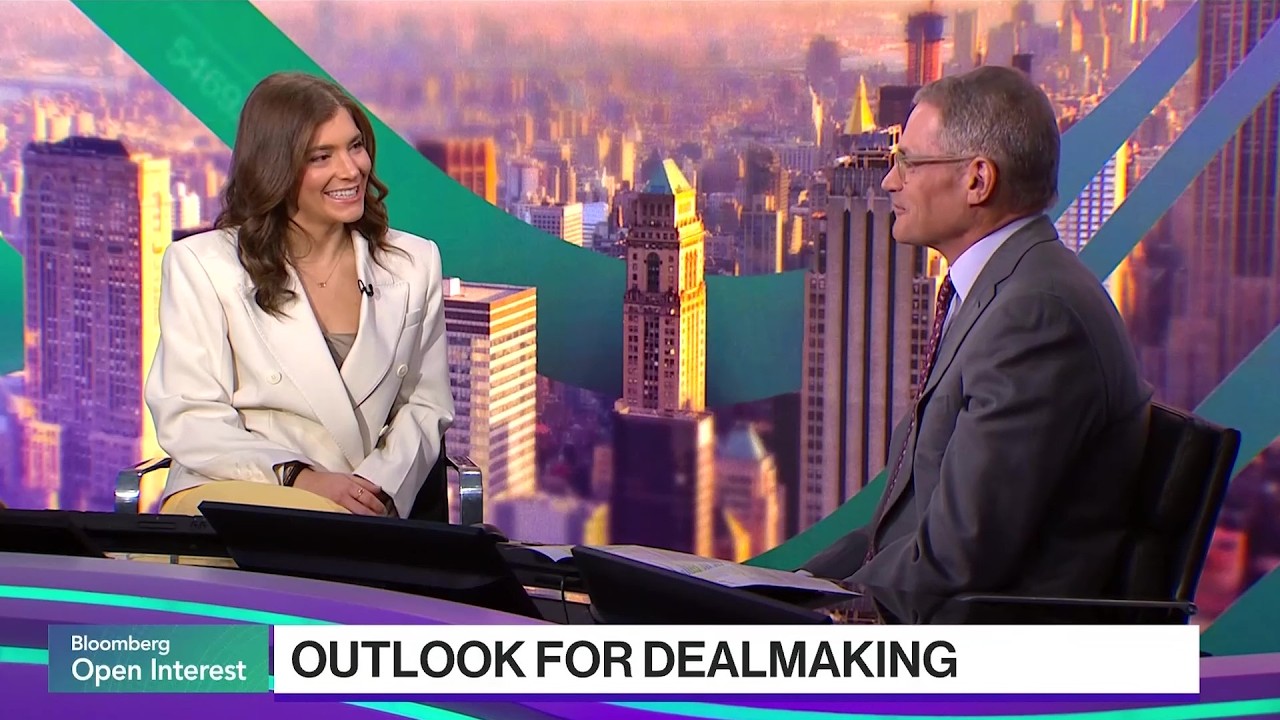
In February 2026 Fisch appeared on Bloomberg’s Open Interest to discuss SOLV Energy’s initial public offering. The offering raised $513 million. It supplied a contemporary example of a portfolio business entering public markets, where an investment story has to withstand a different audience and a different kind of scrutiny.
He also described the firm’s internal use of artificial intelligence, including an “IC co-pilot” for investment diligence. IC is the investment committee, the place where enthusiasm for an opportunity must meet questions about its merits. The new tool belongs in that process of examination. Its presence does not make the people responsible for a decision disappear.
The combination is revealing: an investor associated with long tenure discussing new analytical tools. Continuity can be a preference about relationships while experimentation remains a preference about methods. There is no reason a familiar colleague should have to work forever with an unfamiliar spreadsheet.
Time belongs on the giving side, too
Outside the firm, Fisch’s commitments include education, human rights, economic policy and food security. His involvement with Human Rights Watch spanned more than two decades, including 12 years on its board. He and American Securities have also been involved with West Side Campaign Against Hunger for about 20 years. These are relationships measured in recurring participation.
At the Atlantic Council he chairs the Freedom and Prosperity Center’s Advisory Council. In March 2026 the Council announced a five-year, $10 million John Templeton Foundation grant for an Entrepreneurship Policy Initiative. Its planned work includes tracking policies affecting entrepreneurs and smaller businesses in more than 100 countries. Fisch’s stated interest is in giving policymakers and businesses information to support reform.
He delivered welcoming remarks at the Global Prosperity Forum in April. The setting extends a question familiar from his investment career into public policy: which conditions help people build durable enterprises? A company owner and a policy institution work at different scales, but both must contend with rules, incentives and the consequences of decisions made years earlier.
The calendar is part of the portrait
Fisch has been a guest lecturer at Stanford’s business school since 2006. He is also a father of four, an art enthusiast and an Ironman triathlete. In a 2023 off-duty interview, he described endurance athletics as relaxing. Some people choose a comfortable chair; his choice apparently comes with rather more logistics.
It is tempting to turn a demanding sport into a theory of investment success. A hobby is a detail of a life, and a poor substitute for examining how an investment actually works. The more tangible connection across his activities is time: years spent teaching, sustained nonprofit commitments, decades leading one firm. These commitments give the professional record some texture without requiring a motivational slogan.
In 2025 American Securities became majority partner-owned. Fisch remains founder and CEO, but the change places continuity within the institution’s ownership as well as its investment approach. A business built around partnerships must eventually consider its own. After three decades, the question is larger than whether the founder can keep going. It is whether the organization has learned how to carry the work forward.