Louis Hernandez Jr.’s first lesson in allocating resources came with food stamps. At five, he recalls, his mother had him count them and work out how to get the most value. The future technology investor was learning arithmetic inside a family budget. There was no investment committee. There was a mother, a child and a sum that had to work.
His father offered a different kind of classroom: a computer lab where Hernandez could spend weekends. In his account of growing up in Compton and Watts, the two experiences sit close together. Money imposed limits; computing suggested possibilities. His mother went from a GED to a doctorate in education. His father became a computer science professor. Learning was something the adults did, too.
The family’s early years in lower-income Los Angeles help explain the vocabulary Hernandez still uses. Education, family, hard work and community recur in his telling. His foundation’s history remembers him helping distribute outgrown clothes and watching his parents treat education as a route out of poverty. Those details give his later interest in access a human scale. Before there were platforms connecting institutions, there were households sharing what they had.
Today he is the founder, chairman and CEO of Black Dragon Capital, a technology investment firm working across financial technology, media technology and digital commerce. That description puts him inside the world of transactions. His career also follows the people who must live with the systems those transactions finance: account holders, creative professionals, entrepreneurs and students. The question that links them is deceptively ordinary. What does a useful connection actually make possible?

The bank inside the software
Hernandez attended San Diego State University and earned an MBA there. Executive roles at RoweCom preceded his long tenure at Open Solutions, where he served as chairman and chief executive from 1999 to 2013. The work placed him in a consequential, often unglamorous corner of technology: the software financial institutions use to run their businesses. A bank’s visible promise to customers rests on a considerable amount of invisible machinery.
Open Solutions supplied account-processing technology to financial institutions. Its DNA platform offered a real-time, open architecture; Fiserv highlighted data and integration when it acquired the company in January 2013. The transaction had two distinct numbers: a $55 million purchase price and approximately $960 million in assumed debt. Keeping them separate matters. A large transaction total tells a different story from the amount paid for the equity.
Community finance was also becoming a subject for his writing. In the 2010 book Too Small to Fail, Hernandez argued that community-based institutions had an important role in restoring economic stability after the financial crisis. He considered the pressures of old technology, changing customer relationships and regulation together. Software, in this view, belongs in the same conversation as trust and the local economy.
Saving the American Dream: Main Street’s Last Stand extended that concern to small businesses and the banks and credit unions supporting them. Its argument centered on the distance between national financial debates and the institutions that serve families and local employers. The book’s title sounds like a public square. The underlying subject is more practical: whether the organizations closest to a community can keep doing their jobs as the economics around them change.
Two numbers, two meanings. The transaction terms distinguish the price from the debt.
Hollywood has a back office, too
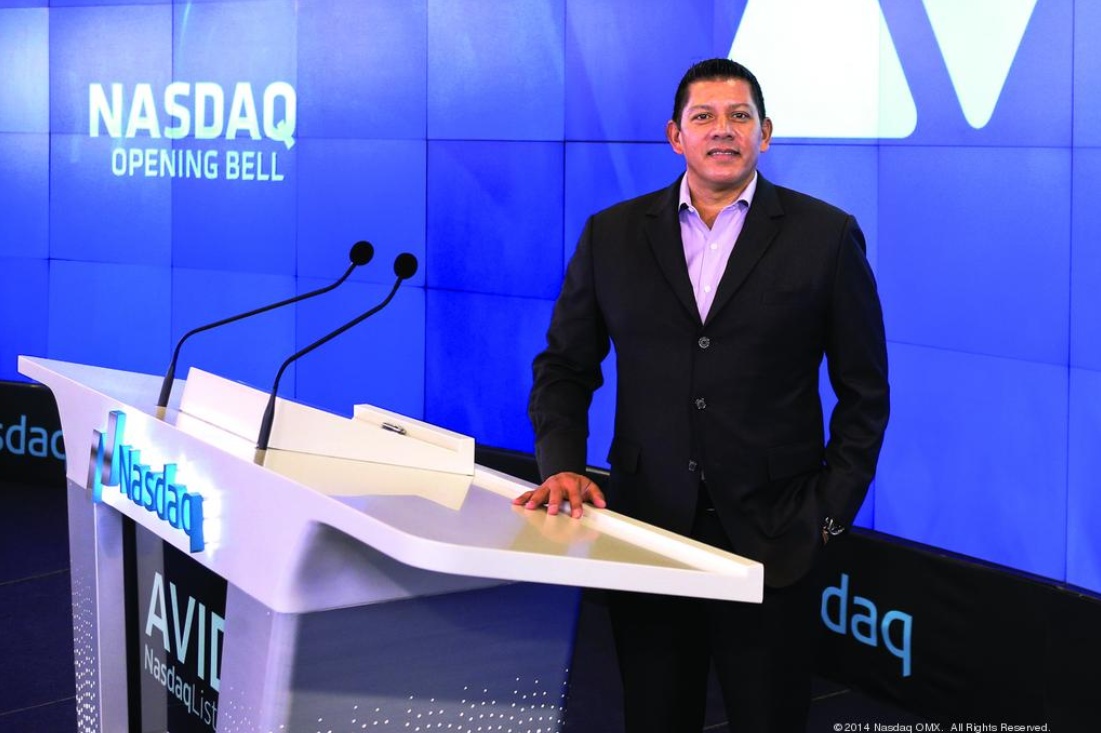
In February 2013, Hernandez became president and CEO of Avid, having joined its board in 2008. He moved from the infrastructure of banking to the infrastructure of creative work. Avid’s tools served film editors, musicians and broadcasters. The customers changed, but the organizational problem had a familiar outline: specialized work, complicated technology and a growing need to connect separate stages of a process.
Avid Everywhere described a platform joining creation, collaboration, asset protection, distribution and consumption. That sequence is a useful way to understand Hernandez’s interest in media. The finished film or recording attracts attention. Behind it are the handoffs that determine whether people can work together, protect their material and get it to an audience. A brilliant edit still has to leave the editing room.
He explored those tensions in The Storyteller’s Dilemma, released in 2017. Its concern was the economic consequence of digitizing media: more ways to create and distribute work, alongside business models struggling to keep pace. Contributors included film editor Maryann Brandon and other working media professionals. The book placed the individual artist and the large enterprise in the same system, with different resources and shared dependencies.
The reach of that argument is telling. A review in the editors’ publication CineMontage treated the book as relevant across content creation, post-production finance and distribution. Hernandez was writing from the executive suite about the conditions surrounding creative work. His recurring subject was the cost of connection: who must adapt, who has the means to adapt, and how the rewards are divided once everybody is connected.
An investor who remembers needing one
Black Dragon Capital’s origin, as Hernandez tells it, came from an entrepreneur’s frustration. Investors could understand the finances without understanding the daily work of building a company. He wanted a firm whose operators had encountered that work themselves. It is a useful clue to his preferred role: money accompanied by people who can help with the machinery, rather than money arriving with a distant set of expectations.
“How can we make life better for others?” is the question he offered when asked how he brings ideas to life. His interview answers favor industry-specific study over general business advice, and he names data science research and Spanish history among his reading interests. The combination is pleasantly untidy. A career in technology investing leaves room for curiosity that refuses to stay inside an investment presentation.
His public biography also emphasizes building diverse teams and supporting entrepreneurs. These are the stated intentions behind the firm’s operating approach, rather than automatic proof of investment results. That distinction becomes particularly relevant in a career where the ability to explain a strategy is so visible. Ideas are part of his work; execution and accountability have to be judged alongside them.
“How can we make life better for others?”Louis Hernandez Jr., on bringing ideas to life
The television business changes hands
In 2020, Black Dragon agreed to buy Grass Valley from Belden. The acquisition was completed that July. Grass Valley makes technology for producing and distributing media, bringing Hernandez back to another layer of the broadcast workflow. The announced plan was to accelerate a move toward software-driven systems, cloud services and pay-as-you-go models. Owning the infrastructure offered a way to act on the arguments he had been making in print.
At the announcement, Grass Valley president Tim Shoulders remained in place. The transition was presented as continuity for customers alongside changes in the technology and business model. That pairing matters in broadcast production. A customer may want a different economic arrangement while still needing existing equipment and systems to function. Migration is a much less glamorous word than revolution, but it is often the work the customer is paying for.
Hernandez was still discussing those changes ahead of ISE 2025, connecting digitization to operations and economics across industries. His latest book, Digital Tsunami, published in 2025, widened the frame from individual sectors to a connected digital ecosystem. The title supplies the wave. The harder question is what people and organizations can afford to do when it arrives.
- 2010Too Small to FailCommunity finance
- 2012*Saving the American DreamMain Street’s institutions
- 2017The Storyteller’s DilemmaMedia’s changing economics
- 2025Digital TsunamiA connected digital ecosystem
*Date of the edition listed by Google Books.
The difficult entries in the ledger
The career includes public setbacks. Avid terminated Hernandez’s employment in February 2018 after an investigation into alleged improper workplace conduct. The company said its board concluded that the findings warranted immediate termination. Jeff Rosica became CEO. That departure belongs in the account of his Avid years alongside the platform strategy and the book; an executive’s tenure includes how it ends.
In September 2024, the SEC charged Black Dragon entities and Hernandez with investment-adviser registration and marketing-rule violations, among other allegations. The regulator’s complaint addressed performance information, recordkeeping and a failure to register during the period it identified. The defendants consented to injunctions and civil penalties without admitting or denying the allegations, subject to court approval at the time of the announcement.
Those events complicate the connection between his public arguments and his responsibilities as a leader. A business can have an articulate theory about a changing market and still face scrutiny over its conduct. The filings and company decisions concern particular actions. They also make the practical demands of governance part of this story, alongside its more expansive language about technology and opportunity.
A scholarship is a different kind of capital
Hernandez established the organization now known as For A Bright Future in 2011. Its work includes scholarships, arts and leadership development for underrepresented and underserved young people. The foundation’s account of his upbringing connects that work to the support his own family received. It is the childhood theme returning through a different institution: access to education can change what a person is able to attempt.
One recent example makes the idea concrete. In December 2025, the foundation named Jennifer Sky Carlos its Creative Arts Scholarship recipient. The award supported her music-education studies at California State University, Sacramento. Her ambition to teach and inspire through music puts a person and a course of study behind the phrase educational opportunity. A scholarship has a destination; it is going somewhere more specific than a mission statement.
The arts also appear in Hernandez’s own interests. He has spoken about taking up photography to capture stories during his travels, learning from friends when he began. His personal website’s launch announcement listed soccer, music and art among his passions. For someone so often photographed discussing business, the idea of him reaching for a camera is a useful change of angle. For once, somebody else gets to be the subject.
In a March 2026 interview, he returned to human needs as the starting point for technology and advocated collaborative vendor relationships. The language follows the same thread as his earlier work with community institutions and creative businesses. Across the books, companies and foundation, he keeps coming back to the relationship between a system and the people inside it.
The food-stamp arithmetic and the broadcast software are separated by decades, industries and very different sums of money. They still pose a related problem: how to make available resources go further. Hernandez’s career gives that question an unusually wide range of settings. Its next answers will be measured in the ordinary places where technology either earns its keep or gets in the way: a financial institution, a production workflow, a student’s education.