The MIT CSAIL Detour That Changes Everything
Here is the thing about finance careers: they are extraordinarily linear. Analyst to associate, associate to VP, VP to principal, principal to partner. The path is well-worn and the signposts are obvious. You move up, not sideways.
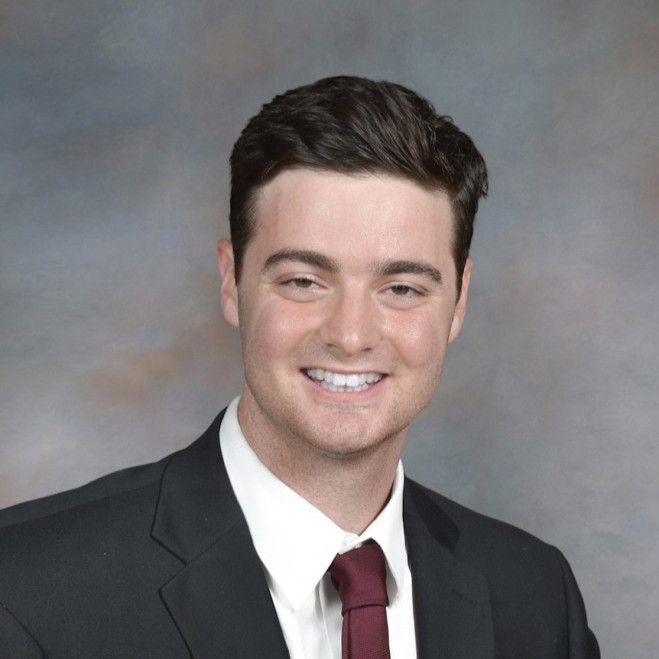
Giovanni Ahern moved sideways. Between a Houlihan Lokey banking internship in 2020 and a Blackstone summer seat in 2021, he worked as a Research Assistant at MIT's Computer Science and Artificial Intelligence Laboratory. CSAIL is not a hobbyist coding club. It is the place where some of the most consequential AI research in history has been developed - robotics, computer vision, natural language processing. Walking those corridors gives you a different instinct about what "breakthrough" actually means versus what is marketing copy.
That instinct is worth a great deal when you are at a16z, evaluating companies that claim to be transforming industries with AI. Ahern can tell the difference between a company with real technical depth and one that has dressed up an API call as a moat.
"Most PE associates learn to model a business. Fewer learn to understand the technology that drives it. Ahern did both at MIT."
His CSAIL stint - rare for someone on a finance track - gives him a credential and a perspective that most of his peers simply do not have.
Three Years at Bain Capital: Learning How Companies Actually Work
Bain Capital's private equity practice is not a passive investor. When they put capital into a company, they send in teams. They work on the operations, the leadership bench, the go-to-market structure. It is demanding, hands-on work. For someone who eventually wants to sit on the VC side, it is one of the best possible training grounds.
Ahern spent three years there, focused on healthcare and technology - two sectors that require genuine domain knowledge. Healthcare deals, in particular, involve regulatory timelines, clinical evidence, reimbursement complexity, and often multi-stakeholder sales cycles that bear almost no resemblance to conventional software business models. Being genuinely fluent in that domain is a differentiator.
By the time he left Bain Capital in August 2025, he had seen what institutional-grade company building looks like from the inside. Not from a pitch deck. From inside portfolio companies, watching what works and what fails.
What Growth Investing Actually Means at a16z
The a16z Growth fund is not seed investing. These are not $2M bets on an idea and a team. These are checks written to companies that already have revenue, traction, and a clear path to market leadership. The question the Growth team is answering is: is this the category winner? And: does it deserve more fuel right now?
That requires a specific kind of judgment. You need conviction about market sizing - not the TAM on the pitch deck, but the actual ceiling of the business. You need to read founder-market fit at scale, which looks different than it does at seed. You need to understand capital efficiency and unit economics at a level of detail that most early-stage investors never have to develop.
Ahern's background - quantitative training from MIT, technical exposure from CSAIL, and three years of granular portfolio work at Bain Capital - is well-matched to that set of questions. The Growth seat at a16z is one of the most competitive positions in venture capital. Joining as an Investing Partner less than four years after graduation from MIT is not a slow career.
The Sectors on His Radar
Given his background, the focal areas are reasonably clear: AI infrastructure, enterprise SaaS, healthcare technology, and fintech sit at the intersection of his technical training, his PE healthcare experience, and a16z's core investment thesis. The firm is also one of the most active in crypto and American Dynamism - defense, aerospace, manufacturing - so Ahern will likely be stress-tested across verticals in ways that a more narrowly-focused investor would not be.
The keywords in his professional profile - AI, cloud, data science, enterprise software, biotech, fintech, blockchain - tell the story of a firm that bets on nearly every major technology vector simultaneously. As a member of the Finance team, Ahern's mandate is broad.