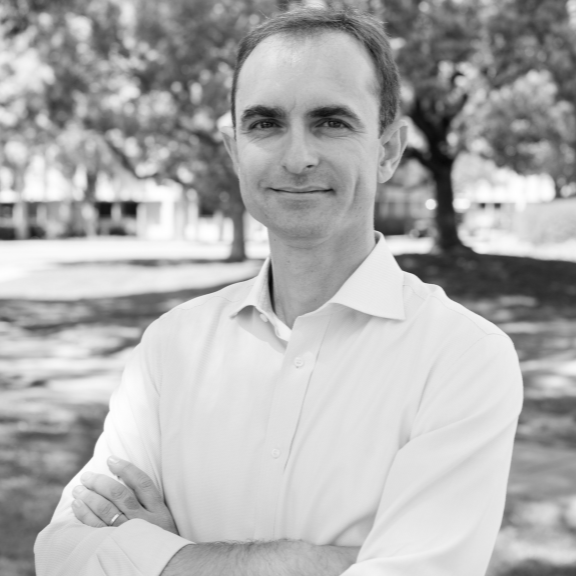
Chief Executive Officer / DNA Script
Biotech Executive • Entrepreneur • Wharton MBA
Twenty years of building biotech commercial engines. Now running a company that lets biologists print custom DNA - on a benchtop, on demand, without chemicals.
Profile
Marc Montserrat started life as an industrial engineer. He spent 4.5 years completing a master's degree that zigzagged across Spain, Italy, and Germany, then went to work in manufacturing at Siemens. Nothing in that trajectory pointed toward biology. Then, at 24, a misdiagnosis stopped him cold.
He does not dwell on it publicly. What he says is simple: "life is short and I wanted to have an impact." He pivoted to pharma, then life sciences, eventually landing at Wharton for an MBA. The manufacturing discipline didn't disappear - it followed him. What changed was the output. Instead of products on factory floors, he started building something more consequential: commercial operations for companies at the edge of what biology can do.
That is the thread connecting two decades of work. At Ariosa Diagnostics, he helped take a prenatal testing startup and scale it all the way through acquisition by Roche, commercializing non-invasive prenatal testing for millions of patients. At Omniome, he built the business development and commercial infrastructure for a next-generation sequencing platform that Pacific Biosciences later acquired. At Deepcell, he was Chief Business Officer for an AI-driven single-cell analysis company reimagining how researchers find target cells without modifying them. Between it all, he co-founded Splice Bio, a genetic medicine company.
Each move was further out on the frontier. By October 2024, he was ready for the most interesting problem yet: commercializing a machine that prints DNA.
DNA Script's SYNTAX System is a benchtop instrument that uses enzymes - rather than the toxic chemicals that have defined DNA synthesis since the 1980s - to write custom oligonucleotides on demand. The implications travel across genomics, vaccine development, gene editing, CRISPR applications, protein engineering, and molecular diagnostics. The company's founding CEO, Thomas Ybert, spent a decade building and proving the science. Montserrat arrived to scale it.
In the months after his appointment, DNA Script signed a memorandum of understanding with EVA Pharma in Africa and Quantoom Biosciences in Belgium to build an mRNA vaccine production platform in Egypt capable of producing 100 million doses per year. The enzymatic synthesis technology Montserrat's team is commercializing sits at the front end of that pipeline - rapidly producing the DNA templates from which mRNA vaccines are built.
He framed it plainly: "By dramatically reducing the time needed to produce DNA templates, we're helping ensure that innovative vaccine technology can reach those at highest risk during emerging epidemics more rapidly than ever before."
That is not a marketing statement. It is a manufacturing problem, reframed as a mission - which is, in retrospect, exactly what Marc Montserrat has spent his career doing.
Life is short and I wanted to have an impact.Marc Montserrat — on his pivot from industrial engineering to life sciences
Career Arc
The technology Montserrat is commercializing at DNA Script
| Feature | Chemical Synthesis (Traditional) | Enzymatic Synthesis (DNA Script) |
|---|---|---|
| Error Rate | Higher - accumulates with length | ~0.35% - lower and consistent |
| Max Oligo Length | Typically <200 nt at quality | Up to 500 nucleotides |
| Hazardous Chemicals | Yes - acetonitrile, ammonia | No - enzyme-based |
| Lab Format | Industrial / core facility | Benchtop instrument (SYNTAX System) |
| Turnaround | Days to weeks (outsourced) | Hours (on-demand) |
| Sequence Security | Outsourced = external exposure | In-lab = confidential |
We should take some risks to work on something which we are passionate about.Marc Montserrat — on career choices and calculated risk
In His Own Words
I am incredibly honored to join DNA Script at such a pivotal time. The company has already revolutionized the field of DNA synthesis, and I look forward to working alongside Thomas and our talented team to further scale the business and accelerate the development and commercialization of cutting-edge solutions.
Our collaboration with EVA Pharma and Univercells-Quantoom to implement our proprietary enzymatic DNA synthesis technology directly supports the mission to accelerate vaccine development and delivery worldwide, and more broadly aligns with our vision to make biology programmable.
By dramatically reducing the time needed to produce DNA templates, we're helping ensure that innovative vaccine technology can reach those at highest risk during emerging epidemics more rapidly than ever before.
The Longer Story
There is a pattern in Montserrat's career that only becomes clear in retrospect. He doesn't join established categories - he joins companies that are inventing them. Ariosa wasn't building into a mature prenatal testing market. It was creating the market for non-invasive prenatal testing (NIPT). Omniome wasn't incrementally improving DNA sequencing - it was going after accuracy and cost in a way the industry said couldn't be done. Deepcell wasn't selling cell analysis tools - it was arguing that AI-powered morphology could replace modification-based cell identification.
Each company was a category creation problem dressed up as a product company. That is the specific skill Montserrat has spent two decades sharpening: entering a space where the customer doesn't yet have language for what they want, and building the commercial machinery to change that.
His industrial engineering background is not incidental here. Engineers are trained to break systems into components, identify bottlenecks, and optimize throughput. In biotech commercial operations, the system is the go-to-market motion - customer education, sales cycles, service and support, partnerships. Montserrat applies that same rigor to revenue operations that he once applied to manufacturing lines.
The Wharton MBA added the vocabulary and the network, but the underlying methodology was already there. What Wharton gave him was permission to think about category design at strategic scale, not just execution scale.
At DNA Script, the category creation challenge is enormous. Most life science researchers have never synthesized their own DNA. The traditional workflow is to email a core facility or an external service, wait several days, and receive oligos by mail. The SYNTAX System asks them to imagine a different world - one where the DNA printer sits in their lab the way a PCR machine does, and synthesis is an intraday operation rather than a supply chain problem.
That worldview shift is not primarily a technical sales problem. It is a market development problem. Researchers need to trust the error rate. Lab managers need to justify the capital expense. Procurement teams need to understand the total cost model. Principal investigators need to believe that on-demand synthesis changes what experiments are even possible. Montserrat has navigated exactly this kind of multi-stakeholder commercial landscape, at multiple companies, for two decades.
The question at DNA Script isn't whether the technology works. It does - the company's 150+ patents and €20M+ in SYNTAX product revenues confirm that. The question is how fast the market can learn to want what DNA Script is selling. That is where Montserrat earns his role.
Montserrat wants to make biology truly programmable - to drive commercial adoption of enzymatic DNA synthesis globally, placing on-demand DNA printing in every research lab and enabling faster vaccine development, gene therapies, and genomic research. The long-term vision is a world where synthetic biology is as accessible and rapid as modern computing: you write the sequence, press print, and the experiment begins.
Education
Latest
Worth Knowing
Connect & Explore