Marc-André Forget lasted three days as an employee of Hydro-Québec before resigning. It is a wonderfully compact entry in a career spent thinking about electricity: arrive at a large utility, take a look around, leave. The more interesting part is that he kept working on the problems utilities face. Eventually, he decided the household deserved a better seat at the table.
By 2021, Forget was running dcbel in Montreal and looking toward California. He was unusually frank about the distance between the place where he was building and the place where he expected people to buy. Quebec, he said then, had little immediate need for the product. California offered a different combination of solar adoption and electricity prices that changed with the hour. Geography was part of the engineering problem.
Five years later, the story had acquired a return journey. In April 2026, dcbel entered the Quebec market. Forget was now talking about working with Hydro-Québec and helping homes interact responsibly with the provincial grid. The former three-day employee had found a reason to come back into the conversation. His route ran through a device called Ara, and through the awkward business of making an ambitious idea ordinary.
Before the house, the whole network
Forget is a professional engineer with a law degree. Those qualifications make an apt pairing for an industry in which a working circuit and permission to connect it are separate accomplishments. His career developed around utility technology and strategic advice, giving him experience with the institutions whose rules would later shape his own company’s prospects.
His work with teams extended across hundreds of projects involving more than 40 utilities and energy companies. Among the technologies associated with his earlier career is EPS-M, a system for managing electrical assets. That background put him close to questions that rarely appear in a consumer product photograph: which equipment needs attention, where investment belongs, and how an electricity network should prepare for change.
He also carried those questions into public discussions. His speaking engagements have included the World Energy Congress in Istanbul, the OECD, Berkeley and the European transmission-system organization ENTSO-E. At Startupfest in July 2024, he joined a panel about the entrepreneurial journey of impact companies. Moving between engineers, policymakers and founders is part of the documented work, rather than an accessory to it.
There is another, less corporate strand. His volunteer record includes communications duties at the Valleyfield International Regatta from 1993 to 2007. Race operations, public announcements and the media all needed to stay in touch. He also helped with his former high school’s annual prom gala and received its Honorary Lifetime Bronco recognition in 2010. Long before home energy became his public subject, he had spent years helping large groups of people get through an event.
A house with too many decisions
In 2015, Forget co-founded dcbel with Dan Fletcher and Ron Denom. The three brought experience in utilities, distributed energy, microgrids and engineering management. Their shared premise was that the electricity system would have to adapt as households began producing and storing more of their own power. A customer could also become a generator, a battery owner and a driver with a substantial electrical appetite.
For a household, those roles come bundled with questions. When should the car charge? Where should the afternoon’s solar production go? What should be held back for later? The old relationship between a home and its electricity supplier had the virtue of requiring little thought. The newer arrangement offered choices, then threatened to make a part-time energy trader of anyone who wanted to use them.
dcbel’s answer was to combine power conversion and software in a home energy station. Solar panels, stationary batteries and a compatible electric vehicle could be managed together. Weather and electricity tariffs could inform the decisions. The attraction was practical: a homeowner could use the equipment without continually refereeing an argument among appliances.
Forget’s ambition reaches beyond the person who enjoys adjusting every setting. In a 2025 conversation about smart homes, he asked, “What is a smart home without smart energy?” It is a fair question for an era in which a house can issue elaborate instructions to a light bulb. The electricity behind the light deserves some intelligence too.
The long distance between working and shipping
A fully working prototype arrived in 2019. Commercial manufacture remained another journey. By 2024, dcbel’s Montreal operation occupied much of two floors, with offices above laboratories where teams developed and tested the product. Forget described a machine containing seven microprocessors and three million lines of code. The quiet exterior concealed a considerable amount of argument with physics.
“We wanted to build the iPhone of energy for the home,” he said. The comparison explains the intended experience: integrate complicated capabilities so the owner can concentrate on using them. A home energy station has an additional obligation. It has to coexist with the electrical system into which someone installs it.
Hardware makes that obligation tangible. The first working unit establishes that an idea can function. Repeated manufacture asks whether it can function consistently, arrive through a supply chain, be installed, and justify its place on a customer’s wall. Forget’s public discussions increasingly turned toward those practical questions. The ambition had acquired a shipping department.
Choosing his company carefully
Volvo Cars invested in dcbel in 2023, connecting the home energy project with a manufacturer whose vehicles could become part of it. For Forget, the relationship joined businesses concerned with electrification and the equipment needed around it. A car that can send power back changes the job description of its charger.
In March 2025, Canada Growth Fund announced a US$40 million investment within a financing round of up to US$55 million. Idealist and other investors were to provide up to US$15 million. The stated purpose included commercialization in North America and Europe while retaining Canadian headquarters and intellectual property. Financing, in that account, was tied to taking technology into the world.
Another investment announcement followed in September, this time involving funds managed by Fidelity Investments Canada. dcbel also described a planned logistics and distribution centre in Louisville, Kentucky, with UPS. These were less photogenic milestones than a prototype. They concerned the routes by which a household might actually receive one.
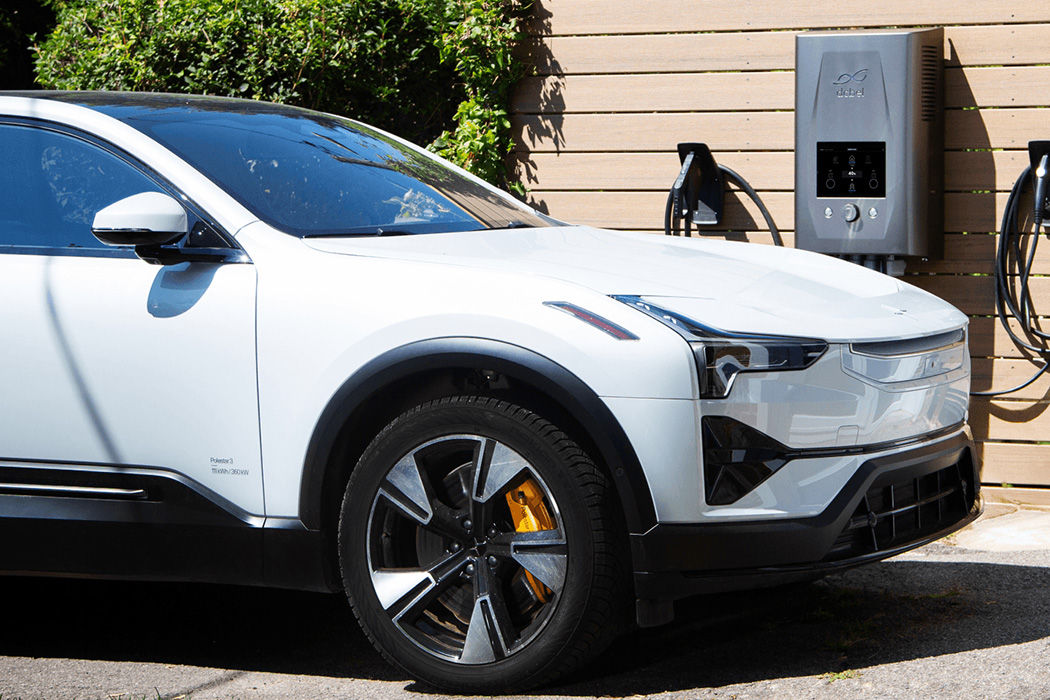
By late 2025, dcbel had announced bidirectional-charging partnerships involving the Volvo EX90 and Polestar 3. Forget argued that the underlying demand extended beyond fluctuations in electric-car sales. “Energy problems are universal problems,” he said. The claim fits his chosen territory: the vehicle is one participant in the home’s energy arrangements, alongside generation, storage and the grid.
His unusual ambition: a boring company
In April 2025, Forget offered an aspiration unlikely to be printed on a motivational poster. He wanted dcbel to become “a very boring company” over the coming quarters. He meant disciplined execution: shipping products, expanding manufacturing and attending to operations. In a business built around electricity, drama is an expensive feature.
At the same time, dcbel launched Capacity, a division serving the organizations on the other side of the household connection. Its initial services included a digital twin for modelling energy systems and a platform for managing distributed devices and their data. Early clients included Volvo, Voltalis and the United Kingdom’s Department for Energy Security and Net Zero.
That move gives his career a pleasing circularity. The former utility adviser had built a consumer energy product; work on managing those products created tools useful to utilities and other institutions. Household autonomy still required coordination. Helping a home make decisions and helping a network understand thousands of homes were related problems.
Forget’s call for boring operations makes more sense in that setting. Every additional relationship brings another handoff, another system to understand and another promise to keep. An uneventful day can be evidence that a great deal of work has gone well.
Energy problems are universal problems.
Marc-André Forget
Quebec, with the timing changed
The Quebec entry in April 2026 brought his argument back to familiar ground. Forget described a province experiencing more electrification and a growing interest in home solar. Local electricians and solar installers also offered an established route to customers. A market he had once judged unready now presented reasons to act.
His language about the provincial utility was cooperative. He described private home grids as complementing Quebec’s electricity system, with an emphasis on responsible integration and reliability. There is a useful distinction between owning more of a home’s energy equipment and ceasing to have neighbours. A connected house still belongs to a connected system.
In September 2026, the outward journey continued with the Texas launch of Ara Core and an installation at the Southern Living Idea House in Fredericksburg. Forget’s message centred on bringing energy functions together so homeowners could manage generation, storage, consumption and export. The demonstration placed the idea inside a house people could visit.
It is an appropriate setting for the next test of his work. Most homeowners will never inspect a patent or ask how many processors sit inside the box. They will notice whether the equipment fits their lives. Forget has spent years moving between the scale of the network and the scale of a household. The destination is a home whose energy arrangements require less of its owner’s attention. After all that engineering, a perfectly uneventful evening would be quite an achievement.