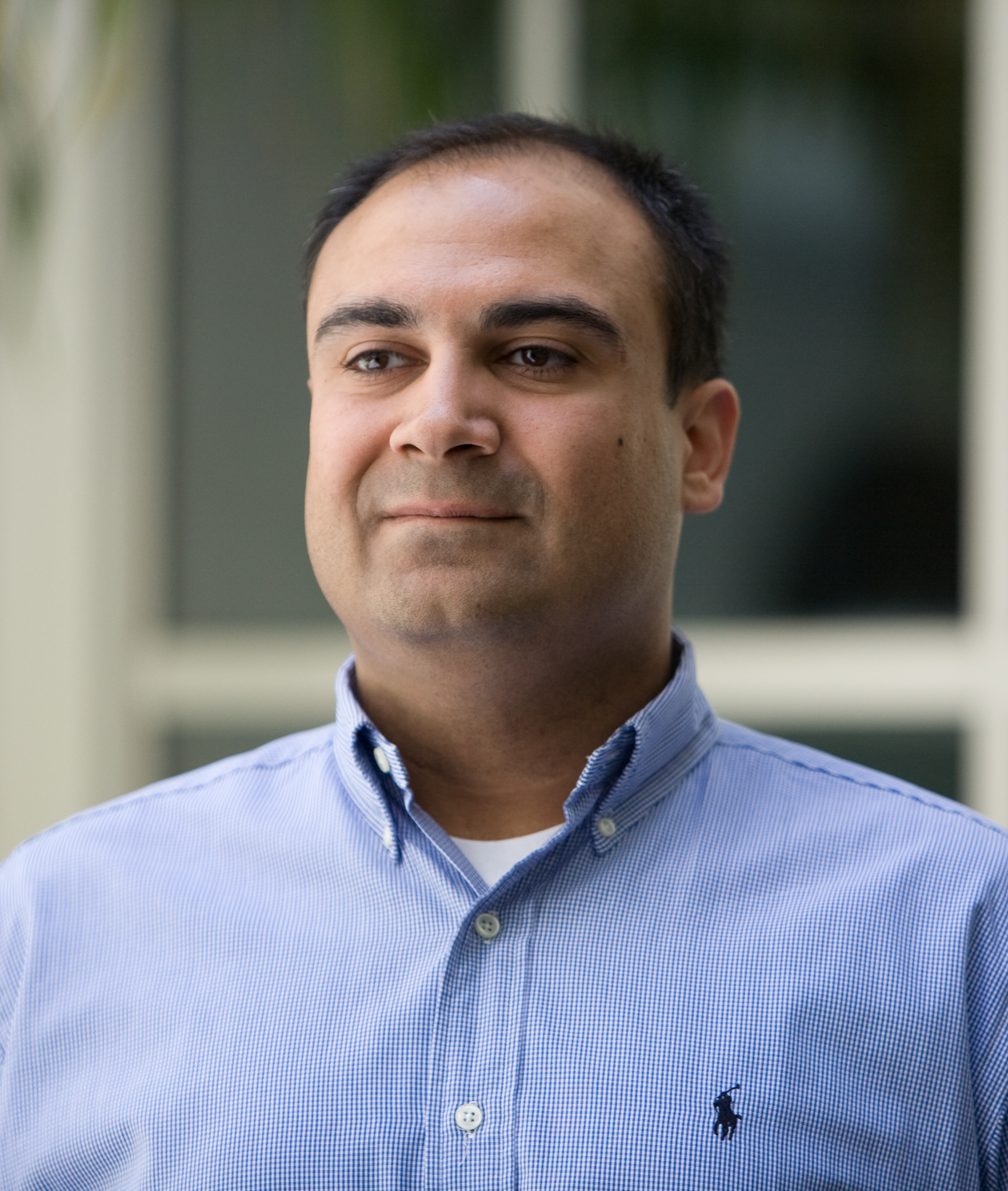
The Frightened Investor Who Keeps Being Right
There is a man in Palo Alto whose office has a shipping container for a conference room, whose fund is named because "most VCs are sheep," and whose job title - self-assigned - is Chief Firestarter. He says he gets frightened every time he writes a check. He also has a higher unicorn hit rate than almost anyone else in Silicon Valley.
Dr. Manu Kumar runs K9 Ventures from a repurposed industrial building on the edge of Palo Alto, the kind of block where people still make physical things. That choice is deliberate. He wanted to be surrounded by builders. What he has built, quietly and without fanfare, is one of the most precise venture firms in the business.
He was there first - not as a cliche, but as a verifiable fact. K9's first fund closed in 2009. The term "pre-seed" did not yet exist in the venture vocabulary. Manu invented it. A decade and a half later, the entire industry uses the word he coined while everyone else was still calling these checks "friends and family rounds."
"The politically correct reason for the K9 name is that I happen to love dogs. The non-politically correct reason is that most VCs are sheep."
- Manu Kumar, Founder, K9 VenturesThe story begins not in Silicon Valley but in New Delhi, where a teenager named Manu persuaded his grandmother to buy him a Commodore 128. He was sixteen. By the time he was seventeen, he had left India for Pittsburgh and Carnegie Mellon University, arriving with what he describes as "insane perseverance in the face of complete resistance" - which is also, he will tell you, his definition of entrepreneurship.
He did not follow the script. He sat in on an entrepreneurship class reserved for business school students until the professor let him stay. He bootstrapped his first company, SneakerLabs, with $5,000 from a summer internship. He grew it to twenty employees while still completing his degrees. Octane Software acquired it for over $100M in stock in March 2000. Manu was approximately twenty-five years old.
SneakerLabs: $5,000 invested. $100M+ returned. First company. Bootstrapped. Before age 25. Carnegie Mellon dorm era.