BREAKING
Gigi Levy-Weiss, General Partner at NFX
Venture Capital · Israel · Network Effects

GigiLevy-Weiss

The Helicopter Pilot Who Bought Into the Slot Machine — Then Bet the House on Network Effects

General Partner at NFX. Co-founder of Playtika. Former CEO of 888 Holdings. Former attack helicopter pilot. One of the most connected seed investors between Tel Aviv and San Francisco.

NFX General Partner Playtika Co-Founder IDF Pilot
$875M+
Total AUM
577+
Portfolio Cos
25
Unicorns
$325M Fund IV (2025)
10 IPOs
150+ Angel Investments
$4.4B Playtika Final Valuation

He Reviewed Numbers at 5am During a War. Then Turned That Habit Into a VC Firm.

There is a line that Gigi Levy-Weiss keeps returning to in interviews, delivered with the dry timing of someone who has lost and found the same dollar bill many times: "If your best deal turns out to be your worst deal, you're probably doing okay." The deal in question is Playtika. He sold it for around $180 million. Caesars later flipped it for $4.4 billion. His wife, upon hearing the news of the initial sale, asked where he was - she had yoga at five.

That gap between $180 million and $4.4 billion would break most people. Levy-Weiss turned it into a line he uses to calibrate founders. He co-founded Playtika in 2010 with Uri Shahak and Robert Anticole, launching first on VK, the Russian social network. The first game made around $150,000 a month. Then a team member pitched a slot machine where you could pay to play but never win real money. Levy-Weiss's honest reaction: "I thought, that sounds crazy. But we built it." They named it Slotomania. When they ported it to Facebook, it made more money in a single day than all their other games combined. Within a year, Caesars Interactive was writing a check.

Before Playtika, before the $875 million he now manages at NFX, before 150 angel investments and 25 unicorns and 10 IPOs, Gigi Levy-Weiss flew attack helicopters for the Israeli Air Force. Not as a metaphor. Literally. He sat in the cockpit of combat aircraft during military operations. That experience - specifically the culture of structured debriefs after every mission - became the organizational DNA he carries into every company he touches.

The debrief philosophy is simple and radical: after every significant action, you sit down and extract every possible lesson, regardless of outcome. "If you didn't learn anything, there's just no point of putting you in a plane." Levy-Weiss draws a careful distinction between good failures and bad failures. A good failure is where the team executed well but the market didn't respond. A bad failure is sloppy execution dressed up as misfortune. He will celebrate the first. He has very little patience for the second.

After the Air Force, he followed a path that zigzagged through building automation companies, telecom integrators, and Amdocs - the billing software giant - where he ran Western Europe and Latin America before his wife, whom he credits throughout his career with critical interventions, negotiated his exit. He has told this story in podcasts with evident affection and zero embarrassment. She walked in and told them he was leaving. He left.

Israel is a startup that forgot to sign a founders agreement.
- Gigi Levy-Weiss

Then came 888 Holdings. In 2006, Levy-Weiss joined as COO of the London-listed online gambling company. By 2007 he was CEO. In 2006, the U.S. passed the Unlawful Internet Gambling Enforcement Act - a law that shattered the company's revenue base almost overnight. He had warned the board. He had told them this was possible. They had dismissed him as paranoid. When the bill passed, 888 went from roughly $300 million in revenue and $90 million in profit to losses inside a year. He fired 60 percent of the staff. Then he rebuilt - making 888 the first company to exit the U.S. market cleanly, and later the first to re-enter it with proper licensing. That paranoia-as-preparation reflex never left him.

He stayed at 888 until 2011, and has since said, with characteristic honesty, that he probably stayed too long. The moral complexity of the gambling industry also weighed on him - he acknowledges it directly and without defensiveness. He didn't leave because he thought gambling was evil. He left because he wasn't sure he was doing enough good. That's a finer distinction than most executives in the sector have ever made publicly.

The years between 888 and NFX were spent making angel investments - 150 of them, across Israel, San Francisco, and London. Gaming, adtech, mobile, SaaS. MoonActive became his best absolute return. SimilarWeb, now public. Global-e, now public. Crossrider, acquired for $37 million. He joined the Facebook EMEA Client Advisory Council in 2014 believing the platform would make the world a better place. He has since described that belief as naive, and his discomfort with the platform's trajectory as a turning point in how he thinks about technology's relationship with society.

In 2015, Levy-Weiss co-founded NFX with James Currier, Stan Chudnovsky, and Pete Flint. The name is shorthand for the thesis: network effects. The insight, which NFX has spent a decade documenting across 16 distinct types, is that businesses where the product becomes more valuable as more people use it are fundamentally different from other businesses. They're harder to displace. They compound. They eventually become something close to infrastructure. That's the only kind of business NFX wants to build.

The firm now manages $875 million. Fund IV, closed in October 2025 at $325 million, allocates roughly 40 percent to Israeli startups - primarily in cybersecurity, developer tools, and AI. Levy-Weiss runs the Israel office and leads investments in gaming, biotech, space, and generative AI. His check sizes range from $500,000 to $5 million, with a sweet spot around $2.5 million. He rarely replaces founder-CEOs. He views his capital as a commodity and a founder's time as the actual scarce resource. When conditions tighten, he has watched hired-gun replacements bail out. He has not forgotten it.

His current obsession is AI agents - specifically the marketplace model that he believes will define the next decade of business software. The argument is pointed: $750 billion in annual IT spending has chronically underserved small businesses, which can't afford the marketing agencies, accountants, and sales teams that their larger competitors take for granted. AI agents change that equation. Not by automating tasks - by giving a five-person landscaping company access to capabilities that only Fortune 500 companies used to have. "The era of just saying 'I have AI inside me' to raise money is over," he told an interviewer in 2024. He is betting that the era of actually deploying AI to democratize business services is just beginning.

After October 7, 2023, Levy-Weiss co-founded Brothers and Sisters for Israel, a relief organization for IDF reservists and affected civilians. He lost friends' children in the attacks. He also co-founded Line5, working on autonomous defense systems with Redis founder Yiftach Shoolman. For this work, he received the Presidential Award for Volunteerism from the President of the State of Israel. He has also become a vocal advocate for democratic reform in Israel - his 2024 line that "creating jobs is no longer enough to fulfill one's Zionist duty; we must change the country" circulated widely. He grew up in a working-class home in northern Tel Aviv. His parents worked for El Al. He has not forgotten that either.

He reviews financial metrics for thirty minutes every morning. He speaks four languages. He was a competitive tennis player. He named "Gigi" - changed by his mother from "Gigi-Giora" when he was one week old, after a fallen uncle. He has told Mike Moritz's warning - that investors whose first deal is great often become bad investors - as a cautionary tale about himself in public, which is either very self-aware or very savvy, and probably both.

What Gigi Levy-Weiss has built is not a fund. It is a theory of defensibility that started in an attack helicopter, ran through a gambling empire, survived a slot machine that shouldn't have worked, and landed - for now - on the most fundamental force in modern technology. Networks compound. So, apparently, does he.
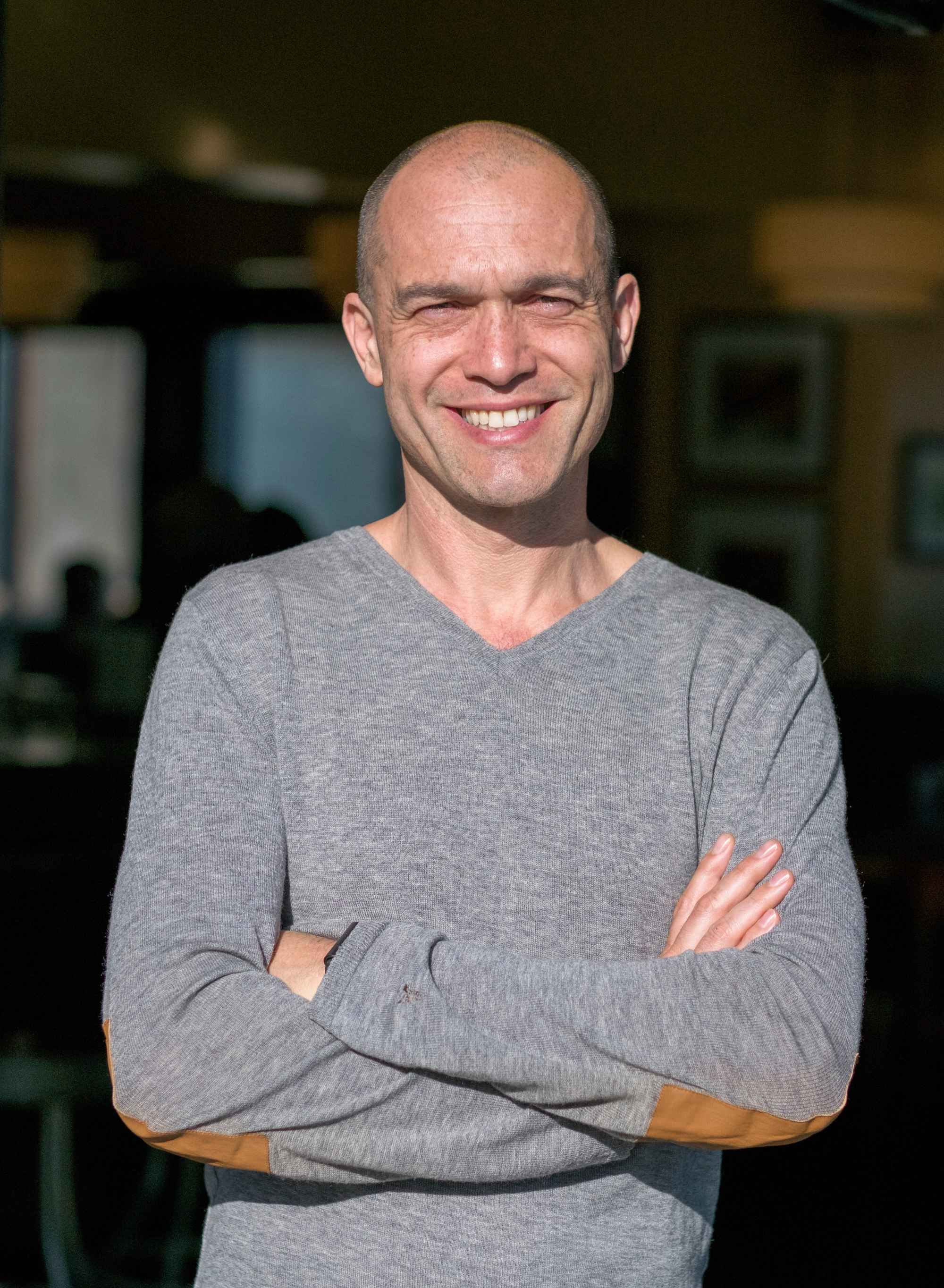
"The age of AI agents is here. Very soon, there won't be many tasks left that AI agents can't do well."
- Gigi Levy-Weiss, NFX · 2024

From Cockpit to Cap Table

1990s

Israeli Air Force - Attack Helicopter Pilot

Flew combat missions. Absorbed the debrief culture that would define every company he ever built.

1998

GIDAN - First Startup

Founded a building automation company. Sold it for several million dollars. First proof he could do this.

2003

Amdocs - Division President

Ran Western Europe and Latin America for the NYSE-listed billing software giant. Left when his wife negotiated his exit. He credits her judgment.

2007

888 Holdings - CEO

Led the London-listed gaming company through the UIGEA crisis and the 2008 crash. Fired 60% of staff. Rebuilt it as the first re-licensed US operator. Stayed "probably too long."

2010

Playtika - Co-Founder

Co-founded the social casino gaming company. Built Slotomania on a pitch that "sounded crazy." Sold to Caesars for ~$180M. Caesars later valued it at $4.4B. His wife had yoga.

2011

150+ Angel Investments

MoonActive, Global-e, SimilarWeb, Crossrider and 146+ more across Israel, San Francisco, and London.

2015

NFX - Co-Founder & General Partner

Built the network effects thesis into a firm. $875M+ AUM. 25 unicorns. Still writing checks at pre-seed.

2023

Brothers and Sisters for Israel + Line5

Co-founded two post-October 7 organizations. Received the Presidential Award for Volunteerism. Went fully public on democratic reform.

2025

NFX Fund IV - $325M

Closed October 2025. 40% earmarked for Israeli startups. Betting on AI agents as the next decade's dominant model.

Three Laws That Run Everything

Network Effects Beat Everything

Products that become more valuable as more people use them don't just grow - they compound. NFX has documented 16 distinct types. Levy-Weiss won't touch businesses that don't have them or can't build them. This isn't an opinion. It's the firm's operating system.

Good Failure vs. Bad Failure

Straight from the cockpit: if the team executed well and the market was wrong, that's a good failure. Celebrate it. Extract the lesson. If execution was sloppy and outcomes were poor, there's no lesson because the team already knew the answer. He learned this sitting in a helicopter debrief room in his twenties and has never stopped applying it.

Speed is the Superpower

Levy-Weiss identifies fast decision-making as the single trait he most prizes - in himself and in founders. Paired with its essential counterweight: knowing exactly when to slow down and listen. Without the second, the first is just recklessness. He's seen both end companies.

The 16 Types of Network Effects
NFX's core thesis — documented over 20 years
Direct
2-Sided
Data
NFX
Social
Market
Platform
Physical
Protocol
Tribal
Hub
Expertise
Personal

"Network effect businesses are the most defensible and most valuable you can build. Every check we write is a bet on this fact." — NFX thesis

The Quotable Gigi

"Train for skill and hire for attitude. Minimum experience threshold - then everything else is who they are."

"Right now, distribution platforms make more money than the games. Across my companies, we're all paying Meta to steal customers from each other."

"The era of just saying 'I have AI inside me' to raise money is over. The era of actually deploying AI is beginning."

"If you didn't learn anything, there's just no point of putting you in a plane."

"Technology has got to this junction where I'm not as 100% sure that it's definitely making the world a better place."

"Creating jobs is no longer enough to fulfill one's Zionist duty; we must change the country."

The Moments That Made Him

🎰

The Slot Machine That Shouldn't Have Worked

A team member pitched Slotomania: a slot machine where you pay to play but can never win real money. Levy-Weiss's response: "I thought, that sounds crazy. But we built it." They ported it to Facebook. It made more money on day one than all their other games had made that entire month. Sometimes the crazy pitch is the right pitch.

🧘

Yoga at Five

When Playtika sold for roughly $180 million - one of the largest acquisitions of an Israeli online gaming company at that time - he called his wife. Her reaction: "That's not what I asked - where are you? I have yoga at five." A month later, upon learning what Playtika actually did: "They paid $180 million for that? You're nuts." The market later agreed: $4.4 billion at IPO.

⚠️

The Warning They Dismissed

Before the U.S. Unlawful Internet Gambling Enforcement Act passed in 2006, Levy-Weiss warned 888 Holdings' board that it was possible. They called him paranoid. When it passed, revenue collapsed from $300M to near zero in months. He fired 60% of the staff. Rebuilt. Made 888 the first company to exit the U.S. market cleanly and the first to re-enter it with proper licensing. Paranoia, properly channeled, is preparation.

💼

His Wife Negotiated His Exit

He was at Amdocs as Division President. The company was growing. The job was good. His wife walked into the office and told them he was leaving. He has told this story in multiple podcasts with warmth and zero embarrassment. He left. He went on to build everything else. He credits her judgment throughout his career without qualification.

The 9 Principles of the Wartime CEO

Based on interviews with the CEOs of Israel's top multi-billion-dollar companies, published by Levy-Weiss in April 2024 following October 7.

  1. Take Care of Your Employees

    The rest of the list only works if this one comes first.

  2. Prioritize Ruthlessly

    Focus and prioritization are key to long-term success. Running a company during an all-out war takes this to a whole new level.

  3. Work-as-a-Service

    Rebuild your operations around people's new reality, not the old schedule.

  4. Leading By Example Is Everything

    You cannot ask for resilience you aren't modeling.

  5. Communication Is the Bedrock of Trust

    Over-communicate. Then do it again.

  6. Business Continuity Planning

    The paranoid survive. Build the contingency before you need it.

  7. Find the Goldilocks Zone

    Not too much caution, not too much aggression. The center holds companies together.

  8. Practice Optimism

    Resiliency is off the charts. Realistic optimism is not naive - it is functional.

  9. The Company is a Community

    When everything external is uncertain, internal belonging becomes the competitive advantage.

Bets That Landed

Gaming · IPO

Playtika

Co-founded 2010. Sold for ~$180M. Caesars eventually brought it public on NASDAQ at $4.4B valuation. One of the largest Israeli tech IPOs in the U.S.

Commerce · IPO

Global-e

Board member since 2013. The cross-border e-commerce platform went public and became one of Israel's most successful public tech companies.

Analytics · IPO

SimilarWeb

Angel investment that joined the NFX portfolio. Went public on NYSE - the web analytics intelligence platform now serves thousands of enterprise clients globally.

Gaming · Acquired

MoonActive

Levy-Weiss cites this as his best absolute return investment. The maker of Coin Master became one of the highest-grossing mobile games in the world.

Fintech · IPO

Marqeta

NFX portfolio company. The card issuing platform went public on NASDAQ and built the infrastructure behind modern fintech cards worldwide.

CRISPR · Bio

Mammoth Biosciences

NFX portfolio. Jennifer Doudna's CRISPR diagnostics company - betting that gene editing tools become standard diagnostics infrastructure.

Things Worth Knowing

01 Flew attack helicopters for the Israeli Air Force before his first startup. Not a metaphor.
02 Speaks four languages: Hebrew, English, Spanish, and French. Conducts deals on three continents.
03 His name "Gigi" was changed by his mother from "Gigi-Giora" when he was one week old. Named after a fallen uncle.
04 Reviews financial metrics every morning for 30 minutes. Habit formed during the 888 Holdings crisis years. Never dropped.
05 Was one of the few Israelis to serve on the supervisory board of Bertelsmann - one of the world's largest media conglomerates.
06 His parents both worked for El Al, the Israeli national airline. Grew up in working-class northern Tel Aviv.
07 Was a competitive tennis player. Still plays recreationally. Applies the same debrief mentality to missed shots.
08 Uses Mike Moritz's warning - "investors whose first deal is good often become bad investors" - as a permanent cautionary tale about himself, in public.

Links & Profiles

Share this profile 𝕏 Twitter 💼 LinkedIn 📘 Facebook