The first ticket Manick Bhan sold through Rukkus brought in $17. He had paid $17 for it. For a former Goldman Sachs employee trying to build a technology company, this was an unusually tidy transaction: one customer, one ticket, absolutely no profit. Yet someone had bought something. After months of building, doubting and complicating the idea, that small exchange finally gave him a useful answer.
He had been trying to make a ticketing app do too much. Discovery, selection, an experience clever enough to justify leaving a lucrative job. With money running short, the team reduced the ambition to a practical question: could they sell a ticket? “Let’s just try to sell a ticket,” he remembers deciding. The first sale was modest. The change in thinking was considerable.
Today, Bhan is the founder, CEO and CTO of Search Atlas, working on software that helps businesses appear in search and increasingly automates the work behind that visibility. His route there runs through a dismantled bicycle, a bond desk and a ticket marketplace whose technology eventually went to TickPick. It also contains a stubborn question: why does a worthwhile business struggle to get found?
A bicycle, in pieces
Bhan was born and raised in Baltimore, to parents from Kashmir. Both were scientists. At nine, he received a bicycle for his birthday and promptly removed its screws and took it apart. His parents were horrified. A present intended to get their child moving had become an investigation.
“I like to take things apart and figure out how they work,” he says. The habit survived school in New Jersey, near Princeton, and a full scholarship to Duke University. He studied chemistry, neuroscience and music. The combination makes more sense once you stop expecting a degree to be an advance booking for the rest of a life.
At Duke, a roommate’s enthusiasm for trading sent him into the business library to read about markets. Options interested him; so did the possibility that understanding a system could produce a tangible result. Goldman Sachs followed. He arrived around the financial crisis, having seen the firm as an intern before joining afterward, and worked on a bond desk.
The financial world offered an education in how businesses connected across countries. Technology offered another temptation: the possibility of building the machinery himself. By 2013, he had left Goldman and was trying to make Rukkus work.
The education of a blinking cursor
Before Bhan could become a software founder, he needed to learn software. His description of the apprenticeship is satisfyingly unglamorous. He sat in his apartment, looked at a cursor, encountered an error and searched for an explanation. Then he repeated the exercise. He spent months learning to code.
One early program involved Spotify tracks and a database. Music was familiar territory: he had trained classically and played violin and guitar. Learning software reminded him of learning an instrument, especially the intoxicating early period when practice produces improvements you can actually notice. The reward was being able to make something work that had refused to work yesterday.
He also learned the cost of technical dependence. He had tried hiring outside development teams before he could judge the work himself. The experience helped convince him that a company building technology needed someone inside who could understand it. Eventually, he learned enough to hire engineers of his own.
The ticket app became a particularly demanding classroom. Selling seats means serving customers while securing inventory from suppliers who already have plenty of people asking for their attention. A small startup can have an appealing pitch and still be a very low priority.
A customer had said yes. For Rukkus, that was the useful part.
Getting a supplier to pick up
Rukkus needed relationships as much as it needed code. Bhan recalls trying to reach a ticket supplier for months without getting anywhere. Calls and messages failed to move the conversation along. So the team sent $500 worth of pizza to the office. The chief executive called, laughing, and a partnership followed. Persistence had acquired a delivery address.
There was less edible persuasion, too. In the early business, Rukkus built a tool that let suppliers see how ticket prices were changing across the industry. Bhan credits that tool with helping secure the company’s first $50 million in direct inventory. It gave the other side something useful before asking it to take the startup seriously.
The same period taught him to study the ordinary details: when people bought, how many returned and whether the cost of attracting them made sense against their transactions. The marketplace could generate activity without generating a sustainable business. Every new feature had to live alongside that arithmetic.
His recollection of the early customers is refreshingly free of retrospective destiny. Rukkus was available in the app store. Some people found it. Some bought. The team watched and adjusted. A company could begin with a little traffic and a workable transaction, without first winning an argument about why it deserved to exist.
A seat worth seeing
Rukkus developed a more distinctive way to help buyers choose: high-definition, 360-degree views from seats in sports and entertainment venues. A seating chart tells you a section and a row. A view from the seat helps answer the question that matters when you are about to spend your money: what will I actually see?
That technology became part of the company’s eventual value. In July 2018, TickPick announced it had acquired a significant portion of Rukkus’s assets and would incorporate its venue views. Users of the app and website would transition to TickPick. The buyer specifically pointed to the mobile viewing experience and the hundreds of venues it covered.
Bhan’s own account of the exit includes a more difficult personal reckoning. He says he put investors first and made no money himself. The experience left him preoccupied with the search problem he had tried to solve at Rukkus. A partnership with Shazam, and the links and traffic he had hoped would follow, had not produced the rescue he expected.
For someone selling access to events, access to an audience had proved frustratingly expensive. The unfinished work was now somewhere outside the venue.
The agency becomes a workshop
After Rukkus, Bhan began helping friends with their businesses and studying how Google evaluated websites. He read patents and examined relationships between rankings and the measures sold by SEO tools. Other founders were wrestling with a familiar frustration: having an interesting product did not mean a search engine would bring people to it.
LinkGraph grew out of that work. Bhan describes meeting co-founder Arman Advani and turning the search investigation into an agency. The service business put him close to repeated problems. It also supplied a regular audience of colleagues who could tell him exactly which tedious task needed a better tool.
Search Atlas began as tools for that team. Bhan would hear about a need and write code. Advani used the resulting software in client meetings; people asked whether they could use it themselves. A product business was emerging from the everyday work of delivering a service.
By 2022, LinkGraph had appeared on the Inc. 5000 at number 1,234; it returned in 2023 at number 2,243. The recognition recorded business growth. The more revealing detail is the development process: tools had users before they had an independent sales pitch. The agency was a place to discover what needed building.
- 01Encounter the problemRukkus needs customers and visibility.
- 02Build for the teamLinkGraph turns repeated tasks into tools.
- 03Let others use itSearch Atlas takes the software beyond the agency.
- 04Automate executionOTTO applies changes; people direct the work.
The experiment still has to work
Bhan’s enthusiasm for SEO comes with an impatience toward its folklore. Discussing local search, he describes testing ranking behavior across businesses and times of day. He also describes isolating a variable on a quiet test site, making a change and observing what happens. Changing everything at once may produce a result; it gives you a poorer explanation.
He is unusually plain about the limits of that process: “I don’t have all the answers.” His response is to keep experimenting and share what the team learns. He describes a framework that combines user experience, authority, content and technical work. In his view, those areas need attention together when helping a business compete.
Automation became a way to execute that accumulated work. OTTO SEO applies optimizations rather than simply leaving a list for someone to work through. It received the Best AI Search Software Solution award at the 2025 Global Search Awards. The distinction is a dated achievement, rather than a prediction about where every business will rank.
His newer ambitions extend into the coordination of marketing itself. In June 2026, he described AI agents that could investigate a competitor’s pricing change, connect it with customer information and prepare campaigns for review. The human job, in his account, moves toward deciding what deserves to happen and assessing the result.
“I don’t have all the answers.”
Manick Bhan, discussing local search experiments
The work beyond the dashboard
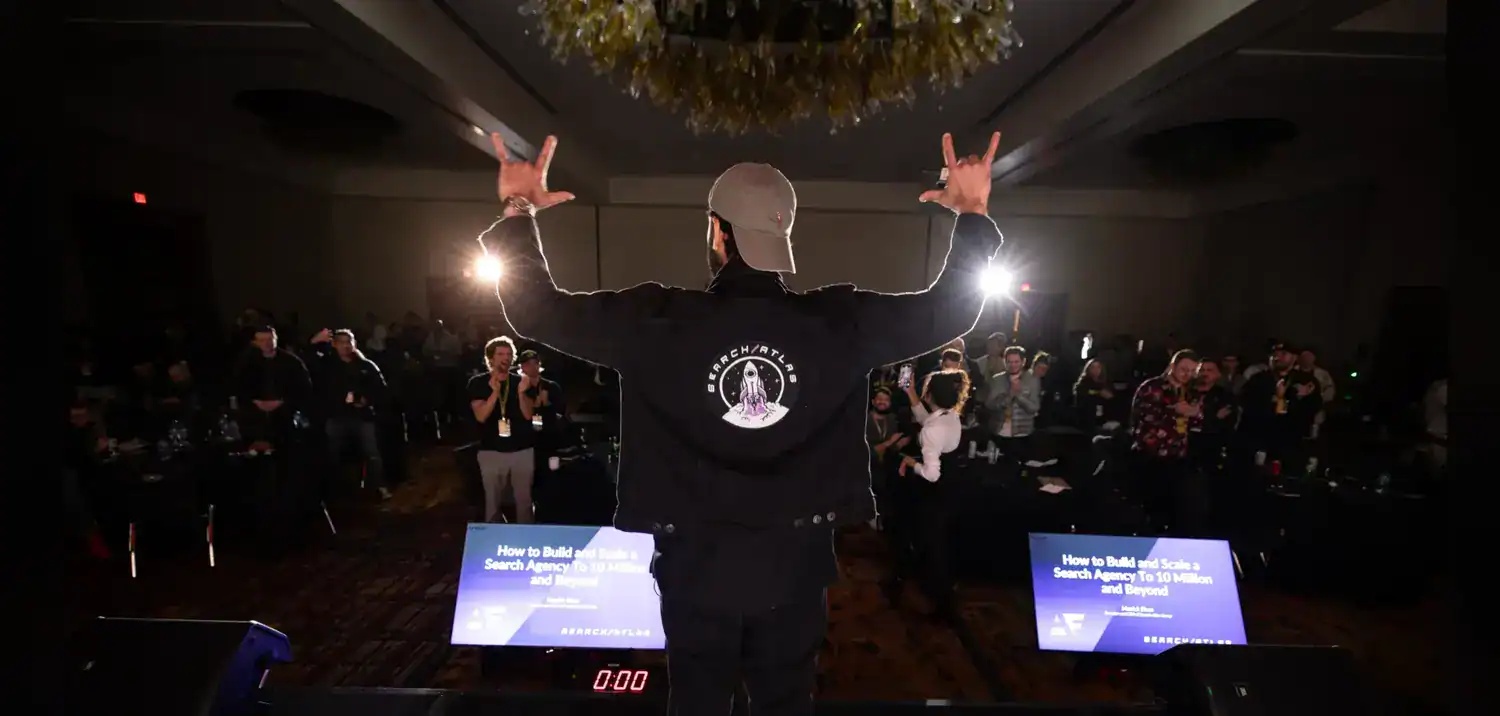
The public-facing Bhan is a speaker and teacher as well as a builder. His recent focus includes helping businesses understand their presence in AI-generated answers. By August 2026, he was describing weekly coding sessions for employees and arguing that connected systems mattered more than simply collecting better prompts. He wants the organization to learn along with its software.
There are other measures of usefulness. Bhan directs Animal Heroes Fund, which supports organizations helping farmed animals with grants, classes, software and services. His 2022 recognition by Vegas Inc described support for Ranch Island Rescue Sanctuary and reported that LinkGraph had given $100,000 to charities in the previous year. The company also established a budget employees could spend on kindness toward colleagues or team activities.

Those details bring the story back to an older habit: making something useful for whoever is on the other side. A supplier gets a pricing tool. A colleague gets software that removes a repetitive task. A customer gets a clearer view before buying a seat. The work changes, and the test remains pleasantly concrete. Does someone have a reason to say yes?
Keep following the question
More from Bhan, his companies and his conversations.