The revealing number is $3.35. That is what Mandala lists for duties in one published scrub-top cost breakdown. Materials come to $3.25. Labor adds $3.00. Before anyone has admired the neckline or checked a pocket, the border has cost more than the fabric. A medical uniform, it turns out, can teach a compact lesson in commerce.
- Medical workwear sold directly through Mandala’s website.
- A published example pairs $10.82 in product costs with a $19.99 selling price.
- The bargain depends on fit, availability and a delivery experience that earns another order.
Mandala makes scrubs for people whose clothes must survive work. Nurses, doctors and other clinicians need to bend, reach, carry things and wash the evidence away afterward. The company’s proposition begins with a reasonable irritation: why should an everyday professional necessity require a premium-fashion budget?
A receipt becomes the sales pitch
Founded in 2018 and led by founder Kaustubh Varma, Mandala sells through its own online store. Its account of the industry focuses on the journey from factory to brand to retailer. Each stop adds a business that needs paying. Mandala removes the retail stop and makes the resulting price argument unusually visible.
On its transparency page, five entries add up to $10.82: materials, hardware, labor, duties and transport. Beside them sit a $19.99 Mandala price and a $40 traditional-price comparison. Those are the company’s figures and its chosen comparison. They should be read as an example, rather than a census of competing scrub prices.
Company figures. Bar lengths compare the five cost entries. Selling-price example: $19.99.
Subtract $10.82 from $19.99 and $9.17 remains. Calling that profit would skip the rest of the business. An online shop still needs customer acquisition, warehousing, returns, staff and software. The breakdown makes a useful distinction possible: the cost of getting a garment ready to sell differs from the cost of running the company selling it.
That is the part other founders can borrow. Pick a claim customers hear constantly, then supply enough detail to examine it. “Affordable” is an adjective. A line for hardware, down to twenty-two cents, gives the customer something to think about. It also makes later price changes harder to explain casually.
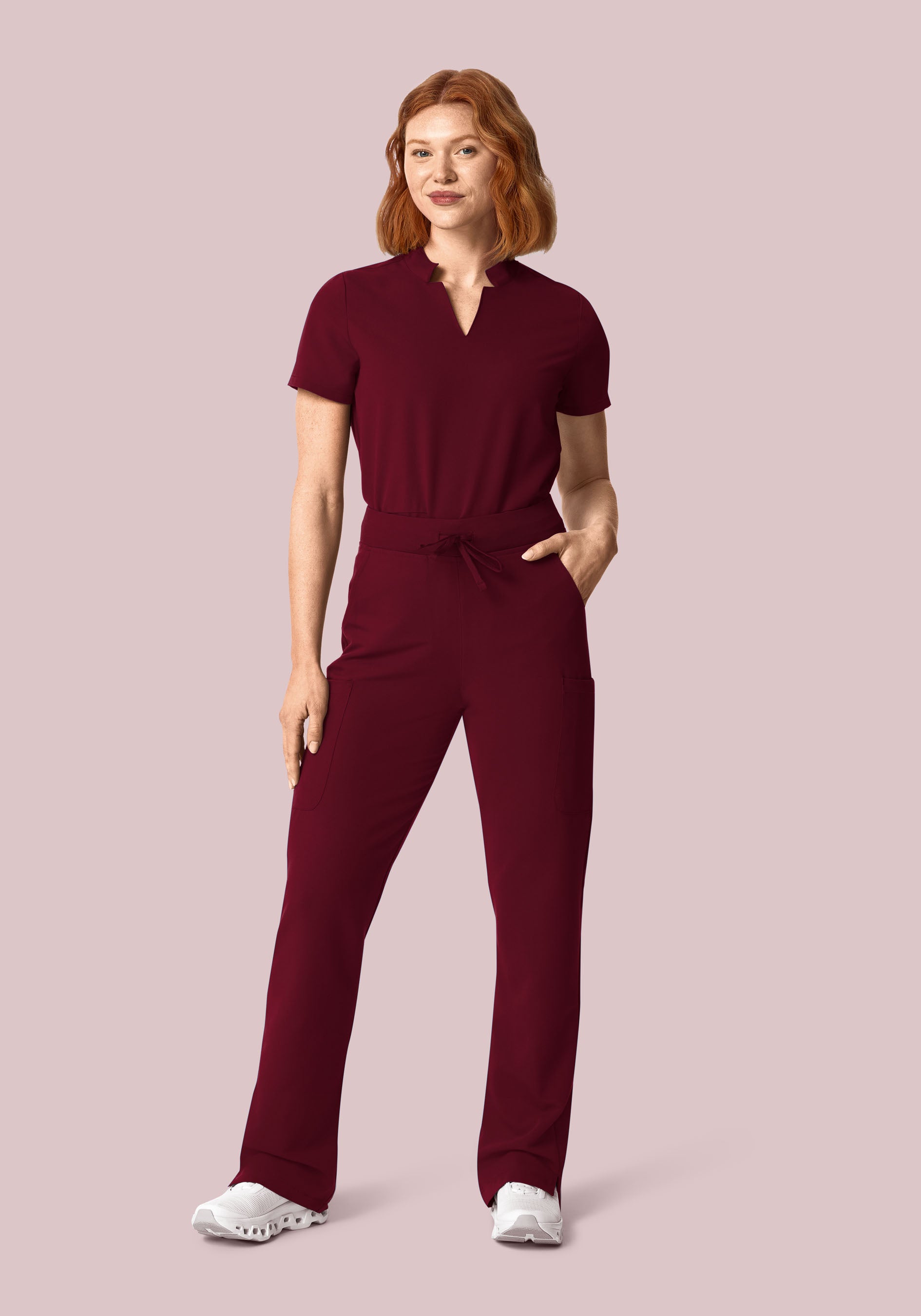
The uniform has a fabric problem, too
Of course, nobody wears a spreadsheet. Mandala’s core scrubs use its Equa-Tek fabric technology, which the company describes as woven into the fibers rather than applied as a conventional surface coating. Its science page says development involved more than a hundred prototypes. That is Mandala’s account of the work behind the material, rather than an independently audited development history.
The black One Pocket Top offers a concrete entry point. Listed at $19.99 when researched, it turns the pricing argument into an actual garment a customer can order. A single chest pocket and a plain front suit the company’s stated design preference: “No flashy logos. No unnecessary details.” Here, restraint is part of the offer.
“No flashy logos. No unnecessary details.”
Mandala’s design philosophy
Mandala also sells Soft Stretch garments made with Soft-Tek, a separate proposition built around softness and stretch. The distinction matters because customers are choosing a feel as well as a silhouette. Cargo pockets, jogger cuffs and wide legs solve different wardrobe preferences; a fabric description cannot make that decision for the wearer.
The catalogue now extends to jumpsuits, maternity clothing, men’s scrubs, lab coats and layers. That breadth keeps the business close to the same customer while expanding the situations it can dress. Someone buying a top may also need trousers, an underscrub or a jacket. The organizing idea remains a working wardrobe.
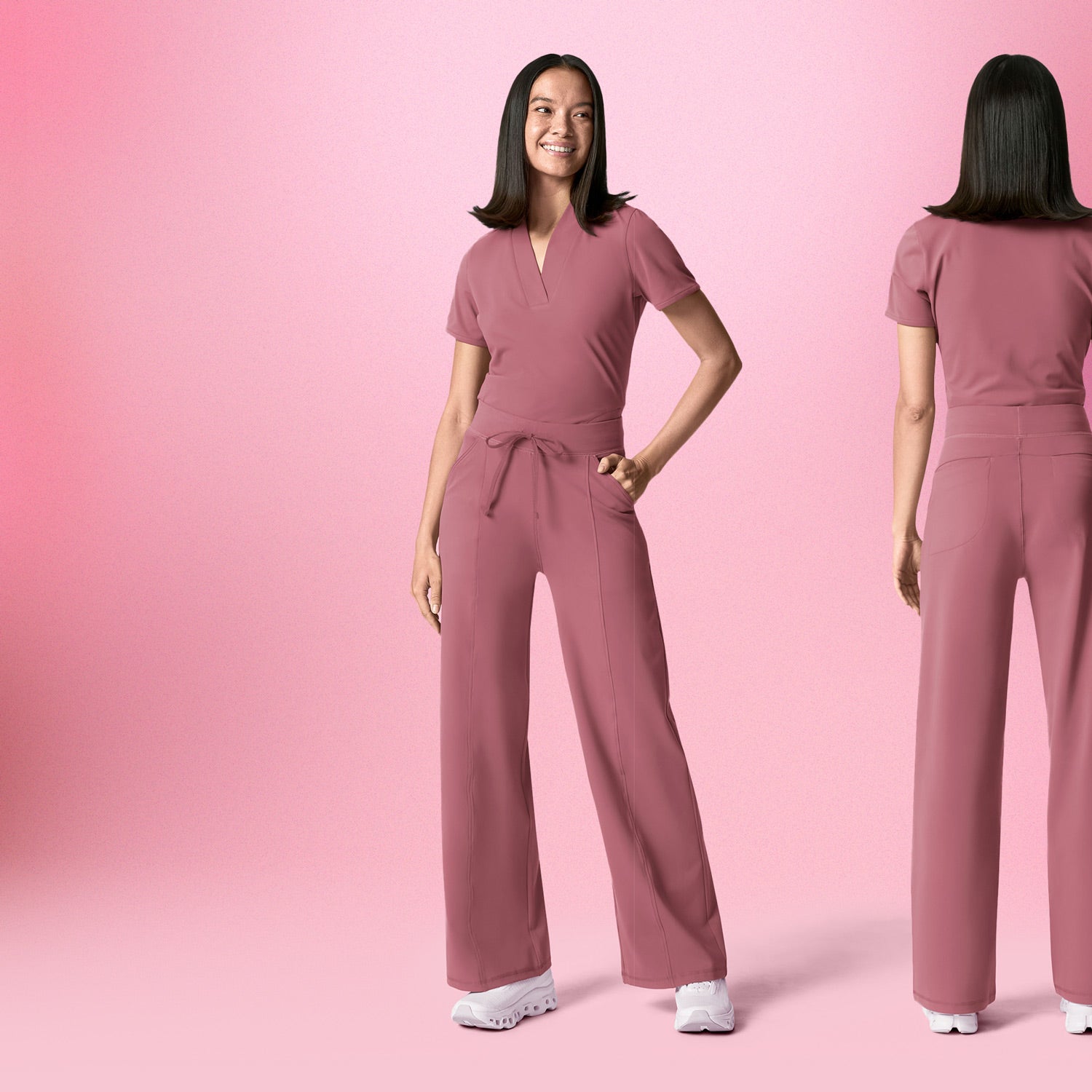
The fitting room moved into the mail
Mandala competes with familiar medical-apparel choices including FIGS, Cherokee, Grey’s Anatomy and Jaanuu. Its particular argument joins simple design, functional fabric claims and visible cost arithmetic. That combination is useful to a clinician comparing workwear, but it does not establish that every Mandala garment will fit better or cost less than every alternative.
Selling online also moves work onto the buyer. There is no shop visit to settle the fit immediately. Mandala offers women’s petite, regular and tall pant lengths, and advises shoppers to consult the chart for the particular style. Its help center describes free returns and U.S. exchanges. Those policies help replace some of the reassurance a fitting room provides.
There are boundaries to the fabric promise as well. Mandala calls Equa-Tek water-resistant, not waterproof, and says water-based spills are easier to repel than oily ones. Buyers should read that distinction literally. A workwear feature earns its value within the conditions it was designed for.
The second order is the harder sale
In 2023, Mandala placed No. 16 on the Inc. 5000. That recognition makes the pricing proposition worth examining. Yet growth and service quality answer different questions. A December 2023 Trusted Health review praised the range while flagging order accuracy and customer-service concerns. The BBB profile also records complaints and an F rating at the time of research.
These records do not measure every buyer’s experience. They do identify the operational test facing a direct seller: the company owns the promise from checkout through resolution. Removing a retailer also means taking responsibility for the conversations that retailer might once have handled.
For a clinician, the sensible experiment is small: check the required color, inspect the size chart, read the stock status and try a garment before replacing a whole wardrobe. For a founder, the lesson travels further. Explain the price clearly, then make receiving the product feel equally straightforward. The arithmetic gets attention. The next shift decides whether the purchase worked.