A colleague’s story about Manas Agrawal begins on holiday in Goa. Abhijit Desai remembered a conversation with an Affine founder he called “Boss Man & Chief Mischief Maker”. What followed was rather more consequential than the nickname: a career that moved from delivery into sales and new business, with room to try a different role after a phone call. In an industry fond of elaborate diagrams, this was a pleasingly short route from curiosity to opportunity.
The anecdote offers a useful entrance to Agrawal’s working life. His business has concerned the movement of information into decisions. His colleague’s experience suggests that, at least on that occasion, decisions could move fairly briskly too. A company may purchase every fashionable technology available and still require three committees to change a chair. Desai’s account supplies a smaller, more human measure of how work felt.
Agrawal co-founded Affine in 2011 and served as its founding CEO. More than a decade later, he started again with Origamis AI. In October 2025, that venture became NuSummit’s AI platform brand, and he joined NuSummit’s leadership. Today his title is Chief Business Officer, Data and AI. The titles have changed; the question connecting these chapters is how to make sophisticated analysis useful beyond the people who build it.
Before the algorithms, an engineer
His education began in a different branch of engineering. Agrawal studied chemical engineering at IIT Kharagpur from 1997 to 2001, then attended the Indian School of Business in 2005-06. His early career included IBM, Dell and Mu Sigma. The combination placed software, business and analytics on the same résumé before he put them together inside a company.
That background helps explain the range of work associated with him. Pricing and assortment planning feature among his specialisms. These are wonderfully concrete subjects: what to charge, what to stock, what a customer might choose. The mathematics may be elaborate; the resulting decision often fits into a sentence. There is an appealing economy in that arrangement.
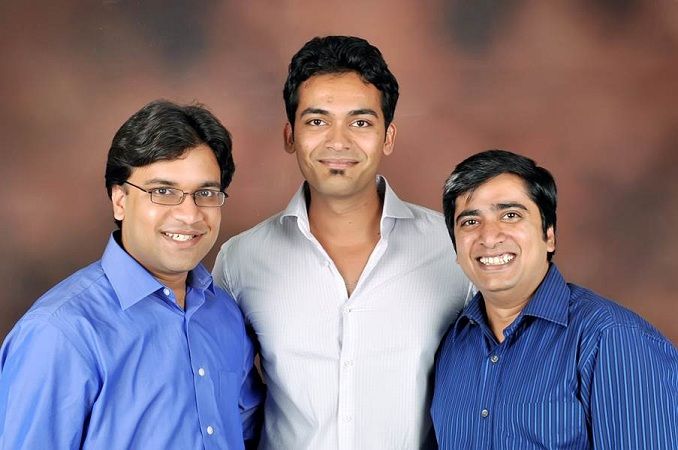
At Affine, his fellow founders were Vineet Kumar and Abhishek Anand. The early division of responsibilities gave Kumar the solutions brief, Anand a client-facing role and Agrawal the CEO’s job. It was a partnership organised around complementary work. Understanding a problem, designing an answer and persuading a customer to use it are related talents, though rarely identical ones.
Eight customers, and an impatience with reports
By July 2013, Affine had a team of 40 and eight customers, five of them Fortune 500 companies. It had raised angel funding the previous year. Those numbers describe a young services business with access to substantial clients. Agrawal was already talking about turning parts of its work into repeatable products.
“Companies are looking for more than just reporting,” he said. His argument went further than producing a more handsome dashboard. Data needed business meaning; it also arrived in forms that could not be tidied into tables. Free text belonged in the picture. The client, meanwhile, needed a recommendation it could act upon.
The early examples included helping telecom businesses understand customer churn. Affine wanted to package domain knowledge into platforms that could be adapted for different customers. Read that beside Agrawal’s later work and the continuity becomes clear: reducing the distance between a complex technical capability and an ordinary business task has occupied him for years. Productisation was on his agenda long before conversational AI acquired its current audience.
A business with a passport
Affine’s work carried it beyond Bengaluru. In August 2019, the company announced an office in Singapore as part of its expansion into Asia-Pacific. The business already worked across the United States and India. Its geographic ambitions followed the kind of enterprise customers its founders had chosen to serve.
The Singapore move matters in Agrawal’s story because building an analytics company involves more than hiring people who can model data. Customers have different markets, working hours and commercial expectations. A local presence makes that work less abstract. An algorithm may travel effortlessly; a business relationship occasionally appreciates being in the same room.
Within Affine, the emphasis expanded to artificial intelligence, data engineering and cloud. A 2021 identity change reflected those three capabilities. Academic partnerships had begun with IIT Bhubaneswar in 2015 and IIT Kharagpur in 2017; a relationship with the Fisher Center for Business Analytics at Berkeley Haas added another setting for work on applications and governance. The company’s vocabulary was widening along with its remit.
The factory floor joins the conversation
Agrawal’s interest in manufacturing gave this expansion a physical address. Affine established a manufacturing excellence lab in Jamshedpur in 2022. Its proposed work included computer vision for quality checks and analysis of machine data. Steel, vehicles and industrial equipment offered a setting where a better decision could show up in an actual production process.
He also wrote about the limits of digitising a factory while leaving operators to adjust settings manually. Better visibility was useful, but the next question concerned what to do with the information. His manufacturing argument focused on augmenting human capabilities and using plant data to improve operations. Even a beautifully connected machine still needs someone to ask a worthwhile question.
There was a parallel effort to help younger businesses build. In 2021, Affine introduced DeepCamp, an accelerator offering technical assistance, business support and a stated $50,000 seed investment for selected startups. Its help extended from algorithms and engineering to product design and routes to market. For a founder who had built a services company, this widened the workbench to include other people’s products.
“The partnerships not only help advance our research but also help us take academic papers to industry.”
Manas Agrawal, 2022
Room to move, inside and outside the company
The Goa anecdote sits comfortably beside a detail Agrawal shared in 2022: more than 40% of Affine’s middle management had been with the business for seven or eight years. He described people moving up inside the company and spoke about flexibility and career opportunities. Those figures belong to that period, but they help explain why an employee’s account of changing functions is more than a cheerful aside.
His interests also reached gaming. At the Fisher Center and Affine’s 2022 summit, Agrawal appeared in the opening gaming session and moderated a discussion about engagement and monetisation with leaders from Mobile Premier League, VerSe Innovation and Zee5. It placed him among people asking how audiences behave, what keeps them involved and which decisions the data can support.
Factories and games make an unusual pair until one considers the working questions. Both produce information in abundance. Both require decisions about what deserves attention. Agrawal’s career connects these settings through the practical work of interpretation. The subject matter changes; the obligation to make a recommendation useful remains.
Another company, another kind of data
In 2024, Agrawal co-founded Origamis AI with Ankit Agarwal and Alexander George Kadankavil, colleagues from his Affine years. The venture addressed a familiar business frustration in a newer form: a general AI model might answer fluently while lacking the particular information a company needed. Their approach brought enterprise data into the interaction.
The early products divided the work by material. DocuAgent dealt with documents, DataAgent with structured databases and PicAgent with visual assets. These names have the virtue of doing some of the explaining themselves. A user seeking a passage in a manual and a user searching an image collection have different jobs, even if both would prefer to avoid an afternoon of rummaging.
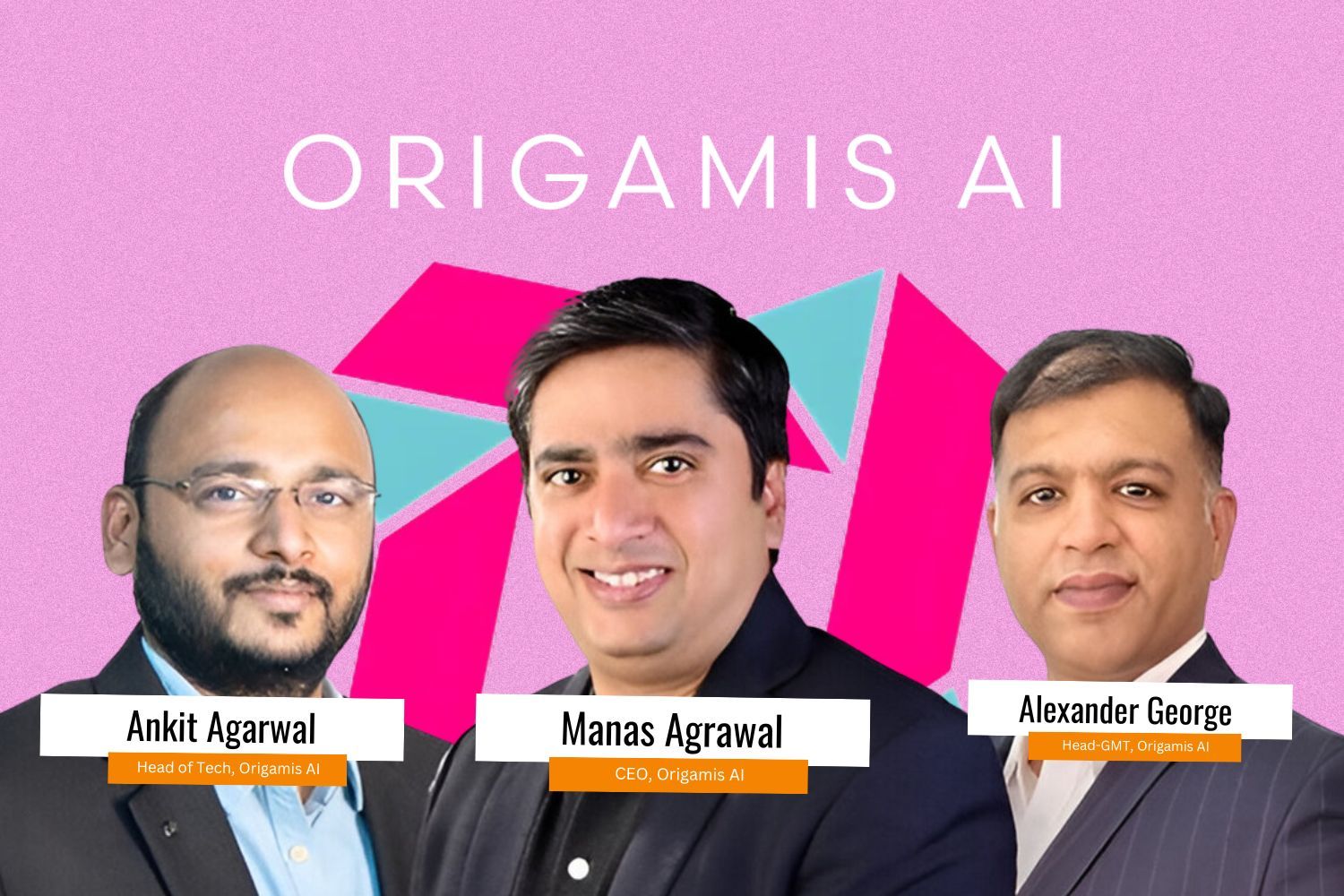
A $500,000 seed round was announced in February 2025, backed by Vikas Gautam and Naveen Agarwal. Agrawal publicly thanked them for guidance as well as capital. His account of their involvement stressed making the products more business oriented. That is a revealing priority for a founder selling a technology whose demonstrations can be easier to admire than to deploy.
Conceptual illustration of the product approach, not a performance claim.
The dance acquires a rulebook
Agrawal’s public writing occasionally abandons the boardroom for the ballroom. In a 2024 post, he presented enterprise GenAI adoption as a tango and arranged its attractions into an ACID test: application-oriented, compatible, inexpensive and dependable. It was an enthusiast’s formulation, complete with comparisons to earlier technologies. The theatrical setting gave a practical checklist rather better lighting.
By October 2025, the next chapter was explicit. NuSummit integrated Origamis AI into its Data and AI portfolio and appointed Agrawal to lead the practice. The announced platform supported deployment on company premises or in the cloud, with controls covering security, costs, observability and responsible AI. Those details matter for regulated customers, whose enthusiasm must coexist with obligations.
His current role brings the founder’s product experience into a larger enterprise setting. Across Affine, Origamis AI and NuSummit, he has kept returning to the point at which technical possibility meets an organisation’s habits. An answer needs context. A product needs a user. A promising experiment needs a way into daily work.
There is room in that story for the colleague in Goa, too. Technology businesses spend much of their time discussing what machines might become capable of doing. Desai’s recollection concerns what a person was allowed to try. Put the two together and Agrawal’s career becomes easier to understand: useful information, a decision, and enough room for the next move.