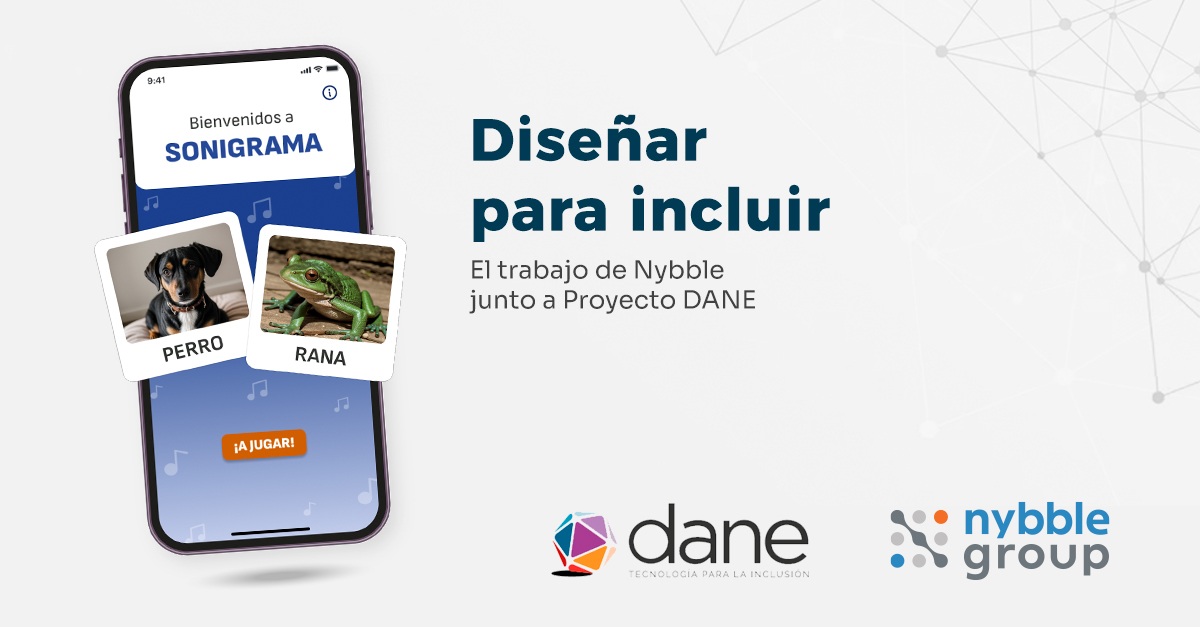
The red box was doing what red boxes usually do. It told someone they had made a mistake. In Nybble Group’s account of redesigning Sonigrama, an animal-and-sound learning app for people with disabilities, watching users react to that box helped change the design. The team removed visible penalties for mistakes. A familiar interface convention had become something worth questioning.
- Nybble builds custom software, connects business systems, and automates repetitive work.
- Its customers include payment processors, manufacturers, retailers, and pet insurance businesses.
- The recurring lesson: inspect the rules and handoffs before choosing the technology.
That small reversal is a useful way into a company whose service descriptions cover a large territory. Software engineering. Enterprise applications. Artificial intelligence. Automation. The vocabulary is familiar. The more revealing material sits inside individual projects, where an employee’s birthday, a mattress delivery, or an insurance quote becomes a surprisingly difficult computing problem.
01 / The birthday problem
Consider Mercado Libre. According to Nybble’s case study, its benefits portal had originally been built for refunds. It was then used to distribute birthday gift cards. The fit was awkward: dates could be changed, and employee eligibility could not be confirmed adequately. A pleasant workplace ritual had acquired a verification problem.
Nybble used UiPath to check employee identities, required information, and whether a gift had already been issued. The interesting part is the sequence. Establish who qualifies. Check the record. Then distribute the benefit. Automating the old process without those checks would simply have moved its weaknesses faster.
A separate Mercado Libre assignment addressed sales contracts. A bot received a spreadsheet, applied approval rules, generated contracts, and notified the relevant people. Sales requirements and inventory guidelines both mattered. The spreadsheet was an input; the real work was encoding the conditions under which a contract could exist.
A simplified view of the published contract automation case.
02 / One business, several versions of the truth
Independence Pet Group presented a different puzzle. Its brands had different technologies and sales flows. Comparing their performance meant first deciding how to measure them consistently. A pet insurance quote can involve multiple animals, breeds, ages, and coverage choices. Treating that transaction like an ordinary shopping basket loses information.
Nybble describes adapting Google Analytics 4 measurement, guiding data-layer implementation, and building individual and combined Looker Studio dashboards. The benefit was a common basis for comparison across brands. A dashboard becomes useful when the numbers underneath it describe the same thing.
At San Miguel, the citrus business, the troublesome handoffs involved supplier invoices and temporary employee registration across countries. Nybble reports using UiPath and Power Automate across finance, HR, sales, and logistics, with scope extending to 15 automations. These are ordinary administrative tasks. Their repetition makes them consequential.
03 / The machinery behind the button
MerchantE’s assignment reached further into the technical stack. Nybble describes moving an Oracle database to AWS, integrating Apple Pay and Google Pay, and creating a specialized automation team for error detection. A customer sees a payment option. Behind it sit cloud infrastructure, third-party services, testing, and people responsible for keeping the transaction moving.
This range helps explain Nybble’s market position. It can supply engineers inside a client’s team, implement business applications, or deliver a custom system. Its software practice covers web and mobile development, architecture, quality assurance, and support. For a buyer, the appeal is having several related implementation skills available within one engagement.
The distinction is practical rather than exclusive. Other consultancies offer similar combinations. Nybble’s public work makes its particular mix visible: operational software, integration, and design, often around systems a customer already uses. Its manifesto also names Accenture, Capgemini, and Auxis among consulting firms whose delivery capabilities it has augmented.
04 / The bill includes the process
Antares, the Argentine brewery, was running Odoo 11 when it sought a broader rebuild around Odoo Enterprise 18. Nybble’s account lists scattered Excel reporting, disorganized master data, and misconfigured access permissions. Its response included functional assessment, process redesign, user training, and end-to-end testing before launch. A new version number alone would not have settled those issues.
The commercial commitment can be substantial. Clutch lists a $25,000 minimum engagement and a $25-$49 hourly range for Nybble. Those figures are starting signals, not a project quote. A La Cardeuse client review places an ERP assignment in the $50,000-$199,999 bracket and says delivery took longer than expected.
Listed minimum project size. Scope, migration, integrations, and support determine the actual bill.
Nybble’s La Cardeuse case describes connecting inventory, manufacturing, transport, and customer service. That breadth helps explain why buyers should discuss acceptance criteria as carefully as features. Which old tasks must still work? Who signs off on stock records? How will dispatch handle exceptions? A migration has to survive an ordinary working day.
05 / Permission to change your mind
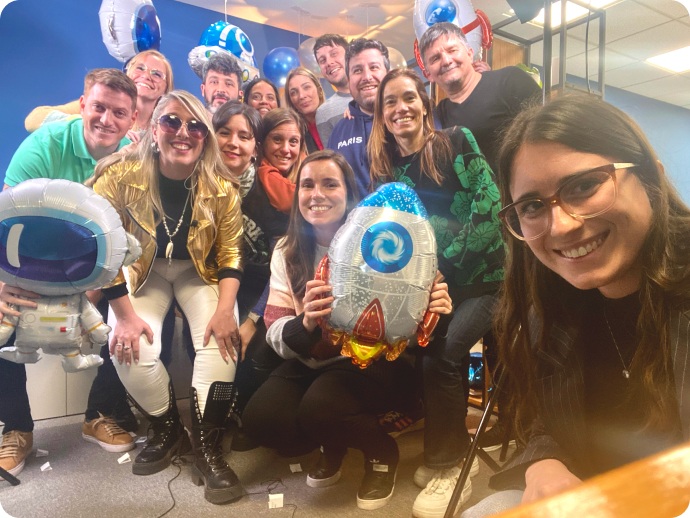
The company’s learning culture has some concrete rituals: Nybble Academy, quarterly town halls, and that week-long camp. Such practices matter in a services business because much of what a customer buys lives in the team’s judgment. The next assignment may require a different answer from the last one.
Sonigrama offers a modest example. Research with users and educational psychologists pushed the team toward a calmer interface. “You have to focus your attention on what’s really needed,” UX lead Natalia Daffunchio explained. The app’s redesign for Proyecto DANE was a pro bono collaboration.
The same willingness to question an assumption becomes more urgent with AI. In a July 2026 essay, founder Gustavo Castenetto discusses the distance between a controlled pilot and messy production conditions. He argues that teams should define which decisions require human confirmation before deployment, and assign responsibility to an owner.
“Someone has to be accountable. Name them.”
Gustavo Castenetto / July 2026
There is something readers can copy here without buying a project: pick one recurring handoff, write down its rules, observe the people using it, and decide what success means. The approach depends on access to those people and a willingness to revise the process. Without either, a faster workflow can preserve the wrong assumption. Even a very small red box can tell you that.